RWA Tokenization Guide 2026 →
Explore the broader institutional architecture behind tokenized government securities, funds and other real-world assets, including legal structure, custody, compliance, settlement and liquidity.
Search by title, topic or phrase

Use our Crypto Search Engine 🔍 to find the topics and keywords you're looking for.
Tokenized U.S. Treasuries bring one of the world’s most established fixed-income markets onto blockchain-based infrastructure. This guide explains how tokenized Treasury funds work, how they differ from directly owning Treasury securities, where yield comes from, how custody and redemption work, what risks investors and institutions should evaluate, and why tokenized government debt has become an important building block for on-chain financial markets.

Table of Contents
ToggleTokenized U.S. Treasuries are blockchain-based digital representations of investment interests linked to U.S. government securities, Treasury bills, repurchase agreements, or Treasury-focused money market funds. Instead of relying only on conventional book-entry systems, the ownership or transfer record can incorporate distributed-ledger infrastructure.
The important distinction is that tokenization does not turn a Treasury security into a different economic asset simply because it is represented digitally. The legal structure, ownership rights, custody arrangement, redemption process, and applicable securities regulations depend on the specific product.
Tokenized Treasury products have moved beyond proof-of-concept experimentation into live financial infrastructure. RWA.xyz currently tracks a multi-billion-dollar market across tokenized U.S. government-debt and Treasury-focused products, with major platforms including BlackRock/Securitize, Circle, Ondo, Franklin Templeton, WisdomTree and Kinexys Digital Assets.
The significance is not simply that Treasury exposure can be placed on a blockchain. The larger infrastructure opportunity is that a yield-bearing government-security position can become easier to integrate with digital custody, programmable settlement, collateral systems, treasury workflows and selected on-chain applications.
| Question | Short Answer |
|---|---|
| What are they? | Blockchain-based representations of Treasury-related investment exposure. |
| What backs them? | Depending on the product, U.S. Treasury bills, notes, government money-market instruments, repos or related assets. |
| Do they equal direct Treasury ownership? | No. The legal claim depends on the fund, issuer, custodian and tokenization structure. |
| Where does yield come from? | Primarily from the underlying Treasury or money-market portfolio, less applicable fees and expenses. |
| Why use blockchain? | Potentially faster transfer, programmable settlement, digital custody and integration with on-chain financial systems. |
| Are they risk-free? | No. Tokenization adds technological, custody, liquidity, operational and structural risks. |
U.S. Treasury securities are debt instruments issued by the U.S. government. Treasury marketable securities include Treasury bills, notes, bonds, Treasury Inflation-Protected Securities and Floating Rate Notes. Treasury bills are short-term instruments with maturities ranging from several weeks to one year.
Treasury bills are commonly used in tokenized products because their short duration, liquidity and role in cash management make them useful building blocks for digital yield products.
TreasuryDirect states that Treasury bills are issued electronically, mature in terms ranging from four weeks to 52 weeks, and are sold at a discount or at par depending on the issue.
A typical tokenized Treasury structure has several layers. The exact architecture differs by issuer, but the basic flow connects a regulated investment vehicle or custody arrangement with blockchain-based token records.
The product acquires or maintains exposure to Treasury bills, government securities, repos or other permitted instruments according to its investment mandate.
The issuer establishes the fund, security or contractual structure that determines what the investor actually owns and what rights accompany the token.
A blockchain-based token or digital record represents the investor’s interest according to the product’s legal and operational framework.
Depending on the product, eligible holders may transfer tokens between approved wallets or interact with designated trading and settlement venues.
Redemption converts the tokenized position back into the applicable settlement asset or fiat value according to the product’s rules, eligibility requirements, liquidity arrangements and operating schedule.
One of the most important concepts for readers is that a tokenized Treasury product is not automatically equivalent to holding a Treasury bill directly in a TreasuryDirect account or conventional brokerage account.
| Feature | Direct Treasury Security | Tokenized Treasury Product |
|---|---|---|
| Underlying | Direct Treasury security | Depends on product structure |
| Ownership Record | Conventional financial infrastructure | May incorporate blockchain records |
| Transferability | Traditional market mechanisms | May support blockchain-based transfers subject to restrictions |
| Programmability | Limited | Potentially higher |
| Wallet Integration | Generally not applicable | May be available depending on the product |
| 24/7 Digital Settlement | Generally follows conventional market infrastructure | May support extended or 24/7 digital transfer depending on venue and structure |
| Technology Risk | Traditional infrastructure risk | Traditional + blockchain, smart-contract, custody or interoperability risks |
The SEC’s 2026 statement on tokenized securities emphasizes that the legal and economic rights attached to a token depend on the specific tokenization model. Tokenization can involve issuer-sponsored securities or third-party structures, and the blockchain record can interact with either on-chain or off-chain master records.
These products generally use a regulated investment-fund structure that invests in short-duration government securities or related money-market instruments while providing blockchain-based representations of fund shares. WisdomTree’s Treasury Money Market Digital Fund, for example, is structured as an open-end Treasury money market fund and uses blockchain technology within its share-recording infrastructure.
Some products provide tokenized exposure to short-duration U.S. government securities through specialized investment structures rather than giving the token holder the same relationship as a direct Treasury owner.
Institutional products may restrict eligible investors, wallet addresses, transfer venues, jurisdictions and redemption mechanisms. These controls can support compliance requirements while still using blockchain infrastructure.
Some products are designed to provide broader on-chain accessibility. Their eligibility, legal structure, geographic availability and transfer restrictions must be evaluated separately rather than assumed from the word “tokenized.” Ondo, for example, describes USDY as a permissionless yield product backed by short-term U.S. Treasuries and other eligible assets, while its institutional OUSG product is designed around short-term Treasury exposure and 24/7 minting and redemption.
The tokenized Treasury market has developed into a substantial segment of on-chain real-world assets. RWA.xyz’s Treasury dashboard reported approximately $14.96 billion in distributed value across tracked tokenized U.S. Treasury funds as of September 26, 2026, alongside more than 83,000 holders. The dashboard tracks products across multiple issuers and networks.
| Platform / Issuer | Representative Product | Role in the Market |
|---|---|---|
| BlackRock / Securitize | BUIDL | Institutional tokenized Treasury-focused fund infrastructure |
| Circle | USYC | Tokenized yield and Treasury-related cash management |
| Ondo | USDY / OUSG | On-chain Treasury and yield products |
| Franklin Templeton | BENJI / Franklin OnChain U.S. Government Money Fund | Tokenized regulated money-market fund infrastructure |
| WisdomTree | WTGXX | Tokenized Treasury money-market fund with on-chain transfer infrastructure |
| Kinexys Digital Assets | JLTXX | Institutional bank-led tokenized money-market infrastructure |
Market values change continuously. Readers should distinguish between distributed value, which measures assets represented on networks in the relevant dataset, and other measures such as represented/off-chain value. RWA.xyz’s methodology and date should therefore be cited whenever a market-size figure is published.
Tokenization itself does not create the underlying yield. The return generally originates from the securities or instruments held by the underlying investment vehicle.
Treasury bills themselves are sold at a discount or at par, with the difference between the purchase price and the amount received at maturity representing the bill’s interest economics.
One of the most important institutional use cases is the ability to connect Treasury exposure with digital-market collateral workflows.
A traditional Treasury position can be valuable collateral, but moving that asset into a blockchain-native trading or settlement environment may require additional operational layers. A tokenized representation can potentially make the asset easier to reference, transfer or integrate into programmable financial infrastructure, subject to the product’s legal and eligibility framework.
Franklin Templeton and Binance announced an institutional program in 2026 allowing eligible clients to use Benji-issued tokenized money-market fund shares as off-exchange collateral while the underlying assets remain in regulated custody.
Companies can potentially use tokenized Treasury products as part of digital cash-management workflows, subject to jurisdiction, eligibility and accounting requirements.
Tokenized Treasury exposure can serve as collateral where a platform, lender or trading venue accepts the specific product.
Yield-bearing Treasury products can potentially sit alongside stablecoins and other digital settlement assets within institutional workflows.
Tokenized Treasury funds can provide a mechanism for moving eligible idle balances into yield-bearing government-security exposure while maintaining digital transfer functionality.
Where legally and technically permitted, tokenized Treasury positions can interact with smart-contract systems, automated treasury rules and digital settlement infrastructure.
Tokenized Treasury products can act as building blocks within broader cross-border digital-finance systems, although the underlying legal, foreign-exchange, custody and settlement rules remain critical.
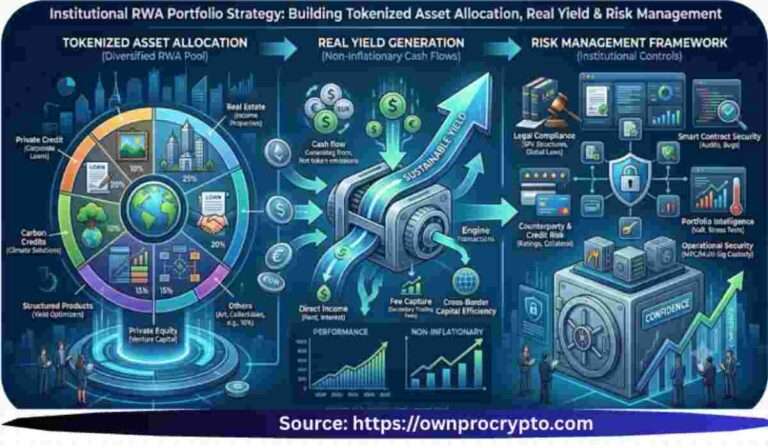
The phrase “Treasury-backed” should not be interpreted as “risk-free in every respect.” Tokenized products introduce several layers of risk beyond the underlying government securities.
| Risk | What to Check |
|---|---|
| Issuer Risk | Who legally issues the token and what claim does the holder have? |
| Custody Risk | Where are the underlying securities held and who controls custody? |
| Smart-Contract Risk | How are token transfers controlled and what contract permissions exist? |
| Redemption Risk | Who can redeem, when can they redeem and what settlement asset is received? |
| Liquidity Risk | Is there primary redemption, secondary-market liquidity or both? |
| Regulatory Risk | Which jurisdiction governs the product and who is eligible to hold it? |
| Blockchain Risk | Which network is used and what happens during outages or congestion? |
| Counterparty Risk | Which banks, custodians, brokers and infrastructure providers are involved? |
| Operational Risk | How are transfers, reconciliations, corporate actions and exceptional events handled? |
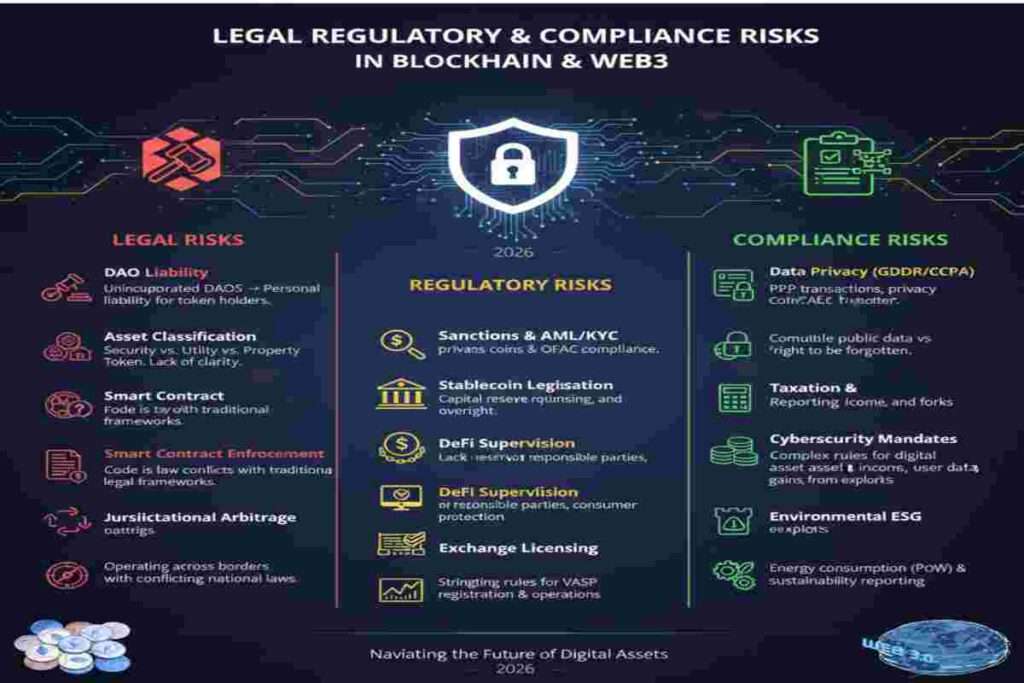
Regulation depends on the legal structure, jurisdiction and type of product. Tokenization does not automatically remove an instrument from existing securities or investment-fund laws.
In January 2026, the SEC staff published a statement explaining different models of tokenized securities and noting that tokenization can involve securities issued directly in tokenized form or third-party structures representing interests in underlying securities. The statement also emphasized that its views were staff views rather than a new rule or regulation.
In September 2026, the SEC also approved a temporary conditional exemption for certain tokenized NMS stock trading venues, demonstrating that U.S. regulators are actively addressing how on-chain market infrastructure can operate within securities-market frameworks.
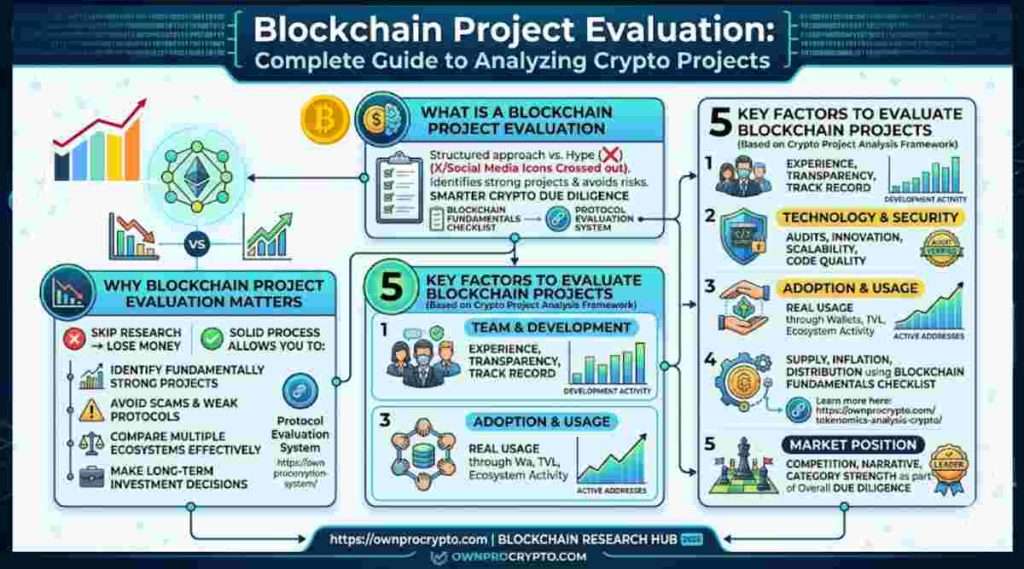
Investors and treasury teams should evaluate the complete product architecture rather than choosing solely on advertised yield.
Determine whether the token represents a fund share, security entitlement, contractual claim or another structure.
Check whether the product holds Treasury bills, repos, government money-market instruments or other permitted assets.
Identify the custodian, segregation arrangements and procedures used to safeguard the underlying assets.
Determine who can mint or redeem, settlement timing, minimums, supported currencies and applicable restrictions.
Review smart-contract permissions, transfer restrictions, supported networks, upgrade authority and emergency procedures.
Compare yield, management fees, transaction costs, redemption costs, minimum investment and liquidity—not just the headline APY.

Tokenized Treasury products and stablecoins can both exist inside digital-dollar infrastructure, but they are fundamentally different financial instruments.
| Feature | Tokenized Treasury Product | Stablecoin |
|---|---|---|
| Primary Purpose | Investment / yield / Treasury exposure | Digital payment and settlement asset |
| Underlying Structure | Fund or investment structure | Reserve-backed or other issuer-specific structure |
| Yield | Usually derived from underlying investments | Typically not automatically passed directly to holders |
| Price Objective | Depends on the product and NAV structure | Generally designed around a stable reference value |
| Investment Regulation | May fall under securities / fund frameworks | Depends on issuer and jurisdiction |
| DeFi Utility | Increasing in selected ecosystems | Generally designed specifically for payments and settlement utility |

The strategic importance of tokenized Treasuries extends beyond putting government bonds on a blockchain. The larger opportunity is connecting a traditional yield-bearing asset with programmable financial infrastructure.
Recent market infrastructure developments illustrate this direction. WisdomTree reported the launch of 24/7 trading and instant settlement for its tokenized Treasury money-market fund, while Franklin Templeton has expanded the use of tokenized money-market shares into institutional collateral workflows.
The European Central Bank also launched its Pontes service in September 2026 to connect its payment system with blockchain-based financial markets, allowing participating institutions to settle blockchain transactions using central-bank-backed euros. That development illustrates a broader institutional trend toward connecting conventional settlement infrastructure with tokenized markets rather than treating them as completely separate systems.
A possible long-term architecture is not simply a larger collection of tokenized funds. It is a financial system in which Treasury exposure can move through regulated digital infrastructure as a native component of collateral, liquidity and settlement workflows.
Key questions about tokenized U.S. Treasuries, digital government bonds, Treasury-focused funds, yield generation, collateral use and the risks behind tokenized financial products.
What are tokenized U.S. Treasuries?
They are blockchain-based digital representations of investment interests connected to U.S. Treasury securities, Treasury-focused funds, repos or related government-money-market assets.
Are tokenized Treasuries the same as Treasury bills?
Not necessarily. A tokenized product may represent a fund share, security entitlement or another legal interest rather than direct ownership of an individual Treasury bill.
Why are Treasury bills popular in tokenized products?
Their short duration, liquidity, established market infrastructure and role in cash management make them useful underlying assets for digital yield products.
Do tokenized Treasuries pay yield?
Many products are designed to provide yield derived from their underlying Treasury or money-market holdings, after applicable expenses and fees.
Are tokenized Treasuries risk-free?
No. Although the underlying assets may be U.S. government securities, the overall product can carry issuer, custody, liquidity, technology, operational, regulatory and smart-contract risks.
Can tokenized Treasuries be used as collateral?
Some can. Eligibility depends on the specific product, custodian, venue, jurisdiction and collateral agreement.
Are tokenized Treasury products regulated?
Regulation depends on the legal structure and jurisdiction. Tokenization itself does not eliminate securities, investment-fund or other applicable regulatory requirements.
What should investors check before using one?
Review the legal claim, underlying assets, custodian, issuer, redemption process, fees, eligibility rules, blockchain controls, liquidity arrangements and regulatory jurisdiction.
Continue exploring the institutional infrastructure behind tokenized U.S. Treasuries, digital government bonds, real yield and on-chain financial markets.
Explore the broader institutional architecture behind tokenized government securities, funds and other real-world assets, including legal structure, custody, compliance, settlement and liquidity.
Go deeper into tokenized Treasuries, real yield, liquidity, portfolio construction and how institutional investors may evaluate tokenized income-producing assets.
Examine the legal, data and technical trust assumptions connecting a blockchain token with its underlying real-world financial asset.
Official U.S. government information on Treasury bills, notes, bonds, TIPS and floating-rate notes that form the underlying reference market for Treasury-related analysis.
SEC staff data providing a useful regulatory reference for tokenized money-market funds and the growing connection between traditional fund structures and blockchain infrastructure.