
Search by title, topic or phrase
Use our Crypto Search Engine 🔍 to find the topics and keywords you're looking for.
Last reviewed: August 2026
The Best Crypto Portfolio Trackers like CoinStats, Delta, Kubera, and CoinTracker give you a pocket-sized financial command center that keeps your entire asset ecosystem completely organized and visible in one place. Managing multiple wallets, exchanges, and blockchains can feel overwhelming at first—but it is much easier than it sounds. Instead of guessing your net worth across a dozen different tabs, these tools give you total clarity through simple dashboards, real-time syncs, and powerful analytics. This guide highlights the top trackers this year, helping you lock down your financial oversight with confidence right from day one.
A crypto portfolio tracker is useful only if you can trust the picture it gives you. Connecting wallets and exchanges is the easy part. The difficult part is determining whether balances are complete, transactions are classified correctly, cost basis is intact, DeFi positions are represented properly, and the resulting performance numbers are suitable for the decision you are trying to make.
That is why there is no single crypto portfolio tracker that is objectively best for every investor. A beginner who wants a simple dashboard has a different requirement from an active trader, a DeFi participant, a family office, or an investor who needs crypto and traditional assets in one balance sheet. This comparison evaluates leading portfolio trackers according to data coverage, accuracy, integrations, DeFi capability, cost-basis and P&L functionality, security, privacy, tax capability, pricing, and workflow fit. The objective is not to produce a popularity ranking. It is to determine which tool is most appropriate for a particular portfolio-management problem.

Table of Contents
ToggleFor most users who want broad crypto portfolio aggregation, CoinStats is one of the strongest general-purpose choices because it combines wallet and exchange connections with portfolio analytics, DeFi and NFT tracking, alerts, and P&L tools. CoinStats currently states that it supports 300+ wallets and exchanges, while its product also includes DeFi and NFT tracking.
Delta is particularly compelling when crypto is only one part of the investment portfolio. Its design brings together crypto, stocks, funds, commodities, indices and other assets, while offering portfolio performance, cost basis, unrealized gains and allocation analytics.
Kubera is better suited to investors who think in terms of total wealth rather than crypto alone. It supports crypto alongside stocks, real estate, private equity and other assets, making it especially relevant to complex personal wealth and family-office-style portfolios.
CoinTracker stands out when tax reporting, transaction classification, portfolio tracking and cost-basis workflows are central requirements. Its current product covers portfolio tracking, realized and unrealized gains, tax reporting, and a large set of exchanges, wallets, blockchains and smart contracts. For specialized use cases, the answer changes.
Zerion is particularly strong for on-chain and DeFi portfolio visibility,
DeBank is highly useful for EVM wallet and address intelligence, and rotki is the standout option for investors who prioritize local-first architecture, open source software and privacy.
| Use case | Our leading choice | Why |
|---|---|---|
| Best overall crypto tracker | CoinStats | Broad wallet/exchange coverage, portfolio analytics and crypto-focused functionality. |
| Best for beginners | CoinStats | Broad coverage without requiring a highly technical workflow. |
| Best for active traders | Delta | Strong performance analytics, cost basis, alerts and multi-asset visibility. |
| Best for multiple exchanges | CoinStats | 300+ wallet and exchange connections stated by the provider. |
| Best for DeFi | Zerion | Strong multi-chain wallet, DeFi position and on-chain portfolio functionality. |
| Best for tax reporting | CoinTracker | Tax calculation, cost basis, reporting and portfolio tracking are integrated. |
| Best for crypto + traditional assets | Kubera | Designed around a broad wealth view spanning crypto and traditional/private assets. |
| Best for professional investors | Kubera / Delta | Choice depends on whether the priority is total wealth or investment analytics. |
| Best for privacy | rotki | Local-first, open-source architecture with encrypted local storage. |
These are OwnProCrypto editorial judgments, not claims made by the vendors themselves. A product can be the strongest choice for one workflow and a poor choice for another.
Tip: Choose a tracker based on the decisions you need to make—not the number of features it advertises.
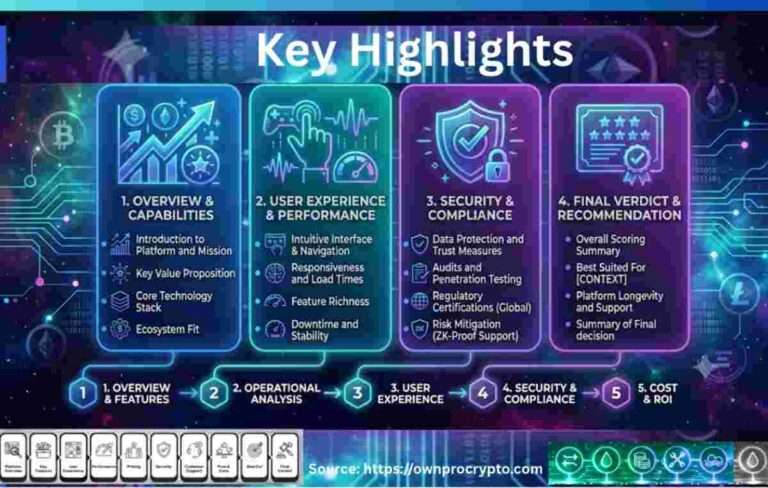
The following table is designed as a decision aid rather than a feature-count contest. Product features and pricing change frequently, so readers should verify current commercial terms before purchasing.
| Tracker | Primary strength | Crypto | DeFi | Traditional assets | Tax / accounting | Privacy model | Best fit |
|---|---|---|---|---|---|---|---|
| CoinStats | Broad crypto aggregation | Excellent | Strong | Limited compared with Kubera/Delta | Strong | Hosted | General crypto investors |
| Delta | Multi-asset investment tracking | Strong | Moderate | Excellent | Secondary strength | Hosted | Investors with mixed portfolios |
| Kubera | Total wealth visibility | Strong | Moderate | Excellent | Portfolio-focused | Hosted | Complex investors and family offices |
| CoinTracker | Tax and accounting workflow | Excellent | Strong | Limited | Excellent | Hosted | Tax-conscious crypto investors |
| Zerion | On-chain and DeFi visibility | Excellent | Excellent | Limited | Moderate | Non-custodial / on-chain focused | DeFi and multi-chain users |
| DeBank | EVM wallet intelligence | Strong | Excellent for EVM | Very limited | Limited | On-chain focused | On-chain researchers |
| rotki | Privacy and local control | Strong | Strong | Limited | Strong | Local-first | Privacy-conscious users |
This table intentionally avoids assigning a numerical score to every feature. A simple 1-to-5 score can create false precision. For example, “DeFi support” is not one capability: protocol coverage, transaction decoding, position valuation, cost-basis treatment and P&L calculation can all differ materially.
Tip: Treat comparison tables as a starting point; verify the integrations and features that matter to your actual portfolio before choosing a platform.
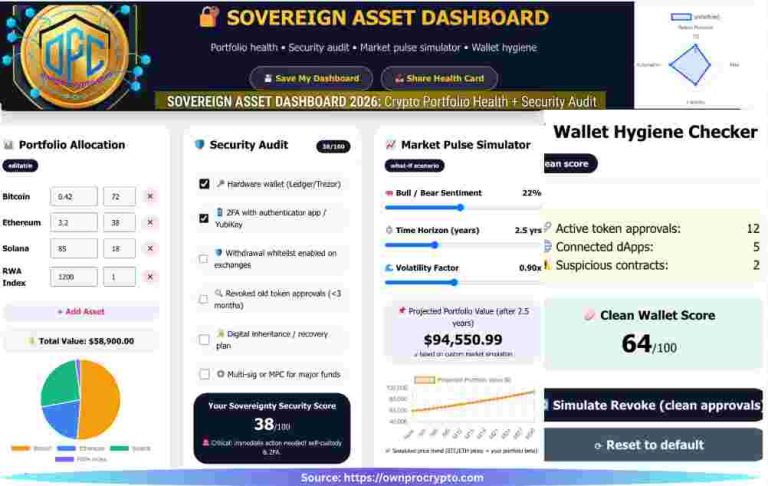
| Decision factor | Why it matters |
|---|---|
| Data completeness | Missing transactions or accounts can materially distort portfolio value and P&L. |
| Data accuracy | Incorrect classification can produce incorrect performance and tax results. |
| Security | API and wallet connections introduce operational and information-security considerations. |
| Coverage | Multi-chain and multi-venue portfolios require broad integration support. |
| DeFi support | On-chain positions often cannot be represented accurately as simple token balances. |
| Tax capability | Tax workflows require transaction history, cost basis and jurisdiction-specific reporting. |
| Analytics | Investors need performance and allocation information, not just current balances. |
| Privacy | Portfolio data can reveal sensitive financial and behavioral information. |
| Workflow | A technically capable product can still be unsuitable if it does not fit the user’s operating model. |
| Cost | The total cost should make sense relative to portfolio complexity and reporting requirements. |




What is the best crypto portfolio tracker in 2026?
There is no universal winner. CoinStats is a strong general-purpose choice for crypto-heavy portfolios, Delta is strong for multi-asset investors, Kubera is strong for complex wealth portfolios, CoinTracker is strong for tax workflows, Zerion is strong for DeFi, DeBank is strong for EVM research, and rotki is strong for privacy-conscious users.
Which is a best crypto portfolio tracker is best for a professional investor?
It depends on the workflow. Professional investors managing crypto alongside broader wealth may prefer Kubera or Delta, while a crypto-native investor with significant DeFi exposure may prefer Zerion or another on-chain-focused system.
Should I use more than one portfolio tracker?
For sophisticated portfolios, using more than one system can be reasonable. One application can serve as the primary portfolio dashboard while another is used for tax reconciliation, on-chain research or independent verification.
Are crypto portfolio trackers accurate?
They can be highly useful, but accuracy depends on integrations, transaction classification, pricing data, protocol coverage and the completeness of the imported records. Users should reconcile material portfolios against primary records.
Why is my crypto portfolio tracker showing the wrong balance?
Common causes include missing transactions, failed API synchronization, incorrect wallet addresses, duplicate transfers, unsupported tokens, stale pricing, incorrect transaction classification and incomplete DeFi decoding.
Can a crypto portfolio tracker steal my crypto?
A properly configured read-only connection should not provide withdrawal authority, but security depends on the exact permissions and architecture involved. Never provide a portfolio tracker with a seed phrase or private key merely to track assets.
Are read-only API keys safe?
Read-only API keys materially reduce the risk of an external tracker being able to withdraw funds, but they are not risk-free. API credentials can expose account information and should be protected, restricted and monitored.
What is the best crypto portfolio tracker for DeFi?
Zerion is one of the strongest choices for multi-chain DeFi portfolio visibility, while rotki is particularly attractive when local processing and accounting are priorities. DeBank is also useful for EVM-centric on-chain research.
Can portfolio trackers accurately track DeFi?
They can track substantial portions of DeFi activity, but no tracker should be assumed to decode every protocol and transaction perfectly. New protocols, unusual contract interactions and complex positions may require manual verification.
Which crypto portfolio tracker is best for taxes?
CoinTracker is one of the strongest choices in this comparison because portfolio tracking and tax reporting are integrated into the same product. rotki is another option for users who prioritize local processing and open-source accounting.
Can a crypto tracker replace an accountant?
No. Software can organize transactions and calculate reports, but professional tax review may still be appropriate depending on jurisdiction, entity structure, transaction complexity and portfolio size.
Are crypto portfolio trackers free?
Many offer free tiers, but advanced synchronization, analytics, tax reporting, larger transaction volumes or additional portfolios may require payment. For example, CoinStats, Delta and CoinTracker currently offer free entry-level options, while their paid plans add additional capabilities.
Is the cheapest portfolio tracker the best?
Not necessarily. The relevant cost is the total cost of obtaining reliable portfolio information. Manual reconciliation, separate tax software and missed transactions can make an apparently cheap solution more expensive operationally.
The best crypto portfolio tracker is not determined by the number of integrations, the prettiest dashboard or the lowest subscription price.
The correct question is: Which system gives me the most reliable representation of my portfolio
for the decisions I need to make?
For broad crypto aggregation, CoinStats is a strong general-purpose choice. Delta is particularly useful for investors who combine crypto with traditional assets. Kubera is better suited to complex wealth portfolios. CoinTracker is particularly strong when tax and accounting are central. Zerion is a strong on-chain and DeFi choice. DeBank is valuable for EVM wallet intelligence. rotki offers the strongest privacy-oriented architecture in this comparison.
For serious investors, however, selecting the application is only the first step. The more important discipline is reconciliation.
Your portfolio tracker should be treated as an analytical layer sitting above primary records. Exchange statements, blockchain data, custody records and accounting systems remain important sources of truth.
OwnProCrypto Institute principle: A portfolio tracker should help you see your portfolio clearly. It should never make you stop questioning whether the picture is complete, accurate and appropriate for the decision in front of you.
Join the Discussion
Share your perspective, question, or additional insight.