
CLARITY Act Crypto: What It Means for U.S. Crypto Regulation in 2026
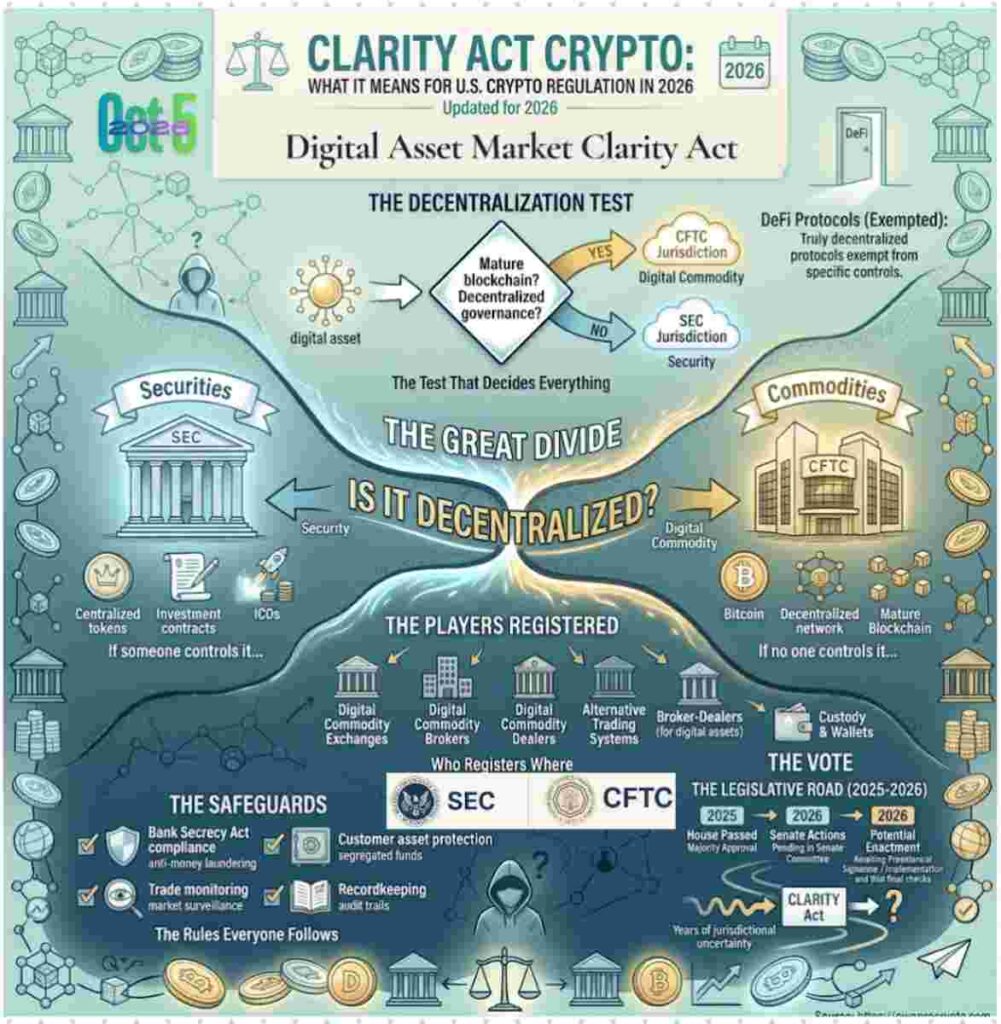
What is the CLARITY Act? The Digital Asset Market Clarity Act of 2025, commonly called the CLARITY Act, is a major U.S. digital-asset market-structure bill designed to establish clearer federal rules for digital commodities, digital-asset markets and the respective roles of the Securities and Exchange Commission (SEC) and Commodity Futures Trading Commission (CFTC).
Boundaries · Regulatory Framework
Table of Contents
ToggleSEC vs. CFTC: How the Proposed Market Structure Works
The core purpose of the CLARITY Act (H.R. 3633) is to establish clearer statutory boundaries between the Securities and Exchange Commission (SEC) and the Commodity Futures Trading Commission (CFTC) for different categories of digital assets and activities.
Under the existing U.S. framework, digital-asset classification can involve federal securities laws, commodities laws, agency interpretations and court decisions, including analysis under the Howey framework. The proposed CLARITY Act would create more explicit statutory categories rather than relying solely on enforcement actions and evolving interpretations.
| Regulatory Dimension | SEC | CFTC |
|---|---|---|
| Primary Jurisdiction | Digital Securities & Investment ContractsWould retain authority over assets and transactions that fall within the federal securities-law framework, including specified investment-contract activities. | Digital Commodities & Commodity MarketsWould receive a substantially larger role over qualifying digital-commodity spot markets and registered intermediaries under the proposed framework. |
| Classification Focus | Investment & Capital FormationFocuses on whether an asset or transaction falls within securities-law requirements, including relevant offering and investment-contract circumstances. | Digital Commodity FunctionFocuses on qualifying digital commodities and the market activities connected to their trading and exchange. |
| Market Activity | Securities Trading & Securities PlatformsApplicable securities-market requirements would continue to govern digital assets that remain within SEC jurisdiction. | Digital-Commodity TradingQualifying digital-commodity exchanges, brokers and dealers would operate within the proposed CFTC registration framework. |
| Core Regulatory Concern | Disclosure & Investor ProtectionFocus includes securities disclosures, market integrity and protections applicable to securities and investment-contract activities. | Market Integrity & Customer ProtectionFocus includes trading oversight, anti-manipulation requirements, customer-asset protections and regulated market infrastructure. |
Chronology of the CLARITY Act in Congress
Tracking the bill’s progression from its introduction in the U.S. House of Representatives through its Senate procedural milestones in 2026.
What the Senate Delay Means for Digital Asset Intermediaries
While federal market-structure legislation remains pending on the Senate calendar, digital asset enterprises must navigate dual-agency administrative rulemaking and state-level compliance obligations.
- Dual-Track Compliance Design: Institutions are configuring technology stacks to comply with both SEC ATS standards and CFTC DCM/CAM market surveillance frameworks concurrently.
- Cross-Border Regulatory Divergence: With the U.S. legislative statute paused, global asset managers are referencing the EU’s Markets in Crypto-Assets (MiCA) framework for standardized token categorization.
- Agency Rulemaking Initiatives: Both the SEC and CFTC are expanding administrative rules using existing statutory authorities to fill the federal oversight gap.
Where should you go next?
This article separates the CLARITY Act itself from the broader U.S. crypto regulatory system. Use the sections above to review jurisdictional boundaries and regulatory impacts.
Explore SEC & CFTC Roles ↑Official CLARITY Act & U.S. Crypto Regulation Resources
Because U.S. crypto regulation is evolving, readers should verify major legal and regulatory developments against primary government sources. The following resources are useful for institutions, businesses, researchers and individuals who want to review the underlying documents.
How Would the CLARITY Act Change SEC and CFTC Crypto Regulation?
One of the most important purposes of the CLARITY Act is to create a clearer division of responsibility between the SEC and CFTC. The proposed framework would give the CFTC a much larger role in regulating qualifying digital-commodity markets while preserving SEC authority over securities and certain primary-market transactions.
The distinction matters because the same crypto ecosystem can contain assets, transactions and businesses that raise different regulatory questions. The CLARITY Act attempts to establish statutory definitions and registration categories rather than leaving the boundaries entirely to case-by-case interpretation.
What would the CFTC regulate?
The House version of H.R. 3633 was designed to establish a federal framework for digital commodities and related intermediaries. It would create registration and regulatory requirements for digital-commodity exchanges, brokers and dealers under the Commodity Exchange Act. (Congress.gov)
What would remain under the SEC?
The SEC would continue to have authority over securities and specified transactions involving digital assets. The legislation also addresses the treatment of investment-contract assets and certain primary transactions rather than simply declaring that every crypto asset is either a security or a commodity.
Need the broader U.S. compliance framework?
This section explains the proposed SEC/CFTC division. For the wider operational compliance framework, use the dedicated U.S. crypto compliance resource rather than duplicating that analysis here.
Explore Crypto Market Compliance →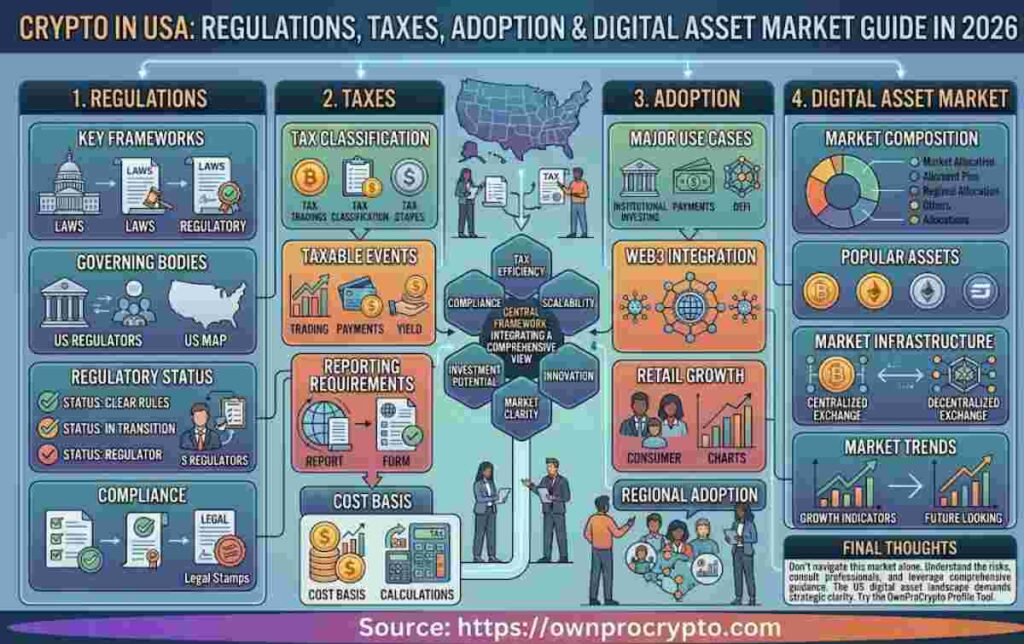
How Would the CLARITY Act Classify Digital Assets?
The CLARITY Act does not simply create a universal label for cryptocurrency. Its proposed framework distinguishes digital commodities, securities, stablecoins and other categories and connects those classifications to the underlying blockchain, rights, transaction and market structure.
The House committee report describes a digital commodity framework tied to the use and operation of a blockchain, while excluding securities, derivatives and stablecoins from that definition. (Congress.gov)
Why classification matters
CLARITY Act vs. the SEC’s 2026 crypto interpretation
The distinction is especially important in 2026 because the SEC and CFTC have already taken an interpretive step outside legislation. Their March 2026 joint action established a taxonomy covering digital commodities, digital collectibles, digital tools, stablecoins and digital securities, and addressed when a non-security crypto asset may become involved in an investment contract. (SEC)
That means readers should not confuse current agency interpretation with proposed congressional legislation. The SEC/CFTC interpretation operates under existing authority; the CLARITY Act would attempt to codify a broader market-structure framework through federal law.

What Would the CLARITY Act Mean for Crypto Exchanges and Brokers?
For exchanges, brokers and dealers, the proposed legislation is significant because it would establish a more defined federal registration framework for qualifying digital-commodity activities.
Instead of treating the entire crypto market as one regulatory category, the bill creates specific concepts for digital-commodity exchanges and intermediaries and introduces requirements connected to registration, customer assets, market conduct and federal oversight. (Congress.gov)
Potential operational effects
What exchanges should not assume
A future federal market-structure law would not automatically mean that every crypto business could operate without other obligations. State requirements, federal financial-crime rules, tax obligations, securities laws and other applicable regulations could remain relevant depending on the business model.
Building institutional crypto infrastructure?
Exchange regulation is only one part of the institutional stack. Use the specialist compliance and custody resources for deeper operational analysis.
Explore Compliance Infrastructure →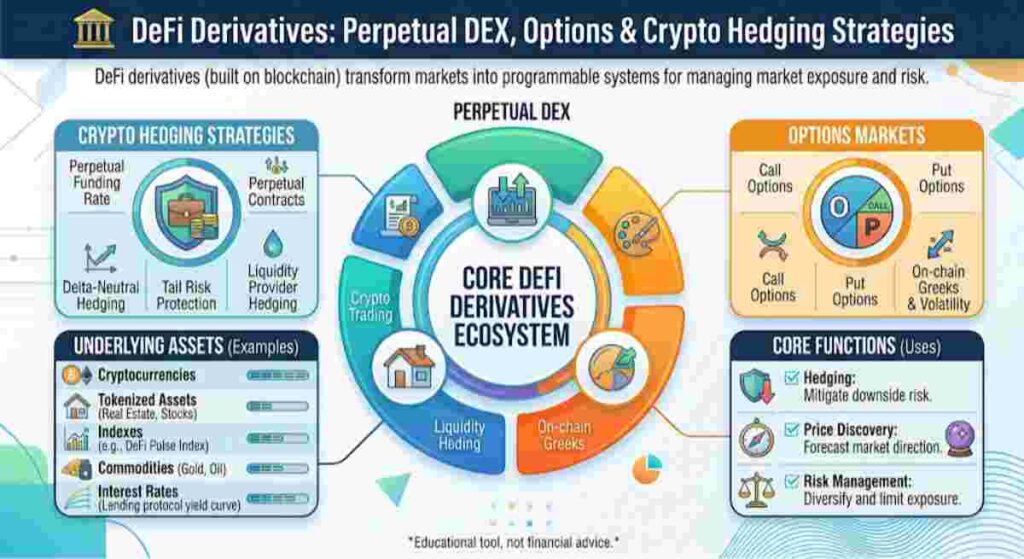
Would the CLARITY Act Regulate DeFi and Crypto Software Developers?
DeFi is one of the more difficult areas of crypto market structure because the legal treatment can depend on what a person or organization actually does rather than simply whether blockchain software is involved.
The CLARITY Act contains provisions addressing decentralized finance and activities involving digital commodities, but readers should distinguish between using open-source or self-custody software and operating a regulated financial intermediary.
Why the distinction matters
What changed in the regulatory environment during 2026?
The SEC has also taken steps affecting software and decentralized technologies. In March 2026, the CFTC issued a no-action position concerning certain self-custodial crypto-asset wallet software providers, illustrating why software, custody and financial-intermediary questions should not be treated as identical. (CFTC)
The practical lesson is simple: “DeFi” is not one legal category. A protocol developer, validator, wallet provider, exchange, liquidity provider and custodian can present different regulatory questions.
Need deeper crypto compliance analysis?
We keep this pillar focused on what the CLARITY Act means. Detailed enterprise compliance questions belong in the dedicated compliance resource.
Explore Crypto Compliance →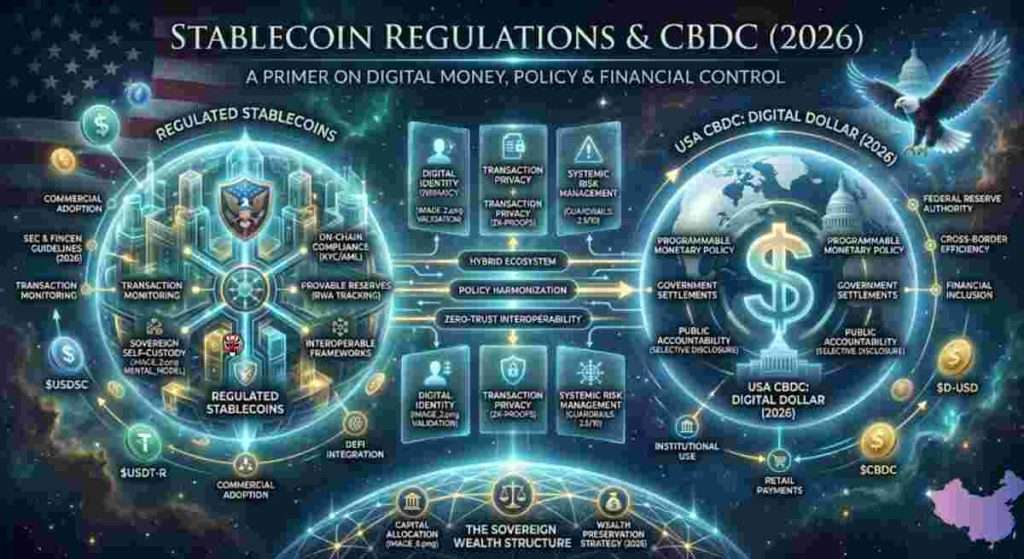
How Does the CLARITY Act Relate to Stablecoins?
Stablecoins sit at an important intersection of U.S. crypto regulation, but they should not be treated as interchangeable with the digital-commodity framework proposed by the CLARITY Act.
The House committee materials describe digital commodities in a way that excludes stablecoins. At the same time, the United States has developed a separate federal framework for payment stablecoins through the GENIUS Act. (Congress.gov)Why this distinction matters
Looking for the stablecoin framework?
We intentionally avoid duplicating the stablecoin regulation article here. Use the dedicated resource for issuer requirements, payment stablecoins and the broader U.S. stablecoin framework. Explore Stablecoin Regulations →
What Would the CLARITY Act Mean for Institutional Crypto?
Institutions care about the CLARITY Act for a broader reason than simply knowing which agency regulates Bitcoin or another asset. Regulatory certainty affects custody, trading, market access, compliance design, product development and risk management.
The proposed framework is therefore relevant to asset managers, banks, trading firms, custodians, exchanges, fintech companies and other institutions building digital-asset infrastructure.
Where institutional impact could appear
Why the story is bigger than the bill
The institutional market is already developing while Congress debates legislation. The SEC issued temporary conditional relief for certain distributed-ledger trading venues in September 2026, and the agency has separately proposed crypto custody rules for investment advisers and funds. (SEC)
This creates an important distinction: institutional crypto regulation is progressing even without the CLARITY Act becoming law. The bill remains important because legislation could establish a more durable statutory framework, but institutions must also monitor the rules and interpretations being developed under existing authority.
Need institutional custody analysis?
Custody deserves its own specialist treatment because institutional custody involves operational, regulatory and security considerations beyond the CLARITY Act itself.
Explore Institutional Crypto Custody →What Is Happening to U.S. Crypto Regulation While CLARITY Is Stalled?
The most important point for readers in late 2026 is that the U.S. crypto regulatory process has not stopped because the CLARITY Act stalled in the Senate.
The SEC and CFTC continue to use their existing statutory authorities to develop rules, interpretations and regulatory pathways for digital assets and crypto markets.
Why this matters for investors and businesses
Readers should therefore avoid a simple conclusion such as “CLARITY failed, so nothing changed.” The reality is more complicated. Congressional legislation, agency interpretation, proposed rules, final rules and enforcement authority are separate parts of the U.S. regulatory system.
Want the broader U.S. regulatory picture?
The CLARITY Act is one component of the U.S. market-structure story. Use the main U.S. crypto pillar for the broader ecosystem and the compliance hub for operational requirements.
Return to Crypto in USA →Who Should Pay Attention to the CLARITY Act?
The CLARITY Act is not only relevant to professional traders. Its potential consequences extend across the U.S. digital-asset ecosystem, although the practical impact depends on the person’s role and activity.
What Happens Next for the CLARITY Act?
The next phase is uncertain. The Senate’s failure to advance the legislation does not itself determine whether a revised market-structure bill could return in a future legislative process.
The practical approach is to monitor three parallel tracks: Congressional legislation, SEC/CFTC rulemaking and the development of the underlying digital-asset market.What should businesses do now?
Businesses should not wait for a future CLARITY Act outcome before establishing basic compliance controls. The appropriate approach is to map the business model against the rules currently applicable, monitor proposed regulatory changes and maintain the ability to adapt if Congress ultimately changes the statutory framework.What should individual investors do?
Individual investors should focus less on predicting the exact legislative outcome and more on using regulated platforms where appropriate, maintaining transaction records and understanding the tax and regulatory characteristics of the assets and services they use.Want the latest U.S. crypto framework?
This article follows the CLARITY Act specifically. For the wider U.S. crypto ecosystem, including regulation, taxation, adoption, stablecoins and institutional markets, return to the main country guide. Explore Crypto in USA →CLARITY Act Crypto at a Glance
The following summary separates what the CLARITY Act proposes from what is already part of the current U.S. regulatory environment.
Frequently Asked Questions About the CLARITY Act
These questions address the practical issues investors, crypto businesses, institutions, developers and researchers are most likely to encounter when evaluating the CLARITY Act and the changing U.S. digital-asset regulatory framework.
No. The CLARITY Act has not become federal law. The House passed H.R. 3633 in July 2025, but the Senate did not advance the legislation in its September 2026 procedural vote. The proposed framework therefore should not be treated as a current federal licensing regime.
Explore the broader U.S. crypto framework →The CLARITY Act, formally the Digital Asset Market Clarity Act of 2025, is proposed U.S. legislation intended to establish a federal market-structure framework for digital assets and clarify the respective roles of the SEC and CFTC.
Its central objective is to create clearer federal rules for digital-asset markets, including definitions, regulatory jurisdiction, registration of certain intermediaries, customer protections and market-conduct requirements.
The Senate failed to advance the legislation in a September 2026 procedural vote. That means the bill did not move forward at that stage; it does not mean that the underlying issue of U.S. crypto market structure has disappeared.
A revised bill could change definitions, agency jurisdiction, registration requirements or transitional provisions. This is why the article should be maintained as a living regulatory resource rather than presenting the 2025 House version as the final U.S. framework.
Partly. The proposed framework would give the CFTC a significantly larger role over qualifying digital commodities and related spot-market intermediaries. It would not eliminate SEC authority over securities or all digital-asset activities.
The SEC would continue to oversee securities and specified transactions involving digital assets. The proposed legislation is intended to establish clearer boundaries between SEC securities jurisdiction and CFTC digital-commodity jurisdiction rather than remove the SEC from crypto.
The CLARITY Act is proposed legislation. SEC rules, interpretations and enforcement authorities operate under laws already in effect. The SEC and CFTC have continued issuing crypto-related interpretations and regulatory actions even while congressional legislation remains unresolved.
The CLARITY Act is only one part of the U.S. digital-asset regulatory environment. Readers should consider congressional legislation alongside SEC and CFTC rules, interpretations, enforcement actions and other applicable federal and state requirements.
Explore Crypto in USA →It addresses decentralized-finance activities, but DeFi is not one single regulatory category. Software development, self-custody, protocol operation, financial intermediation and custody can raise different legal questions.
No. The proposed legislation does not simply prohibit individuals from controlling their own digital assets. Self-custody should nevertheless be distinguished from providing regulated custody or financial-intermediary services to customers.
Explore Institutional Crypto Custody →It could affect the regulatory environment surrounding institutional digital-asset markets, but custody has additional legal, operational and security requirements. Institutions should evaluate custody separately rather than assuming that CLARITY alone determines whether a custody arrangement is permitted.
Explore Institutional Crypto Custody →The proposed framework establishes a category of digital commodities and gives the CFTC a larger role over qualifying digital-commodity markets. However, asset classification can depend on the statutory definitions and the characteristics of the particular asset and transaction, so a simple label should not replace legal analysis.
Potentially, depending on how the asset and relevant activities satisfy the proposed statutory framework. The important question is not simply whether an asset is called cryptocurrency, but how the proposed definitions apply to its network, rights, transactions and market activity.
Stablecoins require separate analysis. The proposed digital-commodity framework does not simply place payment stablecoins into the same category as digital commodities. U.S. payment-stablecoin regulation is addressed separately through the GENIUS Act and related regulatory frameworks.
Explore Stablecoin Regulations →No. The CLARITY Act is primarily concerned with broader digital-asset market structure and regulatory jurisdiction, while the GENIUS Act establishes a federal framework for payment stablecoins. They address different parts of the U.S. digital-asset ecosystem.
Not primarily. The CLARITY Act is a market-structure proposal rather than a comprehensive crypto-tax bill. U.S. taxpayers should continue following the applicable federal tax rules and maintain accurate digital-asset transaction records.
Explore U.S. Crypto Tax & 1099-DA Resources →Yes, potentially. The House version establishes a framework for qualifying digital-commodity exchanges and intermediaries, including registration, customer protection and market-conduct requirements.
Explore Crypto Market Compliance →Yes. The proposed framework includes registration and regulatory requirements for certain digital-commodity brokers and dealers. The exact obligations would depend on the final statutory language and the business activities involved.
Potentially significant changes could affect registration, compliance, customer-asset controls, market conduct and regulatory reporting. Businesses should not wait for the bill to become law before assessing their existing obligations under current federal and state frameworks.
Explore Crypto Compliance →Businesses should comply with the rules currently applicable to their activities, maintain strong transaction and customer records, monitor SEC and CFTC developments, and avoid treating proposed legislation as though it were already enforceable law.
For investors, the potential impact is primarily indirect: clearer market structure could affect which platforms can operate, how digital assets are classified, how trading venues are regulated and what customer protections apply. It does not guarantee that any particular cryptocurrency will increase in value.
It is designed to introduce stronger market-structure, registration and customer-protection requirements, but no legislation can eliminate investment risk, fraud or market volatility. Investor protection would still depend on the final rules, enforcement and the conduct of regulated businesses.
Need the complete U.S. crypto roadmap?
The CLARITY Act is only one part of the U.S. crypto ecosystem. Continue through the specialist resources for taxation, stablecoins, compliance, custody and other areas rather than treating one law as the complete regulatory picture.
Explore the Complete Crypto in USA Guide →Continue Reading ▼
- Institutional Crypto Infrastructure: Governance & Legacy Integration
- Digital Asset Risk Management Framework: The DSARAE Institutional Model for Sovereign Resilience (2026)
- Institutional RWA Liquidity Risk: Stress Testing Tokenized Capital Under Market Pressure
- Portfolio Allocation Strategy: How to Balance Real Estate, Gold & Crypto
- Best Institutional Digital Asset Management Platforms (2026): Enterprise Asset Management & Accounting Tools Compared
🛠 Explore Tools ▼
- Crypto Accounting Software: 2026 Business Assessment & Decision Tool
- Sovereign Banking Stack Architect Readiness Calculator 2026
- Crypto Loss Response Checker: What to Do After a Crypto Loss
- Web3 Architecture Decision Engine: On-Chain vs Off-Chain
- RWA Trust Simulator 2026: Test Legal, Data & Technical Trust
- Crypto Self-Custody Security Toolkit 2026: Secure Your Crypto
- DSARAE Crypto Risk Assessment Tool: Enterprise Web3 Risk Intelligence Engine
- Crypto Research Workspace 2026
- DeFi Ecosystem Intelligence Suite 2026: Complete DeFi Research & Analysis Platform
- Quantum-Resistant Blockchains Toolkit: Free PQC Security Suite
- Token Launch Risk Simulator: Crypto Decision Intelligence OS
- Crypto Survival Score Calculator: Analyze Risk & Survival Probability in 2026
- Crypto Airdrop Scanner & History tracker: Track Airdrops and Crypto History
- Merchant Lightning Capital Simulator: Lightning Infrastructure Economics Tool (2026)
- Institutional Tokenized Asset Liquidity Tool (2026): Treasury Stress Testing & RWA Risk Analysis
- Institutional Crypto Custody Simulator: Risk Dashboard + Architecture Intelligence
- Institutional Staking Suite 2026: Institutional Risk Engine
- Crypto Profile Simulator Tool: Profile & Portfolio Asset Allocation Simulator
- Crypto Transaction Simulator Preview and Analyze Before You Sign
- Cross-Chain Decision Engine: Tool to Compare Blockchain Networks for Web3 Projects
- Token Risk vs Reward Model: Crypto Decision Tool 2026
- Crypto Portfolio Dashboard Risk Assessment 2026: Risk Intelligence Tools
- Crypto Risk Analysis Suite: Scam Checker, APY Calculator & Rug Pull Detector
- Crypto Wallet Approvals: Revoke Token Permissions Before Hidden Risks Drain Your Funds
- Wallet Time Machine: See Any Wallet’s Hidden History Before You Transact
- Sovereign Asset Dashboard 2026: Crypto Portfolio Health + Security Audit.
- Enterprise Crypto Custody Platform: Institutional Wallet Security Tool
- Stablecoin Payment system 2026: Safe Cross-Border Transfers, APIs & Real-Time Settlement
- Crypto Trading System: Crypto Decision Intelligence System
- MPC vs Multi Sig Wallets (2026): Institutional Crypto Custody Architecture Comparison System
- Financial Failure Fixer: Web3 Startup Cash Flow & Risk Optimization Tool (2026)
- Startup Failure Simulator (2026): Why Web3 Projects Fail & How to Fix Them
- Blockchain Oracle Dashboard: Explore & Compare Oracle Networks
- Blockchain Oracles Tool: Chainlink vs Pyth vs Band (2026)
- Generational Wealth Planning 2026: Crypto Strategy for Digital Legacy
- Asset Allocation Calculator: Balance Real Estate, Gold & Crypt
- Crypto Security Checklist (2026): Self-Custody, Wallet Safety & Risk Audit Tool
- AI Crypto Portfolio Tool: Track, Analyze & Optimize Your Portfolio in 2026
- Crypto Bridge Risk Checker: Cross-Chain Security Risks & Safety (2026)
- Blockchain Hackathon Tool : How to Win Without Coding + WIN Score (2026)
- Modular Blockchain Architecture Simulator 2026: Layer 2 & Rollup Designs
- Is Binance Safe: Fee Calculator & Portfolio Risk Analyzer (2026)
- Crypto Tax Estimator: Calculate Crypto Taxes & Compliance (2026)
- Digital Crypto Asset Risk Analysis Tool Model 2026 (DSARAE)
- Digital Sovereignty Score Calculator: Assess Your Crypto Control
- Gold Silver Asset Risk 2026: Asset Risk Assessment Tool
- Crypto Whitepaper Simplifier: 5 Simple Ways to Master Ethereum, Uniswap & DeFi Protocols
- Personalize Portfolio Cryptocurrency Analysis Tool 2026
- Crypto Scam Checker Tool: Check Crypto Websites, Wallets & Tokens
- Web3 Investment Calculator 2026Compare DeFi, Blockchain & Growth Channels