
Search by title, topic or phrase
Use our Crypto Search Engine 🔍 to find the topics and keywords you're looking for.
What happens when liquidity fails under stress?
Institutional RWA Liquidity Risk is becoming one of the most important challenges facing tokenized financial markets. During stable market conditions, tokenized assets often appear liquid, accessible, and operationally efficient. However, liquidity conditions can change rapidly when redemption demand rises, collateral values decline, settlement systems slow, or cross-chain infrastructure becomes fragmented. Understanding how tokenized capital behaves under stress is becoming a critical requirement for institutional investors, treasury teams, and digital asset allocators.
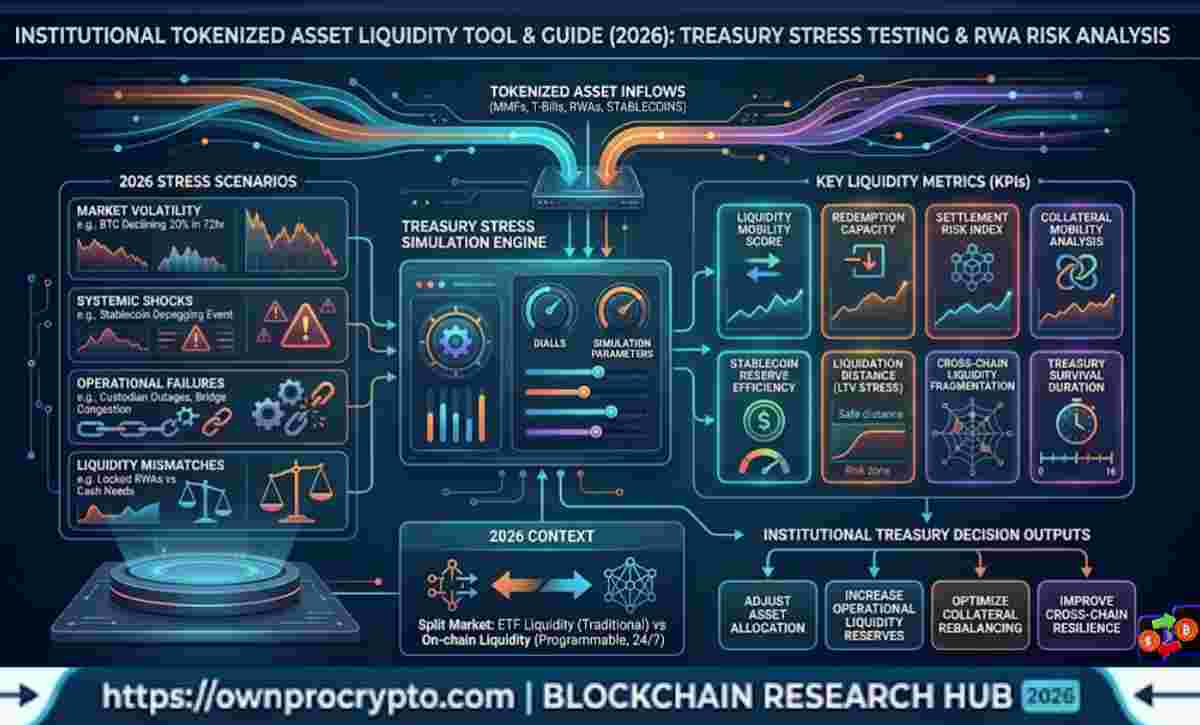
Table of Contents
ToggleInstitutional RWA Liquidity Risk is becoming a defining challenge for tokenized financial markets.
During normal market conditions, tokenized assets often appear liquid, accessible, and operationally efficient. However, market stress reveals a different reality. Redemption requests surge, settlement systems slow, liquidity pools fragment across multiple networks, collateral values decline, and operational bottlenecks emerge throughout the infrastructure stack.
For institutional investors, treasury teams, digital asset allocators, and risk committees, understanding liquidity behavior during periods of market pressure has become just as important as evaluating yield opportunities.
This framework explores how tokenized capital performs under stress and examines the structural vulnerabilities that emerge when liquidity conditions deteriorate across real-world asset ecosystems.
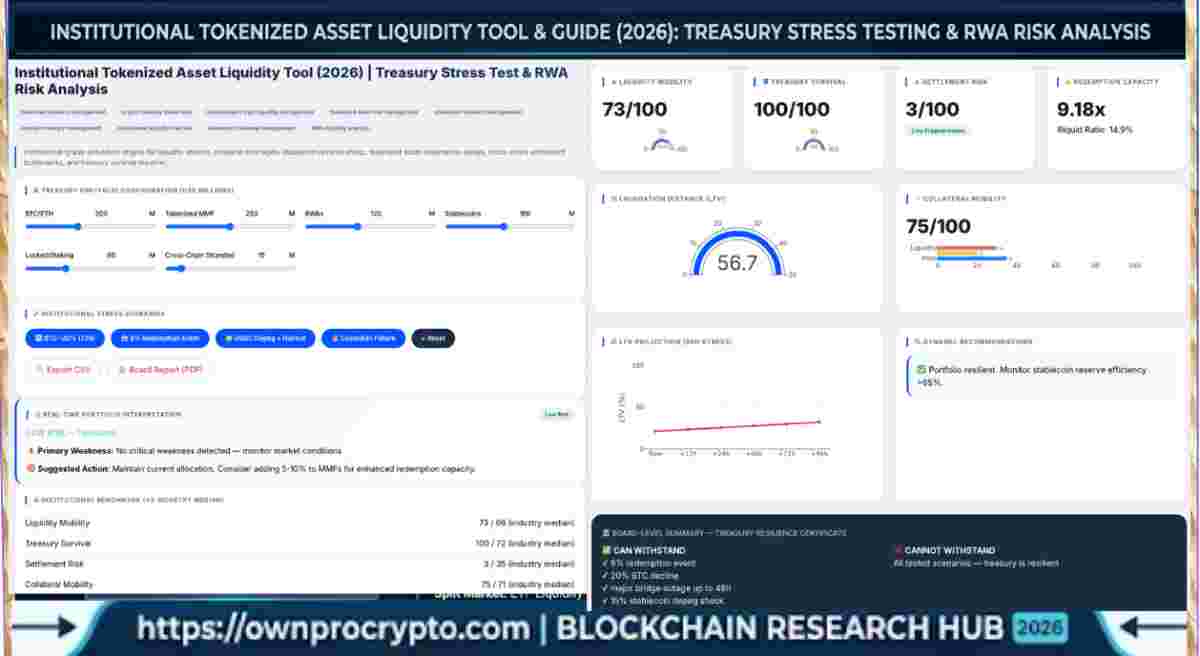
Liquidity is often assumed to exist until it is needed most.
During favorable market conditions, tokenized assets can provide efficient settlement, broader accessibility, and improved capital mobility. However, when redemption demand accelerates and market confidence declines, liquidity conditions can change rapidly.
The primary concern is not whether assets exist.
The concern is whether institutions can access, transfer, redeem, or reposition those assets under stress.
This is the foundation of Institutional RWA Liquidity Risk.
Many institutional portfolios now contain:
During stable periods, these assets may appear highly liquid.
Under stress, liquidity becomes dependent on infrastructure performance, redemption mechanisms, settlement speed, compliance workflows, and capital mobility across multiple networks.
This creates hidden liquidity vulnerabilities that are often underestimated.
Institutional RWA Liquidity Risk refers to the possibility that tokenized capital becomes difficult to access, transfer, redeem, settle, or liquidate during periods of market disruption.
Unlike traditional asset risk, liquidity risk focuses on operational accessibility rather than asset valuation.
An asset may retain value while simultaneously becoming difficult to mobilize.
This distinction becomes increasingly important as institutions expand exposure to tokenized financial infrastructure.
| Risk Category | Description | Potential Impact |
|---|---|---|
| Redemption Risk | High withdrawal demand from tokenized funds | Liquidity shortages |
| Settlement Risk | Delays across settlement networks | Capital lockups |
| Custody Risk | Access restrictions during operational failures | Asset inaccessibility |
| Stablecoin Risk | Depeg or reserve concerns | Collateral impairment |
| Cross-Chain Risk | Fragmented liquidity across networks | Capital isolation |
| Market Risk | Declining collateral values | Forced liquidations |
| Compliance Risk | Regulatory review delays | Redemption bottlenecks |
Each risk category affects institutional liquidity differently, but all contribute to reduced capital mobility during market stress.
Liquidity rarely fails because of a single event.
Instead, liquidity stress typically emerges from multiple pressures occurring simultaneously.
For example:
Individually, each challenge may be manageable.
Combined, they can create a systemic liquidity event.

Tokenized asset stress testing evaluates how institutional portfolios behave when market conditions deteriorate.
The objective is not to predict future crises.
The objective is to identify vulnerabilities before stress events occur.
| Stress Category | Scenario |
| Redemption Shock | Sudden institutional withdrawals |
| Stablecoin Depeg | Loss of reserve confidence |
| Market Crash | Sharp collateral declines |
| Bridge Failure | Cross-chain transfer disruptions |
| Custody Outage | Asset access restrictions |
| Settlement Delays | Slower capital movement |
| Compliance Bottlenecks | Regulatory review interruptions |
These scenarios help institutions evaluate resilience before real-world events emerge.

One of the fastest-growing risks in digital finance is cross-chain liquidity fragmentation.
Assets may exist across multiple networks while liquidity resides elsewhere.
As a result:
| Challenge | Operational Effect |
| Bridge Congestion | Delayed capital movement |
| Liquidity Silos | Isolated liquidity pools |
| Network Downtime | Settlement interruptions |
| Routing Complexity | Higher operational risk |
| Custody Variability | Inconsistent access procedures |
Cross-chain liquidity fragmentation often becomes visible only during periods of stress.
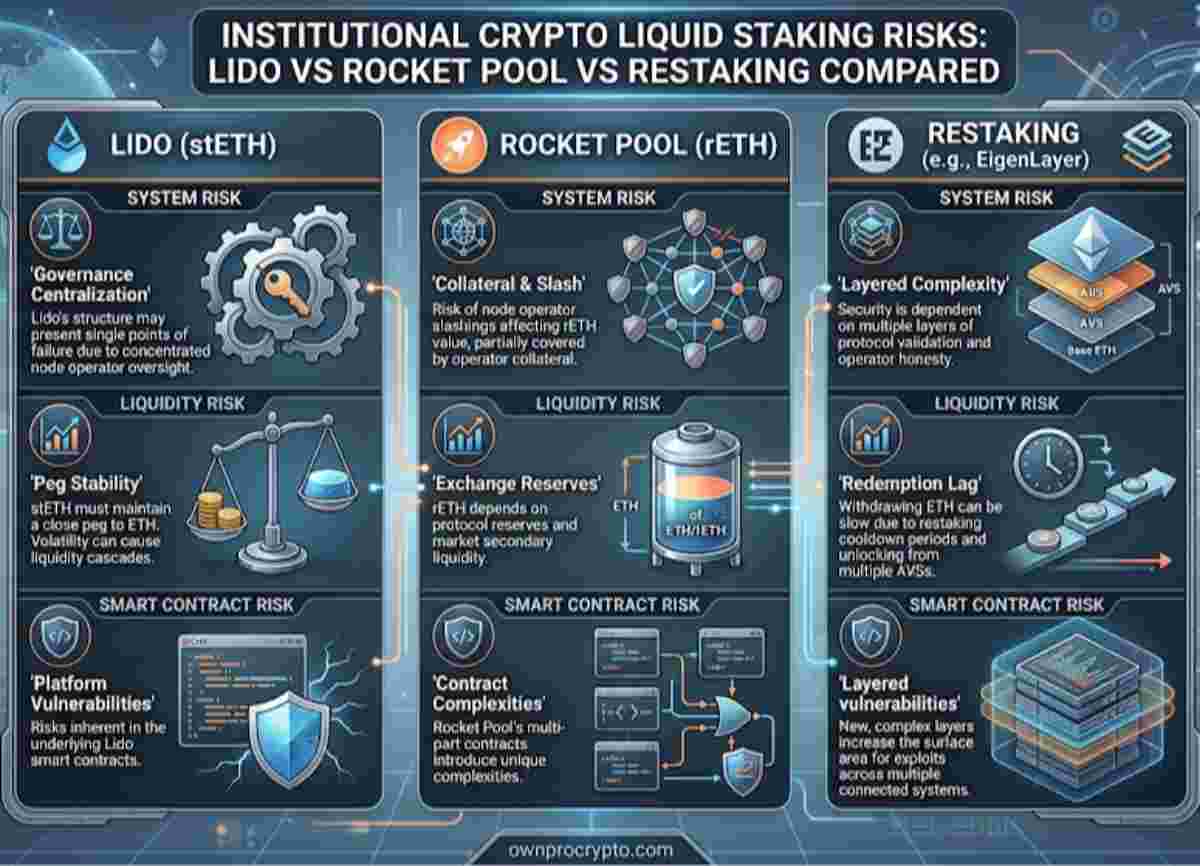
Institutional crypto liquidity management is increasingly focused on resilience rather than optimization.
The key question is no longer:
“How much yield can a portfolio generate?”
The more important question is:
“Can capital remain accessible when markets become unstable?”
Liquidity resilience determines whether institutions can continue operating effectively during disruption.
Not all tokenized assets behave equally during market stress.
| Liquidity Tier | Asset Class |
| High Liquidity | Stablecoins |
| High Liquidity | Tokenized Treasury Bills |
| Medium Liquidity | Money Market Funds |
| Medium Liquidity | BTC Collateral |
| Medium Liquidity | ETH Collateral |
| Low Liquidity | Tokenized Credit Products |
| Low Liquidity | Tokenized Real Estate |
| Very Low Liquidity | Private Market RWAs |
This framework helps institutions identify which assets may become vulnerable during liquidity contractions.
Institutional infrastructure determines:
This defines modern institutional crypto liquidity management.
| Old Model | New Model |
|---|---|
| Asset-centric allocation | Infrastructure-centric liquidity systems |
| Yield maximization focus | Liquidity resilience focus |
| Static portfolios | Dynamic stress-aware portfolios |
| Simple custody | Multi-layer liquidity architecture |
Liquidity readiness is determined by:
| Factor | Weight |
|---|---|
| Asset quality | High |
| Settlement efficiency | High |
| Custody integration | Medium |
| Cross-chain mobility | High |
| Compliance speed | Medium |
Redemption events remain one of the most important drivers of liquidity instability.
When investors seek liquidity simultaneously, institutions may face:
| Stage | Market Behavior |
| Stage 1 | Increased withdrawal activity |
| Stage 2 | Liquidity reserves decline |
| Stage 3 | Redemption delays emerge |
| Stage 4 | Asset liquidation begins |
| Stage 5 | Market confidence weakens |
| Stage 6 | Liquidity freeze risk increases |
This progression highlights how quickly liquidity conditions can deteriorate.
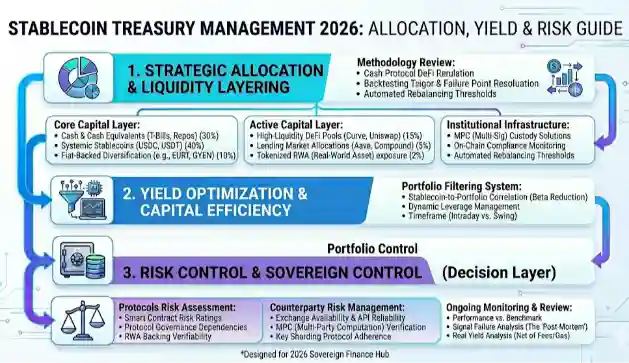
Tokenized treasury products are often viewed as highly stable.
However, stability does not eliminate liquidity risk.
| Benefit | Risk |
| Capital Preservation | Redemption timing risk |
| Yield Generation | Liquidity mismatch |
| Institutional Adoption | Settlement dependency |
| Operational Efficiency | Custody concentration |
| Regulatory Alignment | Compliance bottlenecks |
Understanding tokenized treasury risk requires evaluating both asset quality and liquidity accessibility.
The following framework evaluates common liquidity stress events.
| Scenario | Primary Risk | Expected Outcome |
| Market Crash | Collateral decline | Forced liquidations |
| Stablecoin Depeg | Reserve instability | Liquidity reduction |
| Bridge Failure | Capital isolation | Fragmentation |
| Custody Outage | Access restrictions | Asset immobilization |
| Redemption Shock | Fund outflows | Liquidity pressure |
| Regulatory Event | Compliance delays | Settlement disruption |
These scenarios represent some of the most important institutional liquidity risks facing tokenized markets.
Institutions increasingly operate across:
While this improves flexibility, it can also increase liquidity complexity during market stress.
Effective liquidity resilience requires:
The objective is not maximum efficiency.
The objective is maintaining operational continuity under pressure.
Consider a hypothetical institutional treasury managing tokenized Treasury assets, stablecoin reserves, and cross-chain collateral positions.
During normal conditions, liquidity appears abundant.
Following a market-wide risk event:
Although the portfolio remains solvent, capital mobility deteriorates significantly.
The primary challenge is not asset value.
The primary challenge is accessing liquidity quickly enough to meet operational obligations.
This illustrates why Institutional RWA Liquidity Risk has become a strategic concern for treasury teams.
| Legacy View | Modern Institutional View |
| Asset value determines safety | Liquidity accessibility determines resilience |
| Yield optimization first | Liquidity resilience first |
| Single-network exposure | Multi-network exposure |
| Static risk models | Continuous stress testing |
| Asset ownership focus | Capital mobility focus |
The institutional market is increasingly shifting toward resilience-based liquidity frameworks.
The greatest misconception in tokenized finance is that liquidity is permanent.
Liquidity is conditional.
It depends on settlement systems, redemption mechanisms, custodial infrastructure, compliance workflows, collateral quality, and market confidence.
When conditions deteriorate, the true resilience of tokenized capital becomes visible.
Institutional RWA Liquidity Risk is therefore not simply a market risk problem.
It is an infrastructure, settlement, custody, and capital mobility challenge that determines whether institutions can continue operating effectively under stress.
The future of institutional finance will not be defined solely by who owns the best assets.
It will be defined by who can maintain liquidity when market conditions become difficult.
As tokenized markets mature, tokenized asset stress testing, institutional crypto liquidity management, cross-chain liquidity fragmentation analysis, real world asset liquidity risk assessment, and tokenized treasury risk evaluation will become foundational disciplines for institutional capital allocation.
The institutions that survive future market disruptions will be those that understand not only how liquidity is created—but also how liquidity fails.
Get smarter responses, upload files and images, and more.
© 2026 OwnProCrypto.com · Data references: BlackRock BUIDL · JPMorgan Kinexys
What is Institutional RWA Liquidity Risk?
Institutional RWA Liquidity Risk refers to the possibility that tokenized real-world assets become difficult to redeem, transfer, settle, or liquidate during periods of market stress. The risk focuses on capital accessibility and liquidity availability rather than asset valuation alone.
What is an institutional crypto liquidity stress model?
An institutional crypto liquidity stress model is a risk assessment framework used to evaluate how digital asset portfolios behave during extreme market conditions. It measures liquidity resilience under scenarios such as redemption shocks, stablecoin depegs, settlement disruptions, and collateral liquidations.
How does tokenized asset liquidity differ from traditional financial liquidity?
Traditional financial liquidity primarily depends on market depth and buyer demand. Tokenized asset liquidity also depends on blockchain settlement efficiency, custody access, compliance workflows, and cross-chain asset mobility, making infrastructure a critical factor in liquidity outcomes.
Why is liquidity becoming a strategic issue for institutions?
As institutions expand into tokenized markets, liquidity increasingly depends on multiple infrastructure layers operating simultaneously. During periods of stress, operational constraints can prevent institutions from accessing capital even when assets remain valuable.
What is an RWA liquidity stress model?
An RWA liquidity stress model evaluates how tokenized real-world assets perform during adverse market conditions. The framework analyzes redemption pressure, settlement delays, liquidity shortages, collateral impairment, and capital mobility restrictions.
Why are real-world assets often less liquid than native crypto assets?
Many real-world assets rely on off-chain legal structures, valuation processes, and redemption mechanisms. These dependencies can introduce delays that do not typically exist with native blockchain assets.
What are the primary risks associated with tokenized RWAs?
The most common risks include:
Why is tokenized asset stress testing important?
Tokenized asset stress testing helps institutions identify liquidity vulnerabilities before market disruptions occur. It enables treasury teams and risk managers to evaluate portfolio resilience under realistic stress scenarios.
What is cross-chain liquidity fragmentation?
Cross-chain liquidity fragmentation occurs when assets and liquidity are distributed across multiple blockchain networks without seamless interoperability. This can result in isolated liquidity pools and reduced capital mobility.
Why is cross-chain liquidity fragmentation considered a systemic risk?
Fragmented liquidity can prevent institutions from efficiently moving capital between networks during periods of market stress. This increases settlement risk, redemption delays, and potential liquidity shortages.
How do blockchain bridges contribute to liquidity risk?
Blockchain bridges facilitate asset movement between networks but introduce additional infrastructure dependencies. Bridge outages, congestion, or security failures can isolate liquidity and restrict access to capital.
What happens when liquidity becomes fragmented across multiple chains?
Liquidity fragmentation can lead to inefficient capital allocation, inconsistent settlement timing, higher transaction costs, and reduced operational flexibility during market volatility.
What is institutional crypto liquidity management?
Institutional crypto liquidity management is the process of ensuring sufficient capital availability across custody systems, settlement networks, stablecoin reserves, and collateral positions to meet operational and redemption requirements.
How do institutions manage crypto liquidity risk?
Institutions commonly use:
Why is liquidity management critical for institutional crypto portfolios?
Digital asset markets can experience rapid shifts in liquidity conditions. Effective liquidity management helps institutions maintain operational continuity, meet obligations, and reduce exposure to forced liquidations.
What are the most common liquidity stress scenarios in tokenized markets?
Common scenarios include:
What happens during a liquidity shock in crypto markets?
A liquidity shock can cause wider bid-ask spreads, reduced market depth, delayed settlements, and accelerated liquidation activity. These conditions often reduce capital accessibility across the broader ecosystem.
How does a stablecoin depeg impact institutional liquidity?
A stablecoin depeg can reduce collateral quality, trigger margin calls, impair settlement mechanisms, and weaken market confidence, resulting in increased liquidity stress.
What is Liquidity Coverage Ratio (LCR) in digital asset markets?
Liquidity Coverage Ratio (LCR) measures whether an institution holds enough highly liquid assets to meet short-term redemption demands and operational obligations during stressed market conditions.
What is a Fragmentation Risk Score (FRS)?
Fragmentation Risk Score measures how dispersed liquidity is across custody providers, settlement systems, and blockchain networks. Higher scores generally indicate greater liquidity inefficiency and capital mobility risk.
Why is Settlement Delay Index (SDI) important?
Settlement Delay Index quantifies the time required to move assets between systems and counterparties. Elevated settlement delays can increase liquidity mismatches and operational risk during volatile periods.
What is institutional liquidity architecture?
Institutional liquidity architecture is the integrated framework connecting custody infrastructure, compliance systems, settlement networks, collateral management, and cross-chain liquidity layers to support capital mobility.
Why is infrastructure becoming more important than asset ownership?
Asset ownership alone does not guarantee liquidity access. Infrastructure determines whether assets can be transferred, redeemed, settled, or liquidated efficiently during periods of market stress.
What role does cross-chain infrastructure play in institutional liquidity systems?
Cross-chain infrastructure enables capital movement across blockchain networks. While it improves flexibility and reach, it also introduces interoperability, settlement, and liquidity fragmentation risks.
What is the biggest shift occurring in institutional digital asset strategy?
Institutions are increasingly shifting from yield-focused strategies toward liquidity resilience frameworks. Capital accessibility during stress events is becoming a higher priority than return optimization alone.
How will tokenized assets evolve within institutional finance?
Tokenized assets are expected to integrate into more unified liquidity infrastructures that improve settlement efficiency, reduce fragmentation, and strengthen institutional capital mobility.
What is the biggest long-term risk facing institutional tokenized markets?
The most significant long-term risk is liquidity failure during infrastructure stress events. Market participants may discover that assets remain valuable while becoming operationally inaccessible due to settlement, custody, compliance, or cross-chain disruptions.
If you only explore a few paths from here, these are the most useful entry points: