
Search by title, topic or phrase
Use our Crypto Search Engine 🔍 to find the topics and keywords you're looking for.

Table of Contents
ToggleMultisig Wallet Security is one of the most effective ways to reduce single-key failure in crypto custody, but simply creating a multisig wallet does not make funds automatically secure. A strong setup depends on the signature threshold, independent signer keys, hardware security, geographic separation, transaction verification, recovery planning, and disciplined operational procedures.
In 2026, multisig wallets are widely used for personal cold storage, DAO treasuries, Web3 organizations, protocols, businesses, and institutional digital-asset management. The core principle is straightforward: instead of allowing one private key to authorize a transaction, a multisig policy requires multiple independent approvals.
This guide explains the most important multisig wallet security best practices, including 2-of-3 versus 3-of-5 configurations, hardware wallets, signer separation, backups, transaction verification, recovery, common attacks, and an operational security checklist.
A multisignature wallet distributes transaction authority across multiple signing keys. Rather than relying on one private key, the wallet requires a predefined number of authorized signatures before a transaction can execute.
A configuration is commonly expressed as M-of-N:
For example, a 2-of-3 wallet has three authorized signers, but any two must approve a transaction.
                 MULTISIG WALLET

              ┌─────────────────┐
              │ Transaction     │
              │ Request         │
              └────────┬────────┘
                       │
          ┌────────────┼────────────┐
          ▼            ▼            ▼
      Signer A      Signer B      Signer C
       Key #1        Key #2        Key #3
          │            │            │
          └──────┬─────┴──────┬─────┘
                 │            │
                 ▼            ▼
              Signature    Signature
                 \            /
                  \          /
                   ▼        ▼
                  2 OF 3
                     │
                     ▼
                TRANSACTION
EXECUTES| Configuration | Total Signers | Required Signatures | Main Security Characteristic |
|---|---|---|---|
| 1-of-2 | 2 | 1 | Convenience with limited redundancy |
| 2-of-3 | 3 | 2 | Strong balance between security and recoverability |
| 2-of-4 | 4 | 2 | Higher redundancy but weaker threshold relative to total signers |
| 3-of-5 | 5 | 3 | Strong organizational and treasury configuration |
| 4-of-7 | 7 | 4 | Designed for larger groups and higher-value governance |
The main security advantage of multisig is that compromising one signer does not necessarily give an attacker enough authority to spend the funds.
For a 2-of-3 wallet, an attacker who obtains one private key still needs another authorized signer before the transaction can execute.
| Event | Single-Signature Wallet | 2-of-3 Multisig |
|---|---|---|
| One key compromised | Potentially catastrophic | Funds can remain protected |
| One device lost | May cause total access failure | Two remaining signers can potentially authorize recovery |
| One signer unavailable | Not applicable | Transaction can proceed if threshold remains available |
| Insider attack | One compromised authority may be enough | Additional approvals are required |
| Operational complexity | Lower | Higher |
However, multisig changes the risk model rather than eliminating risk. If enough signer keys are compromised, attackers can still reach the required threshold.
A common mistake is assuming that three keys automatically provide three independent layers of security. They do not if all three keys are stored on the same computer, protected by the same password, backed up in the same location, or controlled by the same person.
The goal is not simply to create multiple keys. The goal is to create independent failure domains.
| Weak Setup | Stronger Setup |
|---|---|
| Three keys on one computer | Independent signing devices |
| All backups in one location | Separated secure backups |
| One person controls every signer | Independent authorized signers |
| Same password everywhere | Separate authentication controls |
| All devices connected to the same environment | Separated operational environments |
| Blind approval from a web interface | Independent transaction verification |
Security guidance for multisig commonly emphasizes distributing keys across different locations and using hardware signing devices rather than treating multisig as a substitute for basic key security.
Choosing the correct threshold is one of the most important multisig wallet security decisions. A higher threshold can increase resistance to a single compromised signer, but requiring too many signatures can create availability and recovery problems.
A 2-of-3 multisig wallet has three authorized signers and requires any two to approve a transaction.
It is popular because it provides redundancy without requiring a large signing group.
| 2-of-3 Characteristic | Security Implication |
|---|---|
| 3 total keys | Provides redundancy |
| 2 required signatures | One compromised key is not enough by itself |
| 1 signer unavailable | Two others can still approve |
| 2 keys compromised | Attacker may control the wallet |
| Operational complexity | Relatively manageable |
| Common use | Personal custody, small teams, family or business reserves |
A 3-of-5 multisig configuration uses five independent signers and requires three approvals.
This can be more appropriate for organizations where authority should not depend on one or two individuals.
| 3-of-5 Characteristic | Security Implication |
|---|---|
| 5 total keys | Greater signer redundancy |
| 3 required signatures | More compromised keys are required to reach the threshold |
| 1 signer unavailable | Normal operation can continue |
| 2 signers unavailable | Normal operation can still continue |
| 3 keys compromised | Attacker may control the wallet |
| Common use | DAOs, organizations, protocols and larger treasuries |
Neither configuration is automatically “more secure” in every situation.
A 3-of-5 configuration requires more compromised signers to reach its threshold, but it also introduces more keys, people, devices, backups, and operational processes that must be managed correctly.
| Factor | 2-of-3 | 3-of-5 |
|---|---|---|
| Number of signers | 3 | 5 |
| Required approvals | 2 | 3 |
| Redundancy | Good | Higher |
| Coordination | Easier | More complex |
| Signer compromise required | 2 | 3 |
| Suitable for | Individuals and smaller teams | Organizations and larger treasuries |
Choose the threshold based on the value being protected, number of trusted operators, availability requirements, recovery design, geographic distribution, and organizational governance.
| Scenario | Potential Configuration | Reason |
|---|---|---|
| Personal long-term custody | 2-of-3 | Balances redundancy and operational simplicity |
| Small business treasury | 2-of-3 | Allows multiple responsible parties without excessive complexity |
| DAO treasury | 3-of-5 | Reduces dependence on a small number of individuals |
| Large protocol treasury | 3-of-5 or higher | Can provide stronger governance separation |
| High-frequency operational wallet | Policy-dependent | Availability and transaction speed may matter more |
The right configuration is therefore not the one with the largest number of signers. It is the configuration that remains secure and usable when something goes wrong.
Signer independence is one of the most important principles in multisig security. If several signer keys can be compromised through the same attack, the apparent redundancy may be misleading.
For high-value multisig wallets, each signer should ideally have an independently secured signing environment. Hardware wallets can reduce exposure of private keys to internet-connected computers, although they do not eliminate phishing, malicious transactions, physical threats, or human error.
Hardware-wallet security guidance emphasizes that the recovery phrase remains extremely sensitive and should never be exposed digitally or shared with another person.
| Signer Component | Recommended Practice |
|---|---|
| Private Key | Keep under the direct control of the authorized signer |
| Signing Device | Use a reputable hardware signer for high-value custody |
| Recovery Backup | Store securely and separately from other signer backups |
| Computer | Use a trusted, updated environment dedicated to signing where practical |
| Authentication | Use unique credentials and strong account protection |
| Physical Location | Separate critical signers and backups where appropriate |
If every signer is stored in the same office, home, safe, or data center, a single physical event can potentially defeat multiple security layers.
Geographic separation can reduce correlated physical risks such as fire, theft, flood, or unauthorized access.
       LOCATION A             LOCATION B             LOCATION C
      ┌──────────┐           ┌──────────┐           ┌──────────┐
      │ Signer A │           │ Signer B │           │ Signer C │
      │ Hardware │           │ Hardware │           │ Hardware │
      └────┬─────┘           └────┬─────┘           └────┬─────┘
           │                      │                      │
           └──────────────┬───────┴──────────────┬───────┘
                          ▼                      ▼
                       2-OF-3 AUTHORIZATION
                               │
                               ▼
                         TRANSACTION
A multisig wallet can lose much of its resilience if all signer recovery materials are stored together.
For example, placing three signer backups inside the same physical safe creates a single physical failure point. A better design separates the backups according to the recovery model and threat environment.
| Backup Design | Risk Profile |
|---|---|
| All seeds in one location | High correlated physical risk |
| Each seed stored separately | Better compartmentalization |
| Digital photos of seeds | High digital exposure risk |
| Encrypted cloud seed storage | Introduces additional online attack risk |
| Secure offline physical backups | Generally stronger for long-term key recovery |
The strongest multisig architecture tries to prevent one incident from compromising enough signers to cross the threshold.
| Failure Domain | Example Separation |
|---|---|
| Device | Separate hardware signing devices |
| Location | Different physical locations |
| Operator | Independent authorized people |
| Network | Separate trusted computing environments |
| Backup | Independent recovery storage |
| Credentials | Separate authentication and access controls |
The objective is simple: one compromise should not automatically become a threshold compromise.
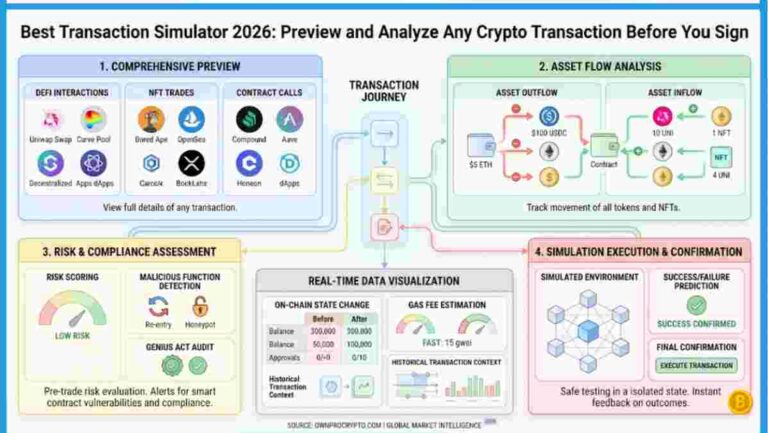
A secure multisig configuration can still fail if authorized signers approve a malicious transaction. One of the biggest multisig wallet security mistakes is treating a transaction request as safe simply because it came from a familiar interface.
Every signer should independently verify what the transaction actually does before approving it.
Never rely only on a shortened address displayed in an application. Verify the complete destination address using a trusted source and, where possible, confirm it directly on the signing device.
| Verification Step | What to Check |
|---|---|
| Recipient | Confirm the complete destination address |
| Network | Confirm the intended blockchain network |
| Asset | Confirm the correct token or native asset |
| Amount | Verify the exact amount |
| Contract | Check the contract address when interacting with smart contracts |
| Function | Understand the action being authorized |
| Permissions | Check whether the transaction grants or changes authority |
A signer should understand the transaction before approving it. Blind signing is particularly dangerous when a transaction interacts with a smart contract and the signing interface does not clearly explain the requested action.
For high-value transactions, use independent transaction simulation, block explorers, trusted internal procedures, or other verification tools before collecting signatures.
REQUEST
   │
   ▼
VERIFY RECIPIENT
   │
   ▼
VERIFY ASSET + AMOUNT
   │
   ▼
VERIFY CONTRACT / FUNCTION
   │
   ▼
SIMULATE WHEN APPROPRIATE
   │
   ▼
INDEPENDENT SIGNER REVIEW
   │
   ▼
REQUIRED THRESHOLD
   │
   ▼
EXECUTE
For large transfers, confirm critical transaction details through a communication channel that is independent of the transaction interface.
For example, an organization can require a transaction initiator to publish the destination, amount, purpose, and transaction identifier in an internal approval system before signers review the blockchain transaction.
| Weak Process | Stronger Process |
|---|---|
| Signer receives a link and signs immediately | Signer independently verifies the request |
| One person explains the transaction verbally | Transaction details are documented |
| Address copied from a chat message | Address verified against an approved record |
| Large transfer approved without simulation | High-value transactions receive enhanced review |
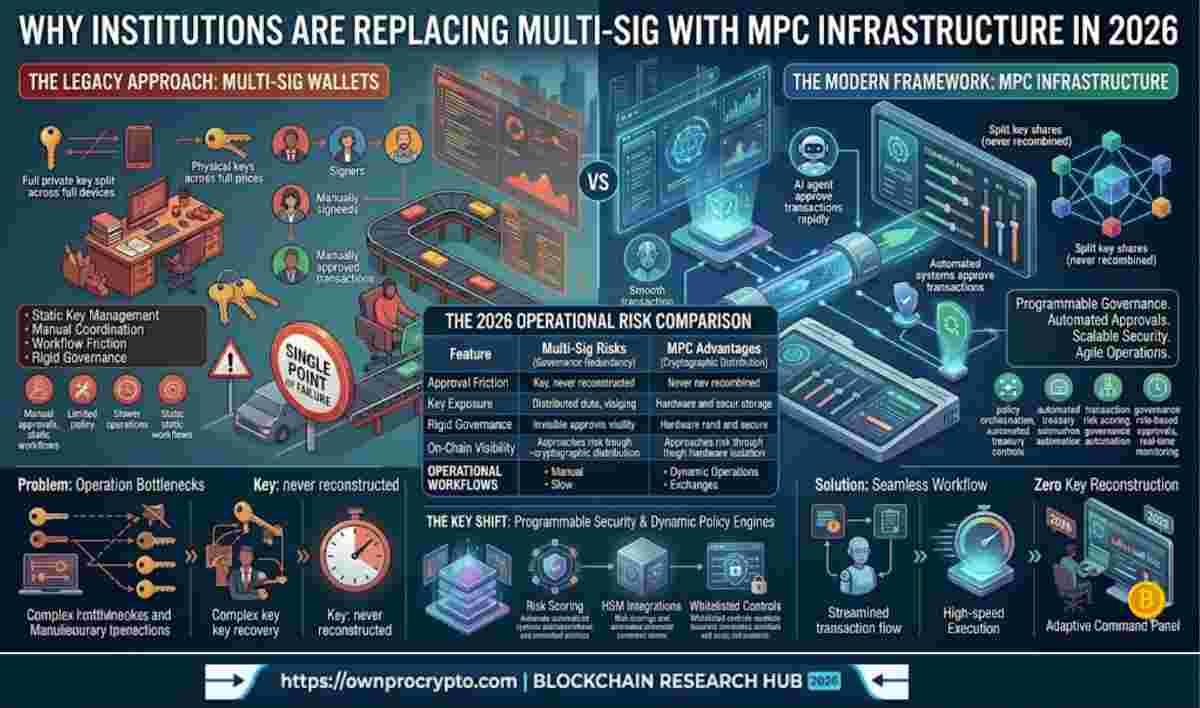
Multisig changes the authorization model, but it does not eliminate social engineering. Attackers may attempt to compromise multiple signers individually, trick signers into approving malicious transactions, or compromise the software environment used to manage the wallet.
| Attack | How It Works | Primary Defense |
|---|---|---|
| Phishing | Fake wallet, signing, or management interface captures credentials or approval | Use bookmarked official interfaces and verify domains |
| Address poisoning | Attacker creates similar-looking addresses to trick users during transfers | Verify complete destination addresses |
| Transaction spoofing | Malicious transaction is presented as a legitimate operation | Independently verify transaction intent |
| Compromised signer | An attacker gains control of one authorized signer | Use independent signer environments |
| Threshold attack | Enough signers are compromised to reach the approval threshold | Increase independence between signers |
| Malicious software | Wallet or computer displays or processes deceptive transaction information | Use trusted devices and independent verification |
| Insider attack | Authorized participant intentionally abuses signing authority | Governance, role separation, monitoring and approval policies |
Never assume that a request is legitimate because it appears in a familiar Discord server, Telegram group, email thread, chat, or project dashboard.
Attackers can impersonate team members and administrators or create convincing replicas of wallet interfaces.
A common social-engineering pattern is a person claiming they can recover lost crypto if the victim provides a seed phrase, private key, signing approval, or wallet connection.
Legitimate wallet security processes should never require an unknown third party to obtain unrestricted access to private recovery material.
| Request | Security Response |
|---|---|
| “Send me your seed phrase” | Never provide it |
| “Connect your wallet so I can recover it” | Do not connect through an unsolicited service |
| “Sign this transaction to verify ownership” | Understand exactly what is being signed |
| “Install this recovery software” | Verify the software independently before installation |
| “This is an emergency; sign now” | Pause and independently verify the request |
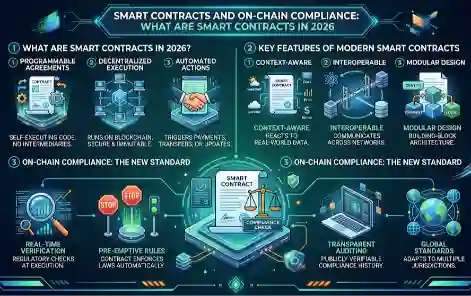
Many modern multisig wallets are implemented through smart contracts or interact with smart contracts. This introduces another layer of risk beyond private-key protection.
A signer may correctly protect their hardware wallet yet still authorize a dangerous smart-contract interaction.
Some blockchain transactions grant a contract permission to move tokens on behalf of a wallet. A signer who does not understand the permission being granted can unintentionally expose assets to future unauthorized transfers.
| Action | Potential Risk | Security Practice |
|---|---|---|
| Token approval | Contract may gain spending authority | Review allowance and spender carefully |
| Contract upgrade | Wallet-connected logic may change | Verify governance and upgrade authority |
| Module installation | Additional execution authority may be introduced | Review every module before enabling |
| Owner change | Control structure can be altered | Require enhanced verification |
| Threshold change | Required approvals can change | Treat as a critical governance transaction |
Changes to the multisig configuration can be more important than ordinary transfers because they can alter who controls the wallet.
For example, changing a 3-of-5 wallet to 1-of-2 could dramatically reduce the security assumptions of the original configuration.
Owner additions, owner removals, threshold changes, module installations, recovery mechanisms, and permission changes should therefore receive enhanced review.
| Configuration Change | Security Priority |
|---|---|
| Adding a signer | Critical |
| Removing a signer | Critical |
| Changing threshold | Critical |
| Installing execution modules | Critical |
| Changing recovery configuration | Critical |
| Routine treasury transfer | High |
A multisig security strategy is incomplete without a recovery plan. The question is not only “How do we prevent unauthorized access?” but also “How do authorized users regain control if a signer, device, location, or operator becomes unavailable?”
Every multisig setup should document what happens if one signer loses access.
For example, a 2-of-3 wallet can remain operational after losing one signer, but the organization still needs a process for replacing or rotating that signer.
| Failure | Potential Response |
|---|---|
| One hardware device lost | Use remaining threshold and follow documented replacement process |
| One signer permanently unavailable | Execute controlled signer rotation |
| One recovery backup damaged | Replace the signer backup according to the recovery plan |
| One signer compromised | Assess exposure and rotate the signer promptly |
| Multiple signers compromised | Activate incident-response procedures immediately |
A recovery process that exists only in documentation has not been properly validated.
Organizations should periodically test whether authorized signers can reconstruct the required signing environment without exposing real funds to unnecessary risk.
Use a controlled test wallet for recovery exercises rather than experimenting with a production treasury.
A backup is not automatically an independent signer. If three signer keys are all derived or controlled through one common recovery mechanism, compromising that mechanism can defeat the intended multisig architecture.
| Concept | Meaning |
|---|---|
| Signer redundancy | Multiple independent authorities can approve transactions |
| Device backup | Allows a signer to recover access to their own key |
| Wallet recovery | Process for restoring authorized control after failure |
| Signer rotation | Replacing an existing signer with a new authorized signer |
For an organizational multisig, the recovery procedure should exist independently of any single employee’s memory.
The strongest multisig wallet security setup combines technical controls with simple operational discipline. The following checklist covers the highest-impact practices for individuals, businesses, DAOs, and Web3 teams.
| Security Control | Best Practice |
|---|---|
| Threshold | Choose M-of-N based on value, availability and governance needs |
| Hardware wallets | Use independently secured signing devices for high-value funds |
| Signer separation | Separate devices, operators and locations where practical |
| Transaction review | Verify recipient, amount, network and contract action before signing |
| Recovery | Maintain secure offline recovery procedures |
| Phishing defense | Use trusted interfaces and independently verify unexpected requests |
| Permissions | Review approvals, modules and contract permissions carefully |
| Signer rotation | Replace lost, compromised or unavailable signers promptly |
| Testing | Periodically test recovery and emergency procedures |
| Monitoring | Monitor wallet activity and investigate unexpected transactions immediately |
Never let one failure compromise the entire threshold.
If one stolen device, compromised computer, phishing attack, physical event, or insider action can obtain enough signatures to spend the funds, the multisig architecture needs stronger separation.
If there is credible evidence that a signer key, device, recovery phrase, or account has been compromised, treat the situation as an incident rather than waiting for a transaction to occur.
| Step | Action |
|---|---|
| 1 | Stop unnecessary signing activity |
| 2 | Determine whether the attacker can reach the signing threshold |
| 3 | Secure unaffected signers |
| 4 | Review recent transactions and permissions |
| 5 | Move funds only according to a preplanned emergency procedure |
| 6 | Remove or rotate the compromised signer when safe to do so |
| 7 | Investigate the original compromise before returning to normal operations |
The most important principle is to avoid creating a second mistake while responding to the first one. Emergency transactions should receive the same careful verification as normal transactions.
| Practice | Why It Matters |
|---|---|
| Use an appropriate M-of-N threshold | Balances security and availability |
| Use hardware signers | Reduces private-key exposure |
| Separate signer environments | Limits correlated compromise |
| Verify every transaction | Prevents authorized malicious actions |
| Protect recovery material | Prevents direct key compromise |
| Test recovery | Reveals operational failures before an emergency |
| Monitor permissions | Reduces smart-contract and authorization risk |
| Rotate compromised signers | Restores the intended security model |
Is a multisig wallet more secure?
It can be, because multiple independent signatures can prevent one compromised key from controlling the funds. Security still depends on how the signers, devices and recovery systems are managed.
What is the safest multisig setup?
There is no universal safest configuration. A well-designed setup normally uses an appropriate threshold, independent hardware signers, separated recovery backups and strong transaction verification.
What is the best multisig threshold?
2-of-3 is often practical for individuals and smaller teams, while 3-of-5 or larger configurations may suit organizations requiring greater signer redundancy.
Is 2-of-3 multisig secure?
Yes, when the three signers are genuinely independent and the two-signature threshold is properly protected.
Is 3-of-5 better than 2-of-3?
Not automatically. 3-of-5 provides more signer redundancy and requires three compromised keys, but it also creates more operational complexity.
How many keys should a multisig wallet have?
The number depends on the value being protected, number of trusted operators, recovery requirements and governance model.
Should multisig use hardware wallets?
For significant holdings, hardware signing devices can substantially reduce exposure of private keys to compromised computers and online environments.
Can a multisig wallet be hacked?
Yes. Attackers can compromise enough signer keys, trick authorized users into signing malicious transactions, exploit software or compromise associated systems.
What happens if one multisig key is lost?
It depends on the threshold. In a 2-of-3 wallet, the remaining two signers can still meet the threshold, allowing a controlled signer-replacement process.
Can multisig prevent phishing?
No. Multisig can prevent one compromised signer from immediately spending funds, but multiple signers can still be tricked into approving a malicious transaction.
Should every multisig transaction be verified?
Yes. Signers should independently confirm the destination, amount, network, contract and purpose before approving important transactions.
What is the biggest multisig security mistake?
One of the biggest mistakes is creating multiple signers without creating independent security environments. Three keys exposed to the same failure can provide much less protection than expected.
How do you recover a multisig wallet?
Recovery depends on the wallet architecture and threshold. A proper setup should have a documented recovery and signer-rotation procedure established before an emergency occurs.
Is multisig good for DAO treasury security?
Yes. Multisig can provide shared treasury control and reduce dependence on one private key, although DAO governance still requires strong signer selection, transaction review and operational controls.
Is multisig suitable for businesses?
Yes. Businesses can use multisig to distribute treasury authority among multiple authorized people and create formal approval procedures.
Does multisig eliminate the need for cold storage?
No. Multisig and cold storage address different aspects of custody. They can be combined to create stronger protection for long-term holdings.
Multisig wallet security is a system, not a feature. The strongest configuration combines an appropriate signing threshold with independent hardware devices, separated signers, secure backups, transaction verification, permission controls and tested recovery procedures.
For many users, 2-of-3 provides a practical balance between security and recoverability. For larger organizations and treasury operations, 3-of-5 or another governance-based threshold may be more appropriate.
The most important principle is simple: design for failure before failure happens. A secure multisig wallet should remain protected when a device is lost, a signer becomes unavailable, a phishing attempt occurs, or one key is compromised.
| Security Goal | Recommended Approach |
|---|---|
| Reduce single-key risk | Use M-of-N multisig |
| Protect private keys | Use secure hardware signing devices |
| Prevent correlated compromise | Separate signers and failure domains |
| Stop malicious approvals | Independently verify transactions |
| Survive key loss | Maintain tested recovery procedures |
| Protect organizations | Use documented governance and signer policies |
Ultimately, the goal of multisig is not simply to require more signatures. It is to make unauthorized control significantly harder while keeping legitimate recovery and operation possible.
As digital-asset custody becomes more institutional, multisig wallet security is increasingly focused on signer independence, transaction verification, hardware security, and operational resilience. For a deeper look at practical wallet-security controls and secure multisig architecture, see the Security Alliance multisig wallet security best practices.
 Related Reading: Crypto Custody & Digital Ownership Crypto Custody & Digital Ownership Hub Diagram

MPC vs Multi-Sig Wallets
Custody Comparison (2026)
Why Institutions Are Switching
From Multi-Sig to MPC
Crypto Self-Custody Guide
Digital Asset Ownership
Institutional Crypto Custody Simulator
Risk Dashboard & Analysis