
Search by title, topic or phrase
Use our Crypto Search Engine 🔍 to find the topics and keywords you're looking for.

Table of Contents
ToggleNext-Gen AI Security Systems are enterprise security architectures designed to protect increasingly autonomous artificial intelligence across models, agents, data, tools, identities, infrastructure, and real-world execution.
Traditional AI security primarily focused on protecting models, applications, APIs, data, and cloud infrastructure. Next-generation AI security must address a much broader problem: AI systems can now interpret external information, make decisions, call tools, interact with other software, access credentials, and in some environments execute financial or operational actions.
The defining shift is therefore from protecting an AI application to controlling the entire AI decision-and-action lifecycle.
In a Web3 environment, this distinction becomes particularly important. An AI system may not simply generate an incorrect answer; it may have permission to sign a transaction, interact with a smart contract, move digital assets, make a machine-to-machine payment, or coordinate with another autonomous agent.
A practical Next-Gen AI Security System therefore needs to answer four questions continuously:
The objective is not to make AI incapable of acting. The objective is to make autonomous action bounded, observable, verifiable, and recoverable.
This creates an important distinction between conventional cybersecurity and AI-native security. Conventional systems protect users, endpoints, networks, applications, and data. Next-generation systems must additionally protect the behavior and authority of intelligent software itself.
For institutions, this becomes particularly important when AI agents can interact with financial infrastructure, enterprise systems, blockchain networks, smart contracts, or other autonomous agents.
Current Ethereum documentation describes AI agents interacting with blockchain systems, onchain wallets, payments, attestations, and agent-to-agent commerce, illustrating why security boundaries around autonomous agents are becoming an important Web3 infrastructure concern.
At an institutional level, the right question is therefore not simply:
What can AI do with blockchain?
A better question is:
What should an intelligent software system be allowed to do on a programmable economic network, under whose authority, and with what verification and control mechanisms?
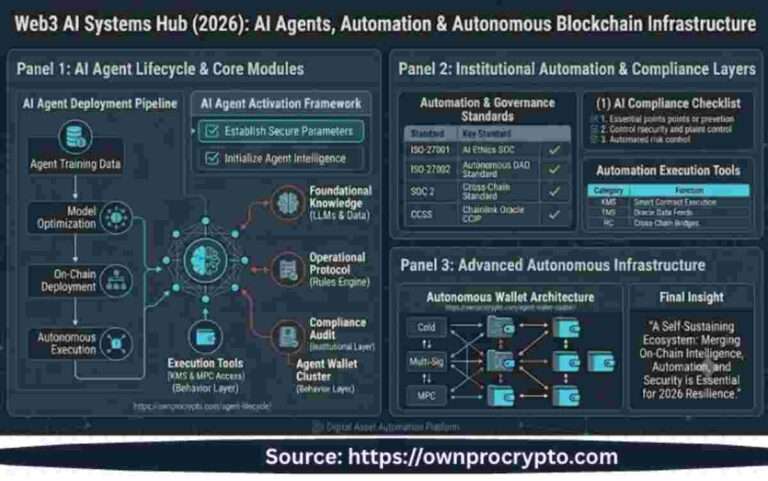
Next-Gen AI Security Systems are security architectures designed to protect AI models, autonomous agents, data, tools, identities, permissions, infrastructure, and AI-driven actions across increasingly autonomous digital environments.
Unlike conventional security systems that primarily defend applications and infrastructure, Next-Gen AI Security Systems also address AI behavior, agent authority, tool access, decision-making, and autonomous execution.
A mature system can combine AI-powered detection, behavioral analytics, identity and access controls, policy enforcement, agent authorization, continuous monitoring, automated response, verification, and incident recovery.
In Web3 environments, these capabilities can extend to cryptographic identities, wallets, smart contracts, digital assets, decentralized infrastructure, transaction policies, and blockchain-based verification.
The important distinction is that Web3 AI is an application environment, while Next-Gen AI Security is the security architecture protecting intelligent systems operating within that environment.
Traditional AI security was largely designed around protecting applications and models from unauthorized access, data leakage, malicious inputs, model theft, and infrastructure compromise.
Next-gen AI security adds another dimension: behavioral and execution security.
An autonomous AI agent can have access to tools, APIs, credentials, wallets, smart contracts, databases, and external services. Security therefore has to control not only who can access the AI, but also what the AI itself is permitted to do.
This creates a fundamental architectural transition:
Traditional security:
User → Application → AI → Result
Next-gen AI security:
User → AI → Tools → Decisions → Permissions → Execution → Verification → Monitoring → Recovery
| Dimension | Traditional AI Security | Next-Gen AI Security |
|---|---|---|
| Primary focus | Protect applications, models and infrastructure | Protect models, agents, behavior, tools and autonomous execution |
| Threat detection | Rules, signatures and known indicators | Behavioral, contextual and AI-assisted detection |
| Identity | User and application identity | User, agent, workload and cryptographic identity |
| Authorization | Application permissions | Fine-grained agent and action permissions |
| Tool access | Application-controlled integrations | Explicitly governed agent tool access |
| Execution | Application-controlled actions | Policy-controlled autonomous actions |
| Verification | Application logs and controls | Verification, simulation, attestations and policy checks |
| Monitoring | Infrastructure and endpoint telemetry | Model, agent, tool, identity and execution telemetry |
| Response | Human or automated incident response | Automated containment, escalation and authority revocation |
| Web3 capability | Usually external to the security architecture | Can include wallets, smart contracts, transactions and digital assets |
Rather than deciding whether a product is “next-generation” based on branding, evaluate five architectural questions:
The more completely a security architecture answers these five questions, the more capable it is of protecting autonomous AI rather than simply protecting the application in which AI operates.
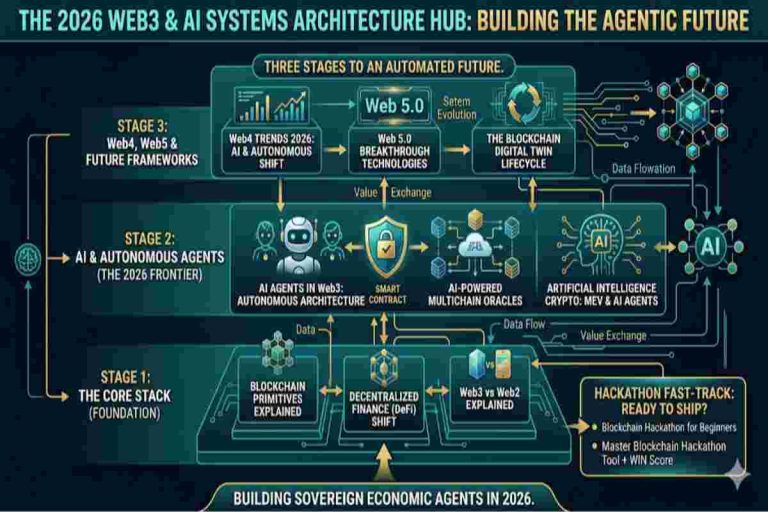
A practical Next-Gen AI Security architecture can be understood as a sequence of data collection, AI reasoning, policy enforcement, authorization, execution, verification, monitoring, and response.
Data → AI Model → Agent Decision → Policy Check → Authorization
                                      ↓
                              Execution / Transaction
                                      ↓
                          Verification → Monitoring
                                      ↓
                         Alert → Containment → Recovery
The AI model does not necessarily need to run on a blockchain. In many architectures, computationally expensive reasoning occurs offchain while blockchain infrastructure provides identity, permissions, settlement, state changes, and auditability.
The security architecture sits around this process, creating boundaries between what the AI can perceive, what it can decide, and what it is actually authorized to execute.
The system first collects information.
Sources can include blockchain transactions, smart-contract state, market data, APIs, databases, documents, enterprise systems, decentralized storage, or user instructions.
This layer is security-critical because external information should not automatically be considered trustworthy.
A malicious document, manipulated API response, poisoned data source, or hostile prompt can influence downstream reasoning.
For example, a DeFi security agent may observe:
The AI model interprets available information and determines what should happen next.
This may involve an LLM, machine-learning model, specialized financial model, rules engine, or multiple cooperating agents.
The crucial point is that AI reasoning is probabilistic, while blockchain execution is generally deterministic. A robust architecture therefore needs a boundary between the AI’s decision-making process and the system that actually executes the decision.
AI agents also introduce security concerns that do not appear in the same form in conventional software. Research on AI agents identifies challenges associated with multi-step inputs, complex internal execution, changing environments, and interaction with untrusted external entities.
Before an AI decision becomes a financial or operational action, the system can apply explicit policies.
| Control | Example |
|---|---|
| Spending limit | Maximum $1,000 per transaction |
| Daily limit | Maximum $10,000 per 24 hours |
| Contract allowlist | Agent can interact only with approved contracts |
| Asset allowlist | Agent can transact only in approved assets |
| Human approval | Transactions above a defined threshold require approval |
| Time restriction | Agent can execute only during defined periods |
| Risk threshold | High-risk transactions are rejected or escalated |
This layer is especially important because an AI model should not automatically become the final authority over valuable assets or sensitive enterprise operations.
If the agent needs to transact, it requires some form of cryptographic authority.
This can involve smart accounts, delegated credentials, session keys, threshold signing, MPC, or other policy-controlled signing mechanisms.
The preferred security model is to treat an AI agent as a transaction proposer operating within constraints, rather than simply giving the AI unrestricted access to a private key.
This principle becomes increasingly important as AI agents move toward autonomous economic activity.
The authorized action is submitted to a blockchain.
The blockchain can then provide deterministic execution of smart-contract logic, transaction ordering, state changes, and settlement.
For security teams, however, successful blockchain execution does not mean the original AI decision was correct. A valid transaction can still be an unsafe transaction.
The security system therefore needs to distinguish between:
After execution, the system should verify what actually happened.
This can include transaction receipts, event logs, attestations, policy checks, simulation results, reputation systems, anomaly detection, or cryptographic proofs.
The emerging blockchain-agent research landscape increasingly treats identity, authorization, coordination, security, privacy, and governance as separate architectural concerns. A 2025 systematization of knowledge specifically examined security and privacy dimensions of AI agents for blockchain, while newer 2026 research examines decentralized agent architecture and governance.

A mature Next-Gen AI Security System is not a single security product. It is a collection of controls operating across the AI decision-and-action lifecycle.
| Layer | Primary Function | Typical Security Capability |
|---|---|---|
| AI Model | Reasoning and prediction | Model integrity, output monitoring, adversarial testing |
| Agent | Planning and autonomous task execution | Agent identity, behavior monitoring and guardrails |
| Data | Information retrieval | Provenance, validation and poisoning detection |
| Identity | Establishing who or what is acting | Identity, credentials and trust relationships |
| Policy | Defining permitted behavior | Rules, limits, allowlists and escalation |
| Authorization | Granting execution authority | Least privilege, scoped permissions and delegation |
| Wallet | Asset control and transaction authorization | Key isolation, smart accounts and threshold controls |
| Execution | Changing system or blockchain state | Transaction simulation and execution controls |
| Verification | Checking actions or outputs | Attestations, proofs, simulations and policy checks |
| Monitoring | Detecting failures and abnormal behavior | Telemetry, anomaly detection and alerts |
| Response | Containing incidents | Revocation, isolation, escalation and recovery |
A common mistake is to think of an autonomous Web3 AI agent as:
LLM + Wallet = Autonomous Agent
That is incomplete.
A production-grade system needs to answer at least six additional questions:
That is why Next-Gen AI Security should be evaluated as a system architecture, not simply as a model-security feature.
The goal of next-generation AI security is not necessarily to eliminate autonomy.
The goal is to create controlled autonomy.
An AI agent can be allowed to perform useful work while operating inside a security envelope defined by identity, permissions, policies, transaction limits, monitoring, verification, and recovery mechanisms.
This separation between intelligence and authority is particularly valuable for financial systems.

AI creates a security surface that extends beyond traditional applications.
Prompt injection occurs when malicious or unintended instructions influence an AI system through its input context.
The risk becomes greater when the model can call tools or execute actions because a manipulated instruction can potentially influence behavior beyond generating text.
An attacker may attempt to manipulate an autonomous agent so that it performs actions outside its intended objective.
The security response should not depend exclusively on the model recognizing the attack. Independent policy controls should constrain what the agent can actually execute.
An AI agent with unnecessary access creates a larger blast radius.
Least-privilege authorization is therefore one of the most important principles in AI agent security.
If an attacker gains access to credentials, signing authority, API keys, or wallets used by an AI agent, the attacker may be able to convert an AI compromise into a direct financial or operational compromise.
Every tool available to an AI agent becomes part of its effective attack surface.
Security teams should therefore evaluate tools as carefully as they evaluate the model itself.
AI systems can make incorrect decisions when the information entering the reasoning process has been manipulated.
This makes provenance, validation, source reputation, and cross-checking important security controls.
Web3 AI agents can inherit the security risks of the contracts and protocols with which they interact.
AI capability does not remove smart-contract vulnerabilities. In some circumstances, greater agent capability can make those vulnerabilities easier to discover or exploit.
EVMbench illustrates this emerging security reality. The benchmark evaluates AI agents on detecting, patching, and exploiting smart-contract vulnerabilities using 117 curated vulnerabilities from 40 repositories. Its results demonstrate that AI agents can already perform meaningful security tasks in blockchain environments, while later research has also highlighted limitations in benchmark scope and generalization.
The most important distinction between an AI assistant and a high-impact autonomous agent is often authority.
An assistant can make a recommendation.
An autonomous agent can potentially act on that recommendation.
This creates a new security requirement: the system must evaluate not only what the AI says, but what the AI is about to do.
Never confuse intelligence with authority.
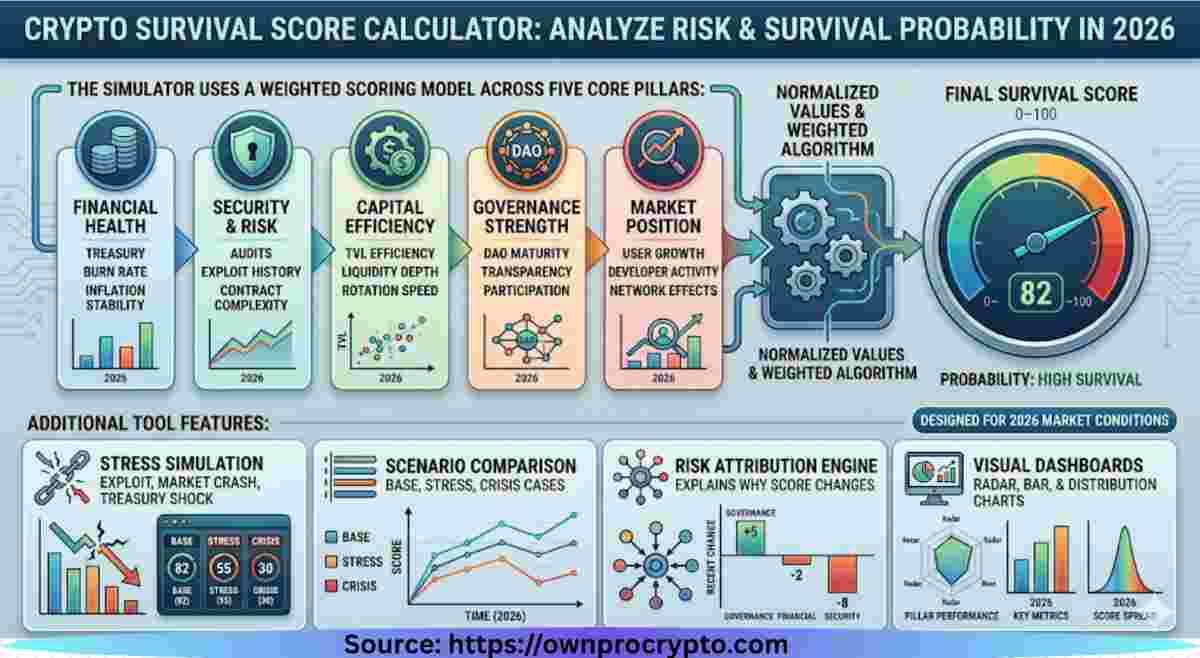
Autonomous cyber threats differ fundamentally from traditional attack models.
Instead of relying on predefined scripts and static malware payloads, modern offensive systems adapt their behavior dynamically based on target responses and environmental conditions.
| Threat Profile | Legacy Cyber Exploits | Autonomous Threat Vectors |
|---|---|---|
| Discovery Velocity | Manual scanning over hours or days | Continuous real-time vulnerability discovery |
| Payload Nature | Static malware signatures | Dynamic polymorphic code |
| Adaptability | Limited human-directed changes | Self-optimizing attack behavior |
| Attack Scale | Linear execution | Exponential autonomous expansion |
| Exploitation Speed | Minutes to hours | Milliseconds |
| Lateral Movement | Manual progression | Autonomous propagation |
| Evasion Capability | Signature avoidance | Behavioral adaptation |
Autonomous cyber threats are particularly dangerous because they continuously evolve throughout the attack lifecycle.
One of the most important developments in cybersecurity is the emergence of behavioral cybersecurity analytics.
Behavioral analysis focuses on understanding how systems normally operate.
When deviations occur, AI models evaluate:
This allows organizations to identify malicious activity even when no known malware signatures exist.
Behavior-based security significantly improves protection against zero-day exploits and previously unseen attack methods.
Human decision-making remains critical for strategy and governance.
However, operational cybersecurity increasingly requires machine-speed cyber defense.
Attackers operate continuously.
Networks operate continuously.
Critical infrastructure operates continuously.
Security systems must therefore respond continuously.
The ability to identify and neutralize threats within milliseconds may determine whether organizations experience minor incidents or catastrophic disruptions.
| Capability Layer | Legacy Human-Led SOC | Next-Gen AI Security Systems |
| Detection Method | Signature-based | Behavioral intelligence |
| Reaction Speed | Minutes to hours | Milliseconds |
| Scalability | Human constrained | Machine scalable |
| Threat Adaptation | Manual updates | Continuous learning |
| Monitoring Coverage | Shift-based | 24/7 autonomous monitoring |
| Compliance Auditing | Periodic review | Continuous validation |
| Resource Efficiency | High staffing requirements | Automated optimization |
This transformation represents one of the most significant shifts in cybersecurity history.

Traditional controls often focus on known indicators and predefined attack patterns. AI-native security can analyze behavior and context to identify deviations from expected activity.
AI-assisted security can process large volumes of telemetry and help security teams identify suspicious activity more quickly.
Instead of treating AI agents as ordinary applications, institutions can establish explicit identities, permissions, policies, and execution limits for autonomous systems.
Scoped permissions, spending limits, allowlists, and isolated credentials can reduce the damage caused by a compromised or malfunctioning agent.
AI can assist with alert triage, investigation, vulnerability analysis, threat correlation, and response workflows.
Autonomous systems operate at machine speed. A corresponding security architecture can monitor and respond at machine speed rather than waiting for manual intervention at every stage.
In Web3 environments, cryptographic infrastructure can provide additional mechanisms for proving identity, recording actions, constraining authority, and verifying selected operations.

Web3 creates an especially important environment for Next-Gen AI Security because autonomous software can interact directly with programmable assets and decentralized protocols.
A conventional AI assistant might return an incorrect recommendation.
A Web3-enabled AI agent could potentially:
This means the security architecture must protect the action, not merely the model.
Wallet infrastructure becomes part of the security boundary when an AI agent can control or initiate transactions.
The preferred architecture is to give agents limited and revocable authority rather than unrestricted access to valuable keys.
Emerging proposals such as ERC-8196 explore policy-bound execution for AI-agent wallets. It is important to treat ERC-8196 as a proposal rather than an established production standard.
AI agents can potentially help security teams analyze smart contracts, detect vulnerabilities, and assist with remediation.
At the same time, more capable agents may also increase the speed and scale at which vulnerabilities can be explored.
This creates a dual-use security problem: the same capabilities can benefit defenders and attackers.
As autonomous agents interact with other agents, security must account for identity, trust, communication, authorization, reputation, and economic incentives.
Research into AI agents and blockchain increasingly identifies multi-agent coordination, interoperability, privacy, and governance as important unresolved areas.
Autonomous agents may need to pay for data, compute, APIs, software services, or other resources.
Blockchain-based payment systems can make these machine-to-machine transactions programmable, but they also make transaction authorization and financial controls part of the AI security architecture.
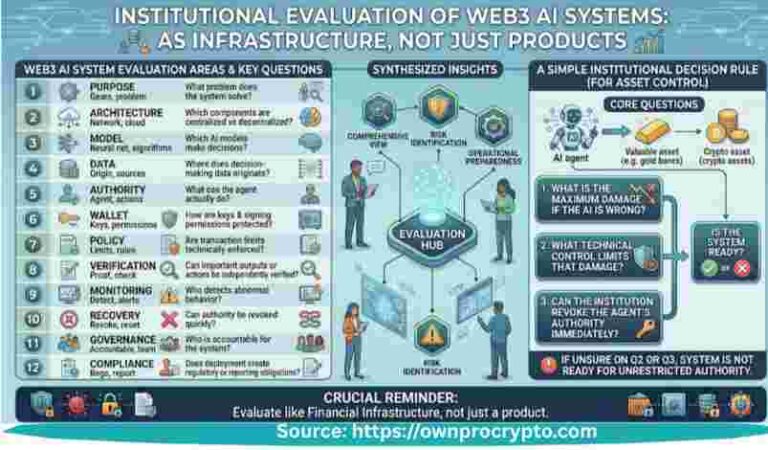
Institutions should evaluate Next-Gen AI Security Systems as complete security architectures rather than buying an isolated AI security feature.
| Evaluation Area | Institutional Question |
|---|---|
| Purpose | What security problem does the system actually solve? |
| Architecture | Which components are centralized, decentralized, or externally controlled? |
| Model | Which AI models make or influence security decisions? |
| Data | Where does security intelligence originate? |
| Agent identity | Can every autonomous agent be uniquely identified? |
| Authorization | What can each agent actually do? |
| Least privilege | Are permissions limited to the minimum required? |
| Tool access | Which APIs, databases, contracts and systems can the agent access? |
| Verification | Can important actions be independently checked? |
| Monitoring | Can abnormal behavior be detected continuously? |
| Containment | Can an agent be isolated when suspicious behavior occurs? |
| Recovery | Can credentials and permissions be revoked quickly? |
| Governance | Who is accountable for autonomous decisions? |
| Compliance | Does deployment create regulatory, audit, or reporting obligations? |
Before allowing an AI system to control valuable assets, sensitive information, or critical infrastructure, ask three questions:
If the second or third answer is unclear, the system should not receive unrestricted production authority.
A mature institutional architecture separates intelligence from authority.
The AI can analyze information and propose actions. A policy engine determines whether those actions are permitted. An authorization layer grants narrowly scoped authority. Execution infrastructure performs the approved operation. Monitoring checks what happened. Recovery controls provide a way to stop the system when necessary.
This creates a security model in which autonomy is earned through controls rather than assumed through intelligence.

As tokenized finance expands, autonomous threats increasingly target high-value financial infrastructure.
Key targets include:
These environments often manage billions in value while operating continuously across multiple jurisdictions and networks.
A successful exploit can directly impact:
For this reason, Next-Gen AI Security Systems are becoming foundational infrastructure for institutional digital asset ecosystems.
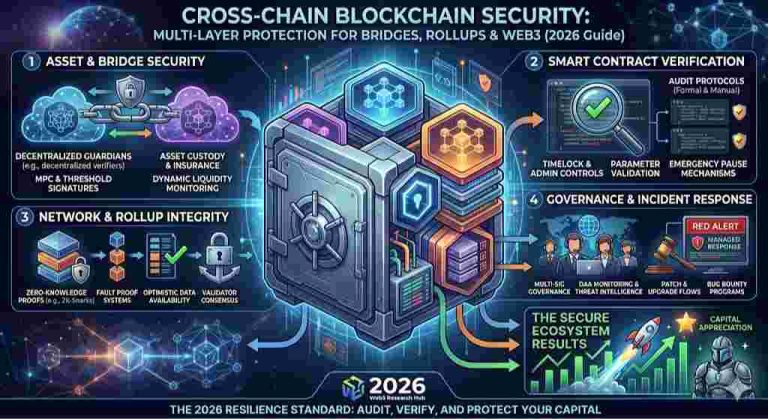
Compliance automation is becoming increasingly important across tokenized financial markets.
Autonomous attacks can target:
AI-driven security platforms provide continuous oversight and validation to ensure operational integrity while preserving compliance obligations.
Security failures often produce hidden costs beyond direct losses.
These include:
By maintaining continuous system availability, AI security infrastructure supports capital efficiency while reducing operational risk exposure.
The following example illustrates how modern defensive infrastructure can dramatically improve resilience.
A multi-chain institutional asset gateway experienced a coordinated attack targeting a smart contract responsible for cross-chain liquidity management.
The exploit attempted to drain collateral pools through a race-condition vulnerability.
Security teams determined that autonomous offensive agents executed attack sequences in less than 400 milliseconds.
Legacy detection systems failed to identify the exploit because the payload continuously modified itself.
The organization deployed Next-Gen AI Security Systems powered by:
A subsequent probe was detected within 12 milliseconds.
The platform automatically:
| Metric | Before Deployment | After Deployment |
| Detection Time | 45 Minutes | 12 Milliseconds |
| Response Model | Human-Led | Autonomous |
| Asset Preservation | High Risk | 100% Protected |
| Operational Availability | Vulnerable | Continuous |
| Threat Visibility | Limited | Real-Time |
The future of AI security is moving toward a more complete security model in which AI models, autonomous agents, identities, tools, credentials, infrastructure, and actions are treated as connected parts of one security environment.
The emerging architecture is likely to become increasingly modular:
                ┌───────────────────────┐
                │       AI Models       │
                └───────────┬───────────┘
                            ↓
                ┌───────────────────────┐
                │   Agent / Reasoning   │
                └───────────┬───────────┘
                            ↓
                ┌───────────────────────┐
                │ Policy & Authorization│
                └───────────┬───────────┘
                            ↓
                ┌───────────────────────┐
                │   Tools / Execution   │
                └───────────┬───────────┘
                            ↓
                ┌───────────────────────┐
                │ Verification / Policy │
                └───────────┬───────────┘
                            ↓
                ┌───────────────────────┐
                │ Monitoring / Response │
                └───────────────────────┘
For Web3, this architecture can extend into wallets, smart contracts, blockchain networks, decentralized compute, stablecoins, cryptographic identity, attestations, and programmable settlement.
The important development is therefore not simply that AI is becoming more capable.
It is that AI is becoming more capable of acting.
Security architecture must evolve accordingly.
Research on blockchain AI agents already frames security and privacy as major areas of concern, while newer work examines decentralized agent architectures, coordination mechanisms, and governance.
The next generation of security systems will therefore need to protect not only computers and networks, but also autonomous decisions, delegated authority, machine identities, agent interactions, and AI-driven economic activity.
What are Next-Gen AI Security Systems?
Next-Gen AI Security Systems are security architectures designed to protect AI models, autonomous agents, data, tools, identities, permissions, infrastructure, and AI-driven actions. They extend traditional cybersecurity by adding controls around AI behavior and autonomous execution.
What is next-generation AI security?
Next-generation AI security is the practice of securing AI systems throughout their complete lifecycle, including model behavior, data, agents, tools, identity, authorization, execution, monitoring, verification, and incident response.
Why is traditional cybersecurity not enough for AI agents?
AI agents can make decisions, call tools, access external systems, and potentially execute actions without a human approving every individual step. Security therefore has to control agent behavior and authority in addition to protecting the underlying application and infrastructure.
What is AI-native security?
AI-native security is security designed specifically for systems in which AI is a significant decision-making or operational component. It addresses risks such as prompt injection, model manipulation, agent misuse, excessive permissions, unsafe tool calls, and autonomous execution.
What is AI agent security?
AI agent security protects autonomous software agents from manipulation, unauthorized access, excessive permissions, malicious inputs, unsafe tool use, credential compromise, and unauthorized execution.
What are the biggest AI agent security risks?
Major risks include prompt injection, agent hijacking, excessive permissions, compromised credentials, malicious tools, data poisoning, unsafe autonomous actions, supply-chain vulnerabilities, and failures in monitoring or incident response.
How do you secure an autonomous AI agent?
Use strong identity, least-privilege permissions, isolated credentials, controlled tool access, transaction or action limits, policy enforcement, continuous monitoring, verification, human approval for high-risk operations, and rapid revocation.
Should AI agents have unrestricted access to private keys?
No. An AI agent with unrestricted access to a private key can turn a model or agent compromise into a direct financial compromise. Safer architectures use scoped permissions, smart accounts, delegated authority, isolated keys, threshold controls, or other mechanisms that limit the agent’s authority.
What are the components of an AI security system?
A mature AI security architecture can include model security, agent security, data protection, identity, policy enforcement, authorization, tool security, credential protection, execution controls, verification, monitoring, automated response, and recovery.
What is an AI security architecture?
An AI security architecture is the structured set of technical and governance controls that protects AI models and agents throughout their data, reasoning, tool-use, authorization, execution, and monitoring lifecycle.
What is agentic security?
Agentic security focuses on protecting AI systems that can independently plan tasks, use tools, make decisions, and execute actions. It emphasizes identity, permissions, behavioral monitoring, policy enforcement, and containment.
What is the difference between AI security and cybersecurity?
Cybersecurity protects systems, networks, identities, applications, and data from threats. AI security includes those concerns but adds risks created by models and autonomous agents, including prompt manipulation, model behavior, AI-generated actions, tool use, and delegated authority.
What is prompt injection?
Prompt injection is an attack or manipulation technique in which instructions embedded in input data or context influence an AI system in unintended ways. The risk becomes more serious when the AI can call tools or execute actions.
What is agent hijacking?
Agent hijacking occurs when an attacker manipulates or compromises an AI agent so that it performs actions outside its intended objective or authority.
Can AI agents be hacked?
Yes. Agents can be attacked through prompts, data, tools, APIs, credentials, software dependencies, model infrastructure, communication channels, or the systems they control.
What is the biggest security problem with autonomous AI?
The combination of autonomy and authority is one of the most significant risks. A model that produces a wrong answer is one problem; an agent that can independently execute the wrong action creates a potentially much larger operational or financial impact.
What is Web3 AI security?
Web3 AI security is the application of AI-security principles to blockchain, decentralized applications, wallets, smart contracts, digital assets, decentralized infrastructure, and autonomous onchain agents.
Why is AI security important in Web3?
Web3 systems can allow AI agents to interact with assets, wallets, smart contracts, payments, and decentralized protocols. A compromised or incorrectly authorized agent can therefore create direct financial or operational consequences.
Can AI agents control crypto wallets?
Yes, but the security architecture should constrain that authority. Spending limits, contract allowlists, scoped credentials, smart accounts, approval policies, transaction simulation, monitoring, and revocation can reduce the risks of autonomous wallet control.
Can AI agents interact with smart contracts?
Yes. AI agents can analyze blockchain state, prepare transactions, call smart contracts, and in appropriately designed systems execute permitted transactions. The security challenge is ensuring that the agent cannot exceed its intended authority.
Can AI agents find smart contract vulnerabilities?
Yes. EVMbench was designed to evaluate AI agents on smart-contract vulnerability detection, patching, and exploitation. Its benchmark includes 117 curated vulnerabilities from 40 repositories. However, subsequent research has identified limitations in benchmark scope and generalization, so AI agents should currently be treated as security tools rather than universal replacements for expert auditing.
Can AI agents exploit smart contracts?
Research demonstrates that capable AI agents can perform end-to-end vulnerability exploitation in controlled benchmark environments. This highlights the dual-use nature of AI security: the same capabilities can potentially help defenders identify vulnerabilities and help attackers discover exploitable weaknesses.
Will AI replace smart contract auditors?
AI is more likely to augment auditors than eliminate them in the near term. Agents can improve breadth, automate repetitive analysis, and identify potential vulnerabilities, while human auditors remain important for protocol-specific reasoning, business logic, economic assumptions, and final judgment.
How should enterprises evaluate AI security systems?
Enterprises should evaluate model security, data provenance, agent identity, authorization, least privilege, tool access, credential isolation, monitoring, verification, incident response, governance, compliance, and the ability to revoke autonomous authority.
What should a CISO ask about AI agents?
A CISO should ask what each agent can access, what it can execute, which credentials it possesses, which tools it can call, how its behavior is monitored, how risky actions are approved, how permissions are revoked, and how an incident involving an autonomous agent would be contained.
How do you limit AI agent permissions?
Use least-privilege access, scoped credentials, allowlists, spending limits, action policies, transaction limits, human approval thresholds, isolated execution environments, and independent authorization controls.
What is the future of AI security?
AI security is moving toward continuous, behavior-aware protection of models and autonomous agents. Future systems are likely to integrate identity, policy enforcement, runtime monitoring, verification, automated containment, and recovery across the entire AI lifecycle.
What is the future of AI agent security?
The future of AI agent security is likely to focus on machine identities, delegated authority, least privilege, secure tool use, agent-to-agent trust, continuous behavioral monitoring, verifiable execution, and rapid revocation.
Will AI agents become security threats themselves?
Potentially. As agents gain greater autonomy and access to tools, credentials, code, and financial systems, they become both security assets and security risks. Their authority therefore needs to be treated as a distinct security boundary.
What is verifiable AI?
Verifiable AI refers to approaches that provide evidence about how an AI computation or output was produced or whether specified conditions were satisfied. Techniques can include cryptographic proofs, attestations, trusted execution environments, reproducibility mechanisms, and other verification methods.
What is AI security orchestration?
AI security orchestration coordinates security controls, detection systems, policies, investigation workflows, and response actions across AI infrastructure. In agentic environments, orchestration can also govern what autonomous agents are permitted to do.
What is autonomous AI risk?
Autonomous AI risk is the possibility that an AI system makes or executes an undesirable decision without sufficient human intervention. The risk increases when the system has access to sensitive data, privileged tools, financial assets, or critical infrastructure.
What should I study after Next-Gen AI Security Systems?
The natural next topics are AI agent security, AI security architecture, autonomous agent risk, AI agent wallets, Web3 AI security, smart-contract security, verifiable AI, AI identity, AI authorization, and institutional AI governance.
By 2030, cybersecurity risk will be defined less by attack frequency and more by attack velocity.
Autonomous cyber threats are expected to operate beyond human response thresholds, requiring a shift from reactive security models to autonomous, intelligence-driven defense infrastructures.
Next-Gen AI Security Systems will serve as the foundational layer for this transition, integrating AI-powered threat detection, behavioral cybersecurity analytics, autonomous incident response, and machine-speed cyber defense into a unified operational framework.
This evolution represents a structural shift in enterprise security architecture—from human-dependent monitoring systems to continuously adaptive, machine-scale defensive environments.
Organizations that fail to adopt autonomous security capabilities will face increasing exposure to real-time compromise, operational disruption, and systemic infrastructure risk.
In contrast, institutions that integrate Next-Gen AI Security Systems will be positioned to maintain resilience, compliance integrity, and operational continuity in an increasingly autonomous threat landscape.
These sources provide useful starting points for further institutional research into AI agents, blockchain security, autonomous execution, and emerging AI-security architectures. The blockchain-agent security literature specifically identifies security and privacy as major research dimensions, while EVMbench provides a concrete benchmark for evaluating agent capability in smart-contract security.
Continue the Web3 AI Systems knowledge path:
This Next-Gen AI Security System’s Templates measures readiness, governance, security posture, and operational effectiveness of AI-powered cyber defense ecosystems.
Purpose
Master inventory of known AI-enabled threat actors.
| Threat ID | Threat Name | Threat Type | AI Capability Level | Severity | Status |
|---|---|---|---|---|---|
| AT001 | PhantomGPT | Autonomous Malware | High | Critical | Active |
| AT002 | ShadowSwarm | Botnet AI | Very High | Critical | Active |
| AT003 | DeepPhish AI | Phishing Engine | High | High | Active |
| AT004 | RavenAgent | Lateral Movement AI | High | Critical | Active |
| AT005 | HydraX | Self-Mutating Malware | Very High | Critical | Active |
Purpose
Track deployed defensive AI agents.
| Agent ID | Agent Name | Security Function | Coverage Area | Automation Level | Status |
|---|---|---|---|---|---|
| SA001 | SentinelAI | Threat Detection | Enterprise | Full | Active |
| SA002 | CyberGuard | Incident Response | SOC | Full | Active |
| SA003 | ThreatVision | Intelligence | Network | Semi-Autonomous | Active |
| SA004 | ZeroTrust AI | Identity Security | IAM | Full | Active |
| SA005 | MalwareHunter | Endpoint Security | Endpoints | Full | Active |
Purpose
Measure AI detection performance.
| Security Layer | Detection Time | Industry Average | Improvement | Status |
|---|---|---|---|---|
| Network Threats | 0.5 sec | 15 min | Massive | Excellent |
| Malware | 0.2 sec | 30 min | Massive | Excellent |
| Insider Threats | 3 sec | 4 hrs | Significant | Good |
| Identity Abuse | 1 sec | 45 min | Massive | Excellent |
| Data Exfiltration | 2 sec | 20 min | Massive | Excellent |
Purpose
Monitor automated security actions.
| Incident ID | Threat Type | Response Trigger | AI Action Taken | Resolution Time | Outcome |
|---|---|---|---|---|---|
| IR001 | Malware | Detection | Device Isolation | 5 sec | Successful |
| IR002 | Credential Theft | Login Anomaly | Session Lock | 2 sec | Successful |
| IR003 | Phishing | Email Analysis | Quarantine | 1 sec | Successful |
| IR004 | Ransomware | File Activity | Process Kill | 4 sec | Successful |
| IR005 | Data Leak | DLP Alert | Access Revocation | 3 sec | Successful |
Purpose
Track defensive AI engagements against offensive AI.
| Engagement ID | Attacker AI | Defender AI | Outcome | Confidence | Status |
|---|---|---|---|---|---|
| ENG001 | DeepPhish AI | SentinelAI | Blocked | 98% | Closed |
| ENG002 | HydraX | MalwareHunter | Contained | 96% | Closed |
| ENG003 | ShadowSwarm | CyberGuard | Neutralized | 99% | Closed |
| ENG004 | PhantomGPT | ThreatVision | Detected | 94% | Closed |
| ENG005 | RavenAgent | ZeroTrust AI | Prevented | 97% | Closed |
Purpose
Measure financial impact.
| Security Function | Manual Cost ($) | AI Cost ($) | Savings ($) | ROI (%) |
|---|---|---|---|---|
| Threat Detection | 500,000 | 120,000 | 380,000 | 317 |
| SOC Monitoring | 900,000 | 250,000 | 650,000 | 260 |
| Incident Response | 600,000 | 180,000 | 420,000 | 233 |
| Threat Hunting | 450,000 | 150,000 | 300,000 | 200 |
| Compliance Monitoring | 350,000 | 120,000 | 230,000 | 192 |
Purpose
Evaluate identity-centric security posture.
| Category | Current Score | Target Score | Gap | Status |
|---|---|---|---|---|
| MFA Coverage | 95 | 100 | 5 | Strong |
| Device Trust | 90 | 98 | 8 | Improving |
| Identity Verification | 92 | 98 | 6 | Strong |
| Access Controls | 94 | 99 | 5 | Strong |
| Continuous Validation | 88 | 98 | 10 | Priority |
Purpose
Track proactive AI investigations.
| Hunt ID | Threat Category | Assets Scanned | Findings | Severity | Status |
|---|---|---|---|---|---|
| H001 | Malware | 25,000 | 12 | Medium | Closed |
| H002 | Insider Threat | 10,000 | 4 | High | Closed |
| H003 | Credential Abuse | 15,000 | 9 | Medium | Closed |
| H004 | Lateral Movement | 8,000 | 2 | Critical | Closed |
| H005 | Data Theft | 20,000 | 6 | High | Closed |
Purpose
Govern AI security models.
| Model Name | Version | Training Date | Validation Score | Approval Status |
|---|---|---|---|---|
| SentinelAI Core | 5.2 | Jan-2030 | 98 | Approved |
| MalwareHunter | 4.8 | Feb-2030 | 97 | Approved |
| ThreatVision | 3.9 | Mar-2030 | 95 | Approved |
| CyberGuard | 5.0 | Apr-2030 | 99 | Approved |
| ZeroTrust AI | 4.7 | Apr-2030 | 98 | Approved |
Purpose
Protect high-value systems.
| Asset Type | Criticality | AI Monitoring | Risk Score | Status |
|---|---|---|---|---|
| Data Centers | Critical | Full | Low | Protected |
| Banking Systems | Critical | Full | Low | Protected |
| Cloud Infrastructure | Critical | Full | Medium | Protected |
| Identity Services | Critical | Full | Low | Protected |
| OT/ICS Systems | Critical | Partial | Medium | Protected |
Purpose
Track emerging AI security risks.
| Risk ID | Risk Description | Probability | Impact | Priority |
|---|---|---|---|---|
| R001 | Self-Learning Malware | High | Critical | High |
| R002 | Autonomous Ransomware | Medium | Critical | High |
| R003 | Deepfake Social Engineering | High | High | High |
| R004 | AI Supply Chain Attack | Medium | Critical | High |
| R005 | Agent Hijacking | Low | Critical | Medium |
Purpose
Measure SOC transformation.
| Metric | Manual SOC | AI SOC |
|---|---|---|
| Alerts Per Day | 5,000 | 50,000 |
| False Positives | 35% | 4% |
| Mean Time to Detect | 6 hrs | 2 sec |
| Mean Time to Respond | 8 hrs | 5 sec |
| Coverage | Partial | Continuous |
Purpose
Measure organizational preparedness.
| Assessment Area | Current | Target | Gap |
|---|---|---|---|
| AI Security Strategy | 88 | 98 | 10 |
| Detection Systems | 94 | 99 | 5 |
| Incident Response | 90 | 99 | 9 |
| Governance | 85 | 98 | 13 |
| Threat Intelligence | 92 | 99 | 7 |
Purpose
Evaluate security maturity.
| Domain | Score |
|---|---|
| AI Detection | 96 |
| Autonomous Response | 94 |
| Threat Intelligence | 92 |
| Governance | 89 |
| Resilience | 91 |
Purpose
Track future initiatives.
| Initiative | Timeline | Impact | Budget ($M) | Status |
|---|---|---|---|---|
| Autonomous SOC | 2030 | Very High | 15 | Active |
| AI Threat Grid | 2031 | High | 10 | Planned |
| Global Threat Mesh | 2032 | Transformational | 25 | Planned |
| Autonomous Compliance Engine | 2031 | High | 8 | Planned |
| Predictive Cyber Defense | 2033 | Transformational | 30 | Research |