
Client → Stablecoin Conversion → Routing Engine → Blockchain Network → Freelancer Receives Payment
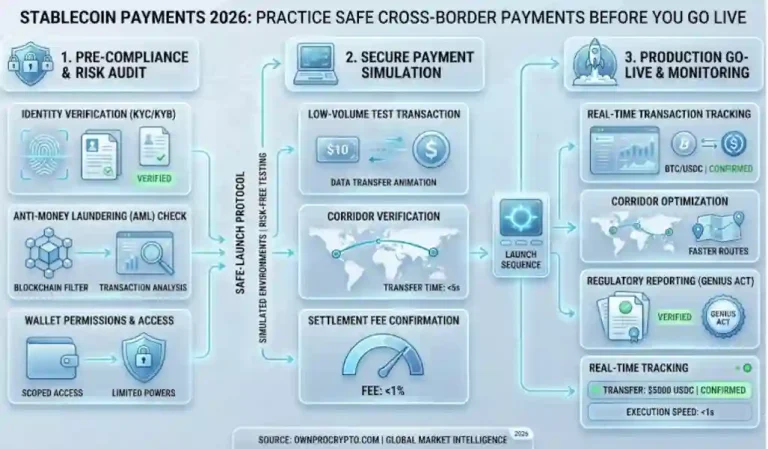
Table of Contents
ToggleIf you are tired of losing a chunk of your invoice every time you work with an overseas client, there is some great news. Shifting to Stablecoin Payments for Freelancers is completely changing the game for independent contractors worldwide. By switching to fiat-backed digital assets, you can bypass slow banking gatekeepers entirely, secure your financial freedom, and get your funds dropped into your wallet in seconds for just pennies.
Remote work continues to expand across global markets.
At the same time, many freelancers face common payment challenges:
Stablecoin payments help solve many of these issues by enabling digital dollar transfers through blockchain networks.
For freelancers, the appeal is often practical rather than speculative:
Traditional Freelance Payment

Client
 │
 ▼
Bank / Payment Processor
 │
 ▼
Currency Conversion
 │
 ▼
International Transfer
 │
 ▼
Freelancer

Settlement: 2–7 Days
Stablecoin Payment
Client
│
▼
USDT Transfer
│
▼
Blockchain Network
│
▼
Freelancer Wallet
Settlement: MinutesPayment Flow Diagram Client → Wallet Address → Blockchain Confirmation → Freelancer Receives USDT
Problem: International payments often require complicated banking infrastructure.
Problem Solved: Crypto wallets allow freelancers to receive payments directly from clients worldwide.
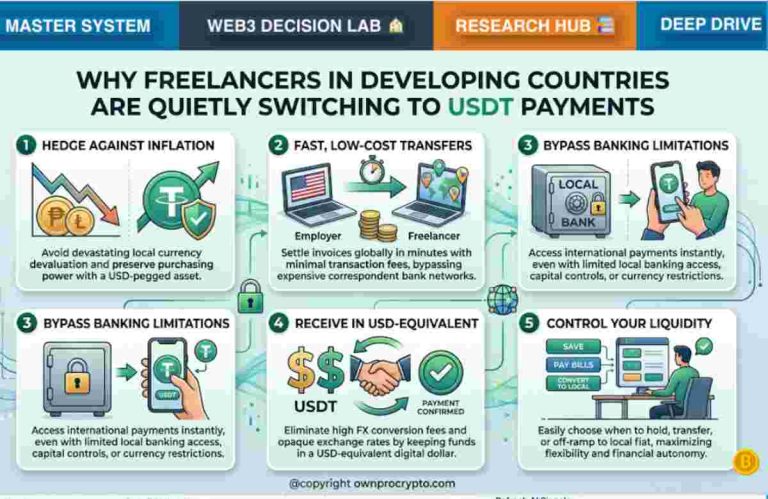
Stablecoin payments are digital payments made using cryptocurrencies designed to maintain a stable value.
Unlike highly volatile cryptocurrencies, stablecoins are commonly used as payment rails rather than speculative assets.
A freelancer can receive payment directly into a crypto wallet and later convert those funds into local currency if needed.
The most common stablecoins used for freelancer payments include:
The payment process is relatively straightforward.
Client
 │
 ▼
USDT Payment
 │
 ▼
Blockchain Network
 │
 ▼
Freelancer Wallet
 │
 ▼
Exchange or Offramp
 │
 ▼
Local Bank AccountThe client sends USDT to the freelancer’s wallet address.
The transaction is processed and confirmed by the selected blockchain network.
The freelancer receives USDT directly into their wallet.
Funds can be converted into local currency through a regulated exchange or payment provider.
Client Payment → USDT Transfer → Freelancer Wallet → Local Conversion
Problem: Traditional international payment systems are slow, expensive, or unavailable for many freelancers.
Result: Faster access → Fewer restrictions → Global payment flexibility
Problem Solved: USDT allows freelancers to receive digital dollar payments globally with fewer delays and fewer banking barriers.
| Payment Method | Settlement Time | Typical Fees | Availability |
|---|---|---|---|
| Bank Wire | 2–5 Days | High | Global |
| PayPal | Same Day–3 Days | Medium–High | Limited in Some Regions |
| Wise | 1–2 Days | Medium | Broad |
| USDT (TRON) | Minutes | Low | Global |
| USDC (Solana) | Minutes | Low | Growing |
For freelancers working internationally, settlement speed can have a direct impact on cash flow and business operations.
USDT remains one of the most commonly used stablecoins globally because of its broad liquidity and network availability.
Many freelancers use USDT for:
| Challenge | How Stablecoins Help |
| Slow payments | Faster settlement |
| Currency instability | Dollar-based value |
| Limited banking access | Wallet accessibility |
| High transfer costs | Lower transaction fees |
| Global clients | Borderless payments |
Payment Logic Flow (Problem → Impact → Result)
Problem: Traditional banking systems are not optimized for global freelance work.
Impact: Freelancers lose time and money due to delays and fees.
Result: USDT payments offer faster, more flexible cross-border income access.
Freelance Work → International Client → Banking Friction → Stablecoin Alternative
Not all blockchain networks operate the same way.
| Network | Typical Cost | Speed | Best Use Case |
| TRON (TRC20) | Very Low | Fast | Small Payments |
| Solana | Low | Very Fast | Modern Payment Apps |
| Ethereum | Higher | Moderate | Large Transfers |
| BNB Chain | Low | Fast | General Payments |
Many freelancers prefer TRON because of its low transaction costs and widespread exchange support.
One reason stablecoin adoption continues to grow is cost efficiency.
| Invoice Amount | Traditional Payment Cost | Stablecoin Payment Cost |
| $500 | $15–$35 | Often Under $1 |
| $2,000 | $30–$75 | Usually $1–$5 |
| $10,000 | $100+ | Often Under $10 |
Actual costs depend on network conditions, exchange fees, and local conversion requirements.
| Benefit | Why It Matters |
| Fast Settlement | Access funds sooner |
| Lower Fees | Reduce payment friction |
| Global Accessibility | Works across borders |
| Dollar-Based Value | Easier budgeting |
| Flexible Withdrawal Options | Multiple offramps available |
| Risk | Consideration |
| Wallet Security | User responsibility |
| Wrong Network Selection | Can cause loss of funds |
| Exchange Dependency | Offramp availability varies |
| Regulatory Differences | Rules differ by country |
| Learning Curve | New users need education |
Problem: Currency instability and payment restrictions create uncertainty for freelancers.
Problem Solved: USDT provides freelancers with more stable and accessible digital payments.
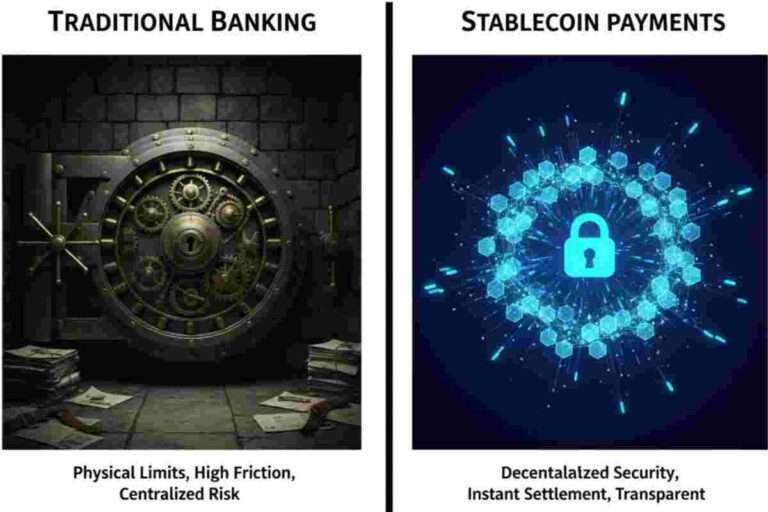
Unlike traditional banks, blockchain transactions are generally irreversible.
Freelancers should follow basic security practices.
| Security Area | Best Practice |
| Wallet Protection | Enable strong authentication |
| Backups | Secure recovery phrases offline |
| Payment Verification | Confirm wallet addresses |
| Exchanges | Use reputable platforms |
| Phishing Protection | Avoid unknown links |
| Large Transfers | Test with small amounts first |
A freelance developer works with clients across three countries.
Traditional bank transfers often take several business days and involve currency conversion fees.
The developer begins accepting USDT payments through a supported blockchain network.
A small design agency pays contractors across multiple regions every month.
Traditional payment providers create delays and increase costs.
The agency adopts stablecoin payouts for approved contractors.
Business Logic Diagram: Global Hiring → Payment Delays → Stablecoin Payments → Faster Contractor Access
Problem: Companies face friction when paying international freelancers.
Problem Solved: Stablecoins simplify global contractor payments and reduce delays.
Remote work is expanding globally.
At the same time:
Stablecoins may continue growing because they solve real-world problems.
Especially in countries where:
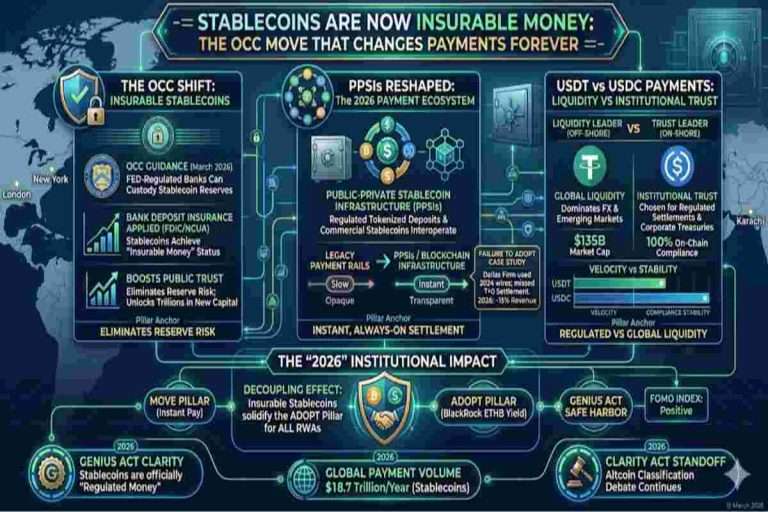
Stablecoins are increasingly used beyond freelance work.
Many users now rely on stablecoin remittance networks for:
The same infrastructure supporting freelancer payments is also becoming part of broader cross-border payment systems.
Stablecoin payments are becoming an increasingly important tool for freelancers operating in a global economy.
For many remote workers, the attraction is straightforward:
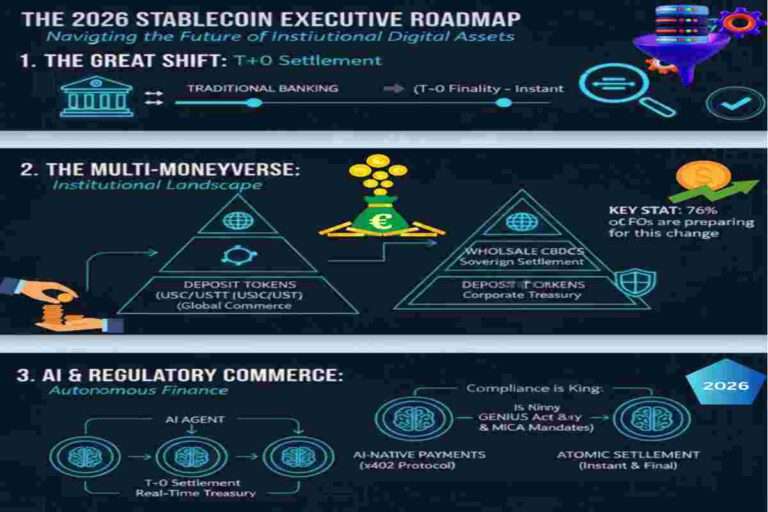
While traditional banking systems continue to play a major role, stablecoins are emerging as a practical alternative for cross-border freelancer payments in 2026.
To maintain topical clarity and avoid content overlap, this article should connect to a limited set of supporting authority hubs:
Each resource should address a distinct subject area while supporting a broader digital asset knowledge framework.
Stablecoin payments allow freelancers to receive digital dollar payments through blockchain networks rather than traditional banking systems.
USDT is widely used globally, but users should follow security best practices and understand local regulations before using any stablecoin.
Many freelancers prefer stablecoins because of lower fees, faster settlement, and fewer geographic restrictions.
Yes. Many exchanges and payment providers allow users to convert stablecoins into local currencies.
Tax treatment varies by jurisdiction. Freelancers should consult local tax guidance or a qualified professional.
The answer depends on cost, speed, and platform support. TRON, Solana, Ethereum, and BNB Chain are among the most commonly used networks.
Welcome to OwnProCrypto (Own & Pro Crypto) — a next-generation Bitcoin and blockchain education platform where the science of finance meets the power of AI-driven automation.
Our mission is simple: to equip you with the knowledge, frameworks, and tools needed to make smarter financial and business decisions in the Web3 economy.
Beyond analysis, OwnProCrypto focuses on transparency, verifiable data, and practical frameworks that investors and builders can actually use. Our goal is not hype — but clear thinking, disciplined analysis, and long-term value creation in the decentralized economy.
Our Background: Salim (Sam) is the founder and lead researcher behind OwnProCrypto, a Web3 intelligence platform focused on crypto security, digital ownership, stablecoin systems, interoperability, and institutional blockchain infrastructure.
Crypto Tools & Analysis:
Crypto Fundamental Analysis Tool | Protocol Evaluation System | DeFi Risk Analysis Tools | Crypto Portfolio Dashboard | Token Risk vs Reward Tool
Guides:
Crypto Fundamental Analysis | Blockchain Project Evaluation | Tokenomics Analysis | DeFi Protocol Analysis | Capital Efficiency
© 2026 OwnProCrypto — Built for smarter crypto decisions