
Search by title, topic or phrase
Use our Crypto Search Engine 🔍 to find the topics and keywords you're looking for.
Updated: August 2026 · Focus: Web3 technology, infrastructure, adoption and long-term direction
Web3 trends 2026 are increasingly about what happens underneath the user experience: smarter software, programmable accounts, zero-knowledge verification, specialized blockchain infrastructure, decentralized physical networks, verifiable data and applications that use blockchain without forcing users to understand blockchain.
The most important change is not another short-lived crypto narrative. It is the gradual movement of Web3 from a product category people deliberately “enter” toward infrastructure that can become part of ordinary financial, commercial, digital and software workflows.
This guide looks at the technologies showing the strongest signs of structural importance in 2026. It focuses on what changed, why it matters, how mature the technology is, what evidence professionals should look for, and what could still prevent adoption.
Table of Contents
ToggleThe strongest Web3 technology trends to watch in 2026 include AI-native applications and autonomous agents, account and chain abstraction, intent-based interfaces, zero-knowledge verification, DePIN, modular and application-specific blockchain architecture, verifiable data, embedded wallets, privacy-preserving computation and consumer applications that hide blockchain complexity. The common direction is simple: Web3 is becoming less visible to users while its programmable ownership, verification and settlement capabilities become easier for software and businesses to use.
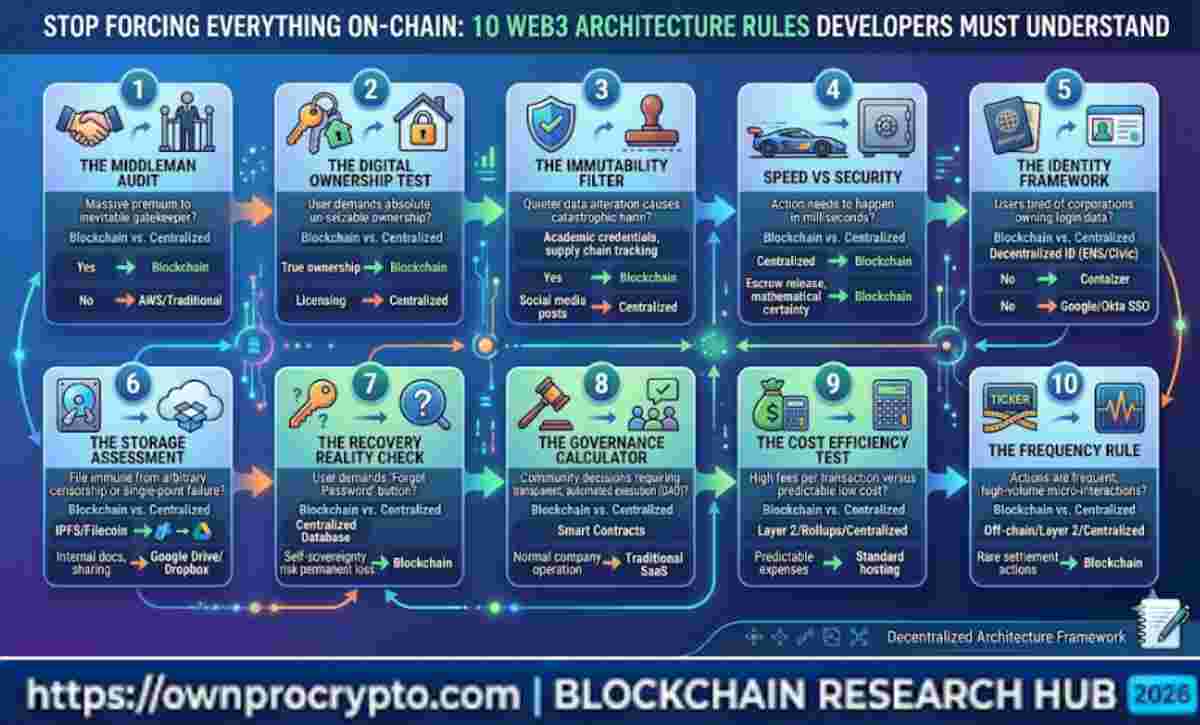
The Web3 market entering 2026 looks different from the earlier cycle. The emphasis is moving away from asking whether blockchain itself is interesting and toward asking which blockchain capabilities can solve a measurable problem better than existing technology.
| Earlier Web3 approach | 2026 direction | Why it matters |
|---|---|---|
| Users manage blockchain complexity | Applications abstract complexity | Better onboarding and retention |
| Manual transaction workflows | Intent-based and automated workflows | Software can execute multi-step tasks |
| One-size-fits-all chains | Specialized architectures | Applications can optimize for their requirements |
| Trust through visibility alone | Cryptographic verification | Systems can prove claims without exposing everything |
| Crypto-native interfaces | Embedded Web3 experiences | Blockchain becomes infrastructure rather than destination |
The strongest trend is therefore not a single protocol. It is abstraction. Wallets, transaction routing, verification, identity, data availability and blockchain execution are increasingly being packaged into components that developers can integrate without exposing every underlying mechanism to the end user.
Not every technology receiving attention in 2026 deserves to be called a lasting trend. A professional assessment should separate narrative momentum from structural adoption.
| Signal | Weak evidence | Strong evidence |
|---|---|---|
| Usage | Short-term spikes | Repeated organic use |
| Developers | Announcement-driven | Independent production builds |
| Economics | Subsidized activity | Sustainable demand |
| UX | Adds complexity | Hides complexity |

One of the most significant Web3 trends in 2026 is the convergence of blockchain with increasingly capable AI agents. The important change is that software can move from recommending an action toward executing a bounded action.
A chatbot primarily responds to instructions. An agent can observe information, reason over a task, call software tools, maintain state and execute actions within permissions. When blockchain infrastructure is added, those actions can become economically consequential.
Observe → Understand → Decide → Request permission → Execute → Verify → Record outcome
Giving software economic authority introduces a new design problem: how much authority should an agent have, and how can that authority be constrained and audited? That makes permissions, verification, identity and recovery just as important as model intelligence.

A mature Web3 product should not require every user to understand gas, nonce management, network selection, seed phrases or transaction routing. In 2026, account abstraction, embedded wallets and intent-based experiences are helping developers move those details behind the application interface.
| User problem | 2026 design direction |
|---|---|
| “Which network do I choose?” | Application selects or routes infrastructure |
| “Where do I get gas?” | Sponsored or abstracted transaction costs |
| “Why do I need a seed phrase?” | Alternative account recovery and authentication models |
| “Why sign five transactions?” | Bundled and programmable actions |
The winning Web3 application may increasingly be the one that users do not recognize as a blockchain application. This is a major architectural change because adoption becomes measured through completed tasks rather than wallet creation alone.

Zero-knowledge technology is becoming broader than the simple idea of hiding transaction information. Its deeper value is the ability to prove that a computation or statement satisfies defined conditions without revealing every underlying input.
The long-term significance of zero-knowledge systems is their potential to make verification cheaper, more private and more portable across applications. The technology remains technically demanding, so performance, proof generation cost, developer tooling and operational complexity should be evaluated before treating every ZK application as production-ready.

Decentralized physical infrastructure networks, commonly called DePIN, represent a different direction for Web3 because their value is not limited to digital assets. They use economic incentives and decentralized coordination to organize physical resources such as connectivity, computing capacity, storage or sensing infrastructure.
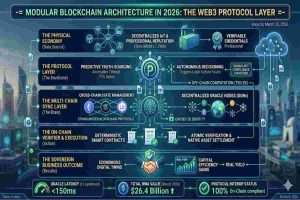
Another major Web3 trend is architectural specialization. Instead of expecting one network to optimize every possible requirement, developers increasingly have more options for separating or customizing execution, settlement, data availability and application logic.
| Requirement | Architecture question | Professional concern |
|---|---|---|
| Performance | Where should execution happen? | Throughput and latency |
| Data | How is data made available? | Cost and availability assumptions |
| Control | How much can the application customize? | Operational responsibility |
| Connectivity | How does the application interact with other systems? | Integration complexity |
The question for builders is increasingly not “Which blockchain is best?” but “Which architecture best fits this application’s technical and economic requirements?” That change favors modular tooling, application-specific environments and infrastructure that can be composed rather than selected as one giant package.

As Web3 applications become more automated, the quality of the information they consume becomes increasingly important. Smart contracts and autonomous software cannot simply “trust” a claim because it appears in an interface. They need mechanisms for determining whether information is authentic, current and permitted for the intended use.
Where did the information originate?
Who or what confirms the claim?
Can the claim be independently verified?
Is the information still valid for this action?
An autonomous system can act faster than a human, but that does not make its inputs trustworthy. The combination of AI agents, cryptographic proofs, attestations, verifiable credentials and trusted data sources is therefore becoming an important part of the Web3 technology stack.
The next stage of Web3 adoption may look less like a new category of websites and more like ordinary applications quietly using blockchain infrastructure. Users increasingly expect familiar authentication, simple payments, predictable interfaces and fast completion of tasks.
A useful way to judge consumer Web3 is to ask how many blockchain-specific decisions a normal user must make.
| Experience | High-friction Web3 | Mature Web3 direction |
|---|---|---|
| Login | Wallet-first | Familiar authentication |
| Transaction | Manual signing sequence | Application-managed workflow |
| Network | User selects chain | Infrastructure becomes abstracted |
| Recovery | Single secret dependency | Multiple recovery mechanisms |
If a product requires a new user to understand wallets, networks, gas and signing before completing a basic task, the infrastructure is still visible. If those concepts are mostly hidden while users retain the benefits of programmable ownership or verification, the technology is closer to mainstream product design.
A trend becomes useful when it can inform a decision. Developers, investors, researchers and businesses should therefore evaluate technologies using the same discipline they would apply to any emerging infrastructure.
| Question | What to investigate | Warning sign |
|---|---|---|
| 1. Demand | Who actually needs it? | Only speculative demand |
| 2. Usage | Are users returning? | One-time activity |
| 3. Technology | Is the architecture mature? | Critical components experimental |
| 4. Security | What can fail? | Unknown failure modes |
| 5. Economics | Does the model work without incentives? | Unsustainable subsidies |
| 6. UX | Does it reduce friction? | Adds technical complexity |
| 7. Integration | Can existing systems connect? | Closed ecosystem |
| 8. Governance | Who controls critical decisions? | Unclear responsibility |
| 9. Evidence | What measurable results exist? | Marketing claims only |
| 10. Durability | Would it matter without the token narrative? | Narrative-dependent value |
The most durable Web3 trends are unlikely to be the ones with the loudest marketing. They are more likely to be the technologies that quietly make digital systems easier to verify, automate, coordinate and own.
| Technology direction | 2026 position | 2030 question |
|---|---|---|
| AI + Web3 | Rapid experimentation and early production | Can autonomous software operate safely at scale? |
| Account abstraction | Increasingly practical | Will users still notice wallets? |
| Zero knowledge | Strong infrastructure development | Can verification become cheap and ubiquitous? |
| Modular architecture | Growing specialization | Which layers become standardized? |
| DePIN | Emerging physical infrastructure model | Can decentralized coordination outperform centralized networks? |
| Verifiable data | Increasingly important | Can digital information become reliably machine-verifiable? |
The following table identifies the high-impact shifts driving Enterprise Web3 adoption and Web3 infrastructure growth as we enter 2026.
| # | Case Study | Problem | Objectives | Analysis / Situation | Implementation | Challenges | Results / Outcomes |
| 1 | RWA Real Estate | Global real estate markets lacked liquidity and fractional access. | Tokenize real-world assets to enable 24/7 global trading. | Traditional settlement took months and high fees. | Launched ERC-3643 compliant on-chain fractional ownership. | Managing local legal and jurisdictional barriers. | $500M in illiquid assets moved to tokenized economies. |
| 2 | Institutional DeFi | Massive capital stayed on the sidelines due to KYC/AML gaps. | Attract Institutional DeFi via permissioned liquidity. | Large banks required on-chain compliance protocols. | Built KYC-enabled pools on a private sub-net. | Maintaining privacy while meeting global reporting rules. | 40% increase in institutional TVL and market maturity. |
| 3 | Agentic Commerce | Smart contracts were “static” and unable to negotiate. | Enable AI + Web3 Integration for autonomous trading. | Automated systems lacked the intelligence to optimize yields. | Deployed AI agents capable of smart contract automation. | Ensuring “Solver” integrity and preventing AI bias. | Real Yield growth driven by 24/7 autonomous optimization. |
| 4 | DePIN Utility | Centralized WiFi networks were expensive and siloed. | Decentralize physical infrastructure for cost efficiency. | Web2 telco models struggled with rural coverage/high costs. | Launched token incentives for independent node operators. | Standardizing hardware for global interoperability. | Created a resilient, user-owned global network at 30% lower cost. |
| 5 | Modular Scalability | Monolithic chains were too slow for mass-market apps. | Transition to Modular Blockchains for speed/low cost. | Network congestion caused $50+ gas fees in peak times. | Disaggregated execution, data, and consensus layers. | Developer learning curves for new modular stacks. | Gas fees dropped to <$0.01, enabling Web3 mass adoption. |
| 6 | DID Privacy | Users lost data ownership to centralized social platforms. | Enable Decentralized Identity (DID) and data sovereignty. | Data leaks in Web2 created a demand for self-custody wallets. | Integrated zero-knowledge verification for social logins. | Overcoming legacy network effects of Web2 giants. | Privacy-first social graphs with 100% user data control. |
| 7 | Governance 3.0 | DAO voting was slow, leading to “Governance Fatigue.” | Improve DAO governance trends via AI automation. | Manual proposal cycles took weeks, losing market timing. | Introduced AI-assisted on-chain voting and signal filtering. | Trusting automated systems with treasury management. | 5x faster decision cycles and higher community engagement. |
| 8 | Zero-Gas Gaming | High transaction costs made gaming unplayable for casuals. | Build sustainable economies with Web3 UX improvement. | Early games were “Play-to-Earn” hype without fun or utility. | Implemented “Gas Sponsorship” via account abstraction. | Onboarding users who have never used a wallet before. | 1M+ active players retained via seamless “invisible” Web3. |
| 9 | SaaS 3.0 Compliance | Enterprises lacked a verifiable trail for auditing. | Integrate Web3 security solutions into business SaaS. | Manual auditing was prone to fraud and human error. | Built on-chain audit trails with On-chain compliance. | Legacy API integration and system latency. | 90% reduction in audit time and 100% data integrity. |
| 10 | Micro-Pay Systems | Global creators struggled with high payment processor fees. | Enable global micro-payments via Layer 2 scalability. | 30% “App Store” taxes killed small-scale creator models. | Launched Lightning-speed payment channels on L2. | Regional regulatory nuances for crypto-transfers. | Enabled “Pay-per-Second” streaming and micro-tipping globally. |
| 11 | eBay NFT Resale | Secondary market for collectibles was rife with fraud/fakes. | Authenticate physical goods using NFT digital twins. | Buyers lacked proof of provenance for high-value items. | Integrated on-chain certificates for luxury and sports cards. | Onboarding traditional collectors to self-custody wallets. | 95% reduction in item disputes; increased marketplace trust. |
| 12 | Shopify Web3 | Merchants struggled with high credit card transaction fees. | Integrate permissionless finance as a direct payment layer. | Processing fees averaged 3%, eating into small business ROI. | Launched native wallet connect and crypto-settlement tools. | Handling real-time crypto-to-fiat tax reporting. | Merchants saved 2.5% on fees; expanded global customer reach. |
| 13 | PayPal PYUSD | Cross-border remittances were slow and expensive (3-5 days). | Accelerate global settlement using a compliant stablecoin. | Legacy SWIFT systems were archaic for modern digital commerce. | Scaled PYUSD on Layer 2 scalability networks for low cost. | Regulatory pressure on stablecoin reserve transparency. | Instant cross-border settlement with sub-$0.10 fees globally. |
| 14 | BestBuy Tech-Cycle | E-waste increased due to opaque hardware secondary markets. | Enable a circular economy via Real-world asset tokenization. | Used electronics lacked a verifiable repair and ownership history. | Attached unique on-chain IDs to devices to track lifecycle. | Standardizing metadata across various tech manufacturers. | 30% increase in resale value for verified-history hardware. |
| 15 | Walmart Supply | Tracking food safety across global routes was slow. | Achieve 100% On-chain compliance and traceability. | Traditional databases were siloed, making recalls difficult. | Migrated supply chain logs to an immutable, shared ledger. | Convincing smaller farmers to adopt Web3 logging tools. | Recalls localized in minutes instead of weeks; saved millions. |
| 16 | Nike Virtual Studio | Digital fashion lacked interoperability between metaverses. | Create “Inter-operable” digital assets for the Future of Web3. | Users couldn’t wear their digital gear across different apps. | Developed cross-chain interoperability for virtual wearables. | Technical differences in engine rendering (Unity vs Unreal). | Doubled digital revenue via cross-platform asset utility. |
| 17 | Amazon Web3 Infra | High barrier to entry for developers launching L2 nodes. | Simplify Web3 infrastructure growth for enterprises. | Setting up nodes was technically complex and time-consuming. | Launched one-click modular blockchain node deployment via AWS. | Balancing centralized hosting with decentralized ideals. | 300% growth in decentralized app deployments on AWS. |
| 18 | Starbucks Loyalty | Traditional points programs had low engagement and zero value. | Tokenize loyalty points for the Web3 trends 2026 era. | Customers felt points were “stale” and lacked real utility. | Migrated rewards to an NFT-based secondary market ecosystem. | Educating millions of non-crypto users on “Points vs Tokens.” | 50% increase in daily active users within the loyalty app. |
| 19 | Mastercard Identity | Online “Guest Checkout” fraud was rising globally. | Secure payments via Decentralized Identity (DID). | CVV and card numbers were easily stolen/phished in Web2. | Replaced card numbers with one-time ZK-identity proofs. | Global merchant adoption of new Web3 checkout standards. | Near-zero checkout fraud and faster transaction approvals. |
| 20 | Ticketmaster DAOs | Scalping and bots ruined the fan experience for live events. | Decentralize ticket ownership and price ceilings. | Legacy databases allowed bots to buy and flip stock instantly. |
The strongest Web3 trends in 2026 are not necessarily the loudest narratives. They are the technologies that make decentralized systems more usable, programmable, verifiable and compatible with ordinary software.
AI agents, programmable accounts, zero-knowledge systems, modular architecture, DePIN and verifiable data are important for the same underlying reason: they move Web3 closer to being infrastructure rather than an experience users must consciously learn.
For professionals, the best question is therefore not “What is trending?” but “Which technological change is becoming difficult to reverse?”
The questions below are grouped by the way professionals usually research a new Web3 technology: understanding the trend, evaluating its practical value and deciding whether it deserves attention.
The rapid pace of innovation can make the ecosystem difficult to navigate. Following a structured approach helps reduce unnecessary risk.
The following table identifies the high-impact shifts driving Enterprise Web3 adoption and Web3 infrastructure growth as we enter 2026.
| # | Case Study | Problem | Objectives | Analysis / Situation | Implementation | Challenges | Results / Outcomes |
| 1 | RWA Real Estate | Global real estate markets lacked liquidity and fractional access. | Tokenize real-world assets to enable 24/7 global trading. | Traditional settlement took months and high fees. | Launched ERC-3643 compliant on-chain fractional ownership. | Managing local legal and jurisdictional barriers. | $500M in illiquid assets moved to tokenized economies. |
| 2 | Institutional DeFi | Massive capital stayed on the sidelines due to KYC/AML gaps. | Attract Institutional DeFi via permissioned liquidity. | Large banks required on-chain compliance protocols. | Built KYC-enabled pools on a private sub-net. | Maintaining privacy while meeting global reporting rules. | 40% increase in institutional TVL and market maturity. |
| 3 | Agentic Commerce | Smart contracts were “static” and unable to negotiate. | Enable AI + Web3 Integration for autonomous trading. | Automated systems lacked the intelligence to optimize yields. | Deployed AI agents capable of smart contract automation. | Ensuring “Solver” integrity and preventing AI bias. | Real Yield growth driven by 24/7 autonomous optimization. |
| 4 | DePIN Utility | Centralized WiFi networks were expensive and siloed. | Decentralize physical infrastructure for cost efficiency. | Web2 telco models struggled with rural coverage/high costs. | Launched token incentives for independent node operators. | Standardizing hardware for global interoperability. | Created a resilient, user-owned global network at 30% lower cost. |
| 5 | Modular Scalability | Monolithic chains were too slow for mass-market apps. | Transition to Modular Blockchains for speed/low cost. | Network congestion caused $50+ gas fees in peak times. | Disaggregated execution, data, and consensus layers. | Developer learning curves for new modular stacks. | Gas fees dropped to <$0.01, enabling Web3 mass adoption. |
| 6 | DID Privacy | Users lost data ownership to centralized social platforms. | Enable Decentralized Identity (DID) and data sovereignty. | Data leaks in Web2 created a demand for self-custody wallets. | Integrated zero-knowledge verification for social logins. | Overcoming legacy network effects of Web2 giants. | Privacy-first social graphs with 100% user data control. |
| 7 | Governance 3.0 | DAO voting was slow, leading to “Governance Fatigue.” | Improve DAO governance trends via AI automation. | Manual proposal cycles took weeks, losing market timing. | Introduced AI-assisted on-chain voting and signal filtering. | Trusting automated systems with treasury management. | 5x faster decision cycles and higher community engagement. |
| 8 | Zero-Gas Gaming | High transaction costs made gaming unplayable for casuals. | Build sustainable economies with Web3 UX improvement. | Early games were “Play-to-Earn” hype without fun or utility. | Implemented “Gas Sponsorship” via account abstraction. | Onboarding users who have never used a wallet before. | 1M+ active players retained via seamless “invisible” Web3. |
| 9 | SaaS 3.0 Compliance | Enterprises lacked a verifiable trail for auditing. | Integrate Web3 security solutions into business SaaS. | Manual auditing was prone to fraud and human error. | Built on-chain audit trails with On-chain compliance. | Legacy API integration and system latency. | 90% reduction in audit time and 100% data integrity. |
| 10 | Micro-Pay Systems | Global creators struggled with high payment processor fees. | Enable global micro-payments via Layer 2 scalability. | 30% “App Store” taxes killed small-scale creator models. | Launched Lightning-speed payment channels on L2. | Regional regulatory nuances for crypto-transfers. | Enabled “Pay-per-Second” streaming and micro-tipping globally. |
| 11 | eBay NFT Resale | Secondary market for collectibles was rife with fraud/fakes. | Authenticate physical goods using NFT digital twins. | Buyers lacked proof of provenance for high-value items. | Integrated on-chain certificates for luxury and sports cards. | Onboarding traditional collectors to self-custody wallets. | 95% reduction in item disputes; increased marketplace trust. |
| 12 | Shopify Web3 | Merchants struggled with high credit card transaction fees. | Integrate permissionless finance as a direct payment layer. | Processing fees averaged 3%, eating into small business ROI. | Launched native wallet connect and crypto-settlement tools. | Handling real-time crypto-to-fiat tax reporting. | Merchants saved 2.5% on fees; expanded global customer reach. |
| 13 | PayPal PYUSD | Cross-border remittances were slow and expensive (3-5 days). | Accelerate global settlement using a compliant stablecoin. | Legacy SWIFT systems were archaic for modern digital commerce. | Scaled PYUSD on Layer 2 scalability networks for low cost. | Regulatory pressure on stablecoin reserve transparency. | Instant cross-border settlement with sub-$0.10 fees globally. |
| 14 | BestBuy Tech-Cycle | E-waste increased due to opaque hardware secondary markets. | Enable a circular economy via Real-world asset tokenization. | Used electronics lacked a verifiable repair and ownership history. | Attached unique on-chain IDs to devices to track lifecycle. | Standardizing metadata across various tech manufacturers. | 30% increase in resale value for verified-history hardware. |
| 15 | Walmart Supply | Tracking food safety across global routes was slow. | Achieve 100% On-chain compliance and traceability. | Traditional databases were siloed, making recalls difficult. | Migrated supply chain logs to an immutable, shared ledger. | Convincing smaller farmers to adopt Web3 logging tools. | Recalls localized in minutes instead of weeks; saved millions. |
| 16 | Nike Virtual Studio | Digital fashion lacked interoperability between metaverses. | Create “Inter-operable” digital assets for the Future of Web3. | Users couldn’t wear their digital gear across different apps. | Developed cross-chain interoperability for virtual wearables. | Technical differences in engine rendering (Unity vs Unreal). | Doubled digital revenue via cross-platform asset utility. |
| 17 | Amazon Web3 Infra | High barrier to entry for developers launching L2 nodes. | Simplify Web3 infrastructure growth for enterprises. | Setting up nodes was technically complex and time-consuming. | Launched one-click modular blockchain node deployment via AWS. | Balancing centralized hosting with decentralized ideals. | 300% growth in decentralized app deployments on AWS. |
| 18 | Starbucks Loyalty | Traditional points programs had low engagement and zero value. | Tokenize loyalty points for the Web3 trends 2026 era. | Customers felt points were “stale” and lacked real utility. | Migrated rewards to an NFT-based secondary market ecosystem. | Educating millions of non-crypto users on “Points vs Tokens.” | 50% increase in daily active users within the loyalty app. |
| 19 | Mastercard Identity | Online “Guest Checkout” fraud was rising globally. | Secure payments via Decentralized Identity (DID). | CVV and card numbers were easily stolen/phished in Web2. | Replaced card numbers with one-time ZK-identity proofs. | Global merchant adoption of new Web3 checkout standards. | Near-zero checkout fraud and faster transaction approvals. |
| 20 | Ticketmaster DAOs | Scalping and bots ruined the fan experience for live events. | Decentralize ticket ownership and price ceilings. | Legacy databases allowed bots to buy and flip stock instantly. |
1️⃣ AI-Powered NFT Use Cases Tracker
| NFT Name | AI Feature | Use Case | Industry | Risk Level | Notes |
|---|---|---|---|---|---|
| AIArtGen | Image Generation | Dynamic art generation | Art | Medium | Algorithm updates can change outputs |
| MusicBotNFT | AI Composition | Music tracks auto-generated | Music | Low | Rights clearly defined |
| GameAI | AI NPC | Smart game characters | Gaming | Medium | Needs frequent updates |
| FashionAI | AI Styling | Personalized fashion NFT | Fashion | Low | Predictive analytics enabled |
| MetaPetAI | AI Companion | Virtual pet interaction | Metaverse | Medium | Chatbot-driven behavior |
2️⃣ Institutional Adoption Scorecard
| Institution | Web3 Sector | Investment Type | AI Integration | Adoption Stage | Notes |
|---|---|---|---|---|---|
| BankXYZ | NFTs | Treasury reserve | Low | Pilot | Experimenting with digital assets |
| FundAlpha | DeFi | Staking & Yield | Medium | Active | AI predictive models in yield optimization |
| TechCorp | Metaverse | Platform launch | High | Beta | AI avatars integrated |
| InsureChain | Insurance | Risk assessment | Medium | Pilot | Fraud detection using AI |
| EduDAO | Education | Tokenized Certificates | Low | Concept | AI grading automation |
3️⃣ Web3 Trend Radar 2026
| Trend | Impact | Adoption Rate | AI Convergence | Dummy Example |
|---|---|---|---|---|
| Tokenized Assets | High | 60% | Medium | Institutional real estate tokens |
| AI-Powered Marketplaces | High | 40% | High | AI NFT marketplaces |
| Decentralized Identity | Medium | 50% | Low | Self-sovereign ID apps |
| On-Chain Analytics | High | 70% | Medium | AI predictive dashboards |
| DAO Governance 2.0 | Medium | 30% | High | AI-assisted decision-making |
4️⃣ AI + DeFi Use Case Mapping
| Project | AI Component | DeFi Application | Potential ROI | Risk Level |
|---|---|---|---|---|
| YieldAI | Predictive yield | Auto staking | 12% | Medium |
| RiskGuard | AI scoring | Loan underwriting | 8% | Low |
| SwapBot | Trading AI | Automated DEX swaps | 15% | High |
| VaultAI | Portfolio AI | Multi-chain vaults | 10% | Medium |
| LiquiAI | Optimization | Liquidity provision | 9% | Medium |
5️⃣ Web3 Project Evaluation Checklist
| Project | AI Integration | Institutional Readiness | Security Audit | Market Potential | Dummy Example |
|---|---|---|---|---|---|
| MetaBank | Medium | High | ✅ | High | AI-assisted digital banking |
| ArtChain | High | Medium | ✅ | Medium | NFT art marketplace |
| DeFiAI | High | High | ✅ | High | AI-driven lending platform |
| EduToken | Low | Medium | ✅ | Low | Tokenized educational content |
| HealthDAO | Medium | High | ✅ | Medium | AI health data marketplace |
6️⃣ Web3 & AI Roadmap Planner
| Phase | Initiative | Timeline | AI Use | Institutional Engagement | Notes |
|---|---|---|---|---|---|
| Q1 2026 | NFT AI Pilot | Jan–Mar | Medium | Banks | Test AI-driven NFT creation |
| Q2 2026 | DeFi Automation | Apr–Jun | High | Hedge funds | Yield optimization models |
| Q3 2026 | DAO AI Governance | Jul–Sep | High | Venture firms | AI-assisted voting |
| Q4 2026 | Metaverse Scaling | Oct–Dec | Medium | Tech conglomerates | AI avatars & events |
| Q4 2026 | Analytics Integration | Oct–Dec | High | All sectors | Predictive dashboards |
7️⃣ AI-Convergence Risk Assessment
| Trend | Risk Type | Probability | Impact | Mitigation | Example |
|---|---|---|---|---|---|
| AI NFT Manipulation | Technical | Medium | High | Smart contract audit | Fake AI-generated art |
| AI Bias in DeFi | Ethical | Medium | Medium | Algorithm review | Loan scoring bias |
| AI Governance Errors | Operational | Low | High | Multi-layer validation | DAO voting errors |
| AI Market Volatility | Financial | High | Medium | Portfolio diversification | Automated trading AI |
| Privacy Risks | Legal | Medium | High | Data encryption | On-chain AI analytics |
8️⃣ Web3 Adoption Metrics Tracker
| Metric | Current | Target 2026 | Growth % | AI Role | Notes |
|---|---|---|---|---|---|
| Wallets | 250M | 400M | 60% | Medium | AI onboarding automation |
| Tokenized Assets | $50B | $120B | 140% | Medium | AI valuation models |
| DAOs | 10k | 18k | 80% | High | AI-assisted governance |
| NFT Market Cap | $30B | $80B | 167% | High | AI-driven art discovery |
| DeFi TVL | $100B | $180B | 80% | Medium | Predictive yield AI |
9️⃣ Institutional Scaling Planner
| Institution | Sector | Scaling Approach | AI Integration | Timeline | Notes |
|---|---|---|---|---|---|
| BankXYZ | Banking | Tokenized assets | Low | 2026 Q2 | Pilot project with AI insights |
| FundAlpha | Hedge Fund | DeFi exposure | Medium | 2026 Q3 | AI trading algorithms |
| TechCorp | Gaming | Metaverse platforms | High | 2026 Q4 | AI avatars and NPCs |
| EduDAO | Education | Tokenized certifications | Low | 2026 Q3 | AI grading & automation |
| InsureChain | Insurance | Smart contract policies | Medium | 2026 Q2 | Fraud detection |
10️⃣ AI-Powered NFT Marketplace Comparison
| Marketplace | AI Feature | Chain | Fees | Institutional Friendly | Dummy Example |
|---|---|---|---|---|---|
| OpenAIArt | AI curation | Ethereum | 2.5% | ✅ | AIArtGen sales |
| MusicAI | AI composition | Polygon | 2% | ✅ | MusicBotNFT listed |
| MetaAI | AI avatars | Solana | 1.5% | ✅ | MetaPetAI launch |
| GameBot | AI NPC | Ethereum | 2% | ❌ | GameAI marketplace |
| FashionAI | AI styling | Polygon | 2% | ✅ | FashionAI NFT drop |
11️⃣ Trend Analysis Dashboard (Yearly 2026)
| Trend | Current Adoption | Projected Adoption | AI Influence | Institutional Engagement | Example |
|---|---|---|---|---|---|
| AI NFT Creation | 30% | 70% | High | Medium | AIArtGen & MusicBotNFT |
| DeFi Automation | 40% | 75% | High | High | DeFiAI project |
| DAO Governance 2.0 | 25% | 60% | Medium | High | AI-assisted DAOs |
| Tokenized Real Estate | 15% | 50% | Medium | High | MetaBank pilot |
| Predictive Marketplaces | 20% | 65% | High | Medium | OpenAIArt & MetaAI |
The foundation of every financial article in this series is the Basic Return on Investment (ROI) Formula, with additional metrics expanding into DeFi, tokenization, NFTs, DAOs, AI, and institutional blockchain adoption. These formulas provide practical methods for evaluating performance, profitability, efficiency, and ecosystem growth across the evolving Web3 landscape.
| Post | Metric | Formula (Google Sheets / Excel) | Description |
|---|---|---|---|
| Crypto Asset ROI | Basic ROI | =(CurrentValue-InitialCost)/InitialCost |
Calculates the percentage gain or loss relative to the original investment. |
| Crypto Asset ROI | Annualized ROI | =((CurrentValue/InitialCost)^(1/Years))-1 |
Calculates the average annual return over the investment period. |
| Crypto Asset ROI | True ROI | =(FinalValue-TotalFees-Taxes-InitialCost)/InitialCost |
Calculates net ROI after deducting trading fees, gas fees, and taxes. |
Although this article focuses primarily on industry trends and security practices, several key ecosystem metrics help measure adoption and protocol growth.
| Post | Metric | Formula (Google Sheets / Excel) | Description |
| Blockchain Trends 2026 | Total Value Locked (TVL) | =SUMPRODUCT(PriceRange,QuantityRange) |
Calculates the total value of assets locked within a DeFi protocol. |
| Blockchain Trends 2026 | Token Holder Growth Rate | =(NewHolders-OldHolders)/OldHolders |
Measures the percentage growth in token holders over a specific period. |
These formulas evaluate investment performance for tokenized real-world assets (RWAs), including fractional ownership models.
| Post | Metric | Formula (Google Sheets / Excel) | Description |
| Tokenized Assets | Tokenized Asset ROI | =(TokenSalePrice-OriginalTokenPrice)/OriginalTokenPrice |
Calculates investment returns on tokenized or fractional assets. |
| Tokenized Assets | Rental Yield | =(AnnualRent-AnnualExpenses)/CurrentAssetValue |
Measures annual net rental income relative to the asset’s current market value. |
DeFi protocols rely heavily on financial ratios, collateral management, and yield calculations.
| Post | Metric | Formula (Google Sheets / Excel) | Description |
| DeFi 2026 | Annual Percentage Yield (APY) | =(1+APR/n)^n-1 |
Calculates the effective annual return after compounding. |
| DeFi 2026 | Liquidation Ratio | =CollateralValue/LoanValue |
Determines whether collateral sufficiently covers an outstanding loan. |
| DeFi 2026 | Impermanent Loss (Simplified) | =1-(2*SQRT(PriceRatio)/(1+PriceRatio)) |
Estimates liquidity provider loss caused by price divergence in constant-product AMMs. |
NFT valuation focuses on pricing, royalties, and marketplace profitability.
| Post | Metric | Formula (Google Sheets / Excel) | Description |
| NFTs & Digital Ownership | Floor Price | =MIN(AskingPriceRange) |
Returns the lowest listed price within an NFT collection. |
| NFTs & Digital Ownership | Creator Royalty | =SecondarySalePrice*RoyaltyPercentage |
Calculates royalty earnings from secondary market sales. |
| NFTs & Digital Ownership | Net Transaction Value | =SalePrice-PlatformFees-GasFees-CreatorRoyalty |
Calculates the seller’s net proceeds after all transaction costs. |
This article evaluates business performance and operational efficiency as AI and blockchain increasingly converge.
| Post | Metric | Formula (Google Sheets / Excel) | Description |
| Web3 Trends 2026 | Customer Acquisition Cost (CPA) | =TotalCampaignSpend/NewWallets |
Calculates the average cost of acquiring a new on-chain wallet or user. |
| Web3 Trends 2026 | Customer Lifetime Value (CLV) | =AveragePurchaseValue*PurchaseFrequency*CustomerLifespan |
Estimates the long-term revenue generated by an individual customer. |
| Web3 Trends 2026 | AI Tool ROI | =(EfficiencyGainValue-ToolCost)/ToolCost |
Measures the return generated from adopting AI-powered automation tools. |
Community participation and governance metrics help evaluate the health of decentralized applications and autonomous organizations.
| Post | Metric | Formula (Google Sheets /Excel) | Description |
| dApps & DAOs | Voter Participation Rate | =WalletsVoted/EligibleWallets |
Measures the percentage of eligible wallets participating in governance voting. |
| dApps & DAOs | Quorum Rate | =TokensVoted/TotalCirculatingTokens |
Calculates the percentage of circulating governance tokens used in proposal voting. |
| dApps & DAOs | Token Distribution Score | =1-(TokensHeldByTop10Wallets/TotalTokenSupply) |
Provides a simple indicator of token ownership concentration and governance decentralization. |
This article is part of our RWA & Tokenized Real Estate 2026 Research Library, a connected group of resources designed to help investors and institutions understand real-world asset tokenization, property-backed income, legal structures, portfolio allocation, liquidity, risk and on-chain financial infrastructure in 2026.