
Search by title, topic or phrase
Use our Crypto Search Engine 🔍 to find the topics and keywords you're looking for.
The Unified Operating Map of Digital Assets, Blockchain Systems, AI Finance & Web3 Infrastructure

Table of Contents
ToggleThe Crypto Ecosystem Intelligence Hub (2026–2030) is a comprehensive guide to the technologies, infrastructure, and investment frameworks shaping digital finance. Rather than focusing on a single cryptocurrency or trend, this hub explains how Bitcoin, blockchain networks, Web3 applications, decentralized finance (DeFi), artificial intelligence, tokenomics, stablecoins, institutional infrastructure, digital asset security, and tokenized real-world assets (RWAs) fit together within the broader crypto ecosystem.
Whether you’re a beginner learning how blockchain works, an investor researching digital assets, or a professional exploring emerging Web3 infrastructure, this guide provides a structured roadmap to help you understand the relationships between today’s technologies and the innovations expected to influence the digital economy through 2030.
Each section serves as a central hub that connects to in-depth OwnProCrypto guides, helping you move from foundational concepts to advanced investment research, portfolio construction, security best practices, and long-term decision frameworks.
This guide connects every major domain:
 Bitcoin & macro digital assets Blockchain architecture & consensus Tokenomics & incentive design AI-powered investing systems Web3 application ecosystems Security, custody & risk frameworks Stablecoin payment networks Institutional crypto infrastructure Tokenized real-world assets (RWA) Cross-chain interoperability Digital ownership & sovereignty
Each section links into deeper OwnProCrypto systems.
The cryptocurrency industry is no longer a single market.
It has evolved into a multi-layer financial and technological ecosystem combining:
This Hub connects the entire system into one structured intelligence map so readers can understand:
Today’s digital asset system is a connected network of technologies, including:
This hub is designed to connect all of it into one structured mental model.
Not as scattered guides.
But as a single operating map of the crypto ecosystem (2026–2030).
| Mistake | Result |
|---|---|
| Learning only Bitcoin | Miss DeFi + AI impact |
| Focusing only on trading | Ignoring custody + regulation |
| Ignoring tokenomics | Exposure to hidden inflation risk |
| Ignoring infrastructure | Misreading scalability trends |
| Ignoring institutions | Missing real capital flow |
👉 Related Resources:
→ https://ownprocrypto.com/crypto-fundamental-analysis-guide/
→ https://ownprocrypto.com/bitcoin-as-a-macro-hedge/
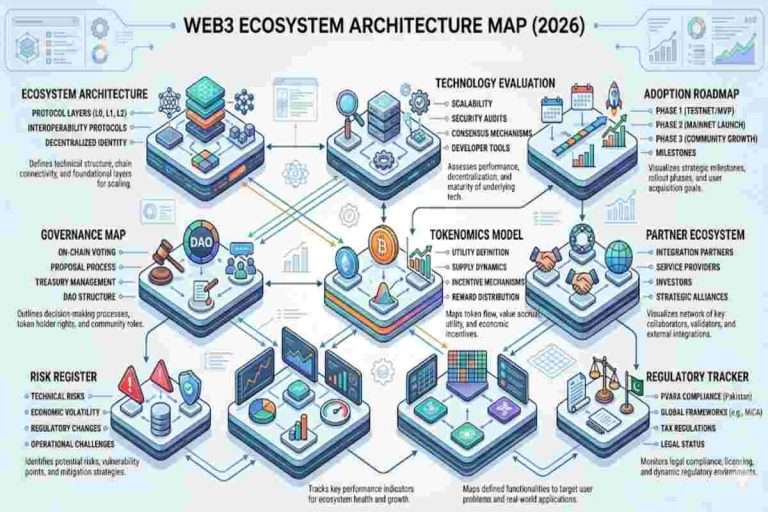
| Layer | Function | Key Systems | Risk Type | Example Assets |
|---|---|---|---|---|
| Monetary Layer | Store & transfer value | Bitcoin, Stablecoins | Volatility, regulation | BTC, USDT, USDC |
| Infrastructure Layer | Blockchain execution | Ethereum, L2s | scalability, congestion | ETH, ARB, OP |
| Data Layer | External data input | Oracles | manipulation risk | Chainlink systems |
| Application Layer | Financial apps | DeFi, NFT, RWAs | smart contract risk | AAVE, UNI |
| Intelligence Layer | AI decision systems | trading bots, agents | model risk | AI crypto systems |
| Institutional Layer | Capital flow & custody | ETFs, custodians | compliance risk | BlackRock products |
| Identity Layer | Ownership & identity | ZK systems | privacy risk | ZK protocols |
Crypto is no longer a “technology”. t is a stacked financial operating system.
Crypto is no longer just:
It has become a stacked economic system where each layer depends on the others.
Stablecoin liquidity
        ↓
DeFi protocols
        ↓
Yield generation
        ↓
AI trading systems
        ↓
Institutional custody
        ↓
ETF capital inflow
        ↓
Market price expansion
A disruption in any layer affects all others.
That is why isolated learning fails.
👉 Related Resources:
→ https://ownprocrypto.com/web3-architecture-guide/
→ https://ownprocrypto.com/blockchain-interoperability-2026/
Cryptocurrency is a digital asset system secured by cryptography and maintained by decentralized networks.
Unlike traditional finance:
| Feature | Traditional Finance | Cryptocurrency |
|---|---|---|
| Control | Centralized banks | Distributed networks |
| Settlement | Days | Minutes/seconds |
| Transparency | Limited | Public ledger |
| Access | Permissioned | Open access |
| Rules | Legal systems | Code + consensus |
Bitcoin is the first successful decentralized monetary system.
| Attribute | Bitcoin |
|---|---|
| Supply | Fixed (21M) |
| Launch | 2009 |
| Security Model | Proof of Work |
| Primary Role | Digital store of value |
| Institutional Role | Macro hedge asset |
Bitcoin is increasingly treated as:
A blockchain is a distributed state machine where nodes agree on a single version of truth.
| Component | Function |
|---|---|
| Blocks | Batch transactions |
| Nodes | Validate data |
| Consensus | Agreement system |
| Cryptography | Security layer |
| Ledger | Historical record |
| Type | Example | Strength | Weakness |
|---|---|---|---|
| PoW | Bitcoin | Maximum security | Energy intensive |
| PoS | Ethereum | Scalable | Validator centralization risk |
A blockchain is a shared, programmable database system that removes dependency on centralized intermediaries.
| Component | Function |
|---|---|
| Blocks | Data storage units |
| Consensus | Agreement mechanism |
| Nodes | Network participants |
| Cryptography | Security layer |
| Smart Contracts | Programmable logic |
| Phase | Description |
|---|---|
| 2009–2015 | Bitcoin era (money only) |
| 2015–2020 | Smart contract emergence |
| 2020–2024 | DeFi + NFTs expansion |
| 2024–2026 | AI + institutional integration |
| 2026–2030 | Tokenized global finance |
Digital scarcity is achieved by:
This is what enables Bitcoin’s value proposition.
Bitcoin is not just a cryptocurrency.
It functions as the settlement layer of digital value.
Key properties:
| Feature | Description |
|---|---|
| Fixed supply | 21 million BTC maximum |
| Decentralized issuance | No central authority |
| Global liquidity | Traded worldwide |
| Institutional adoption | ETFs + custody integration |
| Macro hedge role | Inflation + currency risk hedge |
| Asset | Control | Supply Rule | Settlement Speed |
|---|---|---|---|
| Gold | Physical | Limited mining | Slow |
| USD | Central bank | Expandable | Medium |
| Bitcoin | Network | Fixed | Fast |
👉 Related Resources:
→ https://ownprocrypto.com//bitcoin-price-outlook/
→ https://ownprocrypto.com/is-bitcoin-safe-for-beginners-in-2026/
→ https://ownprocrypto.com/blockchain-primitives/
→ https://ownprocrypto.com/blockchain-project-evaluation/
→ https://ownprocrypto.com/bitcoin-price-outlook/
→ https://ownprocrypto.com/bitcoin-as-a-macro-hedge/

Web3 systems include:
As blockchain adoption expands, ownership is shifting from platform-controlled accounts to user-controlled digital assets. Self-sovereign identity, decentralized credentials, tokenized assets, and non-custodial wallets allow individuals to control data, money, and online identity without relying on centralized intermediaries. This transition forms one of the foundational principles of Web3.
Modern crypto systems are multi-chain by design.
No single blockchain dominates everything.
| Problem | Solution |
|---|---|
| Fragmented liquidity | Cross-chain bridges |
| Isolated ecosystems | Interoperability protocols |
| Asset duplication | Wrapped tokens |
| Data separation | oracle networks |
| Layer | Function |
|---|---|
| Bridge Layer | Asset transfer |
| Messaging Layer | Cross-chain communication |
| Settlement Layer | Final transaction confirmation |
| Security Layer | Fraud prevention |
| Risk Type | Description |
|---|---|
| Bridge hacks | Asset theft |
| Message failure | Data inconsistency |
| Liquidity fragmentation | Capital inefficiency |
👉 Related Resources:
→ https://ownprocrypto.com/web3-interoperability/
→ https://ownprocrypto.com/cross-chain-blockchain-security/
→ https://ownprocrypto.com/web3-architecture-guide/
→ https://ownprocrypto.com/blockchain-interoperability-2026/
→ https://ownprocrypto.com/cross-chain-blockchain-security/
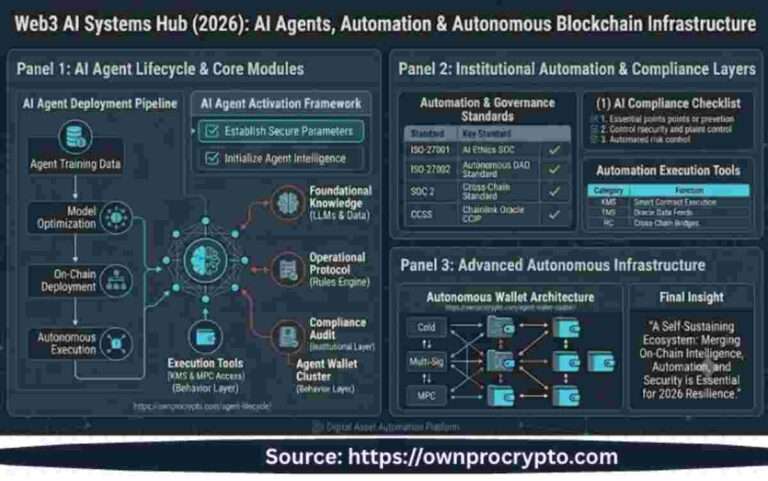
AI is now used for:
| Function | Use Case |
|---|---|
| Data parsing | Market scanning |
| Decision engine | Trade execution |
| Risk scoring | Portfolio safety |
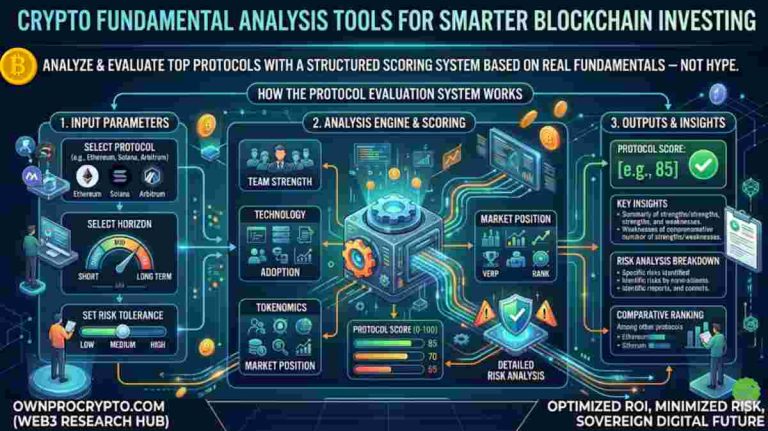
Artificial intelligence is becoming an important layer within modern crypto investing. Rather than replacing investors, AI systems assist by screening projects, analyzing tokenomics, summarizing whitepapers, monitoring market conditions, identifying portfolio risks, and organizing large amounts of blockchain data into actionable investment insights.
Blockchain payment rails enable faster international transfers by reducing intermediary banks and settlement delays. As stablecoin adoption grows, cross-border payments are expected to become one of the largest real-world use cases for digital assets across both consumer and enterprise markets.
Central Bank Digital Currencies (CBDCs) and privately issued stablecoins pursue similar goals but operate under different governance models. CBDCs are issued and controlled by national governments, while stablecoins are typically managed by private organizations and backed by reserve assets. Their coexistence will likely shape the future digital payment ecosystem.
👉 Related Resources:
→ https://ownprocrypto.com/ai-crypto-portfolio-tool/
→ https://ownprocrypto.com/ai-agents-in-web3/
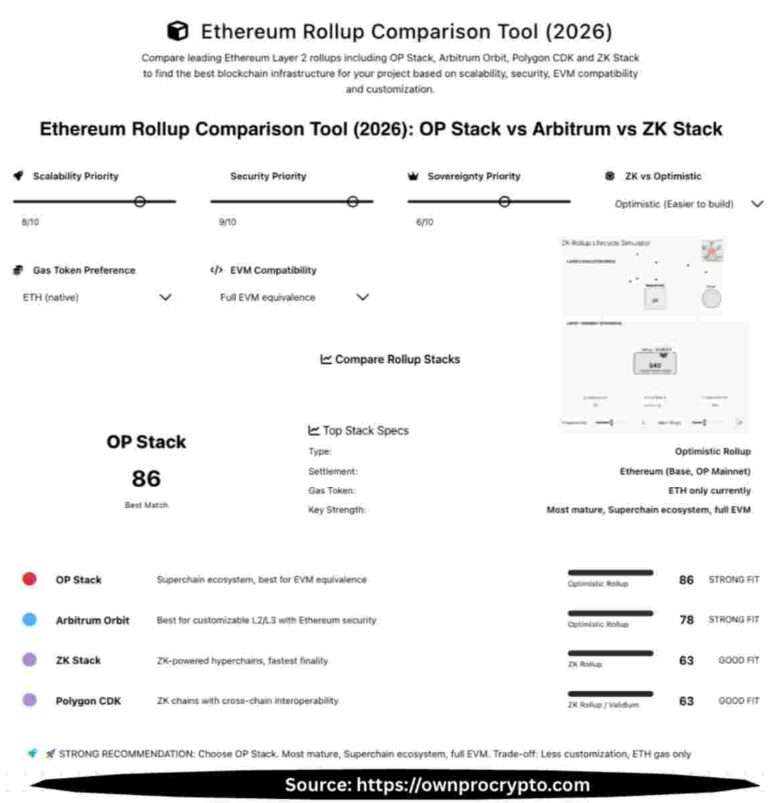
While Bitcoin introduced decentralized digital money, Ethereum expanded blockchain technology into a programmable platform. Instead of only transferring value, Ethereum enables developers to build decentralized applications (dApps), automate agreements through smart contracts, create digital assets, and power entire financial ecosystems without relying on traditional intermediaries.
Today, Ethereum serves as the foundation for much of the decentralized finance (DeFi), NFT, tokenization, and Web3 ecosystem. Thousands of applications and billions of dollars in digital assets operate on Ethereum or on networks compatible with its technology, making it one of the most influential blockchain platforms in the world.
A smart contract is a self-executing computer program deployed on a blockchain. It automatically performs predefined actions when specific conditions are met, eliminating the need for a central authority to verify or enforce an agreement.
For example, instead of relying on a bank or escrow service to release funds, a smart contract can automatically transfer assets once contractual conditions have been fulfilled. Because smart contracts execute transparently on the blockchain, every transaction can be independently verified by participants.
Smart contracts now power a wide range of blockchain applications, including:
Although smart contracts automate execution, they are only as secure as the code developers write. Software vulnerabilities, flawed economic incentives, or oracle failures can still introduce significant risks, highlighting the importance of security audits and protocol evaluation before interacting with decentralized applications.
As blockchain adoption grows, scalability becomes increasingly important. This is where the distinction between Layer 1 and Layer 2 networks becomes essential.
Layer 1 blockchains are the primary blockchain networks responsible for transaction validation, consensus, and security. Examples include Bitcoin, Ethereum, Solana, Avalanche, and Sui.
Layer 2 networks are built on top of Layer 1 blockchains to improve scalability, reduce transaction costs, and increase processing speed while leveraging the underlying security of the base layer.
Common Layer 2 solutions include:
By processing transactions more efficiently before settling them on the main blockchain, Layer 2 technologies enable decentralized applications to scale without sacrificing security or decentralization.
Ethereum transformed blockchain from a digital payment network into a programmable financial and computing infrastructure. Most innovations across decentralized finance, tokenization, AI-powered Web3 applications, digital identity, blockchain gaming, and institutional asset management rely directly or indirectly on smart contract technology.
Understanding Ethereum and smart contracts provides the foundation for many of the advanced topics covered later in this guide, including tokenomics, stablecoins, real-world asset tokenization, institutional infrastructure, and AI-powered crypto systems.
👉 Related Resources:
→ https://ownprocrypto.com/ethereum-rollup-comparison-tool/
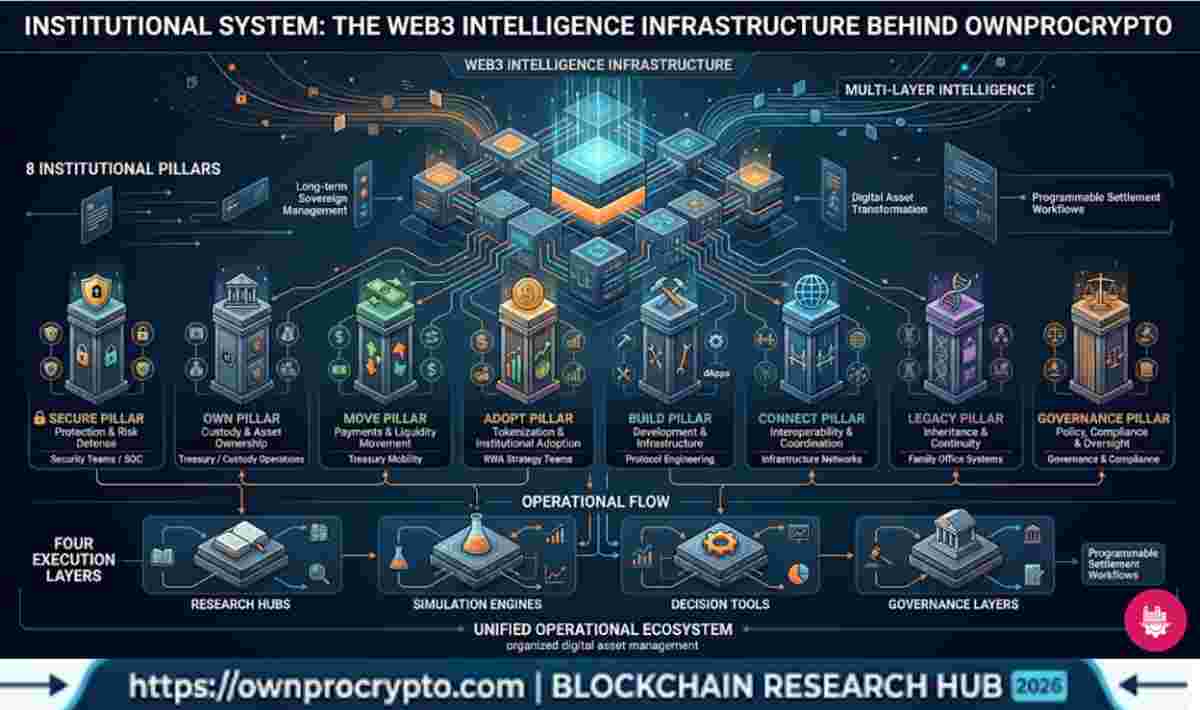
Institutions require:
| Model | Risk Level |
|---|---|
| Self-custody | High responsibility |
| Multi-sig | Medium |
| MPC custody | Institutional-grade |
ETF Adoption & Institutional Capital
Institutional participation has accelerated through regulated Bitcoin ETFs, professional custody providers, tokenized investment products, and enterprise blockchain infrastructure. Pension funds, asset managers, hedge funds, and public companies increasingly view digital assets as part of diversified long-term portfolios, bringing additional liquidity and market maturity.
👉 Related Resources:
→ https://ownprocrypto.com/enterprise-crypto-custody-platform/
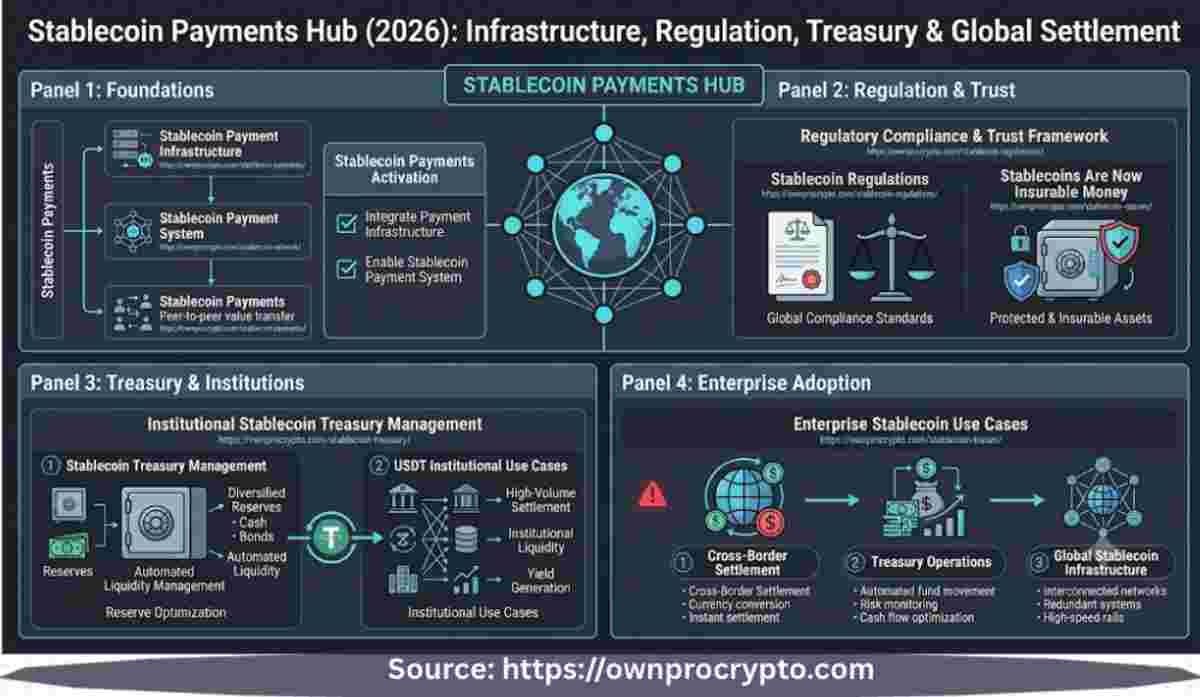
Stablecoins are becoming:
| Use Case | Benefit |
|---|---|
| Payroll | Instant settlement |
| Remittance | Low cost transfer |
| Trading | Stable liquidity |
Stablecoins are evolving beyond trading pairs into global payment infrastructure. Businesses increasingly use dollar-backed digital currencies for payroll, remittances, settlement, treasury management, and cross-border commerce because transactions can be processed continuously with lower costs than traditional banking systems.
👉 Related Resources:
→ https://ownprocrypto.com/stablecoin-payments/
→ https://ownprocrypto.com/stablecoin-treasury/
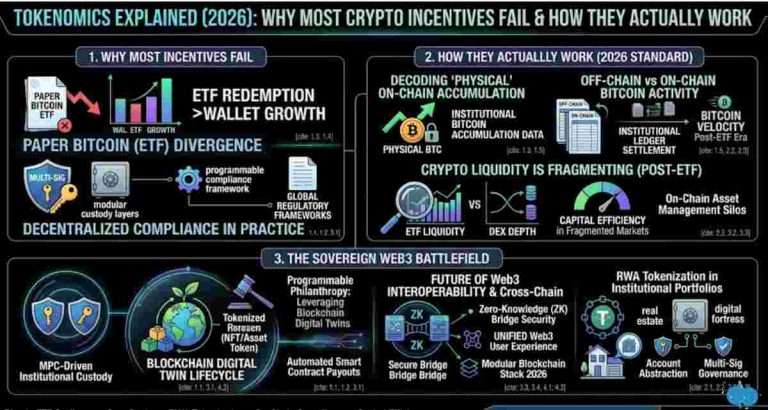
Tokenomics defines how value is created and distributed.
| Element | Risk Type |
|---|---|
| Supply emission | Inflation risk |
| Allocation | Insider dominance |
| Utility | Weak demand loop |
| Incentives | Unsustainable rewards |
High emission schedules often lead to:
Poor treasury control leads to:
| Risk | Impact |
|---|---|
| Large unlocks | Price crashes |
| Early dumping | Market distrust |
| Hidden vesting | Liquidity shocks |
👉 Related Resources:
→ https://ownprocrypto.com/tokenomics-explained/
Are tokenomics and real-world asset (RWA) tokenization the same thing?
No. Although both involve blockchain-based tokens, they solve different problems. Tokenomics focuses on the economic design of a digital token—its supply, distribution, utility, incentives, governance, and how value is created or sustained within a blockchain ecosystem. RWA tokenization, on the other hand, is the process of representing ownership or rights to a real-world asset—such as real estate, government bonds, commodities, invoices, or private credit—as a blockchain token. In simple terms, tokenomics explains how a token functions, while RWA tokenization explains what the token represents.
For example, a DeFi governance token may have carefully designed tokenomics that determine staking rewards, emissions, and voting rights, yet it may not represent ownership of any physical asset. Conversely, a tokenized Treasury bill derives its value from the underlying financial instrument, while its tokenomics are often intentionally simple because the primary purpose is to provide digital ownership and efficient transfer of the real-world asset.
Understanding this distinction helps investors evaluate projects more effectively. Before investing, assess both the quality of the tokenomics and, if applicable, the credibility, legal structure, and underlying asset backing of any tokenized real-world asset.
Now that we’ve covered how crypto tokens are created, distributed, and designed to capture value, the next step is understanding what those tokens can actually represent. While many crypto tokens are native to blockchain ecosystems, others are backed by tangible assets such as real estate, government bonds, commodities, and private credit. This process is known as Real-World Asset (RWA) Tokenization, one of the fastest-growing areas of institutional blockchain adoption.

Tokenization converts real-world assets into digital blockchain-based representations.
| Asset Class | Token Form |
|---|---|
| Real estate | Fractional tokens |
| Bonds | Digital securities |
| Commodities | Asset-backed tokens |
| Private equity | Token shares |
👉 Related Resources:
→ https://ownprocrypto.com/rwa-tokenization-hub/
→ https://ownprocrypto.com/tokenized-asset-liquidity/
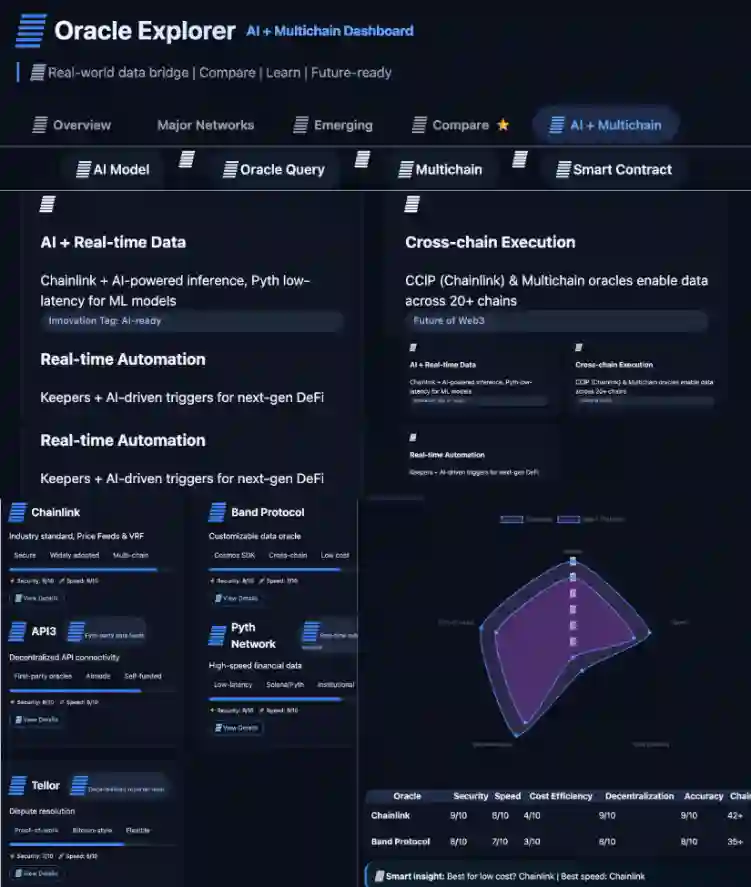
Smart contracts cannot access external data directly.
They depend on oracle systems.
| Data Type | Example |
|---|---|
| Price feeds | BTC/USD |
| Weather data | insurance contracts |
| Sports outcomes | prediction markets |
| IoT data | supply chain tracking |
| Oracle Type | Security Level | Risk |
|---|---|---|
| Centralized | Low | High manipulation risk |
| Hybrid | Medium | Partial trust |
| Decentralized | High | Low manipulation risk |
Oracles act as external data bridges.
| Risk | Impact |
|---|---|
| Price feed manipulation | Liquidations |
| Data delay | Arbitrage attacks |
| Centralized oracle | Single point of failure |
👉 Related Resources:
→ https://ownprocrypto.com/best-blockchain-oracles/
→ https://ownprocrypto.com/blockchain-oracle-dashboard/
→ https://ownprocrypto.com/blockchain-oracles-explained/
→ https://ownprocrypto.com/best-blockchain-oracles/
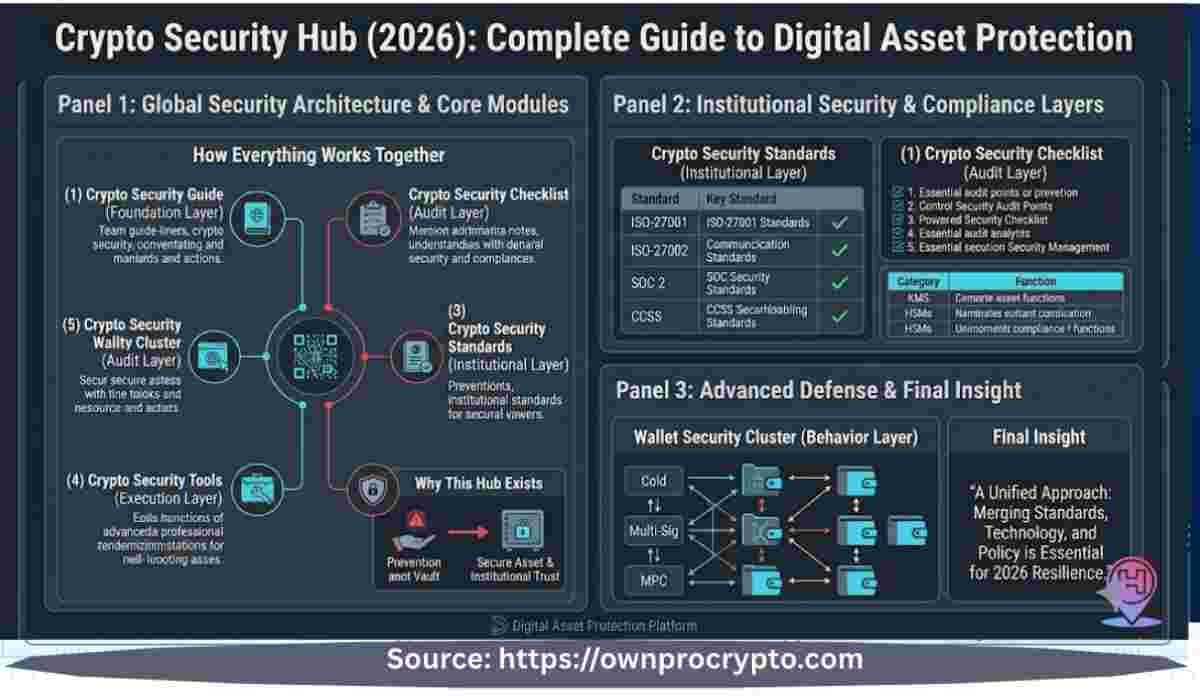
Security determines survival in crypto ecosystems Intelligence.
| Layer | Risk |
|---|---|
| Wallets | Private key theft |
| Smart contracts | Exploits |
| Bridges | Cross-chain hacks |
| Oracles | Data manipulation |
| Exchanges | Custodial risk |
Low liquidity causes:
Flash loans enable:
Successful crypto investing extends beyond selecting promising projects. Effective portfolio management includes diversification, position sizing, liquidity analysis, volatility control, security practices, and continuous risk assessment. Combining these disciplines helps investors preserve capital while pursuing long-term returns.
👉 Related Resources:
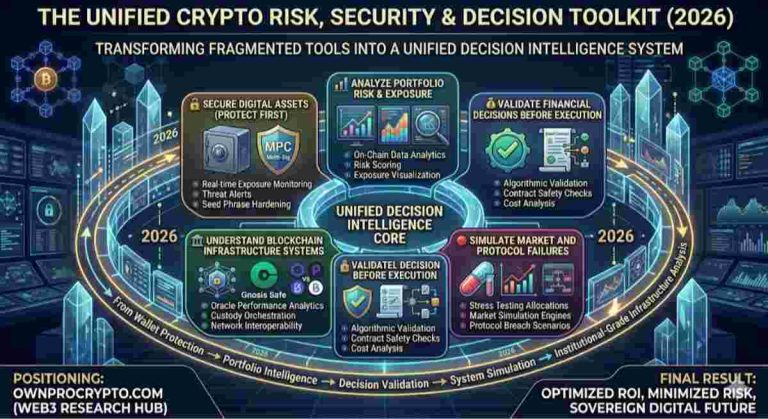
Before investing or launching:
| Category | Check |
|---|---|
| Tokenomics | Sustainable model |
| Security | Audit completed |
| Liquidity | Market depth |
| Governance | Decision clarity |
| Adoption | Real usage |
| Layer | Risk Score |
|---|---|
| Smart contracts | High |
| Bridges | Very high |
| Oracles | Medium |
| Custody | Medium |
Related Resources:
https://ownprocrypto.com/crypto-risk-analysis-suite/
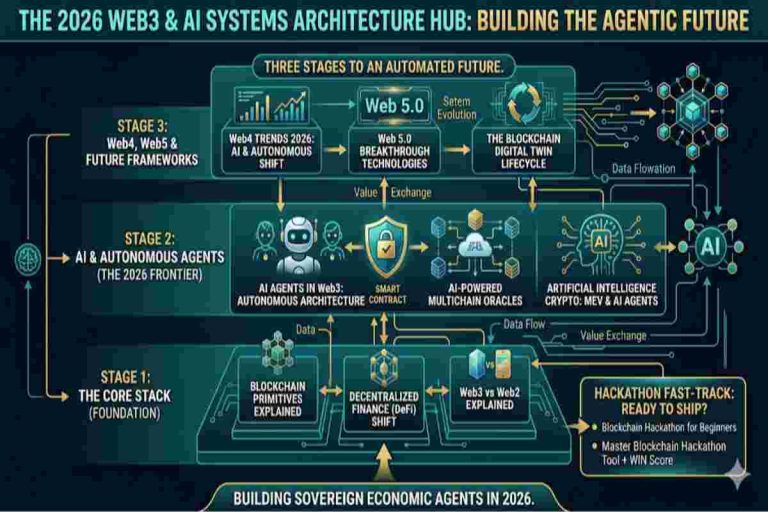
The crypto ecosystem Intelligence is evolving beyond speculative assets into a broader digital infrastructure for finance, identity, ownership, and autonomous software. While no one can predict exactly how the industry will develop, several technologies and research areas are already influencing the next generation of blockchain networks.
| Technology | Current State | Possible Direction (2026–2030) |
|---|---|---|
| Bitcoin Layer 2 | Growing adoption | Faster payments, programmable settlement, expanded institutional use |
| Ethereum Scaling | Rollups becoming standard | Lower fees, unified cross-rollup liquidity, improved user experience |
| Stablecoins | Widely used for payments | Global settlement networks, merchant adoption, programmable finance |
| Tokenized Real-World Assets (RWA) | Early institutional adoption | Tokenized bonds, equities, real estate, and private credit at scale |
| Artificial Intelligence | Research assistants and analytics | Autonomous investment agents, portfolio optimization, on-chain AI automation |
| Decentralized Identity (DID) | Emerging standards | Privacy-preserving digital identity across Web3 applications |
| Zero-Knowledge Proofs (ZK) | Rapid development | Faster privacy solutions, scalable identity verification, enterprise adoption |
| Cross-Chain Infrastructure | Bridges and messaging protocols | Unified multi-chain ecosystems with seamless asset movement |
| Institutional Infrastructure | ETF growth and regulated custody | Greater integration with traditional financial systems |
| Wallet Technology | Self-custody improving | Smart wallets, MPC security, account abstraction, biometric recovery |
| Web5 Concepts | Early-stage development | Greater emphasis on decentralized identity and user-controlled data |
| Quantum-Resistant Cryptography | Active research | Migration toward cryptographic standards designed for future quantum computing |
Several emerging concepts may become increasingly important during the second half of the decade:
Terms such as Web5 and discussions around Web6 reflect ongoing experimentation rather than universally accepted technology standards. While these concepts continue to evolve, the broader trend remains consistent: increasing decentralization, stronger digital identity systems, interoperable blockchain infrastructure, AI-assisted decision-making, and greater user ownership of data and digital assets.
Rather than focusing on labels, the most important long-term shift is the convergence of blockchain, artificial intelligence, digital identity, tokenization, and programmable finance into a connected digital economy.
Crypto is no longer just Bitcoin or trading.
It is a multi-layer financial operating system built from:
Understanding this structure is the difference between:
|
Blockchain Infrastructure |
Understand regulatory perspective on blockchain-based systems 👉 https://www.sec.gov |
|
Interoperability |
Learn about cross-system digital standards and regulatory interoperability 👉 https://www.europarl.europa.eu |
Crypto Ecosystem Intelligence is a connected system of blockchain, assets, applications, and financial infrastructure.
Yes, it remains the primary macro digital asset.
A decentralized internet built on blockchain networks.
The economic design of a crypto asset.
Security vulnerabilities and liquidity failures.
Systems that bring external data into blockchains.
Asset theft or failure in interoperability systems.
Decentralized financial applications without intermediaries.
Use of blockchain assets by funds, banks, and enterprises.
They depend on issuer transparency and regulation.
Secure storage of digital assets.
Multi-party computation-based secure wallet system.
Using artificial intelligence for trading and analysis.
Loss of value due to excessive token supply growth.
Communication between different blockchain networks.
Proof of asset ownership via blockchain.
Next-stage internet integrating AI + blockchain.
Multi-layer protection of wallets, contracts, and infrastructure.
Real-world assets represented as blockchain tokens.
Systematic allocation of digital assets for risk control.