
Search by title, topic or phrase
Use our Crypto Search Engine 🔍 to find the topics and keywords you're looking for.
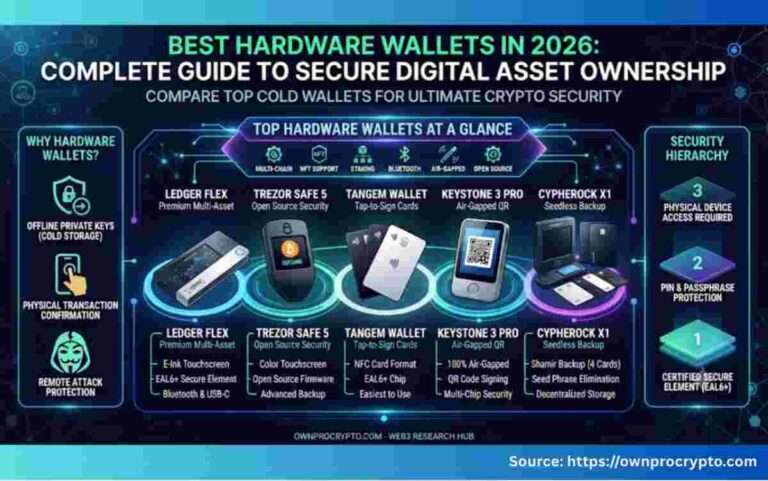
Table of Contents
ToggleBest Hardware Wallets provide a pocket-sized digital vault that keeps your private keys completely safe from online hackers. Taking control of your crypto with a hardware wallet can feel intimidating at first—but it is much easier than it sounds. Instead of leaving your coins on an exchange, these devices give you total ownership through simple setup screens, easy smartphone apps, and tap-to-verify security. This guide highlights the most beginner-friendly options in 2026, helping you lock down your digital assets with confidence right from day one.
This hardware wallet guide was created to help cryptocurrency users understand secure digital asset ownership and choose a hardware wallet based on security architecture, usability, recovery options, and long-term self-custody requirements.
Hardware wallets were evaluated based on factors including:
The goal of this guide is not to identify one universal winner.
Different users have different security requirements.
A beginner storing a small portfolio, a Bitcoin long-term holder, a DeFi user, and an institutional investor may require completely different hardware wallet solutions.
This guide focuses on helping users understand the security trade-offs behind each approach so they can make informed decisions about protecting their digital assets.
Cryptocurrency ownership has entered a new phase.
In the early years of digital assets, security discussions mainly focused on buying Bitcoin, storing private keys, and avoiding exchange failures. In 2026, the security landscape has become significantly more complex.
Crypto users are no longer only protecting coins and tokens. They are managing:
As blockchain ecosystems expand, attackers have also evolved. Modern threats increasingly target user behavior, transaction approvals, and trust relationships rather than only attempting direct private key theft.
The most common security challenges now include:
A hardware wallet has become one of the most important security tools for serious digital asset owners because it creates a physical separation between private keys and internet-connected environments.
Unlike hot wallets that operate directly on computers, browsers, or smartphones, hardware wallets keep private keys isolated inside dedicated security hardware.
The transaction process follows a simple security principle:
The internet can request a transaction, but the hardware wallet controls the approval.
This changes the security model from trusting software environments to verifying actions through a protected device.
Modern hardware wallets in 2026 are no longer basic USB storage devices designed only for Bitcoin.
They have evolved into secure transaction platforms supporting:
Whether someone is searching for the best hardware wallet, the best crypto cold wallet, or the most secure long-term storage solution, the correct choice depends on:
A hardware wallet is not simply a device.
It is the foundation of a broader self-custody security system.
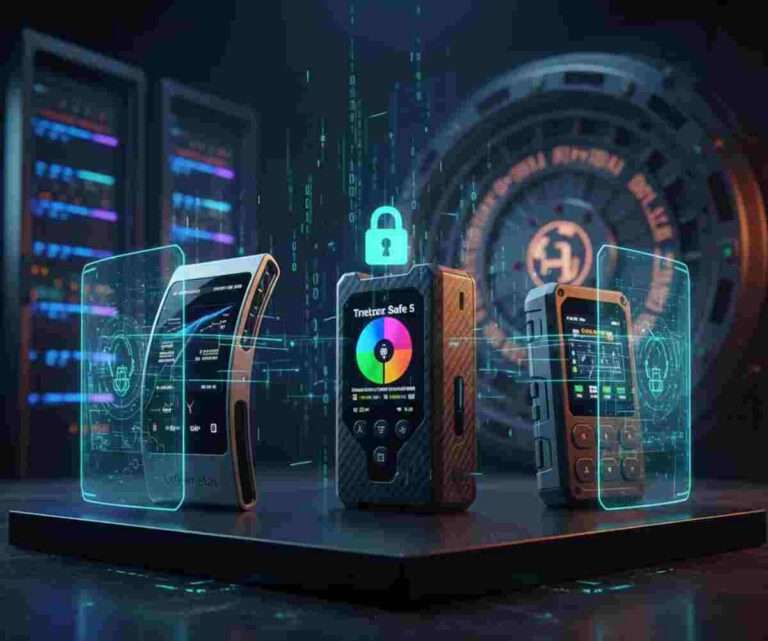
A hardware wallet is a physical cryptocurrency security device designed to generate, store, and protect private keys offline.
Unlike software wallets installed on browsers or mobile devices, hardware wallets create an isolated environment where private keys remain protected from online threats.
The basic hardware wallet process works as follows:
| Step | Process |
|---|---|
| 1 | The hardware wallet generates a private key |
| 2 | The private key is stored securely inside the device |
| 3 | A user creates a transaction through a wallet application |
| 4 | The transaction request is sent to the hardware wallet |
| 5 | The user verifies transaction details on the device |
| 6 | The hardware wallet signs the transaction internally |
| 7 | Only the approved signature is returned to the application |
The private key never leaves the hardware wallet.
This creates a major security advantage.
Even if a connected computer or smartphone becomes infected with malware, attackers generally cannot directly extract the private key because the signing operation happens inside the protected device.
A hardware wallet separates two important functions:
The internet-connected application can prepare a transaction, but the hardware wallet remains responsible for authorization.
This separation is the foundation of modern cryptocurrency self-custody.
Artificial intelligence has significantly changed the threat landscape in cryptocurrency security.
Traditional phishing attacks often relied on obvious fake emails or poorly designed websites. Modern AI-powered attacks can create highly convincing communication that appears legitimate.
Attackers can now generate:
Crypto users are particularly vulnerable because blockchain transactions are irreversible.
A user who enters a recovery phrase into a fake website or approves a malicious transaction may lose assets permanently.
Hardware wallets reduce certain risks by ensuring that private keys are not exposed to websites, applications, or online attackers.
However, users must still verify:
The strongest security approach combines hardware protection with user awareness.
Wallet drainer attacks have become one of the most damaging threats in Web3.
Instead of stealing private keys directly, attackers manipulate users into approving malicious transactions.
A typical wallet drainer attack may involve:
The hardware wallet protects the private key, but it cannot determine whether a user is intentionally approving a harmful smart contract.
This creates an important distinction:
Hardware wallets protect keys. Users must protect decisions.
Modern hardware wallets improve security through:
Users should always review what they are signing before approving any blockchain transaction.
Related security resources:
Crypto Threat Intelligence
https://ownprocrypto.com/crypto-threat-intelligence/
Crypto Wallet Approvals
https://ownprocrypto.com/crypto-wallet-approvals/
Transaction manipulation targets the approval process itself.
In many cases, attackers do not need access to private keys. Instead, they attempt to deceive users into signing transactions they do not fully understand.
Examples include:
This is why transaction visibility has become a critical hardware wallet feature.
Advanced hardware wallets increasingly focus on:
| Security Feature | Purpose |
|---|---|
| Secure display | Allows users to verify transaction details directly |
| Address confirmation | Helps prevent sending assets to wrong destinations |
| Smart contract information | Improves approval awareness |
| Transaction simulation | Helps identify suspicious actions |
| Physical confirmation | Prevents unauthorized remote signing |
The future of hardware wallet security is moving beyond simply protecting private keys.
It is becoming a complete transaction verification system.
Understanding different cryptocurrency storage methods is essential before selecting the right security solution.
Every storage method involves a different balance between:
The fundamental difference comes down to one question:
Who controls the private keys?
In cryptocurrency, ownership is determined by private key control. Any storage method where another party controls the keys introduces additional trust requirements.
| Feature | Hardware Wallet | Hot Wallet | Exchange Storage |
|---|---|---|---|
| Private Key Control | User controlled | Usually user controlled | Exchange controlled |
| Internet Exposure | Low | High | High |
| Remote Attack Risk | Reduced | Higher | Depends on exchange security |
| Long-Term Storage | Excellent | Poor | Not recommended |
| DeFi Interaction | Moderate to High | Excellent | Limited |
| Self-Custody | Yes | Yes | No |
| Recovery Responsibility | User | User | Platform |
| Transaction Approval | Physical device confirmation | Software confirmation | Exchange authorization |
A hardware wallet provides a balance between security and usability.
The private keys remain offline, while the user can still interact with blockchain applications when needed.
Advantages include:
Hardware wallets are generally preferred for users who hold meaningful cryptocurrency balances or want direct ownership control.
Hot wallets are software-based wallets connected to internet-enabled devices.
Examples include:
Hot wallets provide convenience because users can quickly interact with:
However, their internet connection creates additional attack surfaces.
Common risks include:
Hot wallets are often suitable for smaller balances and frequent transactions, but they are generally not ideal for storing large long-term holdings.
Exchange storage means cryptocurrency is held through a centralized platform.
The exchange controls the private keys on behalf of users.
This model provides convenience for:
However, users do not have complete self-custody control.
Risks include:
A common security strategy is:
A hardware wallet does not make cryptocurrency automatically safe.
It protects the most important element:
Control of the private keys.
Users must still protect:
A hardware wallet is recommended for anyone who holds meaningful digital assets or wants complete control over cryptocurrency ownership.
The definition of “meaningful” depends on the individual user.
For one person, it may be a small Bitcoin investment. For another, it may represent years of accumulated digital wealth.
Typical hardware wallet users include:
| User Type | Why Hardware Wallet Helps |
|---|---|
| Long-Term Bitcoin Investors | Protects assets held for years or decades |
| Ethereum Holders | Secures DeFi, staking, and smart contract interactions |
| NFT Collectors | Protects valuable digital ownership assets |
| Traders | Separates trading funds from long-term holdings |
| Institutions | Adds physical transaction approval controls |
| Families | Supports inheritance and recovery planning |
Bitcoin holders often choose hardware wallets because their primary goal is long-term preservation rather than frequent spending.
Important security priorities include:
For long-term holders, the device is only one part of the security system.
A complete strategy also requires:
Ethereum users often require more than simple asset storage.
They interact with:
A suitable hardware wallet helps reduce private key exposure while allowing users to interact with Web3 applications.
However, users must still evaluate every transaction before approval.
Hardware wallets protect authorization keys, but they do not guarantee that every smart contract interaction is safe.
Institutions require additional security controls because digital assets may involve:
Hardware wallets can become part of larger custody frameworks involving:
For professional asset management, the goal is not only protecting keys.
The goal is creating a controlled ownership process.
Related security frameworks:
Crypto Self-Custody Guide
https://ownprocrypto.com/crypto-self-custody/
Digital Legacy Planning
https://ownprocrypto.com/digital-legacy-2026/
The evolution of hardware wallets has transformed them from basic offline Bitcoin storage devices into advanced digital ownership security platforms.
Early hardware wallets focused on one primary objective:
Keep Bitcoin private keys away from internet-connected computers.
Modern hardware wallets now support a much broader ecosystem.
They have developed into platforms for:
The modern hardware wallet combines:
The industry has moved from simple storage toward complete ownership infrastructure.
The first generation of hardware wallets was designed primarily for Bitcoin cold storage.
Security was focused on:
As blockchain ecosystems expanded, user requirements changed.
Modern hardware wallets now support multiple stages of digital ownership evolution.
| Evolution Stage | Main Function |
|---|---|
| Hardware Wallet 1.0 | Bitcoin cold storage |
| Hardware Wallet 2.0 | Multi-chain asset management |
| Hardware Wallet 3.0 | DeFi, NFTs, and smart contract security |
| Hardware Wallet 4.0 | AI agents, programmable permissions, institutional custody |
The next generation of hardware wallets is expected to become an authorization layer for increasingly complex digital environments.
Future systems may help secure:
The purpose is expanding from:
“Store private keys safely.”
To:
“Secure digital ownership across an interconnected financial ecosystem.”

The hardware wallet market in 2026 has expanded beyond traditional USB-based devices.
Modern cold storage solutions now include:
The best hardware wallet is not determined only by price, brand recognition, or supported assets.
The right choice depends on:
Different users require different security approaches.
A beginner may prioritize simplicity and easy recovery, while an institutional user may prioritize multisignature workflows, governance controls, and maximum isolation.
The following comparison highlights leading hardware wallets in 2026 based on their primary strengths and intended users.
| Wallet | Best For | Security Approach | Connectivity | Ideal User |
|---|---|---|---|---|
| Ledger Flex | Best Overall Hardware Wallet | Secure Element + premium user experience | Bluetooth, USB-C | Multi-chain investors |
| Trezor Safe 5 | Best Open-Source Hardware Wallet | Open-source firmware approach + Secure Element | USB-C | Security-focused users |
| Tangem Wallet | Best Hardware Wallet for Beginners | NFC card architecture | NFC | New self-custody users |
| Keystone 3 Pro | Best Air-Gapped Hardware Wallet | QR offline transaction signing | QR Only | Advanced security users |
| SafePal S1 Pro | Best Affordable Air-Gapped Wallet | Secure chip + QR signing | Offline workflow | Budget-conscious security users |
| Cypherock X1 | Best Seedless Recovery Design | Secret-sharing architecture | Hybrid | Advanced long-term holders |
| BitBox02 | Best Bitcoin Cold Storage Wallet | Minimalist open-source design | USB-C | Bitcoin-focused users |
| Blockstream Jade | Best Bitcoin-Only Wallet | Open-source Bitcoin security | USB / QR | Bitcoin sovereignty users |
| Ellipal Titan 2.0 | Best Offline Metal Hardware Wallet | Fully offline QR architecture | QR Only | Physical security-focused users |
Each device represents a different security philosophy.
Some prioritize ecosystem convenience.
Others prioritize transparency, isolation, or simplified ownership.
Different users require different security models.
There is no single hardware wallet that is perfect for every investor.
The “best” wallet depends on whether the user values:
| Category | Recommended Wallet | Why |
|---|---|---|
| Best Overall | Ledger Flex | Premium experience with broad ecosystem support |
| Best Security Transparency | Trezor Safe 5 | Strong open-source security philosophy |
| Best Beginner Wallet | Tangem Wallet | Simple NFC-based ownership experience |
| Best Bitcoin Wallet | Blockstream Jade / Trezor Bitcoin Edition | Bitcoin-focused security approach |
| Best Ethereum Wallet | Ledger Flex / Trezor Safe 5 | Strong Web3 and dApp compatibility |
| Best Air-Gapped Wallet | Keystone 3 Pro | Complete offline transaction signing |
| Best Long-Term Storage | BitBox02 / Trezor | Strong backup-focused architecture |
| Best Ledger Alternative | Trezor Safe 5 / Keystone 3 Pro | Different security philosophies |
| Best Wallet Under $100 | Tangem / SafePal | Affordable cold storage options |
For many users, the best overall hardware wallet should provide a balance between:
A premium multi-chain hardware wallet is often the best fit for users who manage:
However, maximum features do not automatically equal maximum security.
Users should choose based on their personal threat model.
Before choosing a hardware wallet, users should evaluate five important questions:
| Question | Why It Matters |
|---|---|
| What assets do I hold? | Determines blockchain compatibility requirements |
| Do I need DeFi access? | Determines Web3 ecosystem requirements |
| Do I prioritize convenience or isolation? | Defines the ideal security model |
| How will I protect my backup? | Determines recovery safety |
| Who controls my keys? | Defines true ownership |
A hardware wallet should be viewed as part of a complete self-custody strategy.
The strongest security comes from combining:
Reliable hardware + secure recovery + transaction verification + disciplined operational practices
A more expensive device does not automatically create better security.
The strongest setup is the one that matches:
| Category | Weight |
|---|---|
| Private key security | 30% |
| Recovery system | 20% |
| Transaction verification | 15% |
| Software ecosystem | 15% |
| User experience | 10% |
| Price/value | 10% |

Selecting a secure hardware wallet requires evaluating more than price, brand popularity, or supported cryptocurrencies.
Each hardware wallet category was analyzed using key security and usability factors:
| Evaluation Factor | Why It Matters |
|---|---|
| Private Key Security | Determines how effectively keys are protected from unauthorized access |
| Security Architecture | Evaluates hardware protection methods and isolation features |
| Recovery System | Measures backup flexibility and recovery reliability |
| Transaction Verification | Examines how clearly users can review and approve transactions |
| Software Ecosystem | Evaluates wallet applications, integrations, and usability |
| Blockchain Compatibility | Determines supported networks and asset management capabilities |
| Open-Source Transparency | Considers code availability and independent verification possibilities |
| User Experience | Measures setup difficulty and everyday usability |
| Long-Term Support | Evaluates ecosystem maturity and continued development |
Hardware wallets were compared based on their intended purpose rather than assuming every user needs the same security model.
A device designed for beginners may prioritize simplicity, while a device designed for advanced self-custody users may prioritize maximum isolation and transparency.
The best hardware wallet is the one that matches the user’s security requirements, technical ability, and asset management strategy.
Choosing the best hardware wallet in 2026 requires evaluating more than price, popularity, or supported cryptocurrencies.
A secure hardware wallet should balance:
There is no single hardware wallet that is perfect for every user.
A Bitcoin-only investor, an active DeFi participant, an NFT collector, and an institutional treasury manager may require completely different security approaches.
Modern hardware wallets represent different philosophies:
The following hardware wallet reviews analyze the leading devices of 2026 and the users they are best suited for.
Ledger Flex represents the modern evolution of Ledger’s hardware wallet ecosystem, combining dedicated hardware security with a premium touchscreen experience.
Designed for users managing multiple digital assets, Ledger Flex focuses on balancing convenience with self-custody security.
The core security principle remains:
Private keys stay protected inside the device and transactions require physical approval.
Unlike software wallets that depend entirely on the security of computers and smartphones, Ledger Flex creates an additional protection layer between users and online threats.
Ledger Flex is designed for users who need:
| Feature | Details |
|---|---|
| Security | Certified Secure Element architecture |
| Display | E-Ink touchscreen |
| Connectivity | Bluetooth and USB-C |
| Asset Support | Thousands of coins and tokens |
| Mobile Support | iOS and Android |
| Best For | Multi-chain investors |
Ledger Flex provides several advantages for users who prioritize usability alongside security.
Key strengths include:
The touchscreen experience improves usability compared with traditional hardware wallets with smaller displays.
For users who regularly interact with Web3 applications, a larger and clearer screen can reduce transaction mistakes.
Despite its advantages, Ledger Flex has some considerations.
Potential limitations include:
Users who prioritize complete code transparency may prefer open-source-focused alternatives.
Ledger Flex is ideal for users who want:
It is especially suitable for users who want strong security without sacrificing convenience.
Trezor Safe 5 is designed for users who prioritize transparency, open-source development, and independent security verification.
Trezor follows a different security philosophy from many competitors.
Instead of relying primarily on proprietary security systems, Trezor emphasizes:
This approach appeals strongly to security researchers, privacy-focused users, and Bitcoin holders who value auditability.
| Feature | Details |
|---|---|
| Security | Secure Element + open-source firmware approach |
| Display | Color touchscreen |
| Protection | PIN, passphrase, recovery options |
| Backup | Shamir Secret Sharing support |
| Connectivity | USB-C |
| Best For | Security-focused users |
Trezor Safe 5 offers several important advantages:
The open-source approach allows researchers and developers to inspect the software architecture, increasing transparency.
Potential limitations include:
Open-source transparency provides benefits, but it also requires users to take security practices seriously.
Trezor Safe 5 is especially suitable for:
Keystone 3 Pro focuses on maximum transaction isolation through an air-gapped security model.
Instead of relying on Bluetooth or USB data communication, Keystone uses QR-code-based transaction signing.
This creates a workflow where transaction information moves through optical communication rather than direct electronic connections.
The goal is reducing exposure to:
| Feature | Details |
|---|---|
| Communication | QR code signing |
| Security Model | Air-gapped architecture |
| Screen | Large touchscreen |
| Backup | Advanced recovery options |
| Best For | Security-focused users |
Air-gapped hardware wallets reduce attack surfaces by removing direct connections such as:
The device can remain physically isolated while still allowing blockchain transactions through QR-based workflows.
This approach is especially attractive for users with larger holdings or strict security requirements.
Keystone 3 Pro fits users who prioritize:
Choosing the best hardware wallet in 2026 depends less on finding one universal winner and more on matching the wallet with the user’s security requirements.
Different users have different priorities.
A beginner may need:
A Bitcoin investor may prioritize:
A DeFi user may require:
An institution may require:
The best hardware wallet is therefore determined by the user’s:
| User Type | Primary Requirement | Recommended Wallet Category |
|---|---|---|
| Beginners | Simple setup and easy recovery | NFC card wallets and user-friendly devices |
| Bitcoin holders | Minimal attack surface | Bitcoin-focused hardware wallets |
| DeFi users | dApp compatibility and transaction visibility | Multi-chain touchscreen wallets |
| Long-term investors | Maximum offline security | Cold storage-focused wallets |
| Institutions | Shared control and governance | Hardware signing + multisig/MPC systems |
| NFT collectors | Visual transaction confirmation | Touchscreen Web3 wallets |
New cryptocurrency users often struggle with:
The best beginner hardware wallet should reduce complexity while maintaining strong security principles.
Beginner-focused hardware wallets typically prioritize:
A beginner-friendly wallet does not remove the responsibility of self-custody.
Users must still understand:
| Wallet | Beginner Advantage | Security Model | Best For |
|---|---|---|---|
| Tangem Wallet | Tap-to-use NFC cards | Secure chip + mobile app | First-time self-custody users |
| Ledger Flex | Touchscreen experience | Secure Element architecture | Beginners entering Web3 |
| Trezor Safe 3 | Simple interface + open-source firmware | Secure chip + transparent software approach | Security-focused beginners |
| SafePal S1 Pro | Offline QR workflow | Air-gapped signing | Users wanting maximum isolation |
For many new users, the biggest security improvement is not choosing the most advanced device.
It is learning proper self-custody practices.
A hardware wallet protects private keys, but ownership security still depends on:
Related security resources:
→ Crypto Self-Custody Guide
→ Crypto Security Hub
Bitcoin users often prioritize:
A Bitcoin-only wallet removes additional blockchain support and can reduce software complexity.
For long-term Bitcoin holders, simplicity can be an important security advantage.
| Wallet | Bitcoin Focus | Open Source | Backup Features | Best Use |
|---|---|---|---|---|
| Trezor Safe 5 Bitcoin Edition | High | Yes | Shamir Backup | Advanced BTC holders |
| Blockstream Jade | High | Yes | Flexible backup options | Bitcoin sovereignty users |
| BitBox02 Bitcoin Edition | High | Yes | microSD backup | Long-term storage |
| Cold storage setups | Maximum | Depends | Metal backups | Large holdings |
Bitcoin cold storage strategies are often combined with:
Long-term holders should think beyond the device itself.
A hardware wallet may eventually fail, but properly protected recovery information preserves ownership.
Related resources:
→ Digital Ownership Hub
→ Digital Legacy Planning
Ethereum users require more than simple cryptocurrency storage.
They often interact with:
A suitable Ethereum hardware wallet should provide:
| Wallet | Ethereum Support | DeFi Compatibility | NFT Support |
|---|---|---|---|
| Ledger Flex | Excellent | Strong | Yes |
| Ledger Stax | Excellent | Strong | Yes |
| Trezor Safe 5 | Strong | Good | Yes |
| Keystone 3 Pro | Strong | Good through integrations | Yes |
The biggest security challenge in DeFi is not only private key theft.
Modern attacks often involve:
Hardware wallets reduce private key exposure, but users must still verify every action they approve.
Related resources:
→ Crypto Wallet Approvals
→ Smart Contract Risk Calculator
→ DeFi Protocol Analysis Guide
Multi-chain investors require broader blockchain compatibility than Bitcoin-only users.
Modern cryptocurrency portfolios may include:
A multi-chain hardware wallet should be evaluated based on more than the number of supported assets.
Important factors include:
| Wallet | Multi-Chain Support | Token Coverage | Best Feature |
|---|---|---|---|
| Ledger Flex | Very broad | Thousands of assets | Ecosystem support |
| Ledger Nano X | Very broad | Thousands of assets | Mobile Bluetooth use |
| Trezor Safe 5 | Broad | Large token support | Open-source security |
| SafePal S1 Pro | Broad | Multi-chain support | Air-gapped operation |
Investors holding many different digital assets should evaluate:
A wallet supporting thousands of assets is not automatically the best choice.
The quality of security controls matters more than asset quantity alone.
Long-term storage has a different objective.
The priority is not daily convenience.
The priority is preservation and survival over many years.
A long-term crypto storage strategy should consider:
| Security Area | Recommended Practice |
|---|---|
| Device | Reliable hardware wallet |
| Backup | Offline seed storage |
| Physical protection | Metal backup plate |
| Access control | Strong PIN/passphrase |
| Recovery | Tested restoration process |
| Estate planning | Inheritance instructions |
A decade-long holding strategy requires thinking beyond the hardware device.
The hardware wallet may eventually:
However, properly stored recovery information preserves ownership.
Long-term security depends on:
Air-gapped hardware wallets remove direct electronic communication channels such as:
Instead, they use optical communication through QR codes.
The purpose is reducing exposure to remote communication-based attacks.
| Wallet | Communication Method | Security Advantage |
|---|---|---|
| Keystone 3 Pro | QR signing | Complete network isolation |
| SafePal S1 Pro | QR signing | No wireless attack surface |
| Ellipal Titan 2.0 | QR signing | Tamper-resistant design |
Air-gapped systems are especially attractive for:
However, air-gapped does not automatically mean risk-free.
Users must still protect against:
The strongest air-gapped security model still depends on correct operational practices.
Hardware wallet security in 2026 is based on multiple protection layers.
A secure device does not rely on a single feature.
Instead, modern hardware wallets combine:
The purpose is creating multiple barriers between attackers and private keys.
| Security Layer | Purpose |
|---|---|
| Secure Element | Protects private keys from extraction |
| PIN Protection | Prevents unauthorized physical access |
| Encryption | Protects internal data |
| Display Verification | Allows transaction checking |
| Firmware Verification | Prevents unauthorized software |
| Backup Systems | Enables recovery after device loss |
The strongest security model combines:
Hardware protection + user verification + operational discipline
A hardware wallet can protect private keys effectively, but users must still make secure decisions when:
One of the biggest discussions in hardware wallet security is:
Secure element protection versus open-source transparency.
Both approaches solve different security problems.
| Feature | Secure Element Wallet | Open Source Wallet |
|---|---|---|
| Main Goal | Physical attack resistance | Software transparency |
| Strength | Hardware extraction defense | Community auditing |
| Risk Reduced | Chip attacks | Hidden code vulnerabilities |
| Example Approach | Ledger architecture | Trezor architecture |
Secure element-based wallets focus on protecting sensitive hardware components.
Open-source wallets focus on allowing independent verification of software behavior.
The future direction of hardware wallet security is likely to combine:
Modern hardware wallets include multiple security mechanisms designed to protect cryptocurrency ownership beyond basic private key storage.
Advanced users increasingly evaluate hardware wallets based on:
Security features are not equally important for every user.
A beginner may benefit most from simple backup protection, while advanced holders may require:
The seed phrase remains the foundation of cryptocurrency self-custody.
A hardware wallet protects private keys inside the device, but the recovery phrase remains the ultimate ownership credential.
If the hardware wallet is:
The seed phrase allows users to restore access to their cryptocurrency.
However, if another person gains access to the recovery phrase, they may gain complete control over the wallet.
| Action | Security Level |
|---|---|
| Paper backup | Basic |
| Metal backup | Strong |
| Multiple geographic backups | Advanced |
| Shamir backup | Enterprise-grade |
A secure seed phrase should never be stored:
Digital storage creates additional exposure because online systems can be compromised remotely.
A passphrase creates an additional hidden wallet layer on top of the standard recovery phrase.
It is sometimes called:
Depending on the wallet configuration.
A passphrase can provide:
For example, a user may maintain:
Passphrase protection also introduces additional responsibility.
Important risks include:
A passphrase should be treated with the same importance as the recovery phrase.
Multisignature, commonly called multisig, distributes wallet control across multiple devices.
Instead of requiring one private key, a multisig wallet requires multiple approvals.
Example:
A 2-of-3 Bitcoin multisig setup may require:
Any two devices can authorize a transaction.
Multisig reduces the risk of a single point of failure.
If one device is:
The remaining devices can still maintain access.
Multisig is commonly used for:
Before storing significant cryptocurrency holdings, users should verify the following:
| Security Check | Completed |
|---|---|
| Device purchased from official source | ✓ |
| Seed phrase created personally | ✓ |
| Recovery phrase stored offline | ✓ |
| Backup tested successfully | ✓ |
| PIN enabled | ✓ |
| Passphrase considered | ✓ |
| Transaction details verified | ✓ |
| Emergency recovery plan created | ✓ |
A hardware wallet provides strong protection only when combined with secure operational practices.
The device protects the keys.
The user protects the ownership system.
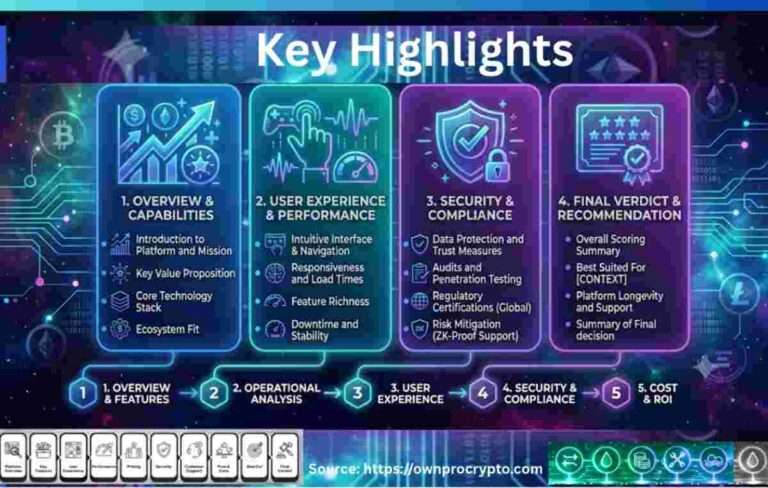
Selecting the best hardware wallet in 2026 requires evaluating more than price and supported cryptocurrencies.
Security architecture, recovery methods, ecosystem compatibility, and personal usage patterns determine whether a wallet is suitable.
A premium hardware wallet is not automatically the safest option for every user.
The correct choice depends on:
Before purchasing a hardware wallet, users should evaluate several important factors.
| Buying Factor | Why It Matters | What To Check |
|---|---|---|
| Security Architecture | Protects private keys | Secure element, audits, firmware transparency |
| Supported Networks | Determines asset compatibility | Bitcoin, Ethereum, Solana, Layer-2 support |
| Backup Options | Enables recovery | Seed phrase, Shamir backup, multisig |
| Transaction Display | Prevents signing mistakes | Large screen, clear verification |
| Connectivity | Impacts convenience | USB, Bluetooth, NFC, QR signing |
| Software Ecosystem | Improves usability | Mobile apps, browser wallets, dApps |
| Firmware Updates | Maintains security | Long-term manufacturer support |
A hardware wallet purchase should be based on the user’s complete security model rather than marketing features alone.
Choosing a hardware wallet requires understanding how different features affect security, usability, and long-term ownership.
A wallet with more features is not automatically better.
Users should prioritize the features that match their specific needs.
| Buying Factor | Why It Matters | What To Check |
|---|---|---|
| Security Architecture | Determines private key protection | Secure element, audits, firmware transparency |
| Supported Networks | Ensures asset compatibility | Bitcoin, Ethereum, Solana, Layer-2 support |
| Backup Options | Determines recovery flexibility | Seed phrase, Shamir backup, multisig support |
| Transaction Display | Helps prevent approval mistakes | Clear screen and transaction details |
| Connectivity | Affects convenience and attack surface | USB, Bluetooth, NFC, QR signing |
| Software Ecosystem | Improves daily usability | Mobile apps, browser wallets, dApps |
| Firmware Updates | Maintains long-term security | Manufacturer update history |
The best hardware wallet is the one that provides the right balance between:
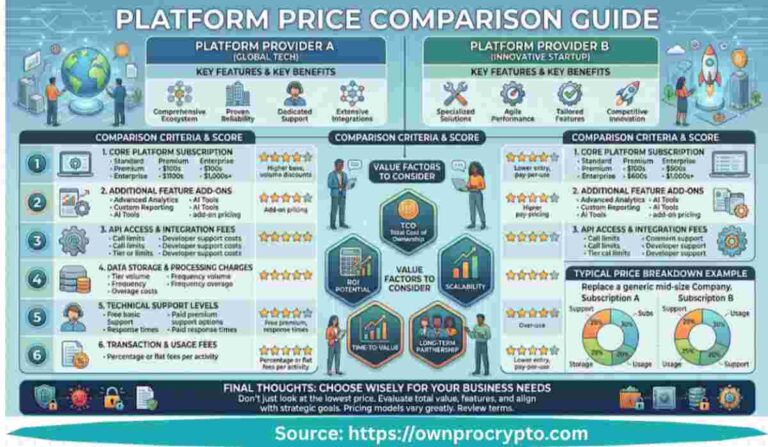
Price should not be the only factor when selecting a hardware wallet.
A lower-cost device may provide excellent protection for some users, while advanced investors may require premium features.
The value of a hardware wallet should be compared against the potential risks of storing significant assets on:
| Category | Typical Price Range | Best For |
|---|---|---|
| Entry-Level Hardware Wallets | Under $100 | Beginners and smaller portfolios |
| Mid-Range Hardware Wallets | $100–$200 | Active crypto users |
| Premium Hardware Wallets | $200+ | Advanced Web3 users |
| Enterprise Security Solutions | Custom pricing | Institutions and organizations |
A $50–$150 hardware investment can provide significant protection compared with keeping large cryptocurrency holdings exposed to online environments.
However, price alone does not determine security quality.
A more expensive wallet may include:
But the user’s security practices remain the most important factor.
Different users require different wallet ecosystems depending on their devices and preferred workflows.
Compatibility affects:
Hardware wallets commonly support major desktop operating systems.
| Wallet Type | Windows | macOS | Linux |
|---|---|---|---|
| Ledger Devices | Yes | Yes | Yes |
| Trezor Devices | Yes | Yes | Yes |
| BitBox Devices | Yes | Yes | Yes |
| Air-Gapped Wallets | Depends | Depends | Depends |
Desktop compatibility is important for users who prefer managing assets through:
Mobile compatibility is increasingly important as cryptocurrency usage becomes more portable.
| Wallet Type | iOS | Android | Best Mobile Feature |
|---|---|---|---|
| Ledger | Yes | Yes | Bluetooth connectivity |
| Tangem | Yes | Yes | NFC tap experience |
| SafePal | Yes | Yes | QR signing |
| Keystone | Yes | Yes | Air-gapped workflow |
Mobile-focused hardware wallets are useful for users who:

Setting up a hardware wallet correctly is more important than simply purchasing the device.
Many cryptocurrency losses occur because of:
A secure setup follows five important principles:
A secure hardware wallet setup process should include the following steps:
| Step | Action | Security Purpose |
|---|---|---|
| 1 | Purchase directly from manufacturer | Reduces supply-chain risks |
| 2 | Inspect packaging and device integrity | Detects possible tampering |
| 3 | Initialize device yourself | Prevents pre-generated seeds |
| 4 | Write seed phrase offline | Protects recovery information |
| 5 | Verify backup | Prevents future recovery failure |
| 6 | Update official firmware | Receives security improvements |
| 7 | Send a small test transaction | Confirms correct setup |
The most important setup rule is:
Never use a recovery phrase provided by someone else.
The recovery phrase should always be generated by the hardware wallet during the user’s own setup process.
The seed phrase is the ultimate ownership credential.
The hardware wallet protects access to private keys during normal use, but the recovery phrase restores ownership if the device is lost.
A secure seed phrase backup should be:
| Storage Method | Security Level | Recommendation |
|---|---|---|
| Screenshot | Unsafe | Never use |
| Cloud Backup | Unsafe | Avoid |
| Paper Backup | Basic | Short-term only |
| Metal Backup | Strong | Recommended |
| Distributed Backup | Advanced | Large holdings |
For significant holdings, users often consider:
Modern hardware wallets provide different recovery approaches depending on the security model and backup system.
Recovery planning is one of the most important parts of self-custody because the hardware device itself is not the cryptocurrency.
The blockchain records ownership.
The recovery system allows users to regain access when a device is:
Modern recovery approaches include:
Most hardware wallets use traditional recovery phrases.
Common formats include:
These words represent the cryptographic information required to restore wallet access.
A compatible replacement device can use the recovery phrase to recreate access to the same blockchain assets.
The recovery phrase should always remain:
Advanced hardware wallets support splitting recovery information into multiple shares.
Instead of storing one complete recovery phrase in one location, the backup is divided.
Example:
A 2-of-3 recovery system:
| Share | Location |
|---|---|
| Backup 1 | Home safe |
| Backup 2 | Bank storage |
| Backup 3 | Trusted family member |
Any two shares can restore access.
Shamir Secret Sharing provides several advantages:
This approach is especially useful for users managing:
Many cryptocurrency losses happen because of operational mistakes rather than hardware failures.
A secure device cannot protect users who accidentally expose recovery information or approve malicious transactions.
| Mistake | Risk | Better Practice |
|---|---|---|
| Buying from unofficial sellers | Possible tampered device | Buy directly from manufacturer |
| Saving seed phrase digitally | Remote theft | Keep offline |
| Sharing recovery phrase | Complete wallet compromise | Never share |
| Approving unknown transactions | Asset draining | Verify every signature |
| Installing fake apps | Malware exposure | Use official software |
| Ignoring firmware updates | Security weaknesses | Update regularly |
The most common security failure is not the hardware itself.
It is poor recovery management or unsafe user behavior.

Modern hardware wallets are no longer only Bitcoin storage devices.
They are becoming security layers for broader digital ownership activities, including:
As blockchain ecosystems expand, hardware wallets must provide more than simple storage.
They must help users securely authorize complex digital actions.
A Web3-focused hardware wallet should provide:
| Requirement | Why It Matters |
|---|---|
| Clear Transaction Display | Prevents malicious approvals |
| Smart Contract Support | Enables DeFi interaction |
| Multi-Network Support | Handles expanding ecosystems |
| Wallet Extension Integration | Connects to Web3 applications |
| NFT Visibility | Improves asset management |
The biggest Web3 security challenge is often not private key theft.
Instead, attackers increasingly target:
Hardware wallets reduce private key exposure, but users must still understand what they are approving.
Decentralized finance requires users to interact directly with blockchain applications.
Common DeFi activities include:
A hardware wallet improves security by keeping private keys isolated.
However, it does not guarantee that every DeFi protocol is safe.
Users must still evaluate:
Related resources:
→ Internal link: Crypto Wallet Approvals
→ Internal link: Smart Contract Risk Calculator
→ Internal link: DeFi Protocol Analysis Guide
NFT ownership requires protecting more than the token itself.
Users must protect:
Hardware wallets help protect NFT ownership by requiring physical confirmation before transactions are approved.
Important NFT security practices include:
Modern investors often manage assets across multiple networks.
A hardware wallet supporting multi-chain ownership may handle:
However, broader support also creates additional complexity.
Users should evaluate:
A secure multi-chain strategy requires both strong hardware and careful operational practices.
Hardware wallets are no longer isolated storage devices.
Modern hardware wallet ecosystems include:
The ecosystem surrounding a hardware wallet can significantly affect the overall user experience.
A strong ecosystem helps users:
However, ecosystem convenience should always be balanced with security principles.
More features can improve usability, but they can also introduce additional complexity.
Ledger remains one of the most recognized hardware wallet ecosystems because of its focus on:
Ledger devices are designed for users who manage diverse cryptocurrency portfolios.
Common use cases include:
| Feature | Purpose |
|---|---|
| Multi-chain support | Manage different blockchain assets |
| Mobile integration | Access assets through smartphones |
| Web3 compatibility | Connect with decentralized applications |
| Transaction confirmation | Verify actions before signing |
| Hardware security | Protect private keys offline |
Popular Ledger devices include:
| Device | Best Use Case |
|---|---|
| Ledger Flex | Premium everyday Web3 users |
| Ledger Stax | Luxury design + advanced users |
| Ledger Nano X | Mobile multi-chain users |
Ledger is especially popular among users who interact with:
The ecosystem advantage comes from combining hardware security with a broad software environment.
Trezor maintains strong popularity among users who prioritize transparency and open-source security.
The ecosystem focuses on:
Trezor’s approach emphasizes user verification and transparency.
| Feature | Purpose |
|---|---|
| Open-source software | Enables independent review |
| Transparent development | Improves trust verification |
| Backup options | Supports recovery planning |
| Bitcoin-focused devices | Reduces unnecessary complexity |
Popular devices include:
| Device | Best Use Case |
|---|---|
| Trezor Safe 5 | Advanced security users |
| Trezor Safe 3 | Value-focused users |
| Bitcoin-only editions | BTC maximalists |
Trezor is commonly preferred by users who prioritize:
Keystone focuses heavily on offline transaction security.
Its architecture emphasizes:
The goal is reducing exposure by minimizing direct electronic communication channels.
| Feature | Purpose |
|---|---|
| QR signing | Enables offline transaction approval |
| Air-gapped workflow | Reduces communication risks |
| Large touchscreen | Improves transaction verification |
| Offline operation | Minimizes attack surface |
Keystone is best suited for:
Hardware wallets are increasingly becoming part of larger institutional custody architectures.
Organizations often combine:
Enterprise security focuses less on a single wallet and more on complete operational control.
Institutional users typically require:
| Security Component | Purpose |
|---|---|
| Hardware signing devices | Protect private keys |
| Multisignature approvals | Prevent single-person control |
| MPC systems | Distribute cryptographic responsibility |
| Governance policies | Define authorization rules |
| Monitoring systems | Detect suspicious activity |
A hardware wallet alone may not be sufficient for institutional requirements.
Organizations often combine multiple security technologies to create a complete custody framework.
Related:
→ Internal link: Enterprise Crypto Custody Platform
→ Internal link: MPC vs Multi-Sig vs HSM Custody
→ Internal link: Institutional Crypto Governance
Hardware wallets remain one of the strongest security tools for cryptocurrency self-custody because they separate private key management from internet-connected environments.
Unlike exchange accounts or software wallets, hardware wallets give users direct control over their digital assets.
However, self-custody also introduces additional responsibilities.
The trade-off is:
More control requires more responsibility.
A hardware wallet can significantly reduce online attack risks, but users must still manage:
Hardware wallets provide several important security advantages for cryptocurrency owners.
| Advantage | Explanation | Security Benefit |
|---|---|---|
| Offline Private Key Storage | Keys remain isolated from online systems | Reduces remote hacking risk |
| Transaction Confirmation | Users approve actions physically | Prevents unauthorized transfers |
| Self-Custody Ownership | No exchange dependency | Full asset control |
| Multi-Chain Support | Manage multiple assets | Simplifies portfolio security |
| Long-Term Storage | Designed for years of protection | Supports wealth preservation |
| Recovery Options | Backup systems restore access | Protects against device loss |
The primary advantage of a hardware wallet is private key isolation.
Even if a connected computer or smartphone becomes compromised, the attacker may still be unable to directly access the private keys stored inside the device.
Hardware wallets also introduce certain challenges.
Self-custody removes dependence on centralized platforms, but it also removes traditional account recovery systems.
| Limitation | Explanation | Risk Management |
|---|---|---|
| User Responsibility | No company can recover lost seeds | Maintain secure backups |
| Learning Curve | Requires security knowledge | Follow setup procedures |
| Physical Loss | Device can disappear | Use recovery phrase |
| Transaction Complexity | Requires verification | Check every approval |
| Purchase Cost | Requires hardware investment | Compare security value |
The biggest limitation is that users become responsible for protecting their own ownership system.
A secure device combined with poor backup practices can still result in asset loss.
The next generation of hardware wallets is moving toward more intelligent and flexible security models.
Future hardware wallet development is expected to focus on:
Major trends include:
| Trend | Impact |
|---|---|
| Smart Wallet Integration | Easier account management |
| MPC + Hardware Combination | Institutional-grade security |
| Social Recovery | Reduced seed phrase dependence |
| Biometric Authentication | Improved usability |
| AI Transaction Analysis | Better fraud detection |
| Quantum-Resistant Security | Future protection |
As blockchain applications become more complex, hardware wallets will likely evolve from simple storage devices into broader digital ownership security platforms.
Hardware wallets are becoming part of a larger digital ownership infrastructure.
Future self-custody systems may combine:
The goal is moving from:
“Store private keys safely”
toward:
“Create a complete digital ownership security system.”
Future cold storage solutions may help users manage not only cryptocurrency but also:
Related:
→ Internal link: Digital Ownership Hub
→ Internal link: Crypto Security Hub
→ Internal link: Zero-Trust Interoperability
There is no universal best hardware wallet for every cryptocurrency user.
The correct choice depends on:
A beginner, a Bitcoin investor, a DeFi user, and an institution may all require different hardware wallet strategies.
The best hardware wallet is the one that matches the user’s specific security model.
| User Profile | Recommended Choice |
|---|---|
| First-time crypto holder | Tangem or beginner-friendly hardware wallet |
| Bitcoin-only investor | Trezor Bitcoin Edition or Blockstream Jade |
| DeFi user | Ledger Flex, Ledger Stax, or Trezor Safe series |
| Multi-chain investor | Ledger ecosystem |
| Maximum offline security | Keystone or SafePal air-gapped wallets |
| Institutional user | Hardware + multisig/MPC custody |
Selecting a wallet should be based on more than popularity.
Users should consider:
The strongest cryptocurrency security strategy is not choosing a device based only on brand recognition or popularity.
It is building a complete self-custody system.
A strong strategy includes:
Hardware wallets remain the foundation of secure digital asset ownership because they transform private keys from internet-accessible credentials into physically controlled cryptographic assets.
In 2026, the question is no longer:
“Do I need a hardware wallet?”
For serious digital asset ownership, the better question is:
“Which hardware wallet architecture matches my security needs?”
Hardware wallets have evolved from simple cryptocurrency storage devices into complete digital ownership security systems.
In 2026, users must consider more than:
The right hardware wallet strategy combines:
Different users require different solutions:
The foundation remains the same:
Control your keys. Protect your recovery. Verify every transaction.
Hardware wallets continue to represent one of the strongest foundations for secure digital asset ownership in the modern cryptocurrency ecosystem.
Hardware wallets are one part of a complete crypto security strategy. Continue exploring related frameworks covering self-custody, wallet protection, institutional custody, and digital asset security.
├── 1. Learn & Foundations ⬇️
│ ├── 📖 Crypto Security Guide
│ ├── 🔐 Crypto Security Checklist
│ ├── 🛡️ Crypto Security Standards
│ └── 🚨 Crypto Security Tools
│
├── 2. Self-Custody & Asset Protection ⬇️
│ ├── 🏰 Crypto Self-Custody Security
│ ├── 🔒 Crypto Asset Security 2026
│ └── ⚡ Crypto Asset Security Framework
│
├── 3. Wallet Security ⬇️
│ ├── 👛 Best Hardware Wallets in 2026
│ ├── 👛 Wallet Time Machine
│ ├── 🔑 Crypto Wallet Approvals
│ └── 📊 Crypto Portfolio Tracker
│
├── 4. Institutional Security ⬇️
│ ├── 🏦 MPC vs Multi-Sig Wallets
│ ├── 🏛️ Institutional Crypto Custody 2026
│ ├── 🔄 Why Institutions Are Replacing Multi-Sig with MPC
│ └── ☁️ Multi-Cloud MPC Architecture
│
├── 5. Cross-Chain Security ⬇️
│ ├── 🌉 Crypto Bridge Risk Explained
│ ├── 🔗 Cross-Chain Blockchain Security
│ └── 🛡️ Zero-Trust Interoperability
│
└── 6. Threat Intelligence & Risk Operations ⬇️
├── 🚩 Crypto Scam Checker
├── ⚠️ Asset Risk Assessment System
└── 📈 Sovereign Asset Dashboard
External security reference: OWASP Smart Contract Security Risks helps identify critical Web3 vulnerabilities, including contract logic issues, oracle manipulation, and smart contract exploitation risks.
Hardware wallets remain one of the most searched cryptocurrency security topics because investors increasingly prioritize:
The following answers cover common hardware wallet searches, including:
What is the best hardware wallet in 2026?
The best hardware wallet in 2026 depends on the user’s security needs, supported assets, and preferred usage style.
There is no single device that is perfect for every cryptocurrency holder.
For premium multi-chain users, devices such as Ledger Flex provide a modern experience with broad ecosystem support.
For users prioritizing open-source security, Trezor Safe 5 remains a strong option.
For maximum offline isolation, air-gapped wallets such as Keystone and SafePal focus on QR-based transaction signing.
The best choice depends on:
What is the best crypto hardware wallet for beginners?
The best hardware wallet for beginners should provide:
Beginner-friendly options often include:
New users should focus on learning:
A simple and correctly managed wallet is often safer than an advanced wallet configured incorrectly.
What is the safest crypto wallet in 2026?
The safest crypto wallet is generally considered a properly managed hardware wallet stored securely offline.
Security depends on multiple factors:
| Security Factor | Importance |
|---|---|
| Private key isolation | Prevents remote theft |
| Seed phrase protection | Enables secure recovery |
| Transaction verification | Prevents malicious approvals |
| Firmware security | Protects device integrity |
| User practices | Prevents social engineering attacks |
No wallet can protect funds if users:
Is a hardware wallet better than a software wallet?
For storing significant cryptocurrency holdings, a hardware wallet generally provides stronger protection than a software wallet.
Software wallets provide convenience but remain connected to internet-enabled devices.
This creates exposure to:
Hardware wallets keep private keys offline and require physical confirmation before transactions are approved.
| Wallet Type | Best Use |
|---|---|
| Software wallet | Daily small transactions |
| Hardware wallet | Long-term asset protection |
| Exchange wallet | Trading convenience |
| Multisig wallet | Advanced custody |
Is Ledger still safe in 2026?
Ledger remains one of the most widely used hardware wallet ecosystems.
Its security approach focuses on:
However, users should still practice strong operational security:
Hardware security works best when combined with careful user behavior.
Ledger vs Trezor: Which hardware wallet is better?
Ledger and Trezor represent different security philosophies.
| Category | Ledger | Trezor |
|---|---|---|
| Main Strength | Secure hardware ecosystem | Open-source transparency |
| Asset Support | Very broad | Broad |
| DeFi Support | Excellent | Strong |
| Open Source | Partial | Strong |
| Best For | Multi-chain users | Security-focused users |
The better choice depends on whether the user prioritizes:
What is the best Bitcoin hardware wallet?
The best Bitcoin hardware wallet depends on whether the user prioritizes simplicity, transparency, or advanced recovery systems.
Popular Bitcoin-focused options include:
Bitcoin investors often prioritize:
A Bitcoin-only approach can reduce unnecessary complexity and create a simpler security model.
What is a cold wallet?
A cold wallet is a cryptocurrency wallet where private keys remain offline and disconnected from internet environments.
Hardware wallets are one type of cold wallet.
Cold storage helps protect against:
Cold storage does not remove all risks.
Users must still protect:
What is an air-gapped hardware wallet?
An air-gapped hardware wallet avoids direct internet communication by removing connections such as:
Transactions are usually transferred through QR codes.
Examples include:
Air-gapped wallets are popular among users who prioritize maximum isolation.
Are hardware wallets hackable?
Hardware wallets are designed to resist many forms of remote attack, but no security system eliminates every possible risk.
Possible attack methods include:
The largest security risk is often not the hardware itself.
It is poor recovery phrase management or unsafe user behavior.
Can a hardware wallet be hacked remotely?
A properly configured hardware wallet makes remote private key extraction extremely difficult because private keys remain isolated inside the device.
However, attackers may still target users through:
Security requires both:
What happens if I lose my hardware wallet?
Your cryptocurrency is not stored inside the physical device.
The blockchain records ownership.
If your hardware wallet is:
You can restore access using your recovery phrase on a compatible replacement device.
The critical protection is maintaining a secure offline backup.
How should I store my hardware wallet seed phrase?
A hardware wallet seed phrase should always be stored offline.
Recommended methods:
| Method | Security |
|---|---|
| Screenshot | Unsafe |
| Cloud storage | Unsafe |
| Paper backup | Acceptable |
| Metal backup | Recommended |
| Multiple secure locations | Advanced |
Never share your seed phrase with anyone.
What is the best cold wallet for long-term crypto holding?
The best cold wallet for long-term holding should prioritize:
Popular choices include:
Long-term storage requires more than selecting a device.
A strong long-term strategy should include:
The hardware wallet may eventually fail, but properly protected recovery information preserves ownership.
Which hardware wallet supports the most coins?
Multi-chain wallets such as Ledger devices support a very broad range of cryptocurrencies and tokens.
When comparing asset support, users should evaluate:
Supported assets can change as blockchain networks continue evolving.
The wallet with the highest asset support is not always the best choice.
Users should also consider:
Can hardware wallets store Ethereum and NFTs?
Yes.
Modern hardware wallets support:
Hardware wallets help protect private keys during Web3 interactions.
However, users must still verify every transaction before approval.
Hardware wallets protect ownership credentials, but they do not guarantee that:
Users should review:
Can I stake crypto using a hardware wallet?
Yes, many hardware wallets support staking through connected applications.
Common staking assets include:
Before staking, users should evaluate:
| Risk Area | Consideration |
|---|---|
| Validator risk | Reliability of staking provider |
| Smart contract risk | Security of connected platforms |
| Lock periods | Ability to access funds |
| Network conditions | Changes in blockchain rules |
A hardware wallet protects transaction authorization, but staking introduces additional ecosystem risks.
What is the difference between secure element wallets and open-source wallets?
Secure element wallets and open-source wallets focus on different security priorities.
| Approach | Main Benefit |
|---|---|
| Secure Element | Physical attack resistance |
| Open Source | Public code verification |
Secure element-focused designs attempt to protect sensitive information using specialized hardware components.
Open-source approaches emphasize transparency by allowing code review and community auditing.
Many users consider a combination of:
to be an ideal security model.
Are hardware wallets worth buying in 2026?
For anyone holding meaningful cryptocurrency, a hardware wallet remains one of the most important security investments.
The cost of a hardware wallet is usually small compared with potential losses from:
A hardware wallet is especially valuable for users who:
The value comes from reducing exposure to online threats.
Which hardware wallet should I buy in 2026?
The right hardware wallet depends on the user’s situation.
| User Type | Suitable Choice |
|---|---|
| Beginner | Tangem or simple hardware wallet |
| Bitcoin holder | Bitcoin-focused wallet |
| DeFi user | Ledger or Trezor ecosystem |
| Maximum security user | Air-gapped wallet |
| Institution | Hardware + MPC/multisig |
The strongest approach is not choosing the most expensive device.
It is building a complete self-custody system with: