infographic of site logo for contact us

OwnProCrypto.com

Use our Crypto Search Engine 🔍 to find the topics and keywords you're looking for.

Blockchain-as-a-Service (BaaS): A Complete 2026–2033 Market & Platform Analysis

Blockchain-as-a-Service (BaaS)- Platforms, Providers, Market Size, Trends & 2033 ForecastBlockchain-as-a-Service (BaaS)- Platforms, Providers, Market Size, Trends & 2033 Forecast
Platforms → Market → Pricing → Choosing → Risks → Future

Table of Contents

Introduction to Blockchain-as-a-Service (BaaS)

Last updated: August 2026

Blockchain-as-a-Service (BaaS) is changing how companies use blockchain infrastructure. Instead of building every Managed blockchain node hosting, network component, API, security layer and operational process themselves, organizations can consume blockchain infrastructure through cloud-based or managed services.

But the term BaaS is now used very broadly. Some providers offer complete permissioned blockchain platforms, while others primarily provide managed blockchain nodes, RPC access, APIs, smart-contract infrastructure or enterprise implementation services.

That distinction matters.

This guide explains what BaaS actually means, how the technology works, which providers matter in 2026, how the global Blockchain market trends is being measured, why published market forecasts differ so widely, and what the BaaS industry could look like through 2033.

At a glanceWhat matters in 2026
What is BaaS?Managed blockchain infrastructure, platforms, tools or services that reduce the need to operate blockchain infrastructure internally.
Primary usersEnterprises, financial institutions, developers, startups, governments and organizations building blockchain-based applications.
Main valueLower infrastructure complexity, faster deployment, managed operations and easier access to blockchain capabilities.
Major use casesSmart contracts, payments, tokenization, supply chains, digital assets, data integrity and enterprise blockchain applications.
Important 2026 issueThe market is shifting from the older idea of “one-click blockchain networks” toward managed nodes, APIs, infrastructure, tokenization and enterprise services.

Tip: If you are evaluating BaaS as a business, do not ask only “Which provider is the biggest?” Ask what infrastructure the provider actually manages for you, which blockchain networks it supports, what you still have to operate yourself, and how difficult it would be to migrate later.

What Is Blockchain-as-a-Service (BaaS)?

Blockchain-as-a-Service is a managed technology model that allows an organization to use blockchain infrastructure without building the entire underlying environment from scratch.

In a traditional deployment, a company may need to provision servers, install blockchain clients, synchronize nodes, manage storage, configure networking, monitor availability, secure endpoints, manage upgrades and build application interfaces.

BaaS moves some or all of that operational burden to a service provider.

BaaS is not one single product

This is the first concept users need to understand. BaaS can describe several different layers of the blockchain technology stack.

BaaS layerWhat the provider suppliesTypical customer need
Managed nodesBlockchain nodes, synchronization, availability and infrastructure operationsCompanies that need reliable blockchain access without running nodes themselves
RPC and APIsEndpoints for reading blockchain data and submitting transactionsDevelopers building wallets, dApps, exchanges and Web3 applications
Managed blockchain networksNetwork creation, membership, peers, ordering and administrationEnterprises needing permissioned or consortium blockchain networks
Development platformsSmart-contract tools, APIs, SDKs, testing and deployment infrastructureDevelopers and Web3 application teams
Enterprise blockchain servicesIntegration, security, compliance, consulting and application developmentLarge organizations with complex blockchain projects
Tokenization infrastructureDigital-asset issuance, lifecycle management and blockchain integrationFinancial institutions and asset issuers

BaaS versus simply “using blockchain”

A company can use a public blockchain without using BaaS. For example, a developer can operate an Ethereum node independently or interact with a public blockchain through infrastructure operated by another company.

BaaS becomes relevant when a provider manages meaningful parts of the infrastructure, platform or operational workload for the customer.

A simple example

Imagine a financial institution wants to issue tokenized assets.

Without managed infrastructure, it may need to select a blockchain, operate nodes, design APIs, establish monitoring, manage security, integrate custody and build application infrastructure.

With BaaS or related managed blockchain infrastructure, some of those responsibilities can be outsourced.

ResponsibilitySelf-managed approachManaged approach
Node provisioningCustomerProvider or shared responsibility
Blockchain synchronizationCustomerOften provider-managed
Network monitoringCustomerOften provider-managed
Smart contractsCustomerUsually customer-owned
Application logicCustomerUsually customer-owned
Security configurationCustomerShared responsibility
ComplianceCustomerShared responsibilityWarning: “Fully managed” does not mean “everything is managed for you.” Smart-contract security, application security, private-key management, business logic and regulatory obligations may remain the customer’s responsibility.

Warning: Never copy a “Top 10 BaaS Providers” list from an older market report without checking the provider’s current documentation. Microsoft Azure Blockchain Service is retired, and Google Cloud’s Blockchain Node Engine is scheduled for shutdown in December 2026.

How Does Blockchain-as-a-Service Work?

operational process: choose → provision → connect → monitor

BaaS works by separating the blockchain infrastructure layer from the application layer.

The provider manages some combination of computing resources, blockchain nodes, networking, storage, APIs, monitoring and BaaS platform services. The customer then interacts with those resources through APIs, SDKs, dashboards or application interfaces.

The basic BaaS architecture

LayerFunctionTypical responsibility
Application layerWallets, dApps, financial applications, enterprise applicationsCustomer
Smart-contract layerBusiness logic executed on blockchain networksCustomer / development team
API / RPC layerConnects applications to blockchain networksProvider or shared
Blockchain node layerReads, validates and relays blockchain dataProvider or customer
Cloud infrastructureCompute, storage, networking and availabilityProvider
Security and monitoringAccess control, logging, monitoring and infrastructure protectionShared responsibility

Step 1: Choose the blockchain environment

The first decision is the network itself.

A company might use a public network such as Ethereum, a permissioned network such as Hyperledger Fabric, or another blockchain depending on its application, governance and regulatory requirements.

Step 2: Provision infrastructure

Instead of manually installing and synchronizing blockchain clients, a managed service may allow the customer to provision nodes or network resources through a console or API. Depending on the provider and service model, the provider may handle tasks such as node deployment, synchronization, upgrades and infrastructure availability.

Step 3: Connect applications

Applications communicate with blockchain infrastructure through RPC endpoints, APIs or SDKs.

Step 4: Monitor and operate

The provider may handle infrastructure monitoring, node restarts, scaling, upgrades and availability, depending on the service.

Step 5: Manage the application separately

The blockchain infrastructure may be managed by the provider, but the application, smart contracts and business rules normally remain under the customer’s control.

QuestionShort answer
Does BaaS eliminate blockchain development?No. It reduces infrastructure work; application and smart-contract development may still be required.
Does BaaS mean the blockchain is centralized?Not necessarily. The underlying blockchain can remain decentralized while infrastructure access is managed by a centralized provider.
Does BaaS remove security responsibility?No. Security is normally shared between provider and customer.
Does BaaS always use a cloud provider?No. The term generally describes a managed service model, although cloud infrastructure is common.

Tip: Think of BaaS as outsourcing infrastructure complexity, not outsourcing responsibility for your blockchain application.


Infographic of Blockchain Digital Twins 2026 Showing Advanced Application like : The ESG Revolution: Tokenized Impact Bonds in 2026 - Security Foundation: Asset Security 2026 & Your Digital Fortress Execution Layer - Smart Legal Contract Modules
Top 8 RWA Protocols Compared

BaaS Use-Case section

Blockchain-as-a-Service Use Cases for Businesses

Blockchain-as-a-Service can support business applications where multiple parties need to coordinate around shared records, verifiable transactions or programmable digital assets. Common applications include supply-chain tracking, financial settlement, digital identity, tokenization, stablecoin payments and document verification.

The strongest use cases are generally not simply “put data on a blockchain.” They involve a meaningful requirement for shared state, independent verification, programmable ownership or coordination between organizations. BaaS becomes valuable when managed infrastructure can reduce the technical burden of delivering that blockchain-based capability.


Supply-Chain Management

BaaS can support supply-chain applications that record selected events such as production, shipment, custody changes and delivery. A shared ledger can provide participating organizations with a consistent history of important events while reducing dependence on manually reconciled records.

The value depends heavily on data quality. Blockchain can preserve and verify recorded events, but it cannot automatically determine whether the original information was accurate.


Financial Settlement

Managed blockchain infrastructure can support financial applications involving digital assets, programmable settlement and tokenized transactions. Businesses can use blockchain networks as a settlement or coordination layer while connecting them to existing financial systems through APIs and integration services.

Financial applications require additional attention to identity, custody, compliance, transaction controls and operational resilience. BaaS addresses infrastructure requirements but does not remove those broader responsibilities.


Digital Identity

Blockchain infrastructure can support systems involving verifiable credentials, attestations and decentralized identity-related workflows. Rather than storing sensitive identity information directly on-chain, applications can use blockchain to verify credentials or proofs while retaining personal information in appropriate off-chain systems.

Privacy, consent, revocation and regulatory requirements should therefore be designed into the architecture from the beginning.


Real-World Asset Tokenization

BaaS can provide infrastructure for applications that represent real-world assets through blockchain-based tokens. Potential assets include financial instruments, property interests, commodities and other legally structured assets.

However, tokenization requires substantially more than smart contracts. Legal enforceability, ownership records, custody, identity, compliance, asset servicing and market infrastructure all influence whether a tokenized asset system can operate successfully.


Stablecoin Payments

BaaS and managed blockchain infrastructure can support applications that interact with stablecoins for payments, settlement and treasury workflows. Businesses can use blockchain APIs, managed nodes and transaction infrastructure without operating an entire blockchain environment themselves.

The architecture must still account for the selected blockchain, stablecoin issuer, transaction costs, wallet security, regulatory requirements and geographic availability.


Enterprise Data and Document Verification

Blockchain can provide a verification layer for documents, certificates, records and business events. Instead of placing entire documents on-chain, organizations can store cryptographic proofs or hashes that allow later verification that a particular document or record has not been altered.

This model can reduce on-chain storage requirements while preserving the ability to independently verify important information.

Infographic of Platform Comparison (2026)
Top 8 RWA Protocols Compared

Blockchain-as-a-Service Platforms and Providers in 2026

The provider landscape needs more careful analysis than most “top BaaS companies” lists provide. In 2026, providers compete across several layers, including managed blockchain networks, public-chain access, dedicated blockchain nodes, RPC infrastructure, blockchain data APIs, enterprise blockchain platforms, smart-contract infrastructure, governance and multicloud deployment.

That makes provider comparison more useful when it answers one practical question: what part of the blockchain stack are you actually buying? Some organizations need a complete permissioned blockchain environment, while others only need reliable access to public blockchain nodes or blockchain data.


Important BaaS Provider and Service Categories

Provider CategoryExamplesBest Suited To
Managed blockchain networksAmazon Managed Blockchain, Oracle Blockchain PlatformEnterprise networks and permissioned blockchain applications
Managed node and RPC infrastructureCloud and specialist infrastructure providersDevelopers and applications needing reliable blockchain access
Enterprise blockchain technologyOracle, IBM and other enterprise technology vendorsLarge organizations and business networks
Blockchain consulting and implementationAccenture, Deloitte, Capgemini, TCS and similar firmsLarge transformation and implementation projects
Specialist Web3 infrastructureDedicated blockchain infrastructure companiesDevelopers, protocols and Web3 applications

These categories should not be treated as interchangeable. A managed blockchain network can provide network membership, identity, governance and other enterprise functions, while an RPC provider may simply provide API access to public blockchain nodes. Provider selection should therefore begin with the infrastructure requirement rather than the provider’s brand name.


BaaS Provider Comparison

Provider2026 PositioningStrongest Use CaseKey AdvantageMain Limitation or Consideration
AWSManaged blockchain infrastructure and APIsPublic blockchain applications and enterprise networksBroad cloud ecosystem and managed infrastructurePricing and architecture can become complex
OracleEnterprise blockchain platformPermissioned business networks and enterprise applicationsHyperledger Fabric and enterprise integrationMore enterprise-oriented than general-purpose Web3 infrastructure
Alibaba CloudEnterprise BaaS/PaaSConsortium networks and enterprise applicationsMultiple blockchain frameworks and cloud integrationRegional availability and ecosystem considerations matter
Google CloudManaged blockchain node infrastructure undergoing transitionExisting managed blockchain node workloadsCloud infrastructure and simplified node operationsBlockchain Node Engine and Blockchain RPC are scheduled for shutdown on December 15, 2026
IBMEnterprise Hyperledger Fabric support and multicloud blockchain technologyPermissioned enterprise networksHyperledger Fabric expertise and multicloud deployment optionsMore suitable for complex enterprise environments than lightweight Web3 projects

Amazon Managed Blockchain

Amazon Managed Blockchain remains one of the clearest examples of managed blockchain infrastructure. AWS describes Amazon Managed Blockchain as a fully managed service supporting the Hyperledger Fabric and Ethereum open-source frameworks. Its current services also provide access to public blockchain infrastructure, including Ethereum and Bitcoin, while allowing customers to create private Hyperledger Fabric networks.

AWS CapabilityPractical Value
Managed blockchain infrastructureReduces node and network operations
Ethereum supportUseful for public Web3 applications
Bitcoin accessProvides managed access to Bitcoin infrastructure
Hyperledger FabricSupports permissioned enterprise networks
Blockchain data APIsProvides standardized access to supported blockchain data
Usage-based pricingSupports scalable architectures but requires cost modeling

Tip: AWS is especially attractive when blockchain infrastructure must integrate deeply with an existing AWS architecture. Do not evaluate Amazon Managed Blockchain as an isolated blockchain product; evaluate the complete AWS architecture around it, including networking, security, data services, application infrastructure and expected usage costs.


Oracle Blockchain Platform

Oracle Blockchain Platform is focused primarily on enterprise blockchain environments. Its architecture is based on Hyperledger Fabric and provides capabilities around network participation, identity, administration, monitoring and application integration. Oracle also positions its broader digital-assets capabilities around areas such as tokenization, confidential transactions and enterprise interoperability.

Oracle StrengthBest Application
Permissioned blockchainEnterprise consortiums
Hyperledger FabricBusiness networks
Tokenization capabilitiesEnterprise digital assets
Oracle integrationERP and enterprise workflows
Multicloud interoperabilityComplex enterprise deployments

Warning: Oracle can be a powerful choice for a permissioned enterprise architecture, but a startup building a simple public-chain dApp may not need the governance and infrastructure complexity of a full enterprise blockchain platform.


Alibaba Cloud: Strong Consortium-Oriented Architecture

Alibaba Cloud’s Blockchain as a Service is positioned as an enterprise platform that reduces the need to manage underlying blockchain infrastructure directly. Its 2026 documentation identifies three supported blockchain frameworks: Ant Blockchain, Hyperledger Fabric and Quorum. Its consortium-oriented architecture is designed for organizations that need to create networks involving multiple participating entities.

Alibaba BaaS FeatureEnterprise Implication
Managed infrastructureLower operational overhead
Ant BlockchainHigh-throughput enterprise workloads
Hyperledger FabricPermissioned consortium architecture
QuorumEnterprise-focused Ethereum-compatible blockchain option
Consortium networksUseful for multi-party business workflows

Tip: Alibaba Cloud is worth considering when the target market, cloud footprint and consortium requirements align with its ecosystem. Provider selection should include regional infrastructure, regulatory requirements, organizational procurement constraints and the blockchain framework required by the project.


Google Cloud: An Important 2026 Warning

Google Cloud deserves special attention because older BaaS articles may still recommend Blockchain Node Engine as if it were a long-term current product. That information is now outdated.

Google Cloud states that Blockchain Node Engine and Blockchain RPC will be shut down on December 15, 2026. Google also announced limited support beginning June 15, 2026, with new node creation and new Blockchain RPC endpoint provisioning disabled from that date. Google recommends that affected customers migrate to QuickNode before the shutdown.

Google Cloud Service2026 StatusDecision Implication
Blockchain Node EngineScheduled for shutdownDo not design a new long-term dependency without a migration plan
Blockchain RPCScheduled for shutdownExisting applications require migration
Recommended migration providerQuickNodeEvaluate migration before December 15, 2026

Warning: This is one of the most important facts to include in a 2026 BaaS comparison. An older article can easily become misleading if it describes Google Cloud Blockchain Node Engine as an unchanged long-term offering. Google’s current documentation provides a December 15, 2026 shutdown date and migration guidance.


IBM: Hyperledger Fabric and Enterprise Blockchain Support

IBM’s current blockchain offering is centered on IBM Support for Hyperledger Fabric rather than the older standalone IBM Blockchain Platform software model. IBM Support for Hyperledger Fabric enables organizations to build and join Hyperledger Fabric networks across on-premises, private, public or hybrid multicloud Kubernetes environments.

The offering provides a management platform for deploying and operating Fabric components, including peers, certificate authorities, ordering nodes and smart-contract container images. This makes IBM particularly relevant to organizations that need enterprise support, multicloud deployment and controlled Hyperledger Fabric environments.

IBM StrengthBest Application
Hyperledger Fabric supportPermissioned enterprise networks
Multicloud deploymentOrganizations operating across multiple cloud environments
Enterprise supportProduction blockchain deployments requiring commercial support
Kubernetes-based deploymentOrganizations with existing containerized infrastructure
Network management toolingOrganizations operating complex Fabric networks

Important: IBM Blockchain Platform Software Edition reached end of support in 2023 and was replaced by IBM Support for Hyperledger Fabric. Current comparisons should therefore avoid presenting the older IBM Blockchain Platform software as a current standalone product.


Microsoft Azure and Other Historical BaaS Products

Historical provider lists can also contain products that are no longer active. Microsoft Azure Blockchain Service, for example, was retired in 2021 and should not be presented as a current BaaS option. This illustrates why BaaS comparison articles need regular product-lifecycle checks rather than simply copying older “top providers” lists.

Provider or Product2026 Editorial StatusArticle Treatment
AWS Amazon Managed BlockchainActiveInclude as a current major managed blockchain provider
Oracle Blockchain PlatformActive enterprise offeringInclude as an enterprise BaaS option
Alibaba Cloud BaaSActiveInclude as a current enterprise and consortium-oriented option
IBM Support for Hyperledger FabricCurrent IBM offeringInclude as the current IBM enterprise Fabric offering
Google Cloud Blockchain Node EngineScheduled for shutdown December 15, 2026Discuss as a transition and platform-lifecycle case, not a long-term recommendation
Microsoft Azure Blockchain ServiceRetiredDo not list as an active BaaS product

Which Provider Fits Different Business Needs?

There is no single BaaS provider that is best for every organization. A business already deeply integrated with AWS may value ecosystem integration and managed infrastructure, while an organization focused on permissioned enterprise networks may place greater importance on Hyperledger Fabric capabilities, governance and controlled participation. Other businesses may prioritize regional cloud availability, public blockchain access, multichain APIs, tokenization infrastructure or specialized blockchain infrastructure.

The strongest comparison therefore begins with the workload rather than the vendor name. Organizations should evaluate supported networks, infrastructure control, APIs, security, compliance, geographic availability, developer experience, pricing, observability, support, product lifecycle and migration options against their specific requirements.

In practical terms, the right choice depends on whether the organization needs a complete managed blockchain network, permissioned enterprise infrastructure, public-chain access, managed nodes, blockchain data APIs or a broader Web3 infrastructure stack. These are different service layers, and treating them as interchangeable can lead to unnecessary cost, architectural complexity and vendor dependency.

Warning: Never copy a “Top 10 BaaS Providers” list from an older market report without checking the provider’s current documentation. Microsoft Azure Blockchain Service is retired, and Google Cloud’s Blockchain Node Engine is scheduled for shutdown in December 2026.

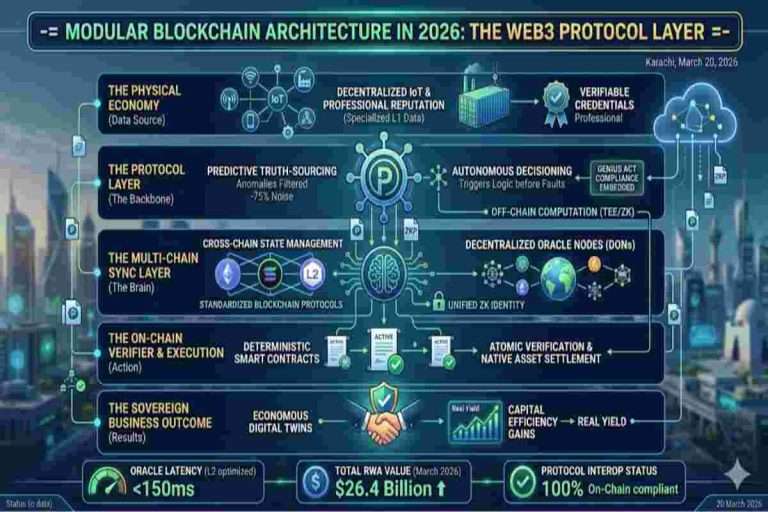
This infographic of Modular Blockchain Architecture in 2026 explained The Protocol Layer of the Web3 Ecosystem
BaaS Versus Blockchain Infrastructure: What Is the Difference?

BaaS Versus Blockchain Infrastructure: What Is the Difference?

The BaaS market is no longer a simple race between cloud companies offering a “blockchain platform.” In 2026, providers compete across several layers: managed blockchain networks, public-chain access, RPC infrastructure, blockchain data APIs, smart-contract development, enterprise governance, and multicloud deployment.

That makes a provider comparison more useful when it answers one practical question: what part of the blockchain stack are you actually buying?

ProviderPrimary BaaS StrengthBest FitImportant 2026 Reality
Amazon Web Services (AWS)Managed public-chain access, blockchain data APIs and Hyperledger FabricDevelopers, fintech, institutions and AWS-native enterprisesAmazon Managed Blockchain currently supports Ethereum, Polygon, Bitcoin and Hyperledger Fabric.
Alibaba CloudEnterprise BaaS, Hyperledger Fabric, Quorum and Ant BlockchainConsortium networks and enterprises needing managed blockchain infrastructureIts 2026 documentation explicitly lists three supported blockchain engines.
OracleEnterprise blockchain and Hyperledger Fabric infrastructureLarge enterprises already using Oracle databases, ERP and OCIOracle’s 2026 documentation continues to cover Oracle Blockchain Platform and Digital Assets Edition.
IBMEnterprise Hyperledger Fabric and managed blockchain operationsRegulated enterprises and multicloud deploymentsIBM’s current direction is increasingly centered on IBM Support for Hyperledger Fabric rather than the older standalone Blockchain Platform software model.
Google CloudBlockchain RPC and managed node infrastructureDevelopers and cloud-native Web3 applicationsGoogle Cloud announced that Blockchain Node Engine and Blockchain RPC will shut down on December 15, 2026, with QuickNode recommended for migration.

Source check: AWS currently describes Amazon Managed Blockchain as a fully managed service supporting Ethereum, Polygon, Bitcoin and Hyperledger Fabric. Alibaba Cloud’s March/April 2026 documentation lists Ant Blockchain, Hyperledger Fabric and Quorum. Oracle continues publishing 2026 Oracle Blockchain Platform documentation. IBM’s current documentation describes its managed/full-stack BaaS approach around Hyperledger Fabric. Google Cloud has announced the December 15, 2026 shutdown of Blockchain Node Engine and Blockchain RPC.

A company can use a managed RPC endpoint without actually buying a complete Blockchain-as-a-Service platform. Likewise, an enterprise can deploy Hyperledger Fabric through a managed service without using a public blockchain such as Ethereum.

CategoryWhat You GetTypical UserExample Requirement
Managed permissioned blockchainNodes, identity, consensus/network management and governanceEnterprise consortiumSeveral banks sharing a transaction network
Blockchain RPCAPI access to public blockchain nodesDevelopersRead Ethereum data or submit transactions
Blockchain data APINormalized/indexed blockchain dataAnalytics and application teamsQuery wallet, token or transaction history
Blockchain development platformDevelopment, deployment and integration toolingWeb3 developersBuild and operate a dApp
Enterprise blockchain platformBlockchain + identity + governance + enterprise integrationLarge organizationsConnect blockchain workflows with existing enterprise systems

Warning: Treating every blockchain API provider as equivalent to a complete BaaS platform analysis creates misleading comparisons. A company buying an RPC endpoint has a very different infrastructure and governance requirement from a bank creating a permissioned consortium network.

Managed Blockchain Nodes

Managed blockchain nodes are infrastructure services that allow organizations to access or operate blockchain networks without handling every aspect of server provisioning, software installation, synchronization, upgrades and node monitoring themselves. Depending on the provider, managed nodes may support public networks such as Ethereum or enterprise-oriented blockchain environments.

The main value is operational simplicity. Instead of building a node environment from the operating system upward, a business can use provider-managed infrastructure and concentrate on applications, APIs, smart contracts and business workflows. However, organizations should still evaluate node configuration, geographic availability, synchronization behavior, uptime, access controls and recovery procedures before treating managed nodes as production infrastructure.

Blockchain RPC and API Services

Blockchain RPC and API services provide application-level access to blockchain networks. They allow wallets, decentralized applications, backend systems and other software to submit transactions, query blockchain data, read smart-contract states and interact with blockchain nodes without necessarily operating those nodes directly.

This service layer is narrower than a complete Blockchain-as-a-Service environment. A company that only needs reliable access to public blockchain networks may need an RPC or blockchain API provider rather than a broader BaaS solution. The distinction matters because RPC availability, request limits, latency, supported networks and data APIs can become important production dependencies even when the organization does not manage blockchain infrastructure itself.

Enterprise Blockchain Platforms

Enterprise blockchain platforms generally provide more than basic node access. They can include permissioned networks, identity management, membership controls, consensus or ordering services, smart-contract environments, monitoring, governance tools and integrations designed for organizations operating in controlled business environments.

These platforms are particularly relevant when several known organizations need to share records or coordinate transactions without exposing the entire system to an unrestricted public network. Enterprises should nevertheless evaluate whether a distributed ledger is genuinely necessary and whether the platform’s governance, interoperability, compliance and operational model fit the business problem.

Why the Distinction Matters

The distinction between BaaS, managed blockchain nodes, RPC services and enterprise blockchain platforms matters because these services solve different infrastructure problems. A developer building a decentralized application may only need reliable RPC access, while an enterprise consortium may require permissioned networks, identity controls and governance capabilities.

Choosing the wrong service layer can create unnecessary costs and operational dependencies. Before comparing vendors, define whether the requirement is blockchain access, managed node hosting, blockchain data APIs, network deployment, smart-contract infrastructure or a complete enterprise blockchain environment.

Tip: Do not choose a BaaS provider because it appears on a “top blockchain companies” list. First identify whether you need a permissioned consortium network, public-chain RPC access, blockchain data APIs, tokenization infrastructure, or a complete enterprise blockchain operating layer. Those are different products with different risks.

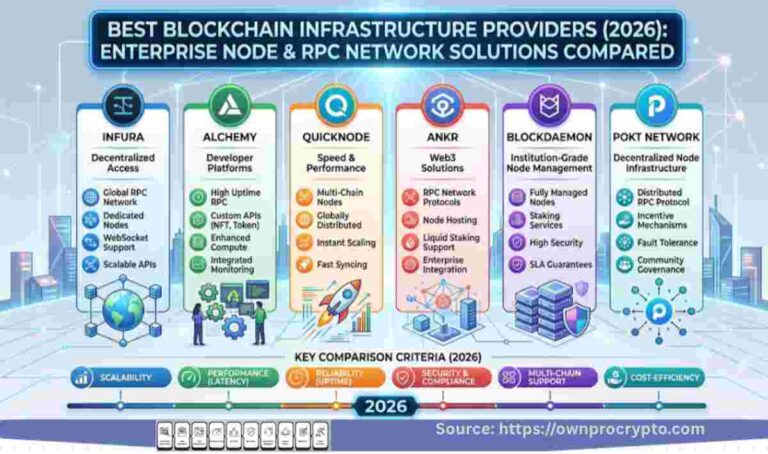
Infographic of Best Blockchain Infrastructure Providers (2026)- Enterprise Node & RPC Network Solutions Compared
How BaaS Architecture Works: From Blockchain Nodes to Business Applications

BaaS Architecture: From Blockchain Nodes to Business Applications

The easiest way to understand BaaS architecture is to look at how blockchain infrastructure connects to applications, identities and existing business systems. A BaaS provider may manage nodes, networking, APIs, infrastructure and operational services, while the customer usually remains responsible for application logic, business rules, data decisions and access policies.

The exact division of responsibility depends on the provider and service model. A public-chain infrastructure service, for example, may manage nodes and RPC endpoints, while an enterprise BaaS platform may also provide identity, governance, network management and integration capabilities.

This layered approach explains why BaaS can reduce blockchain complexity without eliminating blockchain responsibility. Organizations still need to decide what data belongs on-chain, who can access it, how identities are governed, how smart contracts are secured and what happens when the underlying blockchain infrastructure changes.


Public versus permissioned BaaS

CharacteristicPublic-chain BaaSPermissioned BaaS
ParticipantsGenerally openKnown and authorized organizations
ExamplesEthereum, Bitcoin, Polygon accessHyperledger Fabric and enterprise consortium networks
Identity modelOften pseudonymous/public-key basedExplicit organizational identities
Primary advantageOpen ecosystem and composabilityGovernance, privacy and controlled participation
Typical enterprise usePayments, tokenization, public digital assets and Web3 applicationsSupply chains, inter-company workflows and regulated data sharing

AWS, for example, currently combines public-chain access with private Hyperledger Fabric networks, demonstrating how modern BaaS can span both models. :contentReference[oaicite:6]{index=6}

Practical rule: If your participants already know each other and require controlled access, start by evaluating permissioned infrastructure. If the application needs open liquidity, public composability or interaction with existing crypto ecosystems, public-chain infrastructure may be more appropriate.

Hybrid On-Chain and Off-Chain Architecture

Hybrid architecture combines blockchain infrastructure with conventional databases, cloud services, APIs and enterprise applications. Rather than storing every piece of information on a blockchain, applications can place verifiable events, transaction states, hashes or proofs on-chain while keeping large, private or frequently changing data in conventional systems.

This approach can improve scalability, privacy and cost efficiency while preserving the blockchain’s role as a shared verification or settlement layer. The correct boundary depends on the application’s requirements, but sensitive personal information, large files and operational databases generally require careful consideration before being placed on an immutable ledger.


Why “put everything on-chain” is usually the wrong architecture

BaaS does not automatically make every workload suitable for blockchain. A well-designed system usually separates blockchain state from ordinary application data.

Data TypeLikely LocationReason
Ownership recordOn-chainShared verification
Transaction settlementOn-chainAuditability and final state
Large documentsUsually off-chainCost and performance
Private customer informationUsually off-chainPrivacy and regulatory requirements
Hashes/proofsOn-chainIntegrity verification
Analytics datasetsOff-chain/indexed systemsQuery performance and flexibility
Infographic image of BaaS Market Size & Growth Forcase
How BaaS Architecture Works: From Blockchain Nodes to Business Applications

Blockchain-as-a-Service Market Size and 2033 Forecast

The global Blockchain-as-a-Service (BaaS) market is expected to expand significantly through the early 2030s as enterprises increasingly use managed blockchain infrastructure instead of building and operating complete blockchain environments themselves. However, published market-size estimates vary considerably because research firms use different definitions of BaaS, including different combinations of managed blockchain platforms, infrastructure services, development tools, and enterprise blockchain solutions. For that reason, BaaS market forecasts should be treated as estimates rather than a single definitive market figure.

Recent research illustrates this difference. Fortune Business Insights estimates the global BaaS market at about $2.48 billion in 2026 and projects it to reach $9.68 billion by 2034, representing an 18.59% CAGR. Another 2026 market analysis estimates the market at approximately $7.57 billion in 2026, reaching $14.26 billion by 2032 at an 11.06% CAGR. These differences are largely a reminder that the boundaries of the BaaS market are not standardized across research providers.

For a 2033 outlook, the broader direction is more important than relying on a single forecast number. Demand is being supported by enterprise adoption of blockchain-based applications, tokenization, digital identity, payments, supply-chain systems, and other use cases where organizations want blockchain capabilities without taking on the full operational burden of running the underlying infrastructure. BaaS can reduce that technical burden by shifting much of the infrastructure management to a service provider.

The market is also evolving beyond the traditional idea of simply hosting a private blockchain. Increasingly, businesses are combining managed blockchain infrastructure with cloud services, APIs, smart-contract platforms, tokenization infrastructure, and other Web3 services. This broader infrastructure model may become increasingly important as BaaS providers adapt to enterprise demand through 2033.


What Is Driving BaaS Market Growth?

Several factors are contributing to the expected growth of BaaS:

  • Lower infrastructure complexity: Businesses can use managed blockchain environments without operating every underlying node and infrastructure component themselves.
  • Enterprise adoption: Financial institutions, supply-chain organizations, governments, and other enterprises continue exploring blockchain for applications requiring shared records, automation, and verifiable transactions.
  • Tokenization and digital assets: The growth of real-world asset tokenization and blockchain-based financial infrastructure is creating new demand for managed blockchain services.
  • Stablecoin and blockchain payments: Businesses increasingly need reliable infrastructure for applications involving blockchain-based settlement and payments.
  • Cloud integration: BaaS can be integrated with broader cloud computing, data, security, and application-development environments.
  • Developer accessibility: Managed services lower some of the technical barriers involved in deploying blockchain applications.

Why the 2033 Forecast Should Be Treated Carefully

A long-term BaaS forecast should not be interpreted as a prediction that every blockchain-related service will grow at the same rate. The market itself is changing, and some services traditionally described as BaaS are increasingly being grouped with broader blockchain infrastructure or Web3 infrastructure services.

This distinction matters because the future BaaS market may be defined less by a single managed blockchain product and more by a collection of infrastructure, API, node, smart-contract, tokenization, identity, and enterprise blockchain services. As a result, the 2033 opportunity is likely to depend as much on how the BaaS category evolves as on the underlying growth of blockchain adoption.

BaaS Pricing: What Does Blockchain-as-a-Service Cost?

The biggest mistake in BaaS budgeting is asking only, “What is the monthly platform fee?” Enterprise blockchain cost is usually distributed across infrastructure, requests, storage, data transfer, development, security, integration, monitoring and compliance.

Cost ComponentWhat Drives CostWhy It MattersCommon Cost Risk
Compute / nodesNode count, instance size and uptimeCore infrastructure expenseOver-provisioning
StorageLedger size, historical data and retentionBlockchain state grows over timeIgnoring long-term data growth
API requestsRead/write traffic and query complexityHigh-volume applications can generate substantial API usageUnexpected request volume
Data transferTraffic between blockchain infrastructure and applicationsCan become significant at scaleIgnoring network architecture
DevelopmentSmart contracts, APIs, SDKs and integrationOften larger than initial infrastructure costUnderestimating engineering effort
SecurityAudits, key management, monitoring and incident responseCritical for financial workloadsTreating security as an optional feature
ComplianceKYC, AML, privacy, audit and regulatory controlsRequired in regulated industriesAdding compliance after deployment
MigrationVendor changes, chain migration and architecture redesignCan become a major hidden costVendor lock-in

AWS provides a useful real-world example of this model: its current Amazon Managed Blockchain pricing distinguishes between dedicated nodes, storage, API requests, data retrieval and data transfer, while serverless services can charge according to API requests. :contentReference[oaicite:7]{index=7}

Alibaba Cloud similarly publishes BaaS specifications and pricing based on blockchain instances, nodes and storage, illustrating why infrastructure configuration matters when comparing providers. :contentReference[oaicite:8]{index=8}


What Determines BaaS Pricing?

BaaS pricing can depend on several infrastructure and usage variables, including managed nodes, compute resources, storage, API requests, network traffic, blockchain transactions, monitoring and enterprise support. Some services may also introduce minimum commitments or different pricing tiers depending on workload and deployment requirements.


A simple BaaS total-cost model

For planning purposes, an enterprise can think of annual BaaS cost as:

Planning VariableQuestion
InfrastructureHow many nodes, regions and environments are required?
TrafficHow many blockchain reads, writes and events will the application generate?
DataHow much blockchain and indexed data will be retained?
EngineeringHow much development and integration work is required?
SecurityWhat audit, monitoring and key-management controls are necessary?
ComplianceWhich regulatory and reporting requirements apply?
Migration reserveCan the architecture move to another provider if pricing or product strategy changes?
Investor tip: A BaaS platform with a cheap entry price can still be expensive at scale. Evaluate cost per useful business transaction, not merely cost per node or cost per API call. The economic question is whether managed infrastructure reduces the organization’s total cost of ownership.

What should an enterprise calculate before choosing a provider?

MetricWhy Measure It?Decision Signal
Cost per transactionShows operating economicsLower is not always better if reliability is poor
Cost per active userUseful for consumer applicationsReveals scaling efficiency
API cost per 1M requestsUseful for RPC-heavy applicationsHighlights provider pricing differences
Infrastructure utilizationShows whether capacity is being wastedLow utilization can indicate over-provisioning
Migration costMeasures lock-inLower migration cost improves strategic flexibility
Warning: Never compare BaaS providers using advertised starting prices alone. A serious evaluation needs the expected transaction volume, API traffic, storage growth, geographic requirements, availability requirements and compliance architecture.
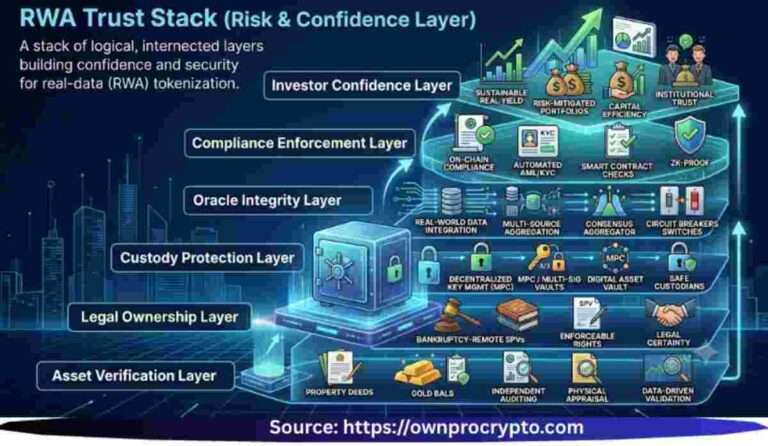
Infographic of RWA Trust Stack- Risk & Confidence Layer (2026)
How BaaS Connects With the Broader Web3 Infrastructure Stack

How BaaS Connects With the Broader Web3 Infrastructure Stack

BaaS should not be evaluated in isolation. For an enterprise, blockchain infrastructure usually connects with custody, identity, security, interoperability, tokenization, stablecoin payments, analytics and governance.

Enterprise RequirementRelated InfrastructureOwnProCrypto Content Opportunity
Blockchain deploymentBaaS / nodes / RPCBest Blockchain Infrastructure Providers
Enterprise blockchainPrivate and permissioned networksBest Enterprise Blockchain Platforms
Cross-chain connectivityInteroperability and messagingBlockchain Interoperability
Blockchain dataAnalytics and indexed dataBest Web3 Analytics Tools
Digital assetsCustody and wallet infrastructureBest Digital Asset Custody Platforms
TokenizationRWA platforms and token infrastructureBest Tokenization Platforms
PaymentsStablecoin APIs and settlementBest Stablecoin APIs
SecuritySmart-contract and wallet riskBest Crypto Security Tools
 
Infographic of Best Blockchain Infrastructure Providers (2026)- Enterprise Node & RPC Network Solutions Compared
How BaaS Architecture Works: From Blockchain Nodes to Business Applications

How to Choose a Blockchain-as-a-Service Platform in 2026

The right BaaS platform is not necessarily the one with the largest blockchain feature list. The better choice depends on what the organization actually needs: public-chain access, a permissioned consortium, smart-contract deployment, tokenization, data access, compliance, geographic coverage, or a combination of these.

One important distinction is already visible in the 2026 market: some providers position themselves as complete managed blockchain platforms, while others increasingly focus on specific infrastructure layers such as managed nodes, RPC access and blockchain data APIs.

Decision FactorWhat to EvaluateWhy It MattersBest Fit
Blockchain modelPublic, private, permissioned or consortiumDetermines governance and access controlEnterprise, Web3 or hybrid projects
InfrastructureNodes, RPC, storage, indexing and networkingControls operational complexityDevelopment teams and institutions
Smart contractsSupported VM/frameworks, deployment and lifecycle toolingDetermines development flexibilitydApps, tokenization and enterprise workflows
SecurityIAM, encryption, key management, monitoring and isolationReduces infrastructure and operational riskFinancial institutions and regulated companies
IntegrationAPIs, SDKs, databases, ERP and cloud servicesDetermines how easily blockchain enters existing systemsEnterprise applications
Pricing modelNodes, requests, storage, bandwidth, network membership and supportInfrastructure cost can change significantly with usageAll organizations
Vendor dependencePortability, standards and migration optionsReduces long-term lock-inInstitutions and large enterprises

Tip: Do not select a BaaS provider from a feature checklist alone. Map your required application architecture first, then determine which provider supplies the necessary infrastructure with the fewest additional dependencies.


Public Blockchain Infrastructure vs Enterprise BaaS

This distinction is particularly important in 2026. A managed Ethereum node can be extremely useful for a Web3 application, but it is not equivalent to a permissioned enterprise blockchain network.

RequirementManaged Public-Chain InfrastructureEnterprise BaaS
Ethereum nodeStrong fitMay or may not be central
Consortium networkLimitedStrong fit
Permissioned identityUsually application-dependentCore capability on many platforms
Enterprise workflow integrationRequires additional servicesOften a major selling point
TokenizationStrong for public-chain applicationsStrong where enterprise controls are required

Warning: The phrase “BaaS” is increasingly used as a broad category. Before comparing vendors, define whether you mean managed blockchain networks, managed nodes/RPC, blockchain data infrastructure, or a complete enterprise blockchain platform.


Technical Requirements

Before selecting a BaaS provider, define the technical requirements of the actual workload. These may include supported blockchain networks, node types, transaction throughput, read performance, API requirements, smart-contract compatibility, geographic deployment, integration requirements and availability targets.

The technical evaluation should be based on the production architecture rather than a generic feature checklist. A provider that works well for a small proof of concept may have different performance, pricing or operational characteristics once transaction volume and data requirements increase.


Security and Compliance Requirements

Security and compliance requirements should be defined before comparing providers. Consider identity and access management, encryption, key management, audit logging, network isolation, data residency, disaster recovery, regulatory obligations and incident-response procedures.

The right provider depends partly on the risk profile of the application. Financial institutions, governments and other regulated organizations may require significantly stronger controls and contractual assurances than a developer building a small experimental application.


Portability and Exit Strategy

Portability should be considered before production deployment rather than after a provider becomes difficult to leave. Document which application components, blockchain data, infrastructure configurations, smart contracts and integrations can be transferred if the organization changes providers.

An effective exit strategy should identify alternative infrastructure, data-export procedures, replacement APIs, migration dependencies and estimated switching costs. This turns vendor lock-in from an abstract concern into a measurable business risk.

Warning: Market forecasts should not be interpreted as guaranteed provider revenue or guaranteed blockchain adoption. BaaS market estimates vary substantially depending on what researchers include in the market definition.

Warning: A blockchain is not automatically a better database. The strongest BaaS architectures normally use blockchain for shared state, verification, settlement or coordination while keeping sensitive, large or frequently changing data in appropriate off-chain systems.

BaaS Provider Comparison: Strengths, Weaknesses and Strategic Fit

The most useful competitor analysis is not “Provider A is better than Provider B.” The right question is where each platform becomes strong, where it becomes restrictive, and what happens when the workload grows beyond the original architecture?

ProviderStrengthWeakness / LimitationLock-In RiskBest Strategic Use
AWSStrong cloud integration, managed public-chain access, blockchain data APIs and Fabric supportArchitecture can become deeply dependent on AWS services; pricing varies by nodes, requests, storage and data transferMedium–HighEnterprise applications already standardized on AWS
Alibaba CloudMultiple enterprise blockchain engines and consortium architectureMore specialized than general-purpose public Web3 infrastructure providersMediumEnterprise consortium and permissioned blockchain deployments
OracleStrong fit with enterprise databases, business applications and Fabric-based environmentsLess attractive when the requirement is primarily public-chain developer infrastructureMedium–HighOracle-centric enterprise blockchain deployments
IBMEnterprise governance, Fabric expertise, multicloud capability and supportMore complex and enterprise-oriented than lightweight developer BaaSMediumRegulated enterprise and consortium workloads
Google CloudStrong cloud infrastructure and developer experienceBlockchain Node Engine and Blockchain RPC are scheduled for shutdown in December 2026High transition risk for affected workloadsExisting users should plan migration rather than new long-term dependency

AWS’s current pricing model illustrates why BaaS should be evaluated as an operating-cost problem rather than merely a subscription. Depending on the service, customers can pay for nodes, storage, API requests, data retrieval and data transfer. :contentReference[oaicite:1]{index=1}

Alibaba Cloud’s current BaaS architecture is also broader than a simple node provider: its documentation describes infrastructure, cloud resources, platform services, application integration and security/operations layers. :contentReference[oaicite:2]{index=2}

Oracle’s 2026 documentation shows that Oracle Blockchain Platform remains an active enterprise product, while its 24.1.3 release added Red Hat OpenShift support and Microsoft Azure Cloud support for the Enterprise Edition. :contentReference[oaicite:3]{index=3}

IBM’s current documentation describes IBM Blockchain Platform as a managed/full-stack BaaS offering capable of deploying blockchain components across Kubernetes environments, while its product direction has moved away from the older standalone Blockchain Platform Software Edition toward IBM Support for Hyperledger Fabric. :contentReference[oaicite:4]{index=4}

Investor tip: The strongest BaaS businesses may not be the companies selling “blockchain” as a standalone product. The more durable opportunity is often in the infrastructure around blockchain: identity, APIs, compliance, custody, data, tokenization, payments, interoperability and enterprise integration.
The Image shows Fortress System™ : Scam-Resistant Crypto & Blockchain Security Framework (2026)
BaaS Security, Compliance and Vendor-Lock-In Risks

BaaS Security, Compliance and Vendor-Lock-In Risks

The shared-responsibility problem

A managed service can remove node administration while leaving the hardest business risks untouched. A badly designed smart contract remains dangerous whether it runs on self-managed infrastructure or a premium cloud platform.

BaaS reduces infrastructure work, but it does not eliminate blockchain risk. The provider manages part of the infrastructure while the customer remains responsible for application design, smart-contract logic, identity, governance and many security decisions. The exact division of responsibility varies by provider and service, so organizations should document which security controls are managed by the provider and which remain under customer control.

RiskWhere it appearsMitigation
Vendor lock-inProvider-specific APIs and infrastructureUse portable standards and documented migration paths
Smart-contract riskApplication layerAudits, testing and controlled deployment
Key-management riskWallets and signing systemsMPC, HSM, multisig and strict access controls where appropriate
Data privacyOn-chain and off-chain dataMinimize sensitive on-chain data and apply appropriate encryption
AvailabilityCloud and blockchain infrastructureRedundancy, monitoring and disaster recovery
Regulatory exposureJurisdiction and business modelLegal and compliance review before production deployment

Tip: Treat BaaS as an infrastructure simplifier, not a security guarantee. The strongest architecture separates cloud infrastructure security, blockchain consensus security, application security and asset/key security.


Private Keys and Access Control

Private-key management is one of the most important security questions in a managed blockchain architecture. Organizations need to understand who can create, store, access and use signing credentials and whether administrative access to infrastructure is separated from authority to authorize blockchain transactions.

Enterprise deployments should document key ownership, signing permissions, recovery procedures, administrator privileges, authentication requirements and audit logging. Where high-value assets or regulated transactions are involved, key management should be evaluated as a distinct security boundary rather than assuming that managed infrastructure automatically solves custody or signing risks.


Data Privacy and Regulatory Requirements

Blockchain’s shared and potentially immutable nature creates important privacy and regulatory considerations. Organizations must determine what information is placed on-chain, who can access it, where related infrastructure operates and whether the information can remain permanently available under applicable legal requirements.

A common architecture keeps sensitive personal or confidential information off-chain while using blockchain for proofs, hashes, references or transaction states. BaaS providers can supply infrastructure security and access controls, but regulatory responsibility ultimately depends on the application’s data, users, jurisdiction and business model.


Smart-Contract Security

Managed infrastructure does not automatically make smart contracts secure. Smart-contract vulnerabilities can result from coding errors, flawed business logic, incorrect access controls, unsafe upgrade mechanisms or unexpected interactions with external systems.

Organizations should therefore treat smart-contract security as a separate application responsibility. Testing, code review, formal analysis where appropriate, auditing, deployment controls and monitoring may all be necessary depending on the value and risk of the application.


Vendor Lock-In and Migration Risk

BaaS can reduce infrastructure complexity while simultaneously creating dependency on a provider’s APIs, deployment tools, data services and operational model. The more tightly an application depends on proprietary capabilities, the harder it may become to migrate to another provider or self-managed infrastructure later.

Organizations can reduce this risk by using open standards where practical, maintaining infrastructure-as-code, documenting architecture, separating application logic from provider-specific services and establishing clear data-export procedures. A good BaaS evaluation should ask what can actually be moved if the provider becomes too expensive, changes its product strategy or discontinues a service.

Infographic image of BaaS Market Size & Growth Forcase
The Future of Blockchain-as-a-Service: 2026–2033

The Future of Blockchain-as-a-Service: 2026–2033

The BaaS market is likely to evolve from the simple idea of “renting blockchain infrastructure” toward a broader blockchain infrastructure stack. The important shift is that enterprises increasingly need blockchain capabilities without necessarily wanting to operate a blockchain themselves.

Trend Expected direction Business impact
Tokenization Continued enterprise adoption Demand for issuance, custody, compliance and settlement infrastructure
Stablecoin infrastructure Growing payment and settlement use More demand for APIs, wallets and transaction infrastructure
RWA platforms Expansion beyond experimental pilots Institutional demand for compliant tokenization infrastructure
Blockchain data APIs More abstraction Developers increasingly consume blockchain data as a service
AI + blockchain Agent-driven transactions and verification Demand for programmable, observable blockchain infrastructure
Multichain applications Higher infrastructure complexity Need for unified APIs, interoperability and chain abstraction
Compliance infrastructure Increasing importance Enterprise adoption becomes more dependent on governance and regulatory tooling

How BaaS Is Evolving Into Blockchain Infrastructure Services

The original BaaS model focused heavily on managed blockchain networks. Modern Web3 infrastructure increasingly separates the stack into nodes, RPC, indexing, data APIs, wallets, identity, smart-contract tooling, interoperability, tokenization and compliance.

This means the future BaaS winner may not be the provider with the most visible “blockchain platform.” It may be the provider that makes blockchain infrastructure almost invisible to the application developer.

The meaning of BaaS may therefore continue to evolve as the market separates into specialized services such as managed nodes, RPC infrastructure, blockchain data APIs, enterprise networks, smart-contract platforms and tokenization infrastructure. For buyers, this evolution is useful because it encourages more precise vendor comparisons. Instead of asking whether a company is simply a BaaS provider, organizations can ask which part of the blockchain stack the provider manages and whether that service matches the actual technical requirement.

AI Agents and Blockchain Infrastructure

AI agents could increase demand for blockchain infrastructure when autonomous software needs to make verifiable transactions, interact with digital assets, execute programmable payments or access decentralized services. In such architectures, blockchain infrastructure can provide transaction execution and verification while AI systems provide decision-making or workflow automation.

The impact on BaaS will depend on whether these workloads develop into sustained production activity. AI adoption alone does not guarantee blockchain infrastructure growth, but increased machine-to-machine transactions could create new requirements for reliable nodes, APIs, wallets, identity and transaction infrastructure.

Tokenization and Institutional Adoption

Tokenization could become an important driver of managed blockchain infrastructure as financial institutions and businesses experiment with digitally represented assets, programmable settlement and blockchain-based financial workflows. Production tokenization systems require reliable infrastructure, smart-contract execution, identity, compliance and integration with existing financial systems.

The long-term opportunity therefore extends beyond token issuance itself. If tokenized assets become part of institutional financial infrastructure, demand could expand for the underlying managed blockchain services required to operate those systems.

Infographic of Web3 Development Guide Standards & Enablement Build Web3 Roadmap
What Blockchain-as-a-Service Means for Students, Developers and Investors

What BaaS Means for Students, Developers and Investors

Blockchain-as-a-Service (BaaS) reduces the operational burden of working with blockchain infrastructure. For students, managed platforms can provide a practical environment for learning blockchain architecture, smart contracts and cloud infrastructure without requiring them to operate local nodes. For developers, managed blockchain services can simplify access to nodes, APIs, deployment tools and testing environments. For startups, the main considerations are cost, scalability and dependence on a particular provider.

Audience What to learn Practical question
Student Blockchain architecture and cloud infrastructure What does the provider actually manage?
Developer Nodes, APIs, smart contracts and deployment Which APIs and blockchain networks does the application need?
Startup Cost, scalability and vendor dependence Can the architecture scale without excessive infrastructure cost?
Enterprise Governance, integration and compliance Can blockchain connect securely to existing systems?
Investor Infrastructure economics and adoption Is demand coming from real production workloads or experiments?
Institution Security, resilience and regulatory controls Can the platform satisfy institutional governance requirements?

Bottom line: BaaS is best understood as an abstraction layer between blockchain infrastructure and the organization that wants to use blockchain. The value is not simply “having a blockchain.” The value is reducing the infrastructure, operational and engineering burden required to make blockchain useful.

Infographic of Best Blockchain Infrastructure Providers (2026)- Enterprise Node & RPC Network Solutions Compared
How BaaS Architecture Works: From Blockchain Nodes to Business Applications

Final Verdict: Is Blockchain-as-a-Service Worth It in 2026?

Is BaaS Worth It in 2026?

Scenario BaaS fit Reason
Learning blockchain development High Removes much of the infrastructure barrier
Startup building a Web3 application High Faster deployment and easier scaling
Enterprise consortium High Managed governance and permissioned infrastructure can reduce complexity
Institutional tokenization High Infrastructure can support issuance, data, integration and settlement layers
Simple blockchain experiment Medium A full BaaS platform may be unnecessary
Highly customized blockchain protocol Low to medium Self-managed or specialized infrastructure may provide more control

Blockchain-as-a-Service is no longer simply about putting a blockchain on the cloud. The more useful 2026 definition is a managed infrastructure layer that lets organizations consume blockchain capabilities without taking responsibility for every underlying operational component.

For developers, that means faster deployment. For enterprises, it can mean lower infrastructure complexity. For institutions, the real question becomes governance, security, interoperability and regulatory control. For investors, the most important signal is whether BaaS infrastructure is supporting real production activity such as payments, tokenization, financial settlement, identity and enterprise data exchange.

The strongest BaaS strategy therefore is not “choose the biggest provider.” It is choose the smallest reliable infrastructure layer that solves the actual business problem while preserving security, portability and future flexibility.

Blockchain Infrastructure Reading Resources

If you are evaluating Blockchain-as-a-Service beyond the provider level, these related resources explain the surrounding infrastructure, security, interoperability, enterprise architecture and decision-making layers. Together, they provide a practical path from basic BaaS concepts to production blockchain architecture.

Recommended learning path: Start with blockchain infrastructure, move to architecture and interoperability, then evaluate security, governance, custody and finally the business application layer. This avoids choosing a BaaS provider before understanding what infrastructure the project actually needs.

Blockchain-as-a-Service Trends and External Resources

The BaaS market is changing quickly because providers are increasingly positioning blockchain infrastructure as a component of broader cloud, Web3 and enterprise infrastructure rather than as a standalone “blockchain product.” Current provider documentation is therefore more useful than old BaaS rankings when evaluating what is actually available in 2026.

For primary-source verification, AWS describes BaaS as managed blockchain infrastructure delivered through the cloud, while its current Amazon Managed Blockchain documentation covers managed network capabilities for Hyperledger Fabric and Ethereum. :contentReference[oaicite:16]{index=16}

Google Cloud’s current Blockchain Node Engine documentation is another useful reference because it shows how the market is moving toward fully managed blockchain node infrastructure, including dedicated node deployment, APIs, monitoring and operational management. :contentReference[oaicite:17]{index=17}

Recommended external reading: AWS: What Is Blockchain and Blockchain-as-a-Service? and Google Cloud: Blockchain Node Engine Documentation.

These primary sources are particularly useful when validating provider capabilities because BaaS product names, supported networks and deployment models can change faster than third-party comparison articles.

Blockchain-as-a-Service (BaaS) Platforms FAQs

Blockchain-as-a-Service (BaaS) provides managed blockchain infrastructure, development tools, APIs, networking and operational services through cloud or enterprise infrastructure. The important distinction is that BaaS can reduce the operational burden of running blockchain infrastructure, but it does not automatically remove architecture, security, governance, compliance or application-level responsibility.

Blockchain-as-a-Service Basics

What is Blockchain-as-a-Service (BaaS)?

Blockchain-as-a-Service is a managed technology model in which a provider supplies blockchain infrastructure and related development or operational services through a cloud or enterprise environment. Instead of building every node, network component and operational process from scratch, organizations can use managed infrastructure to develop, deploy and operate blockchain applications more efficiently.


What does BaaS stand for?

BaaS stands for Blockchain-as-a-Service. It describes blockchain infrastructure and related capabilities delivered as a managed service rather than requiring an organization to build and operate the entire blockchain stack itself.


How does Blockchain-as-a-Service work?

A BaaS provider typically manages some combination of blockchain nodes, network infrastructure, APIs, monitoring, security controls, deployment tools and supporting cloud resources. The customer uses those services to build applications, connect systems, deploy smart contracts or interact with blockchain networks.


Is BaaS the same as cloud computing?

No. Cloud computing supplies general-purpose computing, storage and networking infrastructure, while BaaS packages blockchain-specific infrastructure and operational capabilities on top of cloud or enterprise infrastructure. Some BaaS offerings are therefore best understood as specialized managed blockchain services rather than a completely separate form of cloud computing.


Is BaaS the same as SaaS?

No. SaaS usually delivers a finished software application to end users. BaaS generally provides infrastructure, platforms, APIs and blockchain development capabilities that organizations use to build or operate their own applications and networks.


Is BaaS the same as PaaS?

BaaS can function similarly to a specialized PaaS because it abstracts infrastructure complexity and provides development capabilities. However, BaaS is specifically focused on blockchain networks, nodes, ledgers, smart contracts, blockchain APIs and related infrastructure.


What problem does BaaS solve?

BaaS primarily solves the operational complexity of adopting blockchain. Organizations can avoid building every infrastructure component themselves and instead focus more resources on application logic, business processes, integrations, governance and user experience.


Who uses Blockchain-as-a-Service?

Typical users include enterprises, financial institutions, developers, Web3 companies, supply-chain organizations, fintech companies, governments and businesses experimenting with blockchain-based applications.


Is BaaS only for cryptocurrency companies?

No. Enterprise BaaS can support use cases involving digital identity, supply chains, tokenization, settlement, data integrity, asset tracking, document verification and multi-party business workflows without requiring the application itself to be a cryptocurrency.


What are the main benefits of Blockchain-as-a-Service?

The main benefits include faster deployment, reduced infrastructure management, easier access to blockchain nodes and APIs, lower initial operational complexity, simplified scaling and the ability to focus internal resources on applications and business processes rather than blockchain infrastructure.


Is Blockchain-as-a-Service worth it?

BaaS can be worthwhile when the cost and complexity of managing blockchain infrastructure internally are greater than the premium paid for managed services. The decision should consider total cost of ownership, security, scalability, vendor dependency, operational requirements and the business value of the blockchain application.


Tip: Do not evaluate BaaS simply as “blockchain in the cloud.” The real question is which infrastructure responsibilities the provider removes, which responsibilities remain with the customer, and whether that trade-off improves the project’s economics and risk profile.

How BaaS Platforms Work

What services are included in a BaaS platform?

Depending on the provider, services may include managed blockchain nodes, network deployment, APIs and RPC endpoints, smart-contract tooling, identity management, monitoring, security controls, data access, developer environments, integrations and infrastructure management.


Does BaaS provide blockchain nodes?

Many BaaS and managed blockchain infrastructure platforms provide managed nodes or node-hosting services. The exact level of control, configuration and management varies by provider and blockchain network.


Can BaaS host Ethereum nodes?

Yes. Ethereum node hosting is an important part of the managed blockchain infrastructure market. Providers can offer managed infrastructure that allows organizations to operate or access Ethereum nodes without managing the entire underlying environment themselves.


Can BaaS support private blockchains?

Yes. Some enterprise BaaS platforms support permissioned or private blockchain networks where participating organizations are known and network access is controlled.


Can BaaS support public blockchains?

Yes. Some services focus on managed access to public networks through nodes, RPC endpoints and blockchain APIs, while other BaaS platforms focus primarily on private or consortium networks.


Can BaaS support hybrid blockchain architecture?

Yes. A business can combine public blockchain infrastructure with private databases, cloud services, identity systems and enterprise applications. In practice, many enterprise architectures are hybrid rather than completely on-chain.


Can BaaS deploy smart contracts?

Depending on the platform, customers may receive tools or infrastructure for deploying and interacting with smart contracts. The actual development, testing, auditing and business logic responsibility normally remains with the customer.


Does BaaS eliminate the need for blockchain developers?

No. BaaS reduces infrastructure and operational work, but applications still require developers, architects and security professionals. Managed infrastructure does not automatically produce secure smart contracts or sound blockchain architecture.


Does BaaS eliminate the need for DevOps?

Not completely. BaaS can reduce infrastructure and node-management responsibilities, but organizations may still need DevOps expertise for applications, integrations, deployment pipelines, monitoring, security and incident response.


Warning: “Managed” does not mean “fully outsourced.” Always separate infrastructure responsibility from application security, smart-contract security, governance, compliance and business-process responsibility.

Best Blockchain-as-a-Service Providers

Who are the major Blockchain-as-a-Service providers?

The market includes large cloud providers and specialized blockchain infrastructure companies. Examples associated with managed blockchain infrastructure or enterprise blockchain services include Amazon Web Services, Google Cloud, IBM and Alibaba Cloud, although their current offerings differ significantly in scope and architecture.


What is the best BaaS provider?

There is no universal best BaaS provider. The appropriate choice depends on the required blockchain network, geographic availability, security model, compliance requirements, integrations, expected transaction volume, deployment model and total cost of ownership.


Is AWS a Blockchain-as-a-Service provider?

AWS provides managed blockchain capabilities. Amazon Managed Blockchain supports creating and managing blockchain networks using supported frameworks, while related AWS services provide managed access to blockchain data and infrastructure.


Is Google Cloud a Blockchain-as-a-Service provider?

Google Cloud provides managed blockchain infrastructure, including Blockchain Node Engine for dedicated blockchain node hosting. Its positioning is particularly relevant to organizations that need managed blockchain node infrastructure rather than a single generic “blockchain platform.”


Does IBM offer Blockchain-as-a-Service?

IBM has historically offered enterprise blockchain capabilities around Hyperledger Fabric and managed blockchain infrastructure. Because IBM’s blockchain portfolio and support model have evolved, buyers should verify the current deployment and support options rather than relying on older BaaS comparisons.


Does Alibaba Cloud offer BaaS?

Yes. Alibaba Cloud has offered BaaS as an enterprise-level platform designed to help customers deploy, operate and develop blockchain networks without managing all of the underlying infrastructure themselves.


Does Microsoft Azure offer Blockchain-as-a-Service?

Microsoft’s blockchain product history includes earlier Azure Blockchain Service and Ethereum BaaS initiatives, while its current portfolio includes services related to confidential and verifiable data. Because the Azure blockchain portfolio has evolved, comparisons should use current services rather than older Azure Blockchain Service articles.


Is Oracle a Blockchain-as-a-Service provider?

Oracle has offered blockchain platform capabilities for permissioned blockchain networks and consortium use cases, including peer nodes, ordering services, REST access and operational tooling. Buyers should verify current availability, support and commercial terms before starting a new deployment.


AWS vs Google Cloud for blockchain infrastructure: which is better?

AWS is attractive when a project needs managed blockchain capabilities within a broad AWS ecosystem. Google Cloud is particularly relevant when the requirement centers on managed blockchain nodes and related infrastructure. The better choice depends on the workload rather than the cloud brand.


AWS vs IBM Blockchain: which is better for enterprises?

AWS offers managed blockchain capabilities within a broad cloud ecosystem, while IBM has historically focused strongly on enterprise Hyperledger Fabric deployments and governance. Enterprises should compare current support status, deployment flexibility, Fabric compatibility, operating model and compliance requirements.


Google Cloud vs Azure for blockchain development: which is better?

The comparison should focus on the specific blockchain services currently available rather than older BaaS branding. Google Cloud has managed blockchain node infrastructure, while Microsoft’s current blockchain-related portfolio has evolved beyond its earlier Azure Blockchain Service.


Alibaba Cloud vs AWS BaaS: which should a business choose?

AWS may be preferable for organizations deeply integrated into the AWS ecosystem, while Alibaba Cloud can be attractive for organizations requiring its enterprise blockchain capabilities and regional cloud footprint. The final choice should be based on supported networks, compliance, deployment geography, integrations and total cost.


Which BaaS platform is best for startups?

Startups should generally prioritize fast deployment, transparent pricing, accessible APIs, documentation, developer tooling, supported networks and the ability to scale without creating unnecessary infrastructure commitments.


Which BaaS platform is best for enterprises?

Enterprises should prioritize security architecture, identity and access management, compliance, governance, data residency, service-level commitments, network control, interoperability, monitoring and long-term vendor support.


Which BaaS platform is best for financial institutions?

Financial institutions should evaluate permissioning, custody boundaries, identity, auditability, privacy, data residency, regulatory controls, operational resilience and integration with existing financial infrastructure before selecting a provider.


Tip: Provider names alone are a poor selection criterion. Compare the actual service layer: node management, network control, supported chains, APIs, security, compliance, deployment flexibility, observability and pricing.

BaaS Pricing and Cost

How much does Blockchain-as-a-Service cost?

BaaS pricing varies substantially by provider and architecture. Costs can include compute, managed nodes, storage, API requests, network traffic, blockchain transactions, support, monitoring and enterprise licensing. A meaningful comparison therefore requires a workload model rather than a single advertised price.


Is Blockchain-as-a-Service expensive?

It can be more expensive than running a simple self-managed node in some scenarios, but the comparison should include engineering, DevOps, security, monitoring, upgrades, availability and incident-response costs. BaaS can be economically attractive when operational complexity is more expensive than the managed service premium.


Is BaaS cheaper than building blockchain infrastructure yourself?

Not necessarily. BaaS can reduce infrastructure and operational overhead, but a large enterprise with existing DevOps and cloud infrastructure may find self-managed deployment more economical for certain workloads. The correct comparison is total cost of ownership rather than infrastructure price alone.


Do BaaS providers charge per transaction?

Some blockchain services may expose costs associated with transactions, API requests, compute, storage or network resources. Pricing structures vary, so customers should examine the provider’s current pricing model and model expected production traffic.


How do I calculate BaaS ROI?

Compare the cost of managed infrastructure against the estimated cost of self-management, including infrastructure, engineering labor, security, monitoring, upgrades, downtime risk and operational support. Then compare those costs with the business value generated by the blockchain application.


What is the total cost of ownership of BaaS?

Total cost of ownership can include infrastructure fees, API usage, storage, network traffic, monitoring, security, support, engineering time, integration, compliance and potential migration costs. A realistic TCO model should include both direct provider costs and internal operating costs.


Tip: For a serious BaaS evaluation, calculate three scenarios: pilot cost, normal production cost and high-growth cost. A platform that performs well in a pilot may have a very different economics profile at scale.

BaaS Security, Privacy and Compliance

Is Blockchain-as-a-Service secure?

BaaS can provide strong infrastructure security, but security depends on the complete architecture. Provider security does not automatically secure smart contracts, private keys, application logic, identity systems, integrations or governance processes.


Who controls the private keys in BaaS?

It depends on the architecture. Some managed services may control or manage infrastructure components while customers retain control over application credentials or keys. Institutional deployments should explicitly document key ownership, signing authority, recovery procedures and administrative access.


Can BaaS be used for regulated industries?

Potentially, but suitability depends on the provider, deployment model, jurisdiction, data architecture and applicable regulatory requirements. Regulated organizations should evaluate data residency, access controls, auditability, encryption, operational resilience and vendor risk.


Does BaaS protect smart contracts?

No. Managed infrastructure can improve infrastructure security, but smart-contract vulnerabilities remain an application-level responsibility unless a separate security service is included.


Does BaaS provide data privacy?

Some enterprise blockchain platforms provide permissioning and privacy features, but privacy depends on what data is placed on-chain, who can access it, how identities are managed and what information remains off-chain.


Can private information be stored directly on a blockchain?

It can be technically possible, but sensitive personal or confidential information should not automatically be placed on an immutable ledger. A common architecture is to keep sensitive information off-chain and store hashes, proofs, references or limited metadata on-chain.


Does blockchain immutability create privacy risks?

Yes. Information placed permanently on a blockchain can be difficult or impossible to remove. Organizations should therefore consider privacy, retention requirements, data protection laws and future use of the information before putting sensitive data on-chain.


Warning: Immutability is not a substitute for privacy. Before putting information on-chain, determine whether the data can legally and operationally remain there permanently.

BaaS Scalability and Performance

Can BaaS scale?

Managed infrastructure can simplify scaling, but blockchain scalability remains dependent on the underlying network, consensus mechanism, node architecture, application design and data-access requirements.


Is BaaS faster than running blockchain infrastructure myself?

Not automatically. BaaS can improve operational efficiency and reduce deployment time, but transaction performance ultimately depends on the underlying blockchain and application architecture.


Can BaaS handle enterprise workloads?

Some platforms are designed for enterprise workloads, but “enterprise” should not be interpreted as unlimited throughput. Organizations should test latency, throughput, availability, failover, node recovery and peak-load behavior before production deployment.


How long does it take to deploy a blockchain node using a managed service?

Deployment time varies by provider and blockchain. Managed node services can significantly shorten infrastructure setup, although blockchain synchronization can still take substantially longer than the initial node deployment.


Does BaaS eliminate blockchain network downtime?

No. Managed infrastructure can reduce operational burden and may provide availability mechanisms, but outages can still occur at the blockchain, cloud, application, network or integration layer.


How can I test BaaS performance?

Use a production-like proof of concept and measure transaction latency, throughput, API response times, concurrent requests, confirmation times, failure recovery, node synchronization and cost under realistic workloads.


Tip: Never judge BaaS scalability from marketing throughput alone. Test the exact workload, including transaction size, concurrency, read traffic, API traffic, confirmation requirements and failure recovery.

BaaS for Developers and Students

Is BaaS good for learning blockchain development?

Yes. BaaS can help students and developers experiment with nodes, APIs, smart contracts and blockchain applications without first building an entire production infrastructure stack.


Can beginners use Blockchain-as-a-Service?

Yes, although beginners should first understand basic blockchain concepts such as wallets, transactions, nodes, consensus, smart contracts, RPC endpoints and network fees.


Can I build a dApp using BaaS?

Yes. A BaaS or managed blockchain infrastructure provider can supply network access, nodes, APIs and related infrastructure that a decentralized application can use.


Can BaaS be used for smart-contract development?

Yes. Developers can use managed blockchain infrastructure for development, testing and deployment workflows, although the exact smart-contract tooling varies by provider and blockchain.


Do I need to know blockchain infrastructure to use BaaS?

You need less infrastructure knowledge than with a completely self-managed deployment, but understanding nodes, RPC, wallets, network configuration, smart contracts and security remains valuable.


Is BaaS useful for a blockchain hackathon?

Yes. Managed infrastructure can reduce setup time and allow teams to spend more of a short hackathon on application development and business logic.


Can non-coders use BaaS?

Some platforms provide simplified interfaces and APIs, but meaningful blockchain application development usually still requires technical configuration or developer support.


Tip: Students should use BaaS to learn architecture, not to skip architecture. Understanding what the managed service is doing underneath is what turns a tool user into a blockchain engineer.

BaaS for Enterprises and Institutions

Why do enterprises use Blockchain-as-a-Service?

Enterprises may use BaaS to reduce infrastructure complexity, accelerate blockchain projects, connect multiple organizations, integrate blockchain with existing systems and test new digital-asset or distributed-ledger applications.


What enterprise problems can BaaS solve?

Potential applications include shared records, asset tracking, settlement, tokenization, identity, supply-chain coordination, document verification and multi-party workflows where several organizations need a common source of verifiable information.


Can banks use BaaS?

Banks can potentially use managed blockchain infrastructure for settlement, tokenized assets, digital identity, payment infrastructure and other distributed-ledger applications, subject to applicable regulatory and operational requirements.


Can governments use BaaS?

Government organizations can use managed blockchain infrastructure for selected identity, document, registry, verification and inter-organizational data applications. However, governance, sovereignty, procurement and data-residency requirements can significantly influence platform selection.


Is BaaS suitable for tokenization?

Yes. BaaS can provide infrastructure for applications involving tokenized assets, although tokenization also requires legal structure, asset servicing, identity, compliance, custody and market infrastructure.


Can BaaS integrate with legacy systems?

Yes. Enterprise blockchain applications commonly use APIs, middleware and integration layers to connect blockchain networks with existing databases, ERP systems, payment systems and other enterprise applications.


Warning: Enterprise blockchain projects usually fail for reasons beyond node infrastructure. Governance, integration, legal ownership, incentives, data quality and business-process redesign can matter more than the choice of blockchain platform.

BaaS vs Self-Managed Blockchain

Should I use BaaS or run my own blockchain nodes?

Choose BaaS when speed, reduced operations and managed infrastructure are priorities. Consider self-managed infrastructure when maximum control, specialized configuration, sovereignty or long-term infrastructure economics justify the additional operational burden.


What are the advantages of BaaS over self-hosting?

The main advantages are faster deployment, reduced infrastructure operations, managed upgrades or monitoring in some services, easier scaling and less initial infrastructure work.


What are the disadvantages of BaaS?

Potential disadvantages include vendor dependency, recurring costs, limited control over infrastructure, provider-specific APIs, migration complexity and possible restrictions on network or geographic configuration.


Does BaaS create vendor lock-in?

It can. Lock-in risk increases when an application depends heavily on proprietary APIs, provider-specific databases, identity systems, deployment tools or non-portable infrastructure.


How can I reduce BaaS vendor lock-in?

Prefer open standards, portable smart contracts, standard RPC interfaces where practical, infrastructure-as-code, documented data-export procedures and architectures that separate the application layer from provider-specific services.


Can I migrate from one BaaS provider to another?

Migration is possible in many architectures, but complexity varies. Portable blockchain protocols and standard interfaces make migration easier, while proprietary APIs, data models and infrastructure dependencies can make it significantly harder.


What happens if I want to leave my BaaS provider?

The difficulty depends on architecture and portability. Standardized infrastructure and open protocols generally make migration easier, while proprietary APIs and tightly coupled services increase friction.

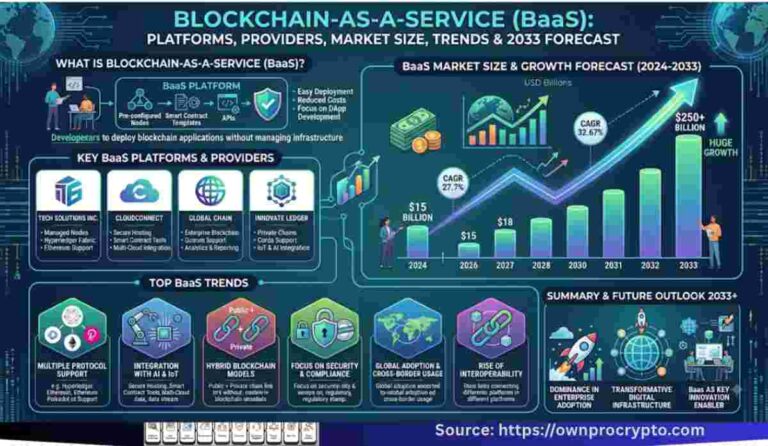
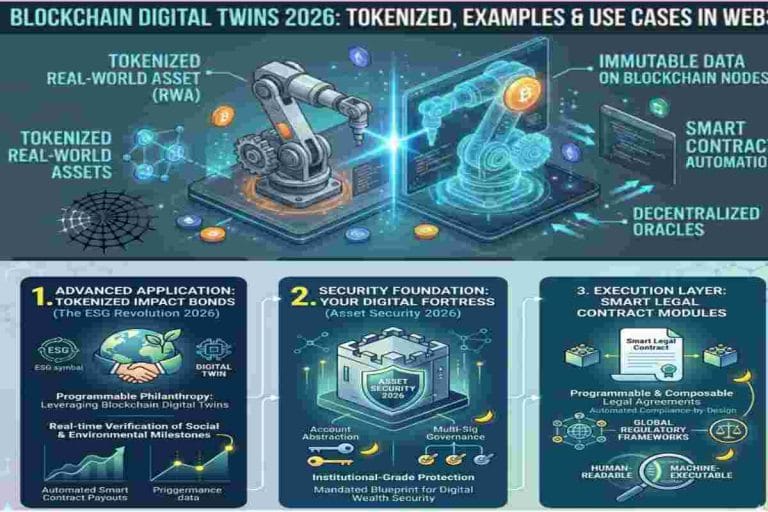
2026 research note: We will continue update this article, it should be reviewed periodically because BaaS is a rapidly changing infrastructure category. Provider product names, supported networks, pricing and service lifecycles can change faster than conventional enterprise software categories. Google’s announced December 15, 2026 retirement of Blockchain Node Engine and Blockchain RPC is a clear example of why BaaS comparisons require current-source verification. :contentReference[oaicite:13]{index=13}

← Best Enterprise Blockchain Platforms: Choosing the Right Private, Hybrid & Permissioned DLT Solution
Enterprise Digital Identity Solutions: Complete Business Guide →
🛠 Explore Tools ▼
📚 Explore Crypto Research Select a research category