
Search by title, topic or phrase
Use our Crypto Search Engine 🔍 to find the topics and keywords you're looking for.
Self-custody means controlling the authority that can move your digital assets — while building a system that remains secure, recoverable, and usable when something goes wrong.
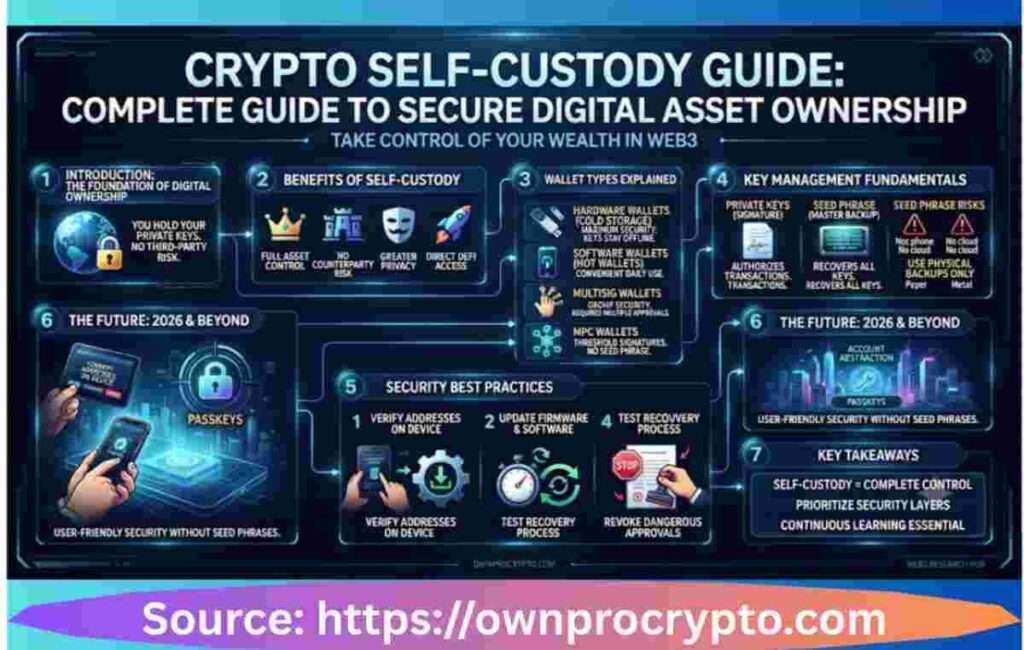
Table of Contents
ToggleCrypto self-custody is a model in which you control the private keys, signing credentials, or other authorization mechanisms required to move your digital assets. Instead of relying entirely on an exchange or third-party custodian, control is placed within your own wallet or custody architecture. Learn more about core concepts in our Crypto Self-Custody Guide.
The core question separating custodial convenience from true financial sovereignty. Explore our Financial Sovereignty research to dive deeper into ownership principles.
A third-party platform controls the underlying signing authority. You access assets via account policies.
The owner controls the signing authority directly through a wallet or custody architecture.
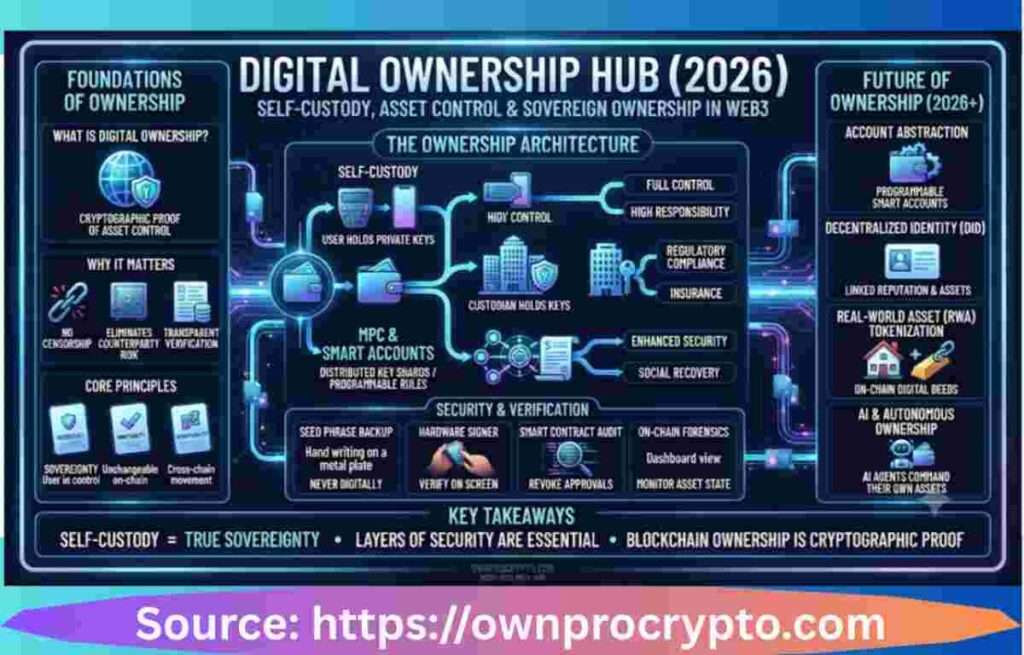
Crypto self-custody works by placing transaction authorization under the control of the asset owner or a defined signing architecture, rather than relying entirely on a centralized custodian.
The software or device interface used to view assets, prepare transactions, connect to applications, and initiate signing.
The cryptographic mechanism capable of authorizing a transaction. Structure depends on the wallet or architecture.
The network processes an authorized transaction according to its consensus rules and transaction logic.
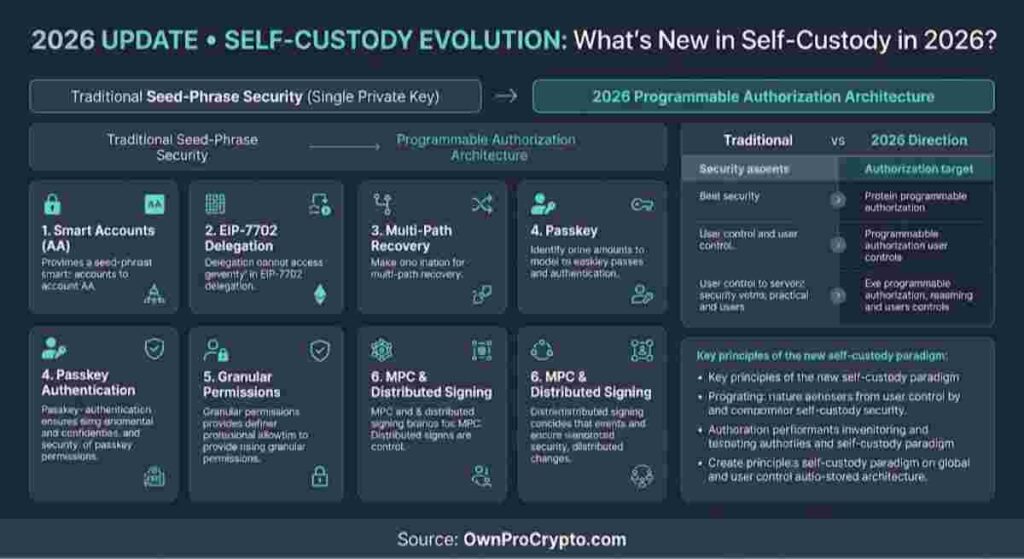
Self-custody in 2026 is moving beyond the traditional model of a wallet address controlled by a single private key and protected primarily by a seed phrase. New account and signing architectures are expanding how users authorize transactions, manage permissions, recover access, and protect digital assets.
Programmable account logic supporting transaction batching, customized recovery, and spending restrictions.
Allows an externally owned account (EOA) to delegate execution to code without changing addresses.
Expanding authentication layers and distributed threshold signing across multi-party components.

Self-custody is not defined by one wallet type. Modern digital-asset ownership can be implemented through software wallets, hardware wallets, multisignature systems, MPC and threshold-signing architectures, or programmable smart accounts.
Convenient for frequent transactions and Web3 activity, but dependent on device security.
Dedicated devices offering strong signing isolation for long-term digital asset holdings.
Distributed signing or threshold approval requirements reducing single-key vulnerabilities.
Private keys remain central to blockchain authorization, but the way people protect and recover that authority is evolving. Seed phrases are still important in many conventional wallets, while smart accounts, passkeys, social recovery, and distributed signing introduce alternative verification models.
Secret cryptographic value used to authorize transactions directly or via signing systems.
A sequence of words from which wallet keys are derived; must be guarded against unauthorized exposure.
Device-level biometric authentication and programmable account-recovery workflows.
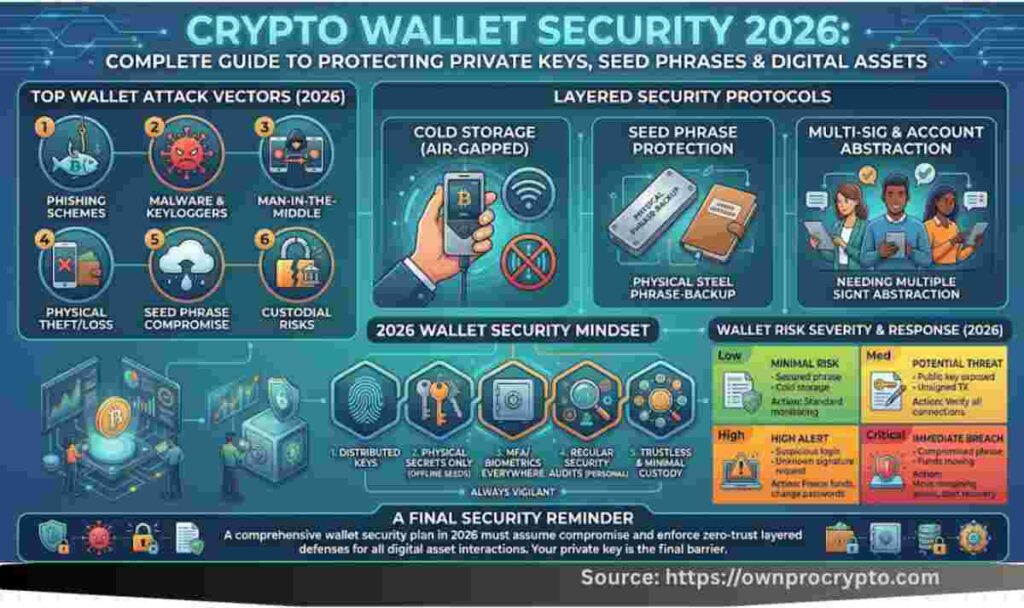
A secure self-custody setup is a coordinated system for authorization, device security, transaction verification, recovery, and ongoing maintenance. Choosing a wallet is only the beginning.
Consider phishing, malware, bad transaction approvals, theft, and loss prior to committing capital.
Use operational hot wallets for day-to-day actions and isolated hardware setups for long-term reserves.
Document and safely validate your restoration procedure before storing significant balances.
Wallet segmentation separates activities with different risk profiles so that a routine interaction, compromised browser extension, or malicious application does not automatically expose every digital asset.
Used for routine transfers and smaller active balances with higher dApp exposure.
Used for deliberate portfolio allocations with selective application access.
Cold storage setup with minimal app interactions and heavily guarded recovery keys.
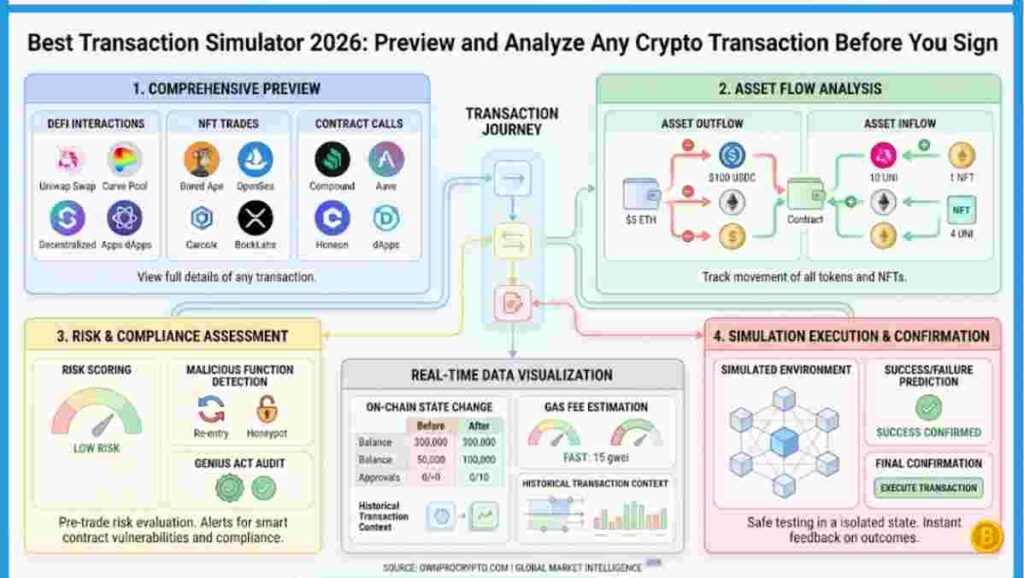
Self-custody security depends on more than keeping private keys secret. Blockchain wallets also authorize transactions, interact with smart contracts, and grant permissions to move tokens. A secure process must verify both the signer and the requested action.
Smart contracts can request broad or unlimited spending permissions that require routine auditing.
Deceptive UI interactions can disguise asset transfers as simple logins or claims.
Always inspect the network destination, token amount, contract interaction data, and permission scope.
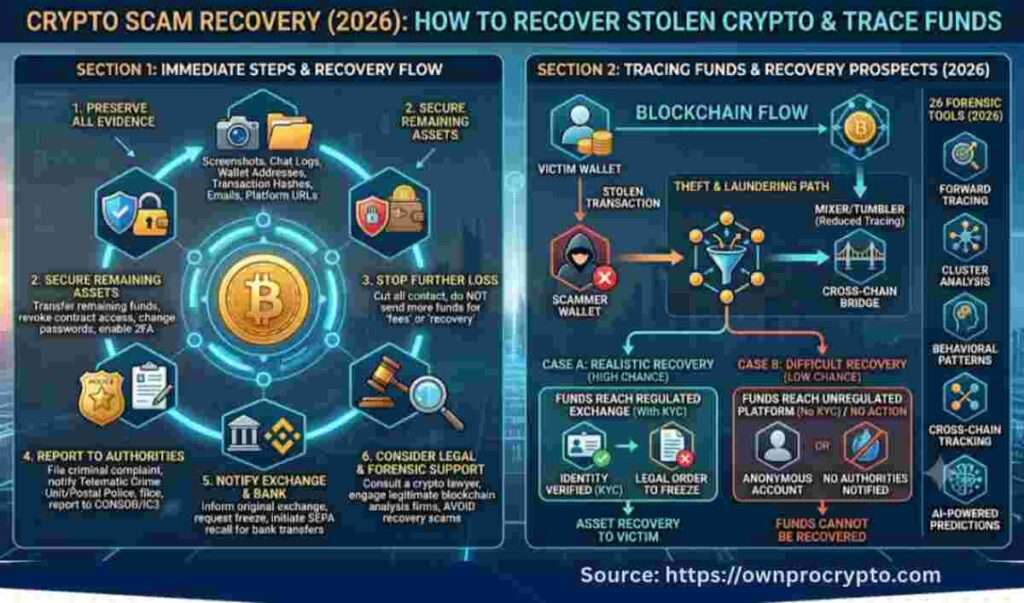
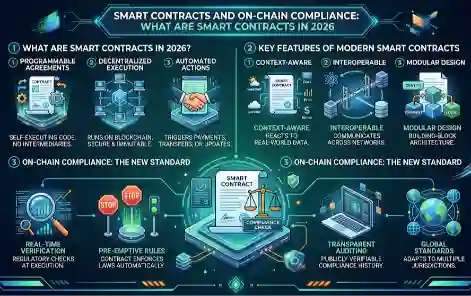
Self-custody must remain secure outside the screen. Hardware wallets, recovery phrases, backup media, and authentication credentials face threats from theft, physical damage, environmental hazards, and human error.
Prevent unauthorized physical or digital exposure of seed phrases and private keys.
Shield recovery media against fire, water immersion, degradation, and accidental disposal.
Ensure reliable access paths exist for authorized recovery during emergency scenarios.
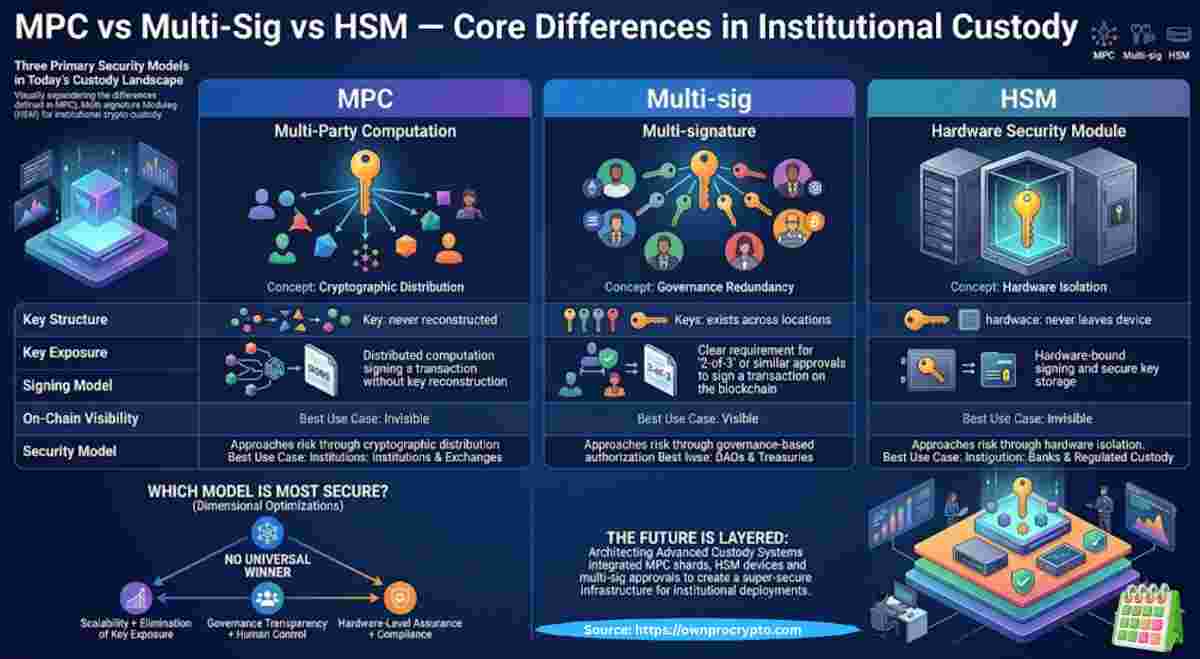
Advanced self-custody architectures reduce reliance on single credentials and support flexible transaction rules. Multisig, multi-party computation (MPC), and smart accounts achieve this through distinct cryptographic and structural models.
Requires a threshold of independent signers (e.g., 2-of-3) to authorize transactions on-chain.
Distributes cryptographic computation across multiple participants without exposing a complete single key.
Enables programmable account logic, recovery guardians, and customized transaction policies.
The best self-custody architecture provides robust protection without creating an unmanageable operational burden. The right choice depends on portfolio size, transaction velocity, technical capability, and recovery needs.
Software or hot wallets suited for low-balance operational speed.
Hardware isolation and cold storage configurations for significant holdings.
Multisig, MPC, or smart accounts managing complex governance and multiple signers.
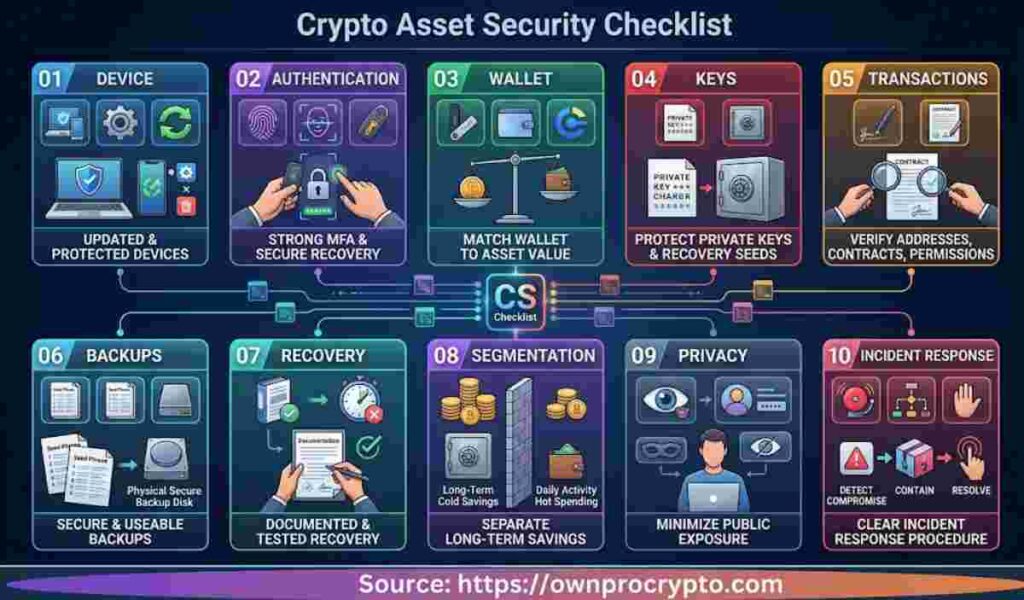
Use this structured framework to review your self-custody controls. Confirm items only when corresponding safeguards are fully deployed and verified.
Verify signer permissions and validate proper wallet segmentation.
Ensure seed phrases are stored securely offline without digital exposure.
Inspect destination addresses, token allowances, and contract interactions before signing.
Explore focused guides, assessment tools, and security architectures for protecting digital assets, controlling wallet authorization, managing recovery, and understanding institutional custody.
From foundational security principles to advanced custody design, follow the path most relevant to your assets, responsibilities, and level of technical involvement.
Understand the core principles, controls, and frameworks behind crypto security before selecting a particular solution.
Connect the broader asset-protection framework with practical self-custody controls, recovery planning, and risk assessment.
Learn how signing authority, wallet permissions, transaction verification, and recovery affect practical digital ownership.
Compare signing models and custody architectures for treasury operations, distributed authorization, and organizational control.
Explore bridge risks, interoperability assumptions, and the security considerations involved in moving assets across networks.
Investigate suspicious activity and identify risks before interacting with unfamiliar websites, projects, or digital assets.
Need another specialist resource? Visit the OwnProCrypto Crypto Security Hub for the wider collection of security guides, standards, tools, and institutional resources.
Crypto self-custody is not simply holding a hardware wallet or recording a seed phrase. It is the holistic process of managing digital asset authorization alongside protection, verification, recovery, and operational resilience.
These answers address common questions regarding ownership, wallet setups, backup recovery, advanced authorizations, and security trade-offs.
Controlling private keys and signing mechanisms directly rather than relying on an exchange custodian.
No. Self-custody is a control model; hardware devices add physical signing isolation but software or multisig also qualify.
Assets remain safe if you maintain a properly tested backup and recovery pathway.
1. Core Concepts & Wallet Architecture
Q: What is crypto self-custody?
A: Crypto self-custody is a model in which you control the private keys or other authorization mechanisms required to transact with your digital assets, rather than relying entirely on a third-party custodian to control that authority.
Q: Is self-custody safer than keeping crypto on an exchange?
A: Neither model is universally safer. Self-custody reduces third-party custody dependencies but makes you responsible for key protection, transaction verification, and recovery. Exchange custody introduces platform, counterparty, account-access, and operational risks.
Q: What is the difference between a custodial and a non-custodial wallet?
A: With a custodial arrangement, a provider generally controls the underlying signing authority. With a non-custodial wallet, the user or designated authorization system controls it. Product labels should be checked against the actual technical and contractual arrangement.
Q: Do I need a hardware wallet for self-custody?
A: No. Self-custody is a control model, not a device category. A hardware wallet can improve signing isolation for suitable use cases, but software wallets, multisig, and other architectures may also provide self-custody.
2. Authentication, Seed Phrases & Recovery
Q: What happens if I lose my hardware wallet?
A: Loss of the device does not necessarily mean loss of the assets. Access may be restored through the wallet’s designated recovery mechanism, provided all required information and credentials remain available.
Q: Are seed phrases still necessary in 2026?
A: Seed phrases remain important in conventional wallets, but smart accounts, passkey-based authentication, social recovery, and MPC-based signing are changing how authorization and recovery work in modern implementations.
Q: Are passkeys the same as private keys?
A: No. Passkeys are authentication credentials based on public-key cryptography used for phishing-resistant sign-in. A passkey may participate in a wallet’s authorization design, but it does not automatically mean direct control of a blockchain private key.
3. Advanced Signing & Custody Architecture
Q: What is the difference between multisig and MPC?
A: Multisig requires multiple separate signatures on-chain according to smart contract rules. MPC distributes cryptographic computation across participants off-chain to produce a single threshold signature.
Q: Is MPC always more secure than multisig?
A: No. Security depends on protocol assumptions, signer independence, recovery procedures, provider dependencies, and policy engines. MPC and multisig address different architectural trade-offs.
4. Risk Mitigation & Long-Term Continuity
Q: Can a hardware wallet prevent phishing and malicious transactions?
A: Not by itself. A hardware wallet protects keys from extraction, but it can still sign a harmful transaction if the user approves malicious data. Always verify destination addresses and permissions.
Q: Can self-custody assets be recovered if the owner dies or becomes unavailable?
A: Potentially, provided a succession mechanism (such as smart contract wills, dead-man switches, or documented recovery procedures) was designed and configured in advance.
Q: What is the most important self-custody security rule?
A: Protect the signing authority and the recovery path, and verify what you authorize. A secure key can still approve a harmful transaction, while an inaccessible recovery mechanism makes ownership impossible to exercise.