
Table of Contents
ToggleBitcoin as a macro hedge is no longer just a theory discussed in financial circles—it is becoming a practical consideration for individuals facing an uncertain world.
These are no longer abstract questions. In periods of war, energy disruption and inflation, access to money can become as critical as the money itself.
There’s a growing realization that in a world shaped by macro uncertainty, Bitcoin’s role is not just about returns—but about mobility, control and continuity. Unlike traditional systems, where transfers can be delayed or restricted, Bitcoin allows value to move as freely as information.
As the gap widens between Bitcoin vs fiat systems, individuals are starting to ask a different question:
not “Should I invest?”
but “How do I prepare?”
“You don’t truly understand a system until you need to leave it.”
Looking ahead, the idea of Bitcoin as a hedge against inflation in 2026 is evolving into something bigger—a foundation for operating in a world where borders, currencies and systems are no longer guaranteed to remain stable.
If that future unfolds, the ability to:
will not be an advantage—it will be a necessity.
As macro environments shift, Bitcoin’s role as a hedge becomes central to the Digital Ownership in 2026 ROI models we track. Follow global economic shifts at the World Economic Forum.
April 2026 is being shaped by rising geopolitical tensions, oil price volatility, and persistent inflation—leaving investors searching for reliable protection against macro uncertainty. In this environment, Bitcoin is increasingly emerging as a viable hedge, with institutional inflows rising even as central banks remain cautious on rate cuts. Once seen as purely speculative, Bitcoin is now positioning itself alongside gold as a macro-sensitive store of value, offering a potential solution for portfolios navigating inflation, currency pressure, and global instability.
Global markets are entering a period defined by geopolitical instability, energy shocks and persistent inflation. These forces are not temporary disruptions—they are structural pressures reshaping how value is created, stored and transferred. In this environment, the concept of Bitcoin as a macro hedge is no longer theoretical. It is increasingly being considered by investors, professionals and independent earners seeking resilience beyond traditional financial systems.
This is not about speculation. It is about positioning.
For individuals navigating uncertain economies, the real question is no longer “Is Bitcoin risky?” but rather:
What happens if the system it hedges against continues to weaken?
Geopolitical tensions are no longer isolated events—they are shaping global finance in real time.
Sanctions, trade restrictions and regional conflicts are:
For individuals and businesses, this introduces a new category of risk: access risk—the possibility that your capital may be restricted, delayed or devalued based on external decisions.
Energy remains the foundation of economic activity. When oil prices rise, inflation follows.
Recent cycles have shown:
This creates a feedback loop where:
inflation erodes savings → policy reacts → currencies weaken further
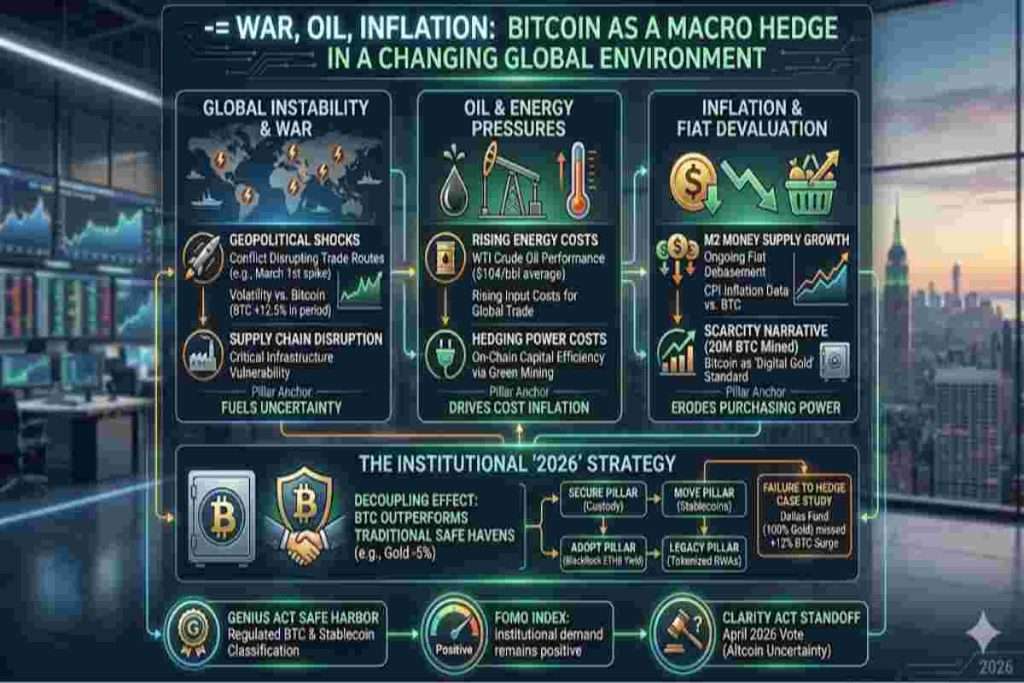
Bitcoin operates on a fixed supply schedule. Unlike fiat currencies, it cannot be expanded in response to economic stress.
Tracking the “Sticky Capital” driving the current breakout.
| Holder Category | BTC Quantity Held | Market % | 2026 Sentiment |
| Public Treasuries | 1.15 Million BTC | 5.4% | Accumulating (Buy the Dip) |
| U.S. Spot ETFs | 1.48 Million BTC | 7.0% | Strong Inflows ($2.8B/mo) |
| Sovereign States | 518,000 BTC | 2.5% | Strategic Reserve Growth |
| Exchanges (Float) | 1.9 Million BTC | 9.0% | All-Time Low Liquidity |
This makes it structurally different:
While short-term volatility exists, its long-term function is increasingly understood as protection against currency debasement.
Bitcoin is not tied to any nation, institution or policy framework.
It is:
In environments where financial access can be restricted, this neutrality becomes valuable.
Not because Bitcoin is perfect—but because alternatives are constrained.
Bitcoin as an Inflation Hedge in a Debasing Currency Environment
Is Bitcoin a Safe Haven Asset in Times of Crisis?
In 2026, the shift from outdated banking to a unified blockchain payment infrastructure has reached its tipping point. Built on the Legacy Pillar, institutional-grade stablecoins are now settling trillions in volume via high-speed Layer 2 networks, permanently replacing the 3-5 day delays of traditional SWIFT wires. This “Always-On” rail provides the Capital Efficiency required for modern global trade, allowing for sub-cent transaction costs and instant finality. For the SEO CEO, this infrastructure is the foundational layer for On-Chain Compliance and the bridge to the total RWA Tokenization of global assets.
A side-by-side look at the new efficiency standards.
| Feature | Legacy Banking (SWIFT) | Blockchain Infrastructure |
| Settlement Speed | 3–5 Business Days | Instant (2–15 Seconds) |
| Operating Hours | Mon–Fri (Banking Hours) | 24/7/365 |
| Average Transaction Fee | $25 – $50 + FX Spread | <$0.01 (L2 Optimized) |
| Transparency | Opaque / Bank-Ledger | Public / On-Chain Auditable |
Modern financial systems rely on trust:
That trust is being tested.
Persistent inflation, rising debt levels and periodic banking instability are forcing individuals to reconsider where value should be stored.
This shift is subtle but important:
From optimizing returns → to protecting access and ownership
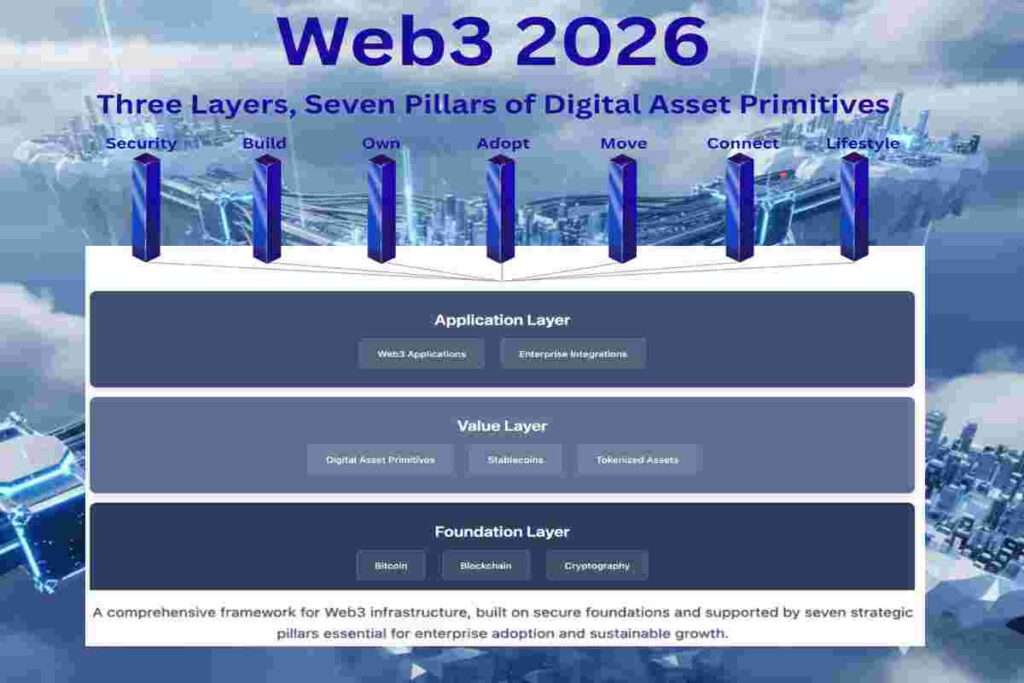
Bitcoin is often framed as an asset. Increasingly, it functions as infrastructure.
A new financial stack is emerging:
This stack allows individuals to operate with greater independence from traditional systems.
Blockchain-based payments enable:
For freelancers and global teams, this removes friction that previously limited cross-border work.
Stablecoins provide:
They are increasingly used for:
Different stablecoins prioritize different trade-offs:
A resilient system often uses multiple rails, not a single dependency.
Bitcoin is often framed as an asset. Increasingly, it functions as infrastructure.
A new financial stack is emerging:
This stack allows individuals to operate with greater independence from traditional systems.
Blockchain-based payments enable:
For freelancers and global teams, this removes friction that previously limited cross-border work.
Stablecoins provide:
They are increasingly used for:
Different stablecoins prioritize different trade-offs:
A resilient system often uses multiple rails, not a single dependency.
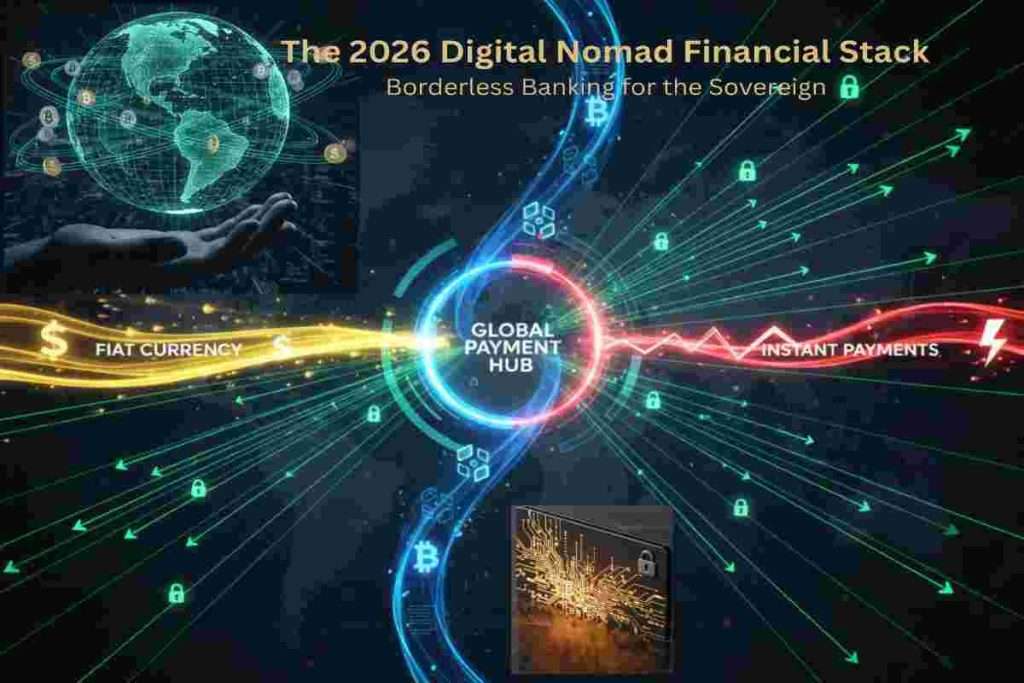
Work is no longer tied to geography.
A developer in one country can:
This reduces dependence on:
Traditional resumes are static. On-chain identity is dynamic.
It reflects:
This creates a more transparent and portable reputation system.
A sovereign career is built on:
Bitcoin plays a central role as:
A designer working with international clients faced:
By shifting to:
They reduced friction and preserved value over time.
An individual in a high-inflation economy experienced:
Allocating a portion of savings to Bitcoin:
A small business working with overseas suppliers faced:
Using blockchain payments:
Bitcoin introduces a form of wealth that is:
This changes how inheritance can be structured.
Emerging systems allow:
A future-ready digital legacy includes:
Without planning, digital assets risk becoming inaccessible.
Digital Asset Inheritance and the Future of Financial Legacy.
Greater control introduces greater responsibility.
Key risks:
Mitigation requires:
Sovereignty is not risk-free—it is risk reallocation.
Moving away from institutional systems requires:
For many, the challenge is not technical—it is behavioral.
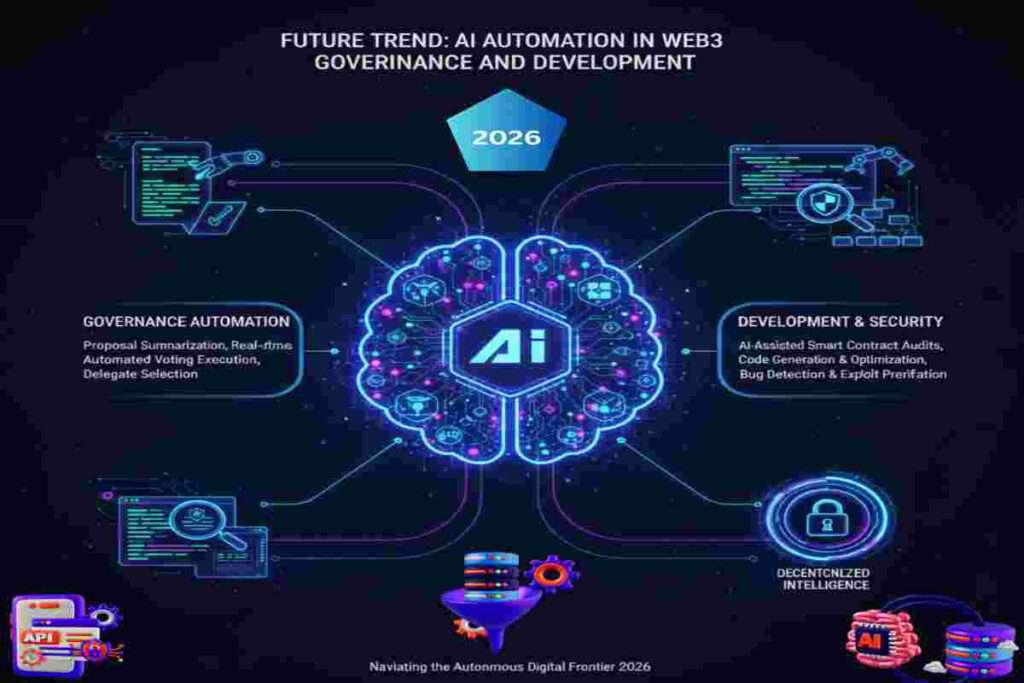
The next phase of this evolution is being shaped by AI and automation.
AI systems can:
When integrated with blockchain:
We are moving toward systems where:
In such a world:
Bitcoin and blockchain act as trustless settlement layers.
This reinforces the importance of:
owning infrastructure, not just participating in it
Comparative analysis of Bitcoin as a Macro Hedge vs. Traditional Assets.
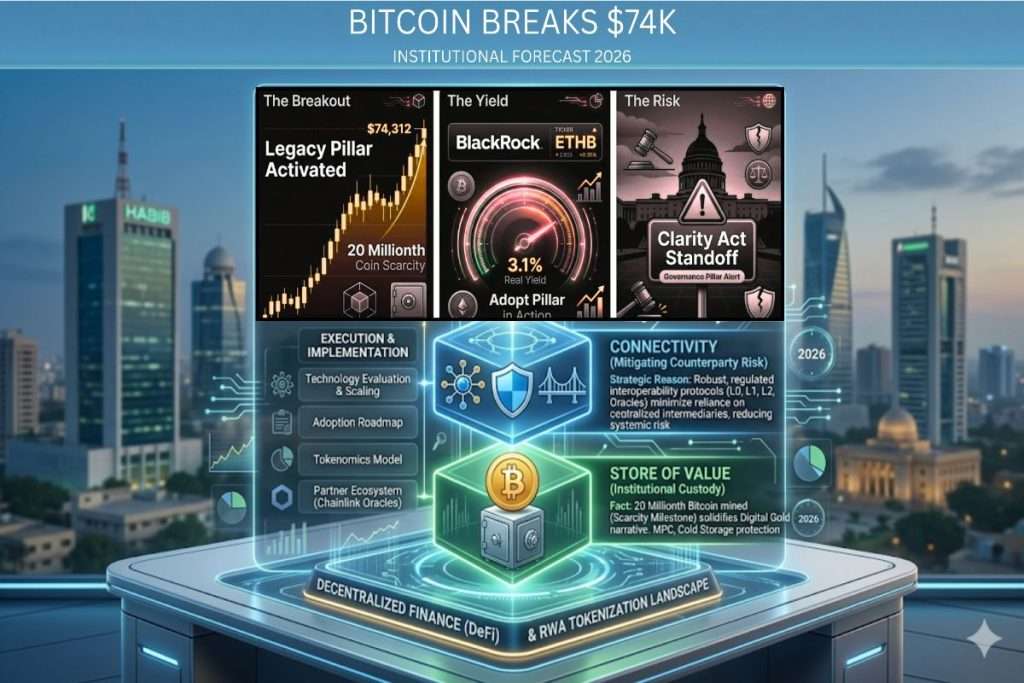
| Metric / Asset | March 2026 Performance | 2026 Year-End Target | Strategic Role |
| Bitcoin (BTC) | +10.2% (Current: $74,312) | $120k – $185k | Primary Macro Hedge / Digital Gold |
| Physical Gold | +2.4% (Current: $2,598) | $2,850 | Conservative Portfolio Anchor |
| WTI Crude Oil | +13.0% (Current: $104/bbl) | $115/bbl | Inflation Catalyst / Input Cost |
| S&P 500 Index | -1.5% (Stagnant) | 5,800 pts | Legacy Equity / Margin Risk |
Projecting the next phase of the Bitcoin S-Curve.
| Milestone Event | Date / Status | Projected Impact |
| 20 Millionth BTC | Mined March 10 | Immediate Scarcity Shock |
| Clarity Act Vote | April 2026 (Est) | Altcoin Liquidity Flush/Reset |
| SEC RWA Approval | Q3 2026 | RWA Tokenization Explosion |
| 1M BTC Milestone | Projected 2030 | Gold Market-Cap Parity |
The convergence of:
is accelerating structural change.
Key developments:
This is not a sudden shift—but a gradual reconfiguration of global finance.
Executive insights on global instability and digital reserves.
Q: Is Bitcoin a macro hedge?
Yes. In the current 2026 climate of high debt and currency devaluation, Bitcoin as a Macro Hedge has become a core institutional thesis. Its fixed supply and programmatic independence from central bank policy allow it to act as a neutral “digital circuit breaker” when traditional systems falter.
Q: How does Bitcoin protect against inflation?
By maintaining a hard cap of 21 million coins, Bitcoin prevents the purchasing power dilution caused by excessive fiat money printing. As global M2 supply expands, this scarcity reinforces its role as a long-term shield against debasement.
Q: Is Bitcoin a safe-haven asset?
It is increasingly viewed as one, particularly by the “Digital Gold” generation. While more volatile than gold, its portability and 24/7 liquidity make it a superior choice for modern portfolio insurance.
Q: Why does Bitcoin gain attention during geopolitical crises?
Because it offers a neutral, borderless alternative when trust in systems declines. During periods of conflict, utilizing Bitcoin as a Macro Hedge provides a “Safe Harbor” that is not subject to geographic or political censorship.
Q: How do oil prices impact Bitcoin?
Higher oil prices drive up input costs and consumer inflation. This historically strengthens the demand for decentralized assets, as investors seek vehicles that outpace the rising cost of energy.
Transitioning from legacy banking to on-chain autonomy.
Q: What is digital asset sovereignty?
It is the state of having full, unmediated control over your digital wealth. This is the ultimate goal of the Secure Pillar—ensuring that your capital cannot be frozen, seized, or devalued by a third party.
Q: Can Bitcoin protect against currency collapse?
Yes. In high-inflation environments (like we’ve seen in secondary markets throughout 2025), it is the primary alternative store of value used to bypass failing local currencies.
Q: What is a sovereign financial system?
A decentralized ecosystem where individuals control their own assets and execution logic without intermediaries.
Q: Can Bitcoin replace banks?
Not entirely, but it significantly reduces reliance on them for settlement and storage. In 2026, we see a hybrid model where banks provide the Connect Pillar, but the underlying value is held in self-custodial Bitcoin.
Q: Why is trust in financial systems declining?
A combination of record-high sovereign debt, persistent inflation, and the “Clarity Act” stalemates has led many to seek the mathematical certainty provided by Bitcoin as a Macro Hedge.
Navigating a borderless, automated economy.
Q: What is a borderless Web3 career?
A professional path where income is earned globally and settled instantly via blockchain, bypassing the delays of the traditional SWIFT system.
Case Study Failure: A developer in 2024 relied on traditional bank wires; his funds were frozen for 3 weeks during a regional crisis. In 2026, he uses the Move Pillar (stablecoins) for 100% uptime.
Q: How do stablecoins support global payments?
They enable fast, low-cost cross-border transactions, acting as the “Liquidity Bridge” within the Adopt Pillar while Bitcoin serves as the long-term wealth hedge.
Q: What is on-chain identity?
A blockchain-based, immutable record of your work history and professional reputation. It allows your “Human Capital” to be as portable as your Bitcoin.
Q: How does AI integrate with blockchain?
AI provides the “Intelligence” to automate complex financial decisions, while blockchain provides the “Trust Layer” to execute those decisions securely without human error.
Q: Is Bitcoin relevant for the future?
Its relevance is accelerating. As global systems become more fragmented, the need for a unified, neutral asset like Bitcoin as a Macro Hedge becomes a mathematical necessity for global trade.
Protecting wealth across generations.
Q: Can Bitcoin be inherited?
Yes, but it requires proactive planning. Without a Legacy Pillar strategy, private keys can be lost forever.
Case Study Failure: A Karachi-based investor failed to document his multisig recovery process. His family lost access to $2M in assets during the 2025 market surge because the “Secure Pillar” was too complex for the heirs.
Q: What is a smart contract will?
A programmable system that automates asset distribution. It ensures your Bitcoin as a Macro Hedge is passed to your beneficiaries exactly when certain on-chain conditions are met.
Q: What are the primary risks of Bitcoin?
While it is a potent hedge, it carries risks involving price volatility, the responsibility of self-custody, and the ongoing “Clarity Act” regulatory shifts.
Q: Is Bitcoin correlated with stocks?
While short-term correlations exist during “Risk-Off” liquidations, Bitcoin’s long-term behavior is increasingly independent, solidifying its status as a distinct macro asset class.
Q: Is Bitcoin affected by interest rates?
Yes. Higher rates can temporarily strengthen the dollar, creating short-term headwinds. However, the structural demand for Bitcoin as a Macro Hedge usually persists as long as debt-to-GDP ratios remain at record highs.
To secure your legacy and master the 2026 market shifts, you need more than just theory—you need execution. I have developed the complete Digital Sovereignty Tool & Pillar Template Set, designed specifically for institutional-grade asset management and on-chain succession planning. This toolkit includes the RWA S-Curve Projection Model, the Smart Contract Will Framework, and the Capital Efficiency Audit.
To access the full template set and start building your Secure Pillar today, Click Here.
Bitcoin’s rise is not driven by hype—it is driven by context.
As traditional systems face pressure, individuals are seeking:
Bitcoin provides a framework for all three.
Not as a replacement for the entire system—but as a parallel layer that reduces dependence on it.
The shift is already underway.
The only variable is participation.
To ensure your Web3 Infrastructure and Sovereign Ownership Framework align with global compliance standards, we recommend referencing the official primary sources. This document provides the legal “navigator” for digital property rights in 2026.
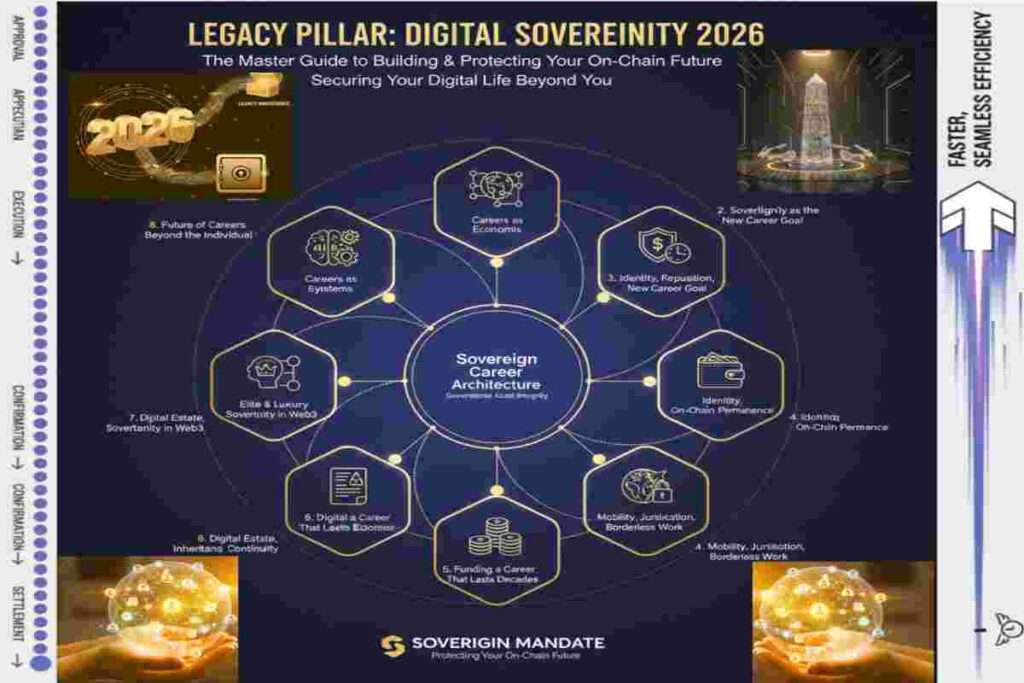
As part of the LEGACY, this guide explores digital identity continuity, inheritance planning, and long-term sovereign asset preservation.
🔗 Official Regulatory Reference:
European crypto regulatory standards under MiCA. EU Markets in Crypto-Assets (MiCA) Regulation
Welcome to OwnProCrypto (Own & Pro Crypto) — a next-generation Bitcoin and blockchain education platform where the science of finance meets the power of AI-driven automation.
Our mission is simple: to equip you with the knowledge, frameworks, and tools needed to make smarter financial and business decisions in the Web3 economy.
Beyond analysis, OwnProCrypto focuses on transparency, verifiable data, and practical frameworks that investors and builders can actually use. Our goal is not hype — but clear thinking, disciplined analysis, and long-term value creation in the decentralized economy.
Our Background
As part of the Web3 Ecosystem Architecture pillar, this guide focuses on Sovereign Ownership Architecture in Web3. Explore related pillars: