
Table of Contents
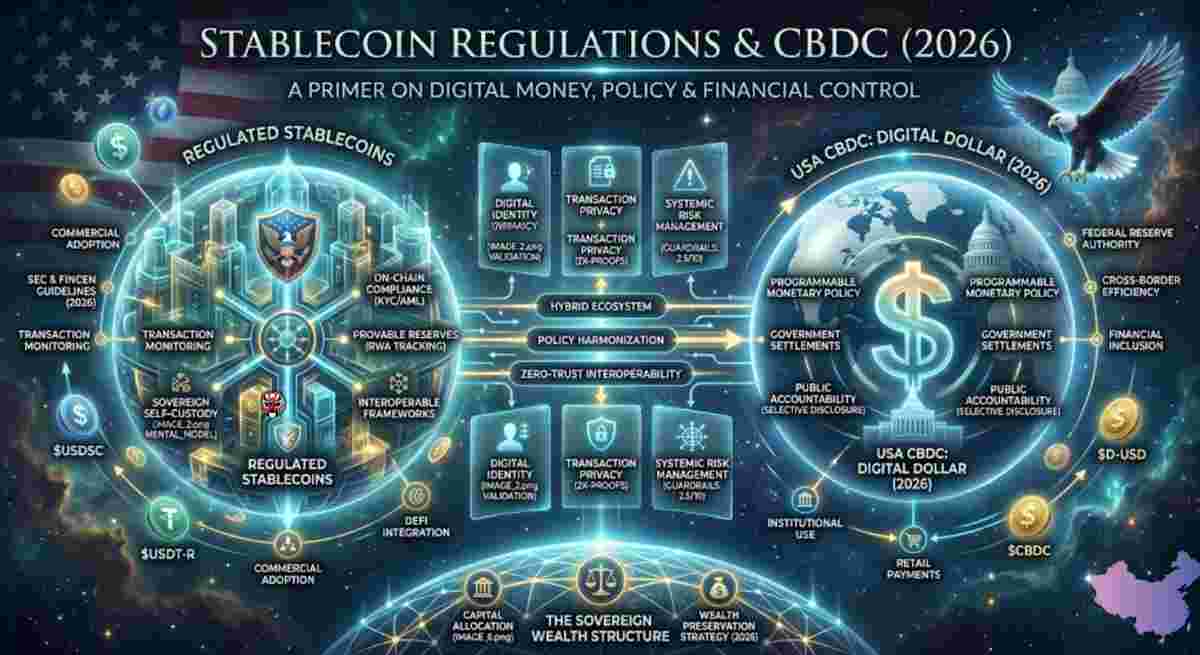
ToggleStablecoin Regulations and central bank digital currencies (CBDCs) are redefining how money operates in the global financial system.
For years, digital assets evolved outside traditional frameworks. Now, governments and institutions are moving to regulate, integrate, and compete with these systems.
This marks a fundamental shift:
from open financial experimentation → regulated digital money infrastructure
Policy shifts in digital money are central to the landscape we track in Stablecoin Payments 2026: Why USDT & USDC Dominate. For a global perspective, see the Bank for International Settlements (BIS).

Stablecoins are digital assets designed to maintain a stable value, usually pegged to fiat currencies like the US dollar.
| Type | Description |
|---|---|
| Fiat-backed | Reserves held in banks |
| Crypto-backed | Backed by digital assets |
| Algorithmic | Maintained via code |
Recent global developments:
The direction is clear:
digital money is becoming state-aligned infrastructure
A Central Bank Digital Currency (CBDC) is a government-issued digital version of fiat currency.
A CBDC is digital money issued and controlled by a central bank.
This is one of the most searched comparisons.
| Feature | Stablecoins | CBDCs |
|---|---|---|
| Issuer | Private entities | Central banks |
| Control | Market-driven | রাষ্ট্র-controlled |
| Transparency | Variable | High (regulated) |
| Privacy | Mixed | Limited |
Stablecoins enable flexibility, while CBDCs prioritize control and stability.
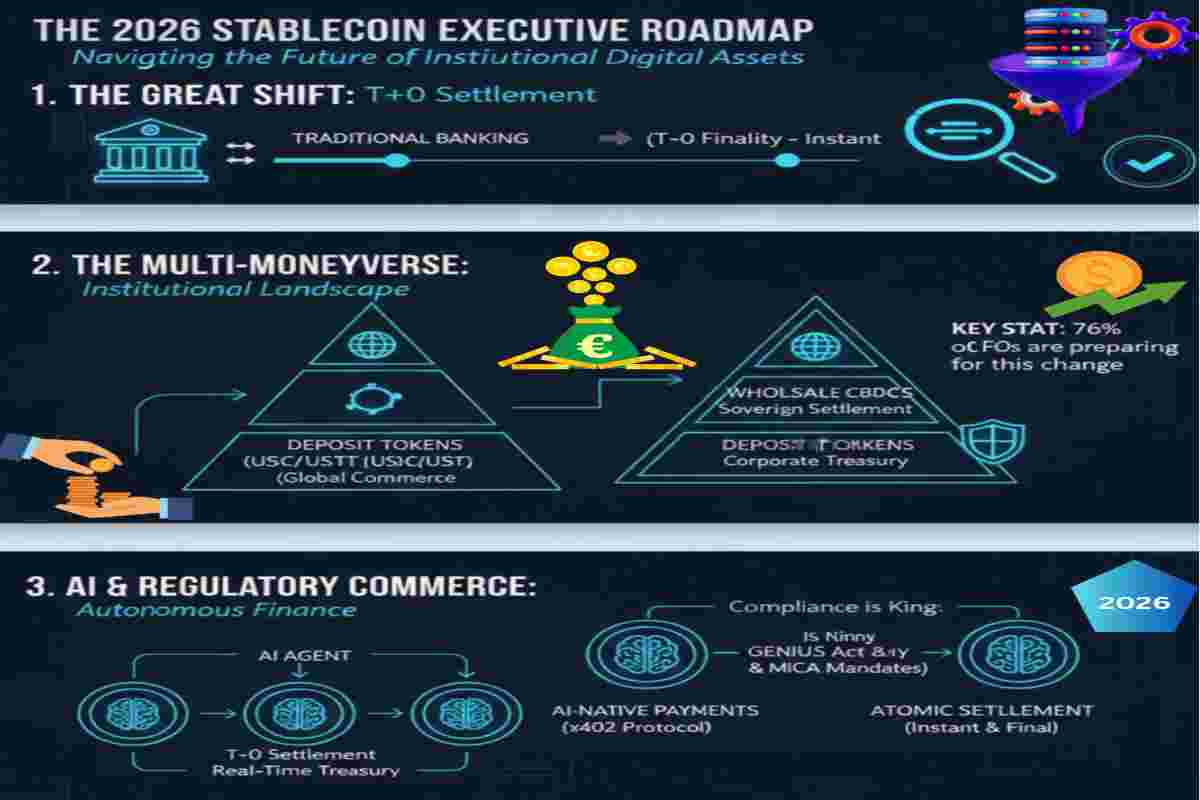
Regulation is becoming stricter and more structured.
Governments aim to:
reduce systemic risk
protect users
maintain monetary control
Stablecoins operate at the intersection of:
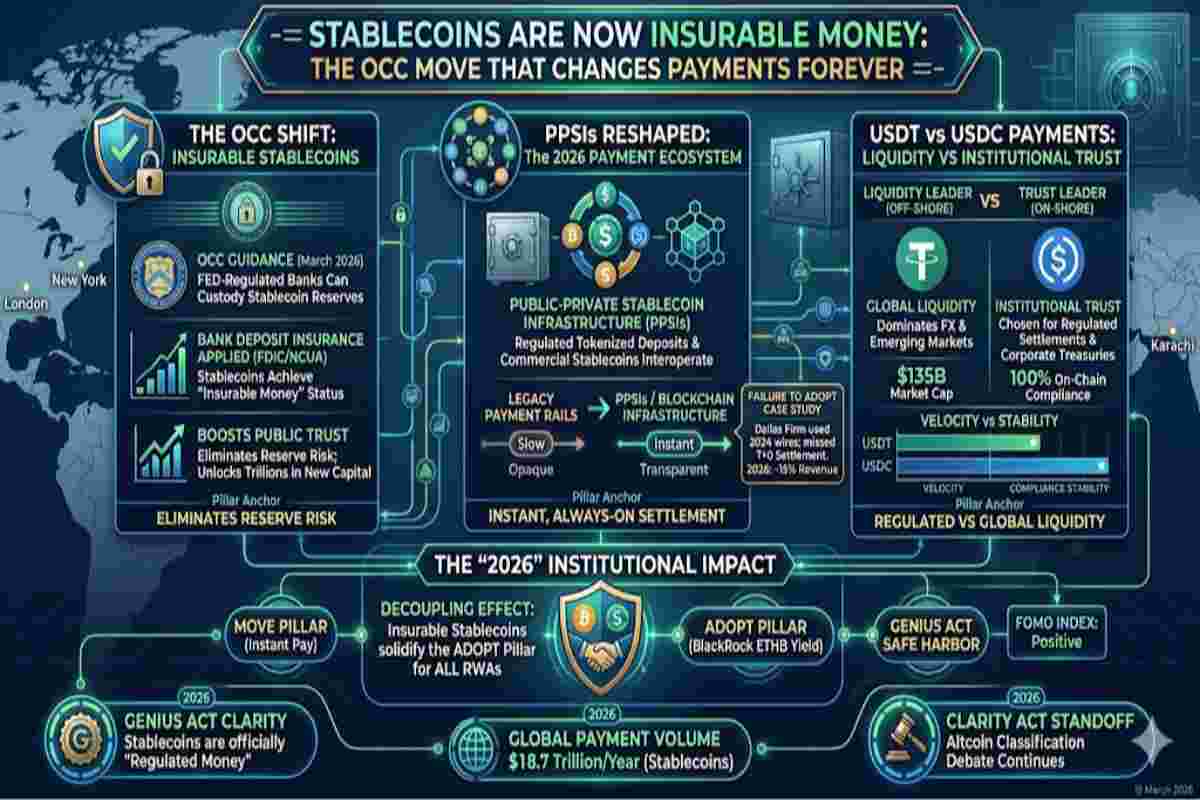
Stablecoins are becoming a core settlement layer.
They function as:
programmable money infrastructure
CBDCs introduce a new dimension of financial oversight.
efficiency vs privacy
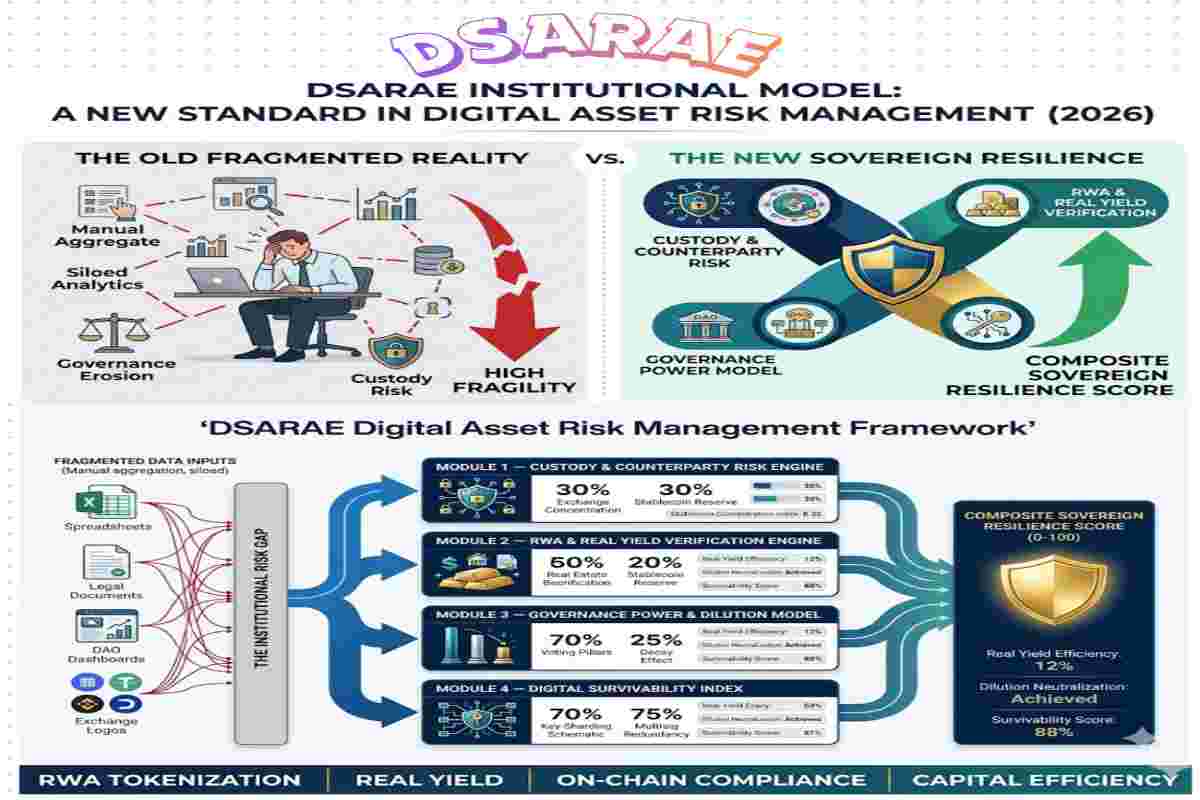
The next phase will include:
Money is evolving into:
programmable + policy-driven infrastructure
Stablecoins and CBDCs represent two competing visions:
Understanding both is essential for navigating the future of finance.
Digital money is evolving into a hybrid system where private stablecoins and government-issued CBDCs coexist.
most people still don’t see this part →
Stablecoin Payments 2026
What are stablecoins?
Stablecoins are digital currencies designed to maintain a stable value, typically pegged to fiat currencies like the US dollar.
this is where it starts getting interesting →
Stablecoins vs Bitcoin
What is a CBDC?
A Central Bank Digital Currency (CBDC) is a digital form of money issued and controlled by a country’s central bank.
the obvious narrative is wrong →
Stablecoin Regulations & CBDC
What is the difference between stablecoins and CBDCs?
Stablecoins are typically issued by private entities, while CBDCs are government-backed and centrally controlled.
look closer →
Web3 vs Web2
How do stablecoins maintain their value?
They use reserves (like cash or bonds) or algorithmic mechanisms to keep their price stable.
small detail, big shift →
Tokenomics Explained
Can stablecoins replace traditional money?
They are more likely to complement fiat systems rather than fully replace them.
this doesn’t match the headlines →
Neo-Banking & Sovereign Finance
Why are governments developing CBDCs?
To modernize payment systems, improve efficiency, and maintain control over monetary policy.
been tracking this quietly →
Global Asset Decoupling
Why are stablecoins regulated?
Regulation aims to reduce systemic risk, ensure transparency of reserves, and protect users.
don’t ignore this →
Digital Asset Taxation
What are the risks of stablecoins?
Key risks include depegging, insufficient reserves, and regulatory uncertainty.
this part →
Top Blockchain Mistakes
Are CBDCs safe to use?
CBDCs are technically secure but raise concerns around privacy, surveillance, and centralized control.
not everyone’s ready for this yet →
Financial Sovereignty
Will stablecoins and CBDCs coexist?
Yes, a hybrid financial system is emerging where both serve different roles in global finance.
weird signal forming here →
Web3 Ecosystem
How will digital money change global payments?
It will enable faster, cheaper, and borderless transactions compared to traditional banking systems.
it’s subtle, but it matters →
Stablecoin Payments
What is the future of digital money?
The future is a globally integrated system combining stablecoins, CBDCs, and traditional finance infrastructure.
before this flips →
Web4 Trends 2026
Welcome to OwnProCrypto (Own & Pro Crypto) — a next-generation Bitcoin and blockchain education platform where the science of finance meets the power of AI-driven automation.
Our mission is simple: to equip you with the knowledge, frameworks, and tools needed to make smarter financial and business decisions in the Web3 economy.
Beyond analysis, OwnProCrypto focuses on transparency, verifiable data, and practical frameworks that investors and builders can actually use. Our goal is not hype — but clear thinking, disciplined analysis, and long-term value creation in the decentralized economy.
Our Background
As part of the Web3 Ecosystem Architecture pillar, this guide focuses on Sovereign Ownership Architecture in Web3. Explore related pillars: