infographic of site logo for contact us
Infographic of Crypto Portfolio Tracker 2026: Security Audit, Risk Management & Wallet Health Dashboard
Tab to Access Crypto Porfolio Tracker

Introduction: Why Crypto Portfolio Tracking Is Broken Today

Crypto users today face a simple but critical problem:

Their assets are everywhere—but visibility is nowhere.

Funds are spread across wallets, exchanges, DeFi protocols, and staking platforms. Yet there is no unified way to understand:

  • Total portfolio value
  • Security exposure
  • Hidden smart contract risks
  • Future performance scenarios

This fragmentation creates blind spots that lead to losses, hacks, and poor decisions.

The Crypto Portfolio Tracker (Sovereign Asset Dashboard) solves this by combining:

  • Portfolio tracking
  • Wallet security auditing
  • Risk simulation
  • Wallet hygiene scoring

Into a single intelligent system.

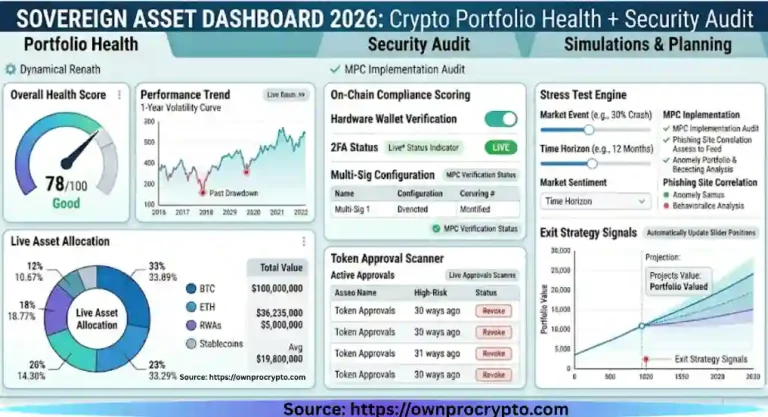
Infographic of Sovereign Asset Dashboard 2026, experience Crypto Portfolio Health + Security Audit.

What Is a Crypto Portfolio Tracker?

A crypto portfolio tracker is a system that aggregates digital assets across wallets and exchanges to provide:

  • Real-time valuation
  • Allocation breakdown
  • Risk exposure insights

But modern versions go further.

They also act as:

  • Security auditors
  • Risk simulators
  • Wallet health analyzers

This transforms it from a tracker into a financial intelligence layer

Infographic of Crypto Arbitrage Bot Without KYC Risk Explained Strategies, Scalping & AI Signals (2026)

The Hidden Risks in Crypto Portfolio Management

Most investors don’t lose money because of market crashes.

They lose it because of invisible risks.

Key risks include:

  • Forgotten token approvals (drainer risk)
  • Connected dApps with active permissions
  • Overexposure to volatile assets
  • Lack of diversification
  • Phantom wallets and inactive contracts

These risks are not visible in traditional dashboards.

Infographic of Why Crypto Signal Groups Fail (And What Institutional Traders Do Instead in 2026)

Why Traditional Portfolio Tools Fail for Crypto

Traditional tools were built for stocks—not programmable assets.

FeatureTraditional ToolsCrypto Reality
Asset trackingYesYes
Wallet security auditNoCritical need
Token approval trackingNoHigh risk area
Smart contract exposureNoEssential
Risk simulationNoNeeded for volatility

This gap is what creates demand for advanced crypto dashboards.

Key Features of a Modern Crypto Portfolio Dashboard

A complete system must solve three layers of problems:

1. Portfolio Visibility

  • Total holdings across chains
  • Asset allocation (BTC, ETH, SOL, RWAs)
  • Real-time valuation

2. Security Audit Layer

  • Wallet connection history
  • Token approvals detection
  • Risk warnings
  • 2FA / hardware wallet status

3. Risk Simulation Engine

  • Bull vs bear scenario modeling
  • Time-based projections
  • Volatility impact visualization

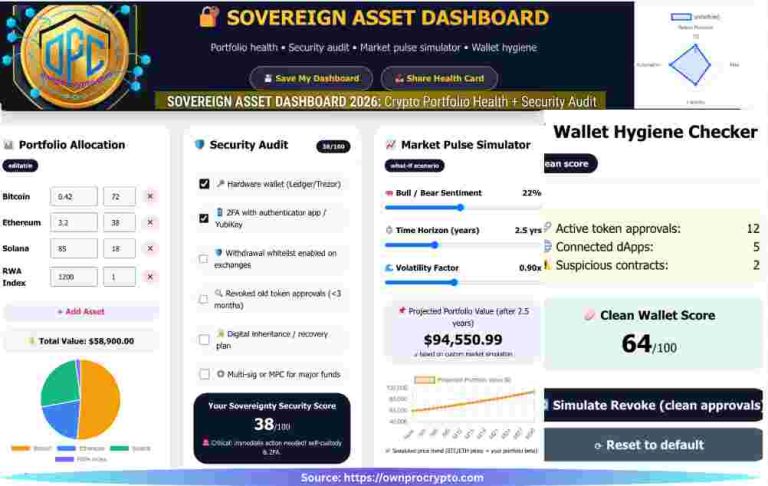
4. Wallet Hygiene Checker

  • Active approvals scan
  • Suspicious contract detection
  • Clean wallet scoring system

Crypto Wallet Security: How to Audit Your Wallet

Security is the most overlooked part of crypto investing.

A proper audit checks:

  • Which dApps have access to your wallet
  • Which tokens have unlimited approval rights
  • Whether unused contracts are still active

Example Actions:

  • Revoke token approvals
  • Disconnect unused dApps
  • Move assets to hardware wallet

This reduces “silent exploit” risk significantly.

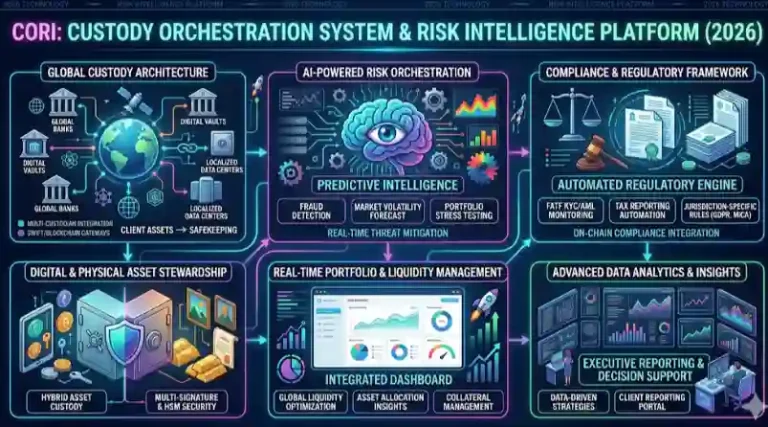
infographic of CORI Custody Orchestration System, explained 2026 Risk Intelligence Platform

Practice Before You Act: Portfolio & Risk Simulator

Markets are unpredictable—but behavior can be simulated.

The dashboard allows users to:

  • Adjust market sentiment (bull/bear)
  • Simulate volatility scenarios
  • Project portfolio value changes

This helps investors understand:

What happens to my portfolio if the market drops 30%?

Infographic of Crypto Portfolio Tracker 2026: Security Audit, Risk Management & Wallet Health Dashboard
Tap to Access System

How the Crypto Portfolio Tracking Works?

The system operates through four connected engines:

 
User Input → Portfolio Engine → Security Audit → Risk Simulator → Dashboard Output
 

Core Modules:

  • Portfolio Aggregator
  • Wallet Security Scanner
  • Risk Simulation Engine
  • Hygiene Scoring System
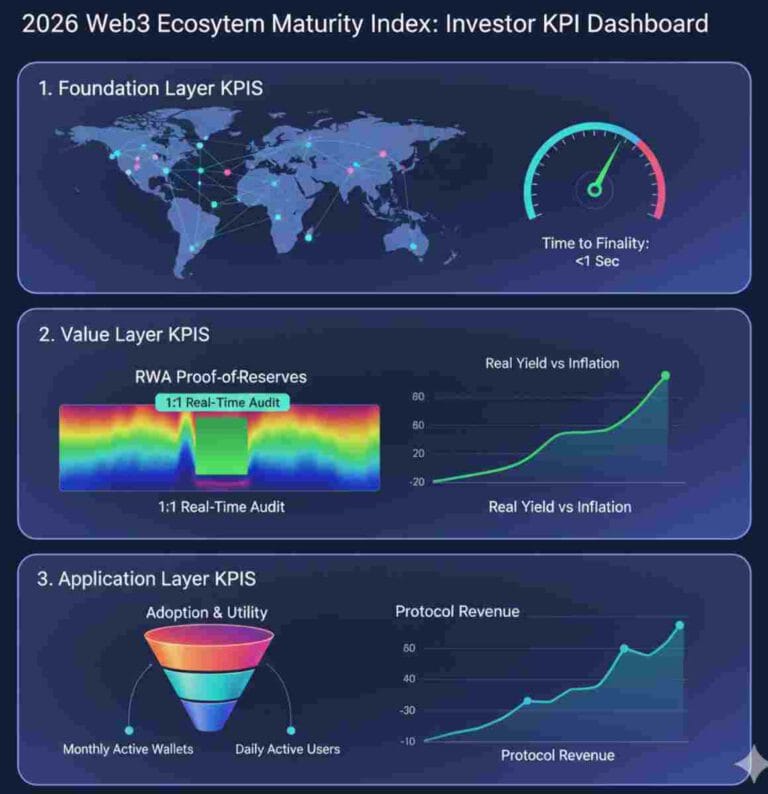
Infographic of the Measuring Ecosystem Health: The 2026 Maturity Index How Institutions Evaluate Web3: The 2026 Web3 Ecosystem

Real Example: Portfolio Health Check

Let’s simulate a user portfolio:

Input Assets

  • BTC: 40%
  • ETH: 30%
  • SOL: 20%
  • RWAs: 10%

Output Analysis

MetricResult
Portfolio Value$25,000
Security Score72/100
Risk LevelMedium
Vulnerabilities2 active approvals

Immediate insight: user has exposure risks despite good allocation.

Infographic of Sovereign Asset Dashboard 2026, experience Crypto Portfolio Health + Security Audit.
Tab to Access Asset Dashboard

Wallet Hygiene Checker (Critical Feature)

This is where most users discover hidden risks.

What it detects:

  • Active token approvals
  • High-risk dApp connections
  • Forgotten permissions

Output:

  • Clean Wallet Score (0–100)
  • Risk flags
  • Suggested actions

This is your viral + retention engine

Who Should Use This Tool?

Ideal Users:

  • Retail crypto investors
  • DeFi users with multiple wallets
  • Institutional portfolio managers
  • Web3 developers
infographic of CORI Custody Orchestration System, explained 2026 Risk Intelligence Platform
Tab to Access Custody System

Future of Crypto Risk Management

Crypto is moving from speculation → structured financial systems.

Future dashboards will include:

  • AI-based risk scoring
  • Real-time exploit detection
  • Cross-chain portfolio intelligence
  • Automated security remediation

The Sovereign Asset Dashboard is an early version of this shift.

FAQs: Crypto Portfolio Tracking Basic to Advanced Usage


Portfolio Tracking Basics

What is a crypto portfolio tracker?
A crypto portfolio tracker is a tool that aggregates assets across wallets and exchanges to show total value, allocation, and performance.


Why do I need a crypto portfolio tracker?
Because crypto assets are spread across multiple platforms, making it difficult to track total exposure and performance manually.


Security & Risk

How does crypto wallet security checking work?
It analyzes wallet connections, token approvals, and smart contract permissions to identify potential vulnerabilities.


What is a crypto wallet hygiene score?
It is a security score based on how clean and safe your wallet is, considering approvals, connections, and exposure risks.


Risk Management

What is crypto risk management?
It is the process of identifying, analyzing, and reducing exposure to market volatility and security risks in crypto portfolios.


How can I reduce crypto portfolio risk?
By diversifying assets, revoking unused approvals, using secure wallets, and monitoring exposure regularly.


Simulation & Tools

What is a crypto portfolio simulator?
It is a tool that allows users to simulate market conditions and predict how their portfolio would perform.


Can I test portfolio risks without real money?
Yes, simulation tools allow safe testing of market scenarios without financial exposure.


Advanced Usage

Who uses crypto portfolio tracking tools?
Retail investors, DeFi users, traders, and institutional asset managers.


What makes advanced crypto dashboards different?
They include security auditing, risk simulation, and wallet hygiene analysis—not just price tracking.

Conclusion: Take Control of Your Digital Assets

Crypto ownership comes with full responsibility.

Without visibility, security, and risk awareness, users are exposed to preventable losses.

The Crypto Portfolio Tracker solves this by combining:

  • Portfolio intelligence
  • Security auditing
  • Risk simulation
  • Wallet hygiene analysis

 It turns fragmented assets into a structured financial system

For deeper compliance guidelines, review the Real-time crypto portfolio data and market analytics (CoinGecko)