

In 2026, legal infrastructure is no longer confined to static documents and manual enforcement. Smart Legal Contract Modules: Composable Legal Contracts on Blockchain in 2026 introduce a programmable legal architecture where compliance, ownership, governance, and automation operate directly on-chain.
Imagine a world where regulatory conditions are embedded into smart contracts, where tokenized real-world assets transfer ownership automatically upon verified oracle events, and where DAO governance decisions instantly trigger enforceable legal outcomes. This is not theoretical — it is the evolution of programmable compliance smart contracts.
Institutions are no longer asking whether blockchain can automate agreements, they are asking how composable legal contracts can integrate with tokenized asset frameworks, oracle-triggered execution, and cross-chain enforceability.
In the next decade, legal systems will not just be written — they will be executed by code.
By modularizing legal clauses into blockchain-native components, enterprises reduce friction, minimize disputes, enhance transparency, and create scalable governance infrastructures capable of supporting digital twins, decentralized finance, impact bonds, and programmable insurance.
The future of law is not paperless. It is programmable.
Automating compliance through modular code is a core pillar of the Web3 Development Guide (2026). Check out the Accord Project for more on open-source smart legal standards.
Table of Contents
Toggle(Building Programmable Legal Infrastructure for Real-World Assets)
Smart legal contracts are blockchain-based agreements that combine legal enforceability with automated execution. Unlike traditional contracts, which require intermediaries and manual enforcement, smart contracts execute predefined conditions automatically when triggered.
These contracts operate on decentralized networks such as Ethereum, ensuring transparency, immutability, and real-time execution. In 2026, they are evolving beyond simple automation into fully integrated legal systems.
By modularizing legal logic into composable smart contracts, institutions can define regulatory conditions, ownership transfers, dispute resolution triggers, and oracle-based compliance events within a structured blockchain-native environment.
This transforms traditional legal documentation into automated, verifiable, and dynamically enforceable digital legal systems.
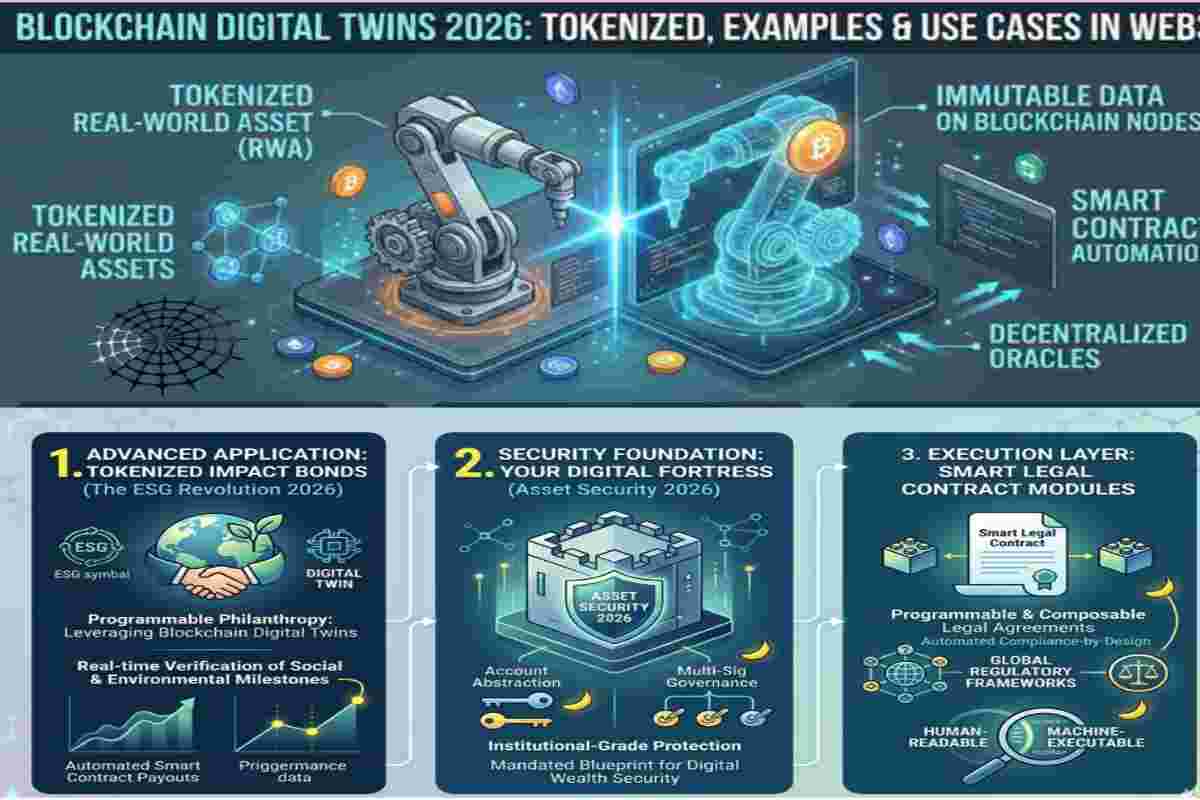
Smart Legal Contract Modules are reusable, programmable legal components that can be combined to form complex agreements. Instead of drafting contracts from scratch, organizations can assemble modular clauses for compliance, payments, governance, and dispute resolution.
This modular approach allows:
It transforms contracts into dynamic systems rather than static documents.
Smart Legal Contract Modules are composable legal logic components deployed as blockchain smart contracts that:
Unlike traditional smart contracts, these modules are:
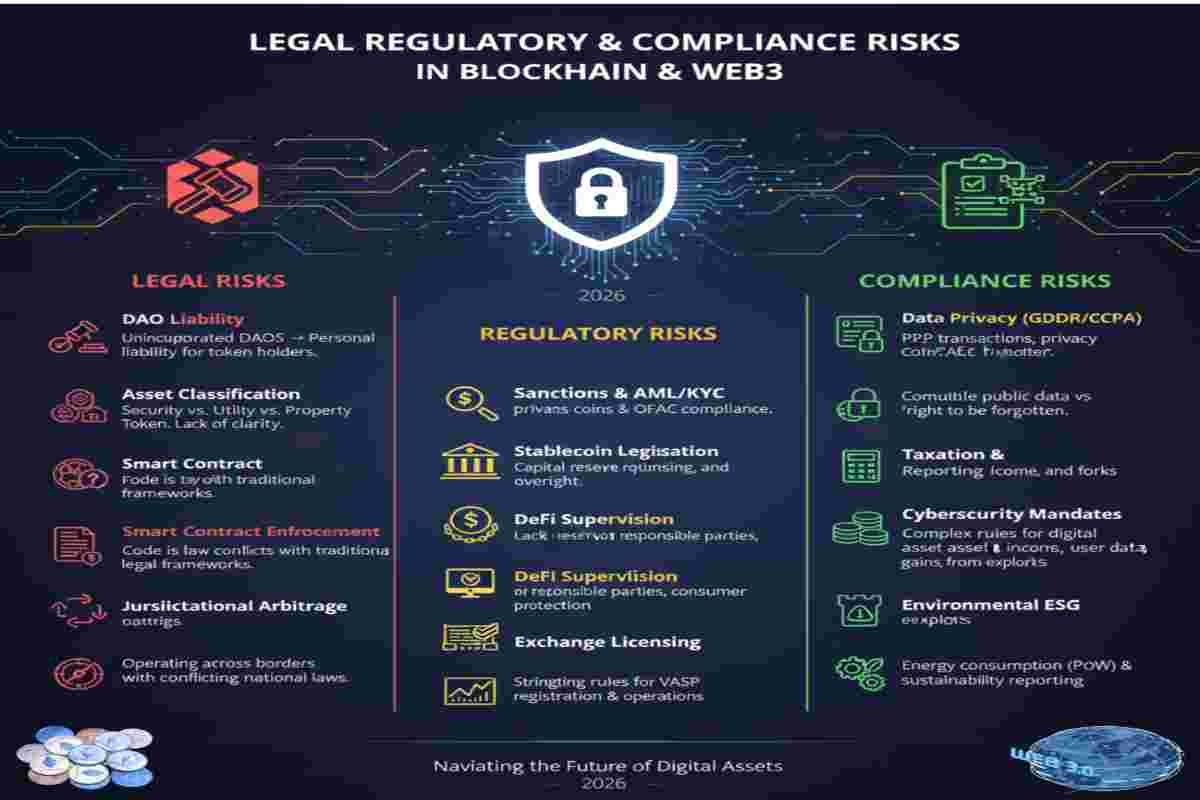
Composable legal contracts function through interconnected modules that execute independently but interact seamlessly.
| Layer | Function | Enterprise Benefit |
|---|---|---|
| Clause Logic Layer | Encodes legal conditions | Eliminates ambiguity |
| Compliance Engine | Verifies regulatory triggers | Reduces legal risk |
| Oracle Trigger Layer | Validates off-chain events | Ensures enforceability |
| Governance Module | DAO voting + execution | Transparent decision-making |
| Cross-Chain Bridge | Multi-network enforceability | Scalable asset transfer |
Traditional Legal Agreement
↓
Clause Segmentation
↓
Smart Legal Modules
→ Compliance Module
→ Oracle Trigger Module
→ Governance Module
→ Settlement Module
↓
On-Chain Execution & Audit Trail
Entire process is:
In 2026, the era of monolithic, “all-in-one” smart contracts has ended. Instead, we use Smart Legal Contract Modules—specialized, pre-verified code snippets that handle specific legal functions like “Force Majeure,” “Late Payment Penalties,” or “Arbitration Triggers.” These modules function as the core protocol layer of a digital agreement. By utilizing a layered blockchain infrastructure, a single contract can pull a “Tax Compliance Module” from one provider and a “Dispute Resolution Module” from another. This multi-chain protocol architecture ensures that if a law changes in one jurisdiction, you only need to update the specific module rather than rewriting the entire agreement. This approach maximizes Capital Efficiency and ensures that Web3 protocol interoperability remains a core feature of every institutional agreement.
| Metric | Traditional Contracts | Smart Legal Modules |
|---|---|---|
| Enforcement Delay | Weeks–Months | Seconds–Minutes |
| Administrative Cost | High | Reduced 30–60% |
| Dispute Frequency | Moderate | Reduced via automation |
| Transparency | Limited | Fully auditable |
One of the most powerful applications is in tokenized real-world assets.
Assets such as infrastructure projects, real estate, and commodities can be tokenized and governed by smart legal contracts.
Traditional infrastructure financing requires:
With smart legal modules:
No manual reconciliation.
No delayed settlement.
| Component | Traditional Model | Smart Legal Module Model |
|---|---|---|
| Ownership transfer | Paper + lawyers | On-chain automated |
| Revenue distribution | Quarterly manual | Real-time trigger |
| Regulatory audit | Periodic | Continuous on-chain |
| Transparency | Partial | Full ledger audit |
Decentralized Autonomous Organizations (DAOs) are redefining governance.
Smart legal contracts enable:
DAO decisions can trigger real-world legal and financial actions without intermediaries, bridging digital governance with enforceable outcomes.
Most DAOs today lack legal enforceability.
Votes happen.
Proposals pass.
Execution often depends on off-chain trust.
Smart Legal Contract Modules change this.
Now governance becomes:
This is especially critical for:
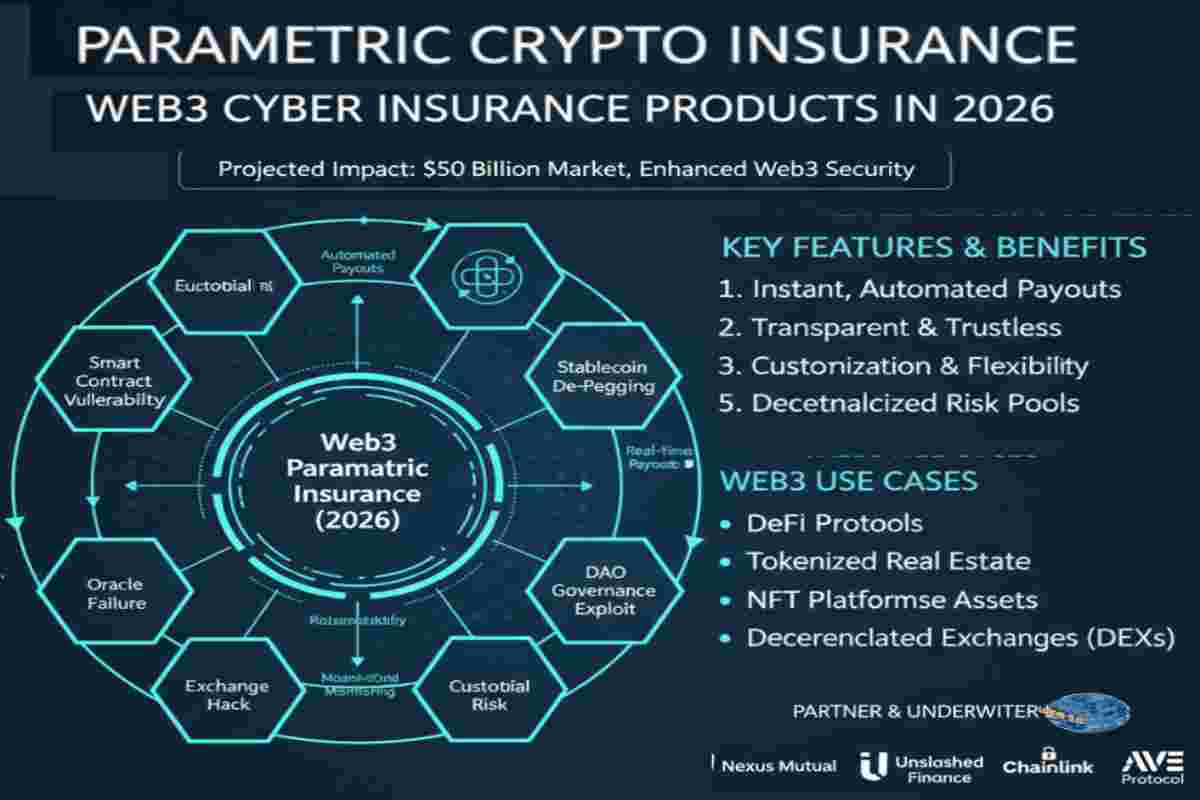
Parametric insurance is another major use case.
Contracts automatically execute payouts when predefined conditions are met, such as weather data or market triggers.
This transforms insurance into a real-time financial instrument.
Parametric insurance relies on:
Smart Legal Contract Modules integrate:
Example:
Flood insurance for smart city infrastructure:
Reduced friction.
Reduced litigation.
Reduced operational cost.
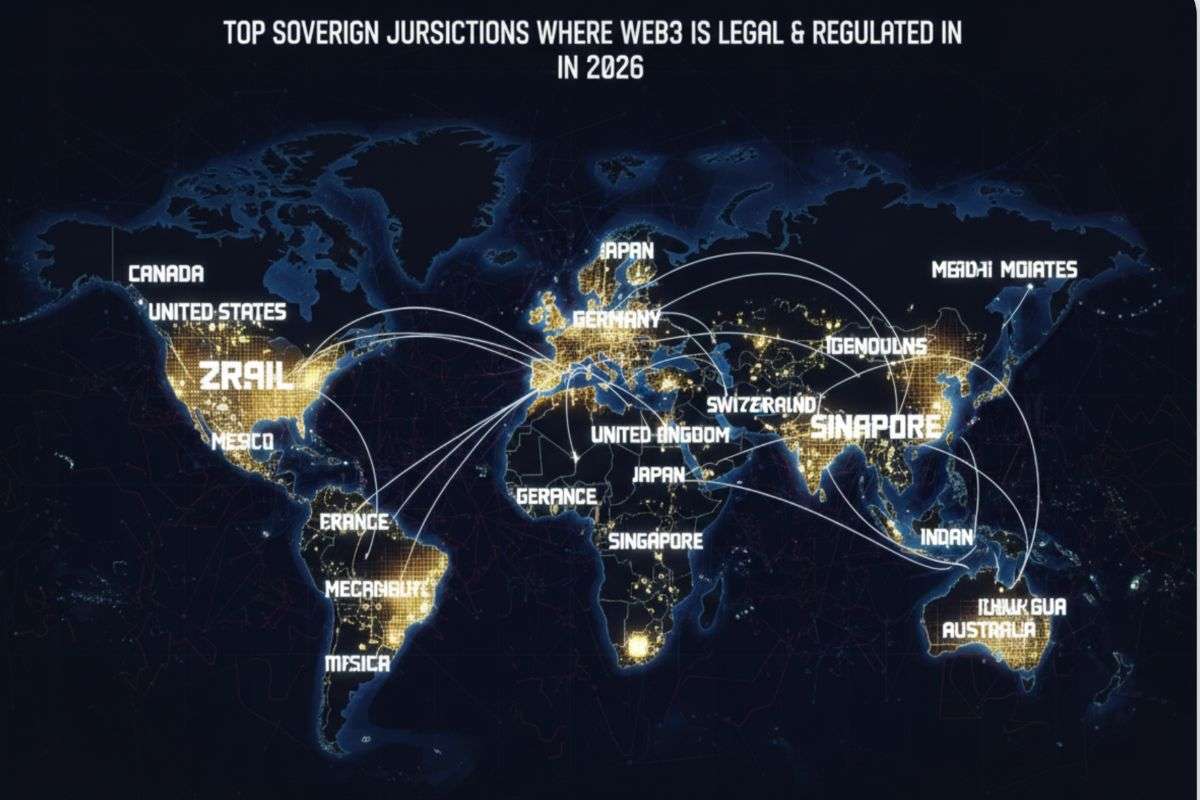
The biggest weakness in blockchain legal systems today is jurisdictional ambiguity.
Smart Legal Contract Modules solve this by layering:
| Layer | Function |
|---|---|
| Jurisdiction Identifier | Assigns governing legal region |
| Compliance Rule Engine | Maps regulatory requirements |
| Conditional Enforcement Module | Activates region-based execution |
| Audit Registry | Stores regulatory proof records |
This enables:
Legal Clause Library
↓
Modular Encoding
↓
Jurisdiction Mapping Layer
↓
Oracle Verification
↓
Compliance Engine
↓
On-Chain Enforcement
A tokenized real estate fund operating across:
Each jurisdiction module enforces:
Same asset.
Different regulatory logic.
One composable legal architecture.
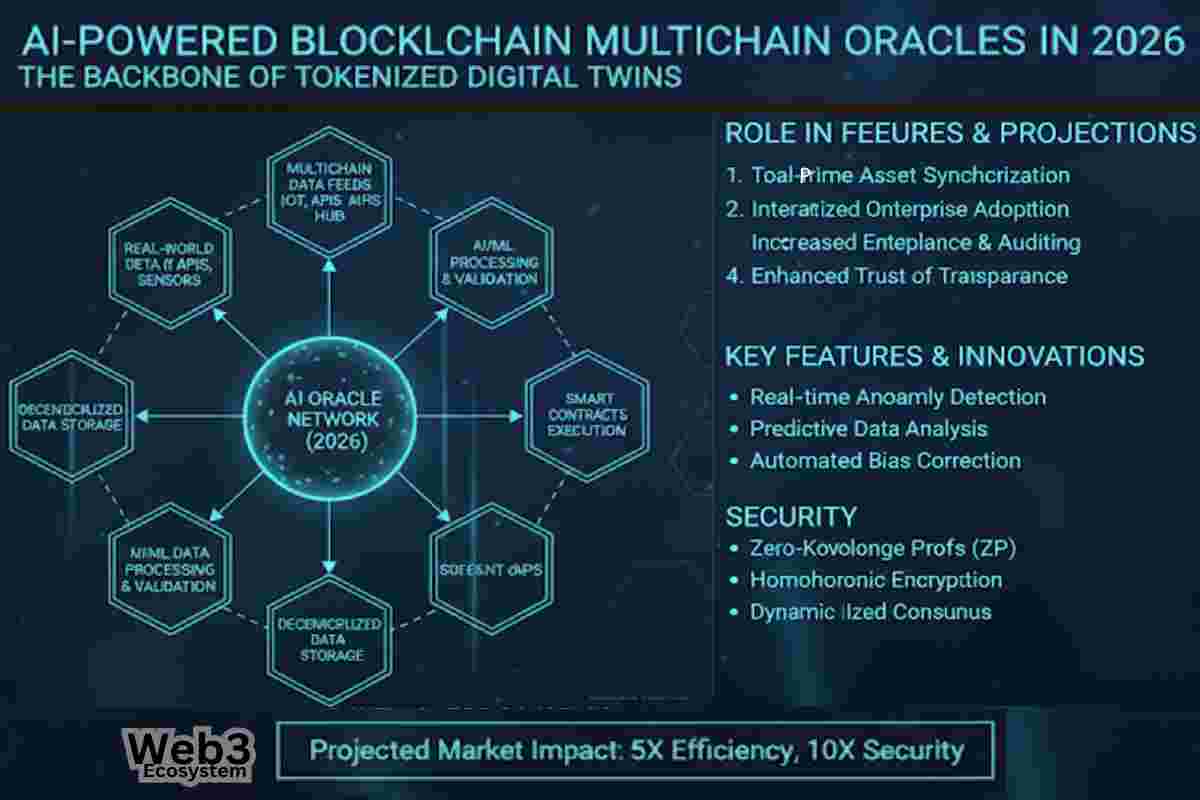
This is where your ecosystem connects.
Smart contracts rely on external data to function effectively.
Smart Legal Contract Modules do not operate alone.
They integrate with:
Physical Asset
↓
Digital Twin Simulation
↓
Oracle Data Feed
↓
Smart Legal Compliance Module
↓
Automated Governance & Settlement
This creates:
A manufacturing plant digital twin detects:
System flow:
No paperwork.
No manual approval.
No delay.
This time we achieved:
These advantages make smart legal contracts a core component of digital transformation strategies.
Smart Legal Contract Modules become powerful when applied to real economic systems. Below are high-impact enterprise implementations where composable legal contracts on blockchain redefine operational control.

No infrastructure is immune to risk. Smart legal systems introduce new operational considerations.
| Risk Category | Description | Mitigation Strategy |
|---|---|---|
| Oracle Failure | Incorrect off-chain data triggers execution | Multi-oracle redundancy |
| Jurisdiction Misalignment | Regulatory conflict across regions | Dynamic compliance engine updates |
| Governance Exploits | DAO manipulation or quorum attacks | Layered voting thresholds |
| Code Vulnerabilities | Smart contract bugs | Formal verification + audits |
The biggest systemic risk is not legal logic — it is incorrect data validation or governance manipulation.
Smart Legal Contract Modules must integrate:
As Smart Legal Contract Modules evolve into Contract-as-a-Service infrastructure, the market expands beyond blockchain startups into institutional finance, infrastructure, insurance, and digital asset governance.
| Segment | 2026 Estimate | 2030 Projection | Growth Driver |
|---|---|---|---|
| RWA Legal Automation | $1.8B | $9–12B | Tokenized infrastructure & bonds |
| DAO Governance Infrastructure | $900M | $5B | Institutional DAO adoption |
| Compliance-as-a-Service | $2.5B | $14B | Regulatory automation demand |
| Oracle-Integrated Legal Systems | $750M | $6B | IoT & digital twin expansion |
Note: Projections based on convergence of blockchain legal tech, RWA tokenization growth, and enterprise automation trends.
By 2030, composable legal contracts on blockchain will not represent a niche Web3 service — they will form the legal backbone of tokenized economic systems.
As enterprises adopt Smart Legal Contract Modules: Composable Legal Contracts on Blockchain in 2026, a new infrastructure model emerges — Contract-as-a-Service (CaaS).
Instead of drafting isolated smart contracts per transaction, institutions deploy a modular legal infrastructure stack that operates as a reusable service layer. This architecture enables programmable compliance smart contracts, tokenized real-world asset legal frameworks, and DAO governance contract automation to function within a standardized environment.
| Layer | Function | Strategic Benefit |
|---|---|---|
| Clause Library Layer | Pre-audited legal clause modules | Reduces drafting friction |
| Compliance Engine | Regulatory mapping & enforcement | Minimizes legal risk |
| Oracle Trigger Interface | Validates off-chain events | Enables automated execution |
| Governance Connector | DAO voting integration | Transparent decision flow |
| Cross-Chain Settlement Layer | Multi-network enforceability | Scalable global deployment |
In this model, legal agreements are no longer static documents — they are programmable service components that can be integrated into:
This transforms legal infrastructure into a reusable, composable product layer — similar to how cloud computing transformed server architecture.
Law becomes an API-driven service, not a manual process.
The evolution of Smart Legal Contract Modules introduces a powerful SaaS monetization model within Web3 legal systems.
As enterprises move toward cross-chain enforceable legal agreements and automated compliance frameworks, opportunities emerge in delivering modular legal infrastructure as subscription-based services.
| Model | Revenue Structure | Target Clients |
|---|---|---|
| Contract Module Subscription | Monthly access to clause libraries | DAOs & Web3 startups |
| Compliance-as-a-Service | Tiered regulatory mapping services | Enterprise tokenization platforms |
| Oracle-Integrated Legal APIs | Usage-based execution fees | Infrastructure & RWA platforms |
| Governance Automation Suite | DAO governance management SaaS | Investment & infrastructure DAOs |
Organizations offering composable legal contracts on blockchain can monetize:
This creates a recurring revenue ecosystem around programmable compliance smart contracts, rather than one-time contract deployment.
In 2026 and beyond, the competitive advantage will not belong to those who simply deploy smart contracts — but to those who productize legal logic as scalable, service-based infrastructure.
This is where executives pay attention.
Not “what is it?”
But “Should we build this internally?”
| Decision Factor | Build In-House | Buy CaaS / SaaS |
|---|---|---|
| Regulatory Complexity | High internal burden | Managed via service layer |
| Development Cost | Significant upfront | Subscription-based |
| Time to Deployment | 12–24 months | 3–6 months |
| Legal Risk Exposure | Internal responsibility | Shared / mitigated |
| Scalability | Limited by internal team | Modular & expandable |
If your organization’s core competency is not programmable legal architecture, adopting a Contract-as-a-Service model reduces risk, accelerates deployment, and preserves capital for core operations.
The real strategic question in 2026 will not be:
“Should we use smart contracts?”
It will be:
“Should we own the legal automation stack — or subscribe to it?”
The competitive moat in Smart Legal Contract Modules: Composable Legal Contracts on Blockchain in 2026 will not be contract deployment — it will be infrastructure control.
The strongest providers will own:
Moat = ecosystem depth + compliance intelligence + integration dominance.
By 2030, Smart Legal Contract Modules will:
We move from:
Legal enforcement after breach –> Automated compliance before breach.”
Institutions adopting composable legal contracts on blockchain gain:

This update integrates the massive institutional shifts of March 2026 into your existing Smart Legal Contract (SLC) framework. The core takeaway for your update is that SLCs have moved from “experimental code” to “federally recognized settlement rails.”
The most significant update for your “Real Example” and “Parametric Insurance” sections occurred on March 9, 2026. Aon plc (NYSE: AON), a $73B global broker, successfully executed the first institutional insurance premium settlement using stablecoin rails.
On March 2, 2026, the Office of the Comptroller of the Currency (OCC) released a 120-page proposal to implement the GENIUS Act of 2025.
For your “Tokenized Real-World Assets (RWA)” section, new data from March 8, 2026, shows that the on-chain value of RWAs has jumped fourfold in the last 12 months, surpassing $26.4 billion.
| Feature | 2025 Standard | 2026 Update (March 19) |
| Enforcement | DAO Consensus | Federal PPSI Oversight |
| Dispute Resolution | On-chain Arbitrator | “Natural Language + Code” Audit (Aon Model) |
| Asset Class | Crypto-Native | Tokenized Industrial RWAs ($26B Market) |
| Regulatory Layer | Unclear / “Grey Market” | OCC / GENIUS Act Compliance |
By 2030, composable legal contracts on blockchain will converge with AI-driven legal reasoning engines.
Future stack evolution:
AI Clause Optimization
↓
Real-Time Regulatory Monitoring
↓
Automated Compliance Adjustment
↓
Self-Updating Smart Legal Modules
Legal agreements will:
The legal layer becomes semi-autonomous — not just executable, but adaptive.
Q1: What are Smart Legal Contract Modules on blockchain?
Smart Legal Contract Modules are composable legal contracts deployed on blockchain that encode legal clauses into programmable compliance smart contracts. Unlike traditional smart contracts, they are modular, jurisdiction-aware, and capable of cross-chain enforceable legal execution for tokenized real-world assets and DAO governance systems.
Q2: Are composable legal contracts legally enforceable?
Yes, enforceability depends on jurisdictional integration and regulatory mapping. When smart legal modules embed governing law metadata and compliance engines, they can function as legally recognized agreements, particularly in tokenized real world asset legal frameworks and automated governance systems.
Q3: How do oracles support smart legal contract automation?
Oracles validate off-chain data such as financial metrics, ESG benchmarks, IoT sensor readings, or compliance events. This enables programmable compliance smart contracts to trigger enforcement, settlement, or governance execution accurately within blockchain environments.
Q4: How are DAOs integrated with legal contract modules?
DAO governance contract automation links voting mechanisms with legally encoded execution logic. Once quorum thresholds are met and oracle conditions validated, smart legal modules enforce outcomes without manual intervention.
Q5: What industries benefit most from composable legal contracts?
High-impact sectors include:
These sectors require automated compliance, transparent auditability, and cross-chain enforceable legal agreements.
Q6: What are the risks of Smart Legal Contract Modules?
Risks include oracle inaccuracies, governance exploits, and smart contract vulnerabilities. Mitigation strategies involve multi-layer validation, formal code audits, compliance upgrades, and security-focused architecture.
Q7: How will Smart Legal Contract Modules evolve by 2030?
By 2030, AI-enhanced legal systems will enable adaptive compliance engines, predictive dispute modeling, and real-time regulatory updates, transforming blockchain legal automation into semi-autonomous legal infrastructure.
To maintain Sovereign Continuity in 2026, legal infrastructure must align with federal standards for digital assets. The OCC (Office of the Comptroller of the Currency) remains the lead architect for the PPSI framework that powers these legal modules. For those conducting deep-dive due diligence on the GENIUS Act and the latest federal rulemaking for “Permitted Activities” involving smart contracts, you can access the official government bulletins and supervision standards directly via the federal portal at http://occ.treas.gov/topics/supervision-and-examination/digital-assets. This level of transparency is the “Gold Standard” for institutional MOVE and OWN operations.
The deployment of Smart Legal Contract Modules is a core component of our Web3 Governance Framework: Sovereign Ownership (2026). While these modules provide the programmable logic for your assets, they must be integrated into a broader strategy to be effective. To see how these contracts facilitate the frictionless transfer of value, explore our MOVE Pillar guide on [Stablecoins Are Now Insurable Money]. If you are looking to secure the governance layer of these contracts against external threats, our SECURE Pillar deep dive on [Smart Contract Audit Protocols] provides the “Defense-in-Depth” strategy needed for high-stakes institutional deployment.
The transition to Smart Legal Contract Modules in 2026 marks the end of “passive” legal documents and the rise of law as a living, breathing infrastructure. By breaking complex agreements into Composable Legal Contracts, organizations can finally achieve the Capital Efficiency that traditional paper-based systems destroyed through manual oversight and human error. As these modules become the definitive standard for On-Chain Compliance, the boundary between a legal obligation and a technical execution disappears. For the SEO CEO, adopting these composable frameworks is no longer an innovation—it is the foundational requirement for securing a Legacy Pillar that is automated, auditable, and globally scalable.
Smart Legal Contract Modules are not an upgrade to contracts.
They are a structural shift from:
Static documentation → Executable legal architecture.
And in an economy driven by tokenized real-world assets, DAOs, digital twins, and automated financial instruments — legal systems must become programmable.
The institutions that modularize law today
will control infrastructure tomorrow.
Welcome to OwnProCrypto (Own & Pro Crypto) — a next-generation Bitcoin and blockchain education platform where the science of finance meets the power of AI-driven automation.
Our mission is simple: to equip you with the knowledge, frameworks, and tools needed to make smarter financial and business decisions in the Web3 economy.
Beyond analysis, OwnProCrypto focuses on transparency, verifiable data, and practical frameworks that investors and builders can actually use. Our goal is not hype — but clear thinking, disciplined analysis, and long-term value creation in the decentralized economy.
Our Background
As part of the Web3 Ecosystem Architecture pillar, this guide focuses on Sovereign Ownership Architecture in Web3. Explore related pillars: