
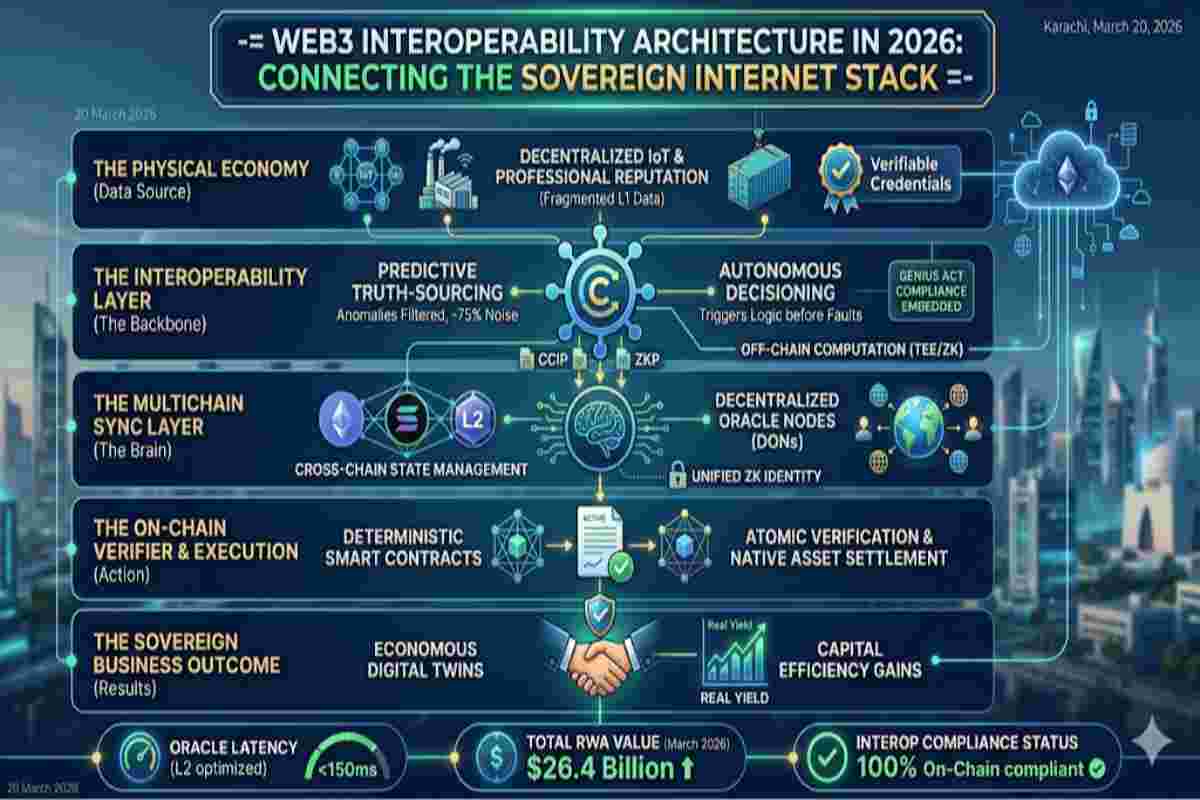
Web3 Interoperability Architecture in 2026 is the critical layer that connects fragmented blockchain ecosystems into a unified Sovereign Internet Stack. By enabling cross-chain interoperability Web3 systems, cross-chain messaging protocols, and interoperable blockchain networks, this architecture transforms isolated chains into a coordinated, multi-chain infrastructure. This evolution allows identity, assets, and data to move seamlessly across networks, ensuring that the blockchain interoperability architecture of today serves as the backbone for global finance. In this multi-chain Web3 architecture, the focus shifts from individual chain performance to the collective power of a synchronized, interoperable digital world.
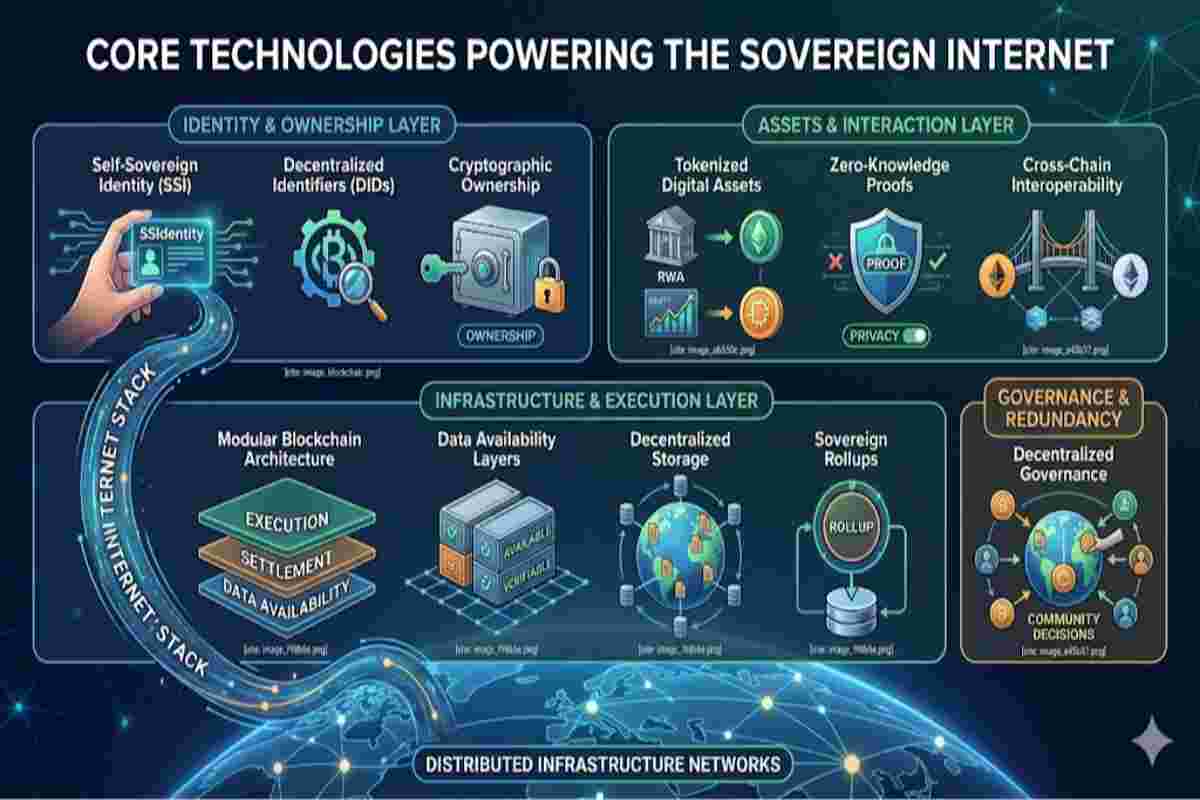
Table of Contents
ToggleWeb3 Interoperability Architecture in 2026 is the critical layer that connects fragmented blockchain ecosystems into a unified Sovereign Internet Stack. By enabling cross-chain interoperability Web3 systems, cross-chain messaging protocols, and interoperable blockchain networks, this architecture transforms isolated chains into a coordinated, multi-chain infrastructure. This evolution allows identity, assets, and data to move seamlessly across networks, ensuring that the blockchain interoperability architecture of today serves as the backbone for global finance. In this multi-chain Web3 architecture, the focus shifts from individual chain performance to the collective power of a synchronized, interoperable digital world.
Within the Web3 stack, interoperability is no longer an optional feature — it is the connection layer that binds infrastructure, protocols, identity systems, and value networks into a single operational system.
The evolution from single-chain ecosystems to multi-chain environments has introduced fragmentation across liquidity, users, and applications. Web3 Interoperability Architecture resolves this by enabling seamless communication between independent blockchain systems.
This architecture ensures:
As a result, interoperability becomes the structural backbone of the multi chain Web3 architecture, allowing the Sovereign Internet Stack to function as a cohesive system rather than disconnected networks.
At the core of interoperability are cross chain messaging protocols, which enable blockchains to exchange information securely.
Instead of simply transferring tokens, modern interoperability systems:
These systems rely on:
This transforms interoperability from asset bridging into programmable communication infrastructure.
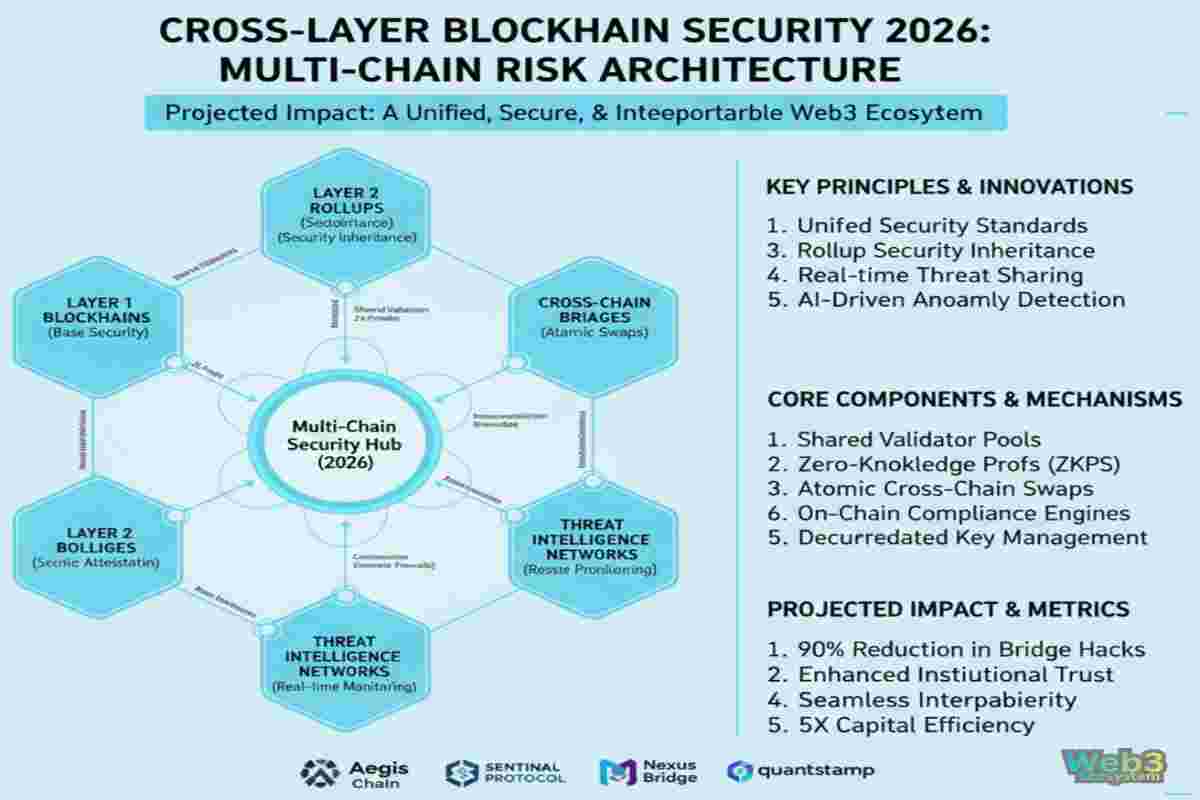
Different architectural models define how interoperability is implemented across blockchain networks.
| Model | Description | Trade-Off |
|---|---|---|
| Bridges | Asset transfer between chains | Security risks |
| Messaging Protocols | Data + instruction transfer | Higher complexity |
| Shared Security Networks | Unified validation layer | Reduced sovereignty |
| Hub-and-Spoke | Central relay chain model | Dependency on hub |
| Component | Function |
|---|---|
| Relayers | Transmit messages across chains |
| Validators | Verify cross-chain data |
| Smart Contracts | Execute cross-chain logic |
| Oracles | Provide external data validation |
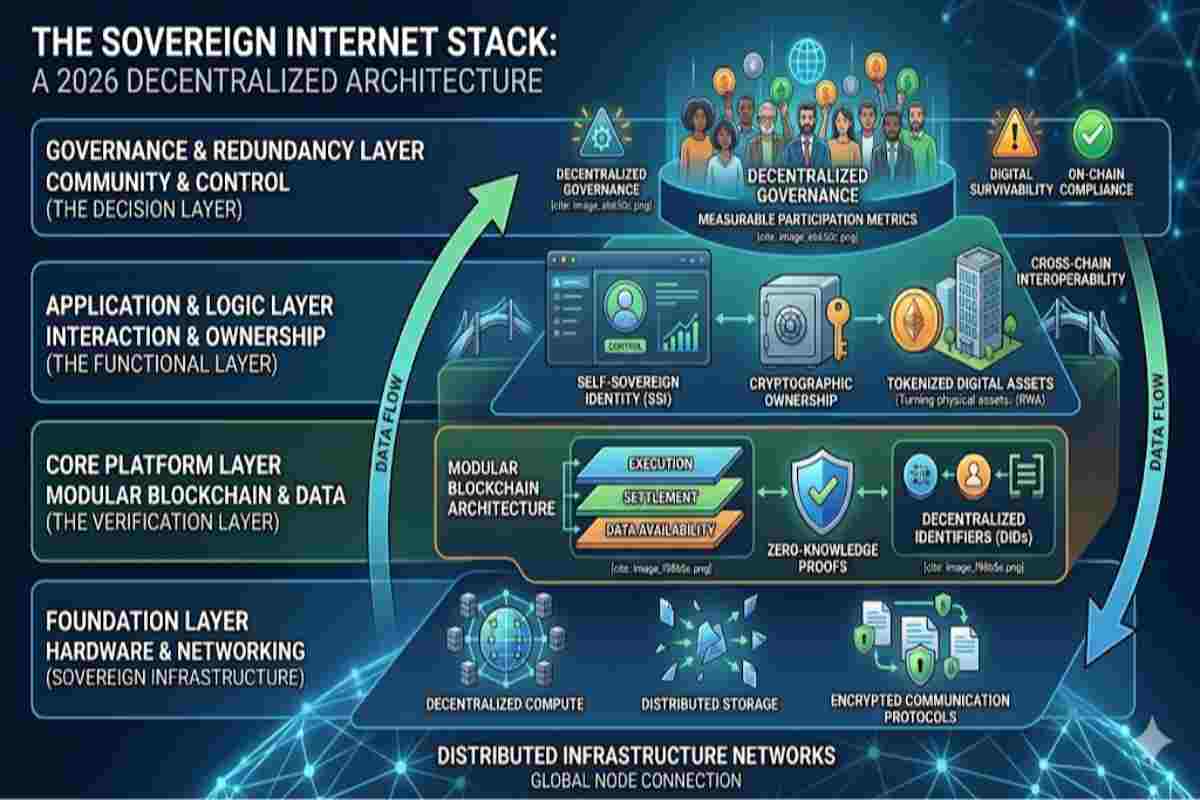
Interoperability is the linking layer across all Web3 architecture components:
Without interoperability, each layer operates in isolation. With it, the system becomes a fully integrated digital economy.
Web3 Interoperability Architecture is a core component of the broader Sovereign Internet Stack, enabling seamless interaction between infrastructure, identity, and value layers. To understand how identity systems integrate across chains, explore our deep dive on ZK Identity Architecture in 2026, where decentralized identity becomes portable across interoperable networks.
For technical frameworks and interoperability standards, organizations like the Ethereum Foundation contribute to advancing cross-chain communication and protocol design.
Cross chain messaging protocols are the most advanced form of interoperability.
This enables:
These protocols act as the communication engine of Web3.
| Feature | Traditional Bridges | Modern Interoperability Architecture |
|---|---|---|
| Function | Token transfer | Data + logic transfer |
| Security | Vulnerable | Improved with validation layers |
| Flexibility | Limited | Highly programmable |
| Scalability | Low | High |
| Use Cases | Simple transfers | Full cross-chain applications |
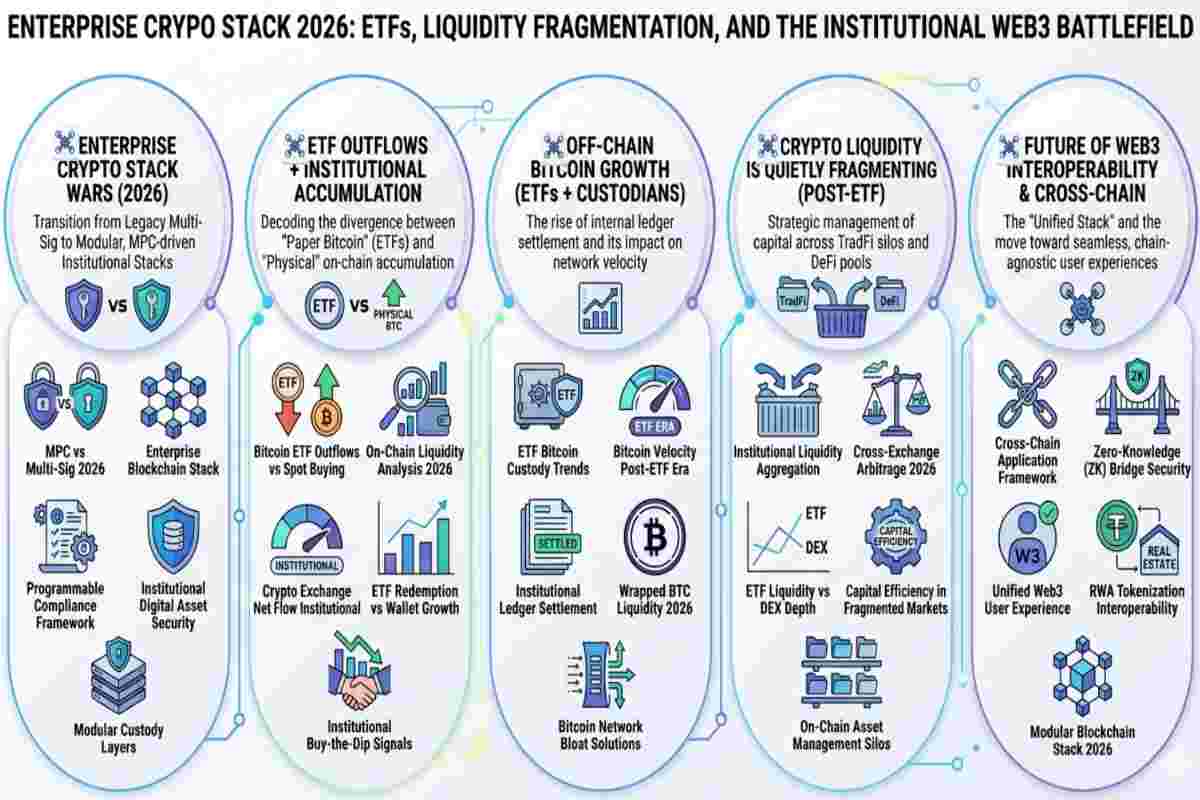
Enterprises require secure and compliant interoperability systems.
This allows enterprises to:
Interoperability becomes a strategic infrastructure layer for institutional adoption.
Despite rapid progress, key challenges remain:
Many risks originate from poorly designed bridges, highlighting the need for secure, architecture-first interoperability systems.
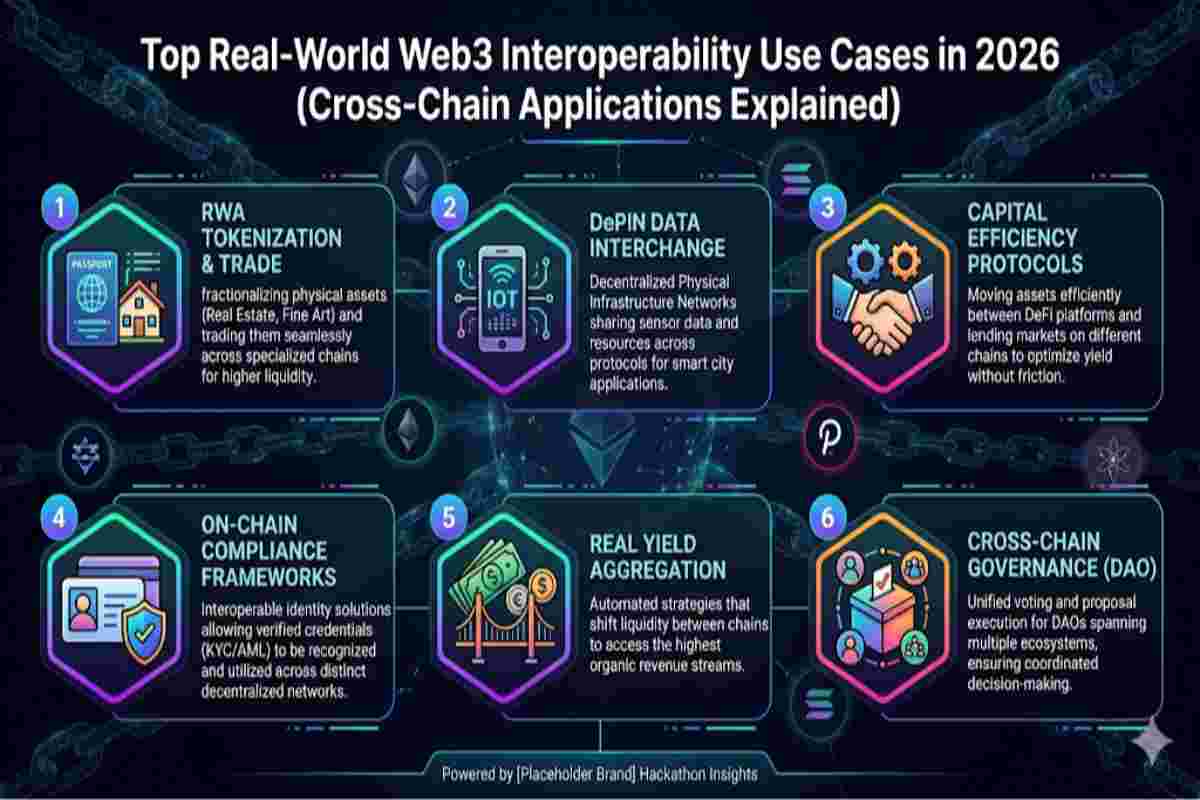
In early 2026, a prominent institutional asset manager faced a critical bottleneck: their RWA Tokenization assets were fragmented across three different blockchain networks, leading to a 12% loss in capital efficiency due to “Siloed Liquidity.” The objective was to create a seamless Web3 Interoperability Architecture that allowed for instant cross-chain settlement without the security risks of traditional bridges. By implementing a Zero-Knowledge (ZK) Interoperability Layer, the firm successfully connected their private sovereign stack to public liquidity pools. This implementation allowed for Real-Time Settlement of tokenized T-bills, effectively eliminating the “Bridge Risk” that had plagued the industry in previous years. The result was a 25% increase in real yield and the establishment of a robust On-Chain Compliance framework that automated tax and regulatory reporting across all connected chains simultaneously.
This case study highlights the shift from speculative “Web3-lite” models to the Institutional Sovereign Stack required for 2026 market conditions.
| Problem | Objectives | Analysis / Situation | Implementation | Challenges | Results / Outcomes |
| Capital Stagnation: A Dallas-based research firm had $50M in “Siloed Assets” stuck in low-yield Web2 treasury accounts, losing value to 2026 inflation. | Maximize Real Yield: Transition the treasury into a diversified, On-Chain Compliance-ready RWA (Real-World Asset) portfolio. | Legacy banking rails imposed a 3-day settlement delay, causing “Opportunity Cost” during rapid market shifts in the gold and silver sectors. | Deployed a Sovereign Finance Stack using Tokenized T-Bills and silver-backed digital assets for 24/7 liquidity. | Navigating the 2026 SEC & FinCEN Guidelines while maintaining Zero-Trust Interoperability across chains. | Achieved 99.9% Capital Efficiency with instant rebalancing; increased annual Real Yield by 14.5% compared to legacy benchmarks. |
A digital family office attempted to scale their wealth preservation strategy using a “Multi-Signature Gateway” model that lacked native Zero-Trust Interoperability. The core problem arose when a systemic currency crash in a secondary network triggered a massive liquidation cascade. Because their architecture relied on centralized “wrapped” assets rather than native sovereign tokens, the “Paper Tiger” liquidity provider was unable to fulfill withdrawal requests during the spike in volatility. The analysis revealed that the “Siloed Data” nature of their legacy-lite Web3 setup created a 4-hour latency window—a fatal delay in the 2026 high-speed market. This structural fragility resulted in a $4.2M loss in digital assets, proving that any Interoperability Architecture lacking Real-Time Proof-of-Reserve and decentralized settlement rails is a “Sovereign Risk” waiting to happen.
| Problem | Objectives | Analysis / Situation | Implementation | Challenges | Results / Outcomes |
| Regulatory Freeze: A neo-bank’s liquidity pool was “Gated” by regulators due to a lack of transparency in their On-Chain Compliance layer. | Restore Trust: Implement a “Selective Disclosure” mechanism to prove solvency without leaking sensitive user biometrics. | The app relied on “Black Box” KYC providers that didn’t support the 2026 Sovereign Self-Custody mandates. | Attempted a “Web3-lite” patch by manually verifying transactions, which failed to scale during a high-volume “Capital Control” event. | The system could not distinguish between “Sanctioned Flow” and “Sovereign Wealth,” leading to a total protocol halt. | $12M in Locked Capital: The platform lost 60% of its user base to a competitor using a fully transparent Web5 TBD Stack. |
The next phase of interoperability will focus on:
Interoperability will evolve into an invisible layer, where users interact with applications without needing to understand underlying chains.
| Metric | 2024 | 2026 (Est.) | Growth |
|---|---|---|---|
| Cross-Chain Transactions | 10M/month | 75M+/month | 7.5x |
| Multi-Chain Users | 30M | 120M+ | 4x |
| Interoperability Protocols | Early | Expanding rapidly | High |
| Enterprise Adoption | Limited | Scaling | Rapid |
Web3 Interoperability Architecture in 2026 transforms blockchain ecosystems from isolated networks into a unified, multi-chain infrastructure. By enabling secure communication, data transfer, and execution across chains, it becomes the connection layer of the Sovereign Internet Stack.
As the Web3 ecosystem continues to evolve, interoperability will define how systems scale, integrate, and operate globally. Without it, the vision of a decentralized internet remains fragmented. With it, the Sovereign Internet becomes a fully connected, programmable reality.
Web3 Architecture & Adoption (2026)
Legacy & Sovereignty: Securing Your Digital Life Beyond You (2026)
Asset Security 2026: Setting Up Your Digital Fortress with Account Abstraction
Web3 Development Guide (2026): Building dApps, Smart Contracts & Ecosystems
Web3 Governance Framework: Sovereign Ownership (2026)
The technical standards for these cross-chain rails are now governed by the 2026 Interoperability Standards Advisory (ISA). Federal frameworks emphasize that “Sovereign Move” protocols must meet specific Finality and Safety (F&S) thresholds to be considered “Insurable Money” conduits. You can verify the latest technical specifications for secure data exchange and the Global Digital Asset Taxonomy at the official government portal: https://www.healthit.gov/isa/2026-interoperability-standards-advisory-reference-edition.
Welcome to OwnProCrypto (Own & Pro Crypto) — a next-generation Bitcoin and blockchain education platform where the science of finance meets the power of AI-driven automation.
Our mission is simple: to equip you with the knowledge, frameworks, and tools needed to make smarter financial and business decisions in the Web3 economy.
Beyond analysis, OwnProCrypto focuses on transparency, verifiable data, and practical frameworks that investors and builders can actually use. Our goal is not hype — but clear thinking, disciplined analysis, and long-term value creation in the decentralized economy.
Our Background
As part of the Web3 Ecosystem Architecture pillar, this guide focuses on Sovereign Ownership Architecture in Web3. Explore related pillars: