
Problem → Shift → Solution → Framework → Outcome → Risks → Signals → Conclusion.
Table of Contents
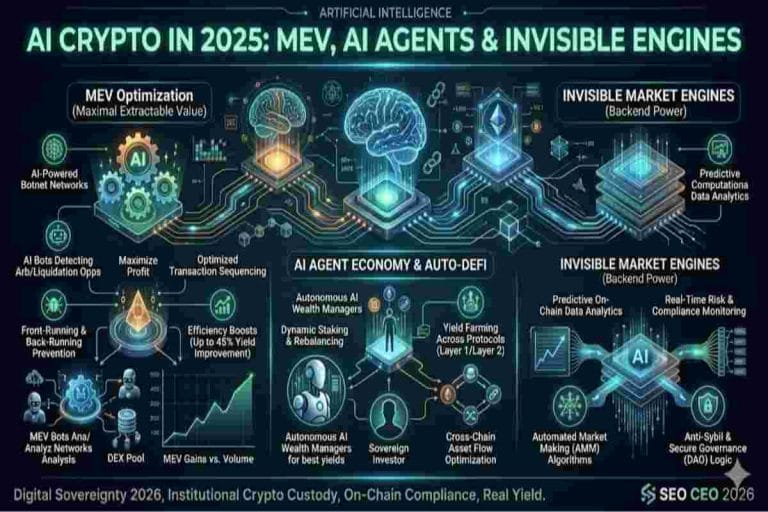
ToggleThe crypto market feels stagnant on the surface — price cycles have flattened, narratives recycled, and attention is fading. But beneath the noise, the real shift is happening in the execution, autonomy, and value layers of blockchain infrastructure, driven by MEV extraction and AI crypto agents that are quietly rewriting how value is captured and executed on chains like Ethereum. In this new era of Artificial Intelligence Crypto, AI-driven agents now compete with AI-powered trading strategies in millisecond decision spaces, turning what was once arbitrary data into structured opportunities and forcing a re-architecture of DeFi execution layers, settlement systems, and the emerging machine economy crypto.
By 2026, markets won’t just move prices — they’ll move themselves, orchestrated by AI agents and invisible execution engines that humans barely understand.
Despite sideways price action across major digital assets, crypto innovation is far from over. What feels like stagnation in BTC, ETH, and altcoin charts is actually a fundamental shift from human-driven markets to machine-native ecosystems.
While narratives like L1s, memecoins, and halving cycles dominate headlines, the real engines of value — execution infrastructure, autonomous AI crypto agents, and invisible market layers — are silently evolving. These layers include MEV extraction, AI agents, and execution protocols that capture value previously invisible to retail traders.
Think of MEV like an MVP (Minimum Viable Product) in crypto: it’s not the full system or the shiny final app — it’s the essential mechanism capturing value efficiently, testing execution strategies, and proving what works in real-time. Instead of humans submitting transactions manually, these “functional prototypes” of execution are constantly optimizing who gets what and when — quietly shaping profits and liquidity at a scale most traders never notice.
In this era of Artificial Intelligence Crypto, AI-driven agents now compete with AI-powered trading strategies in millisecond decision spaces, turning what was once arbitrary data into structured opportunities and forcing a re-architecture of DeFi execution layers, settlement systems, and the emerging machine economy crypto.
This article maps that hidden trajectory, provides a structured framework for understanding the infrastructure stack nobody is pricing in, and highlights the signals most likely to shape the next cycle of crypto innovation and real value capture. These invisible engines are the foundation of the autonomous future we explore in our Web3 Development Guide (2026): Building dApps, Smart Contracts & Ecosystems. Review the latest in AI-blockchain research at DeepMind.
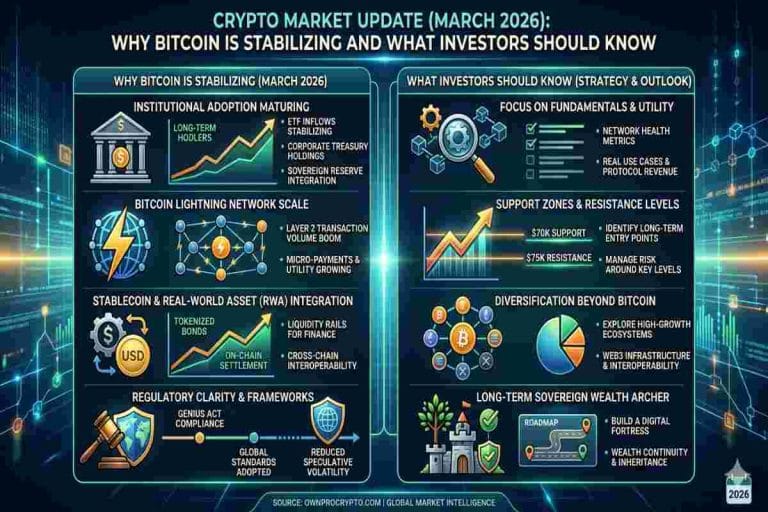
Recent developments highlight the ongoing integration of AI and infrastructure within crypto markets:
These developments suggest that AI agents, MEV-focused infrastructure, and automated execution systems are becoming functional components of the crypto ecosystem, influencing transaction ordering, liquidity flows, and market dynamics.
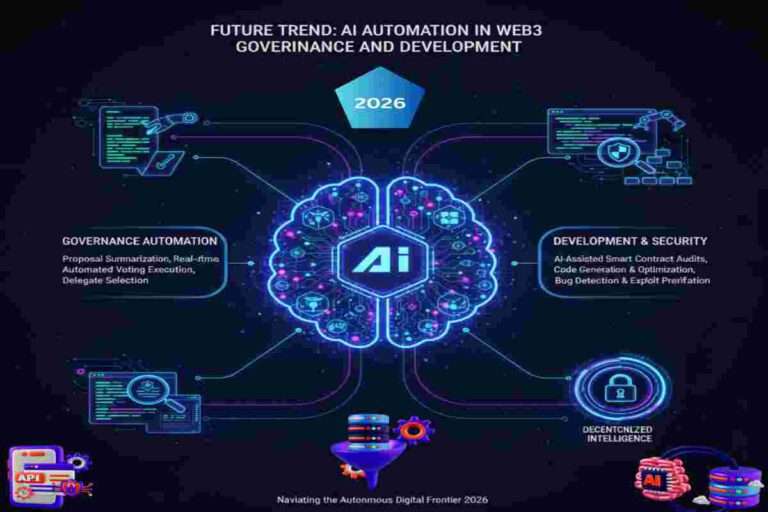
Artificial Intelligence Crypto refers to the intersection where:
This isn’t about generic “AI tokens” or hype cycles — it’s where AI and distributed ledgers converge to automate markets, liquidity movement, and economic activity.
Key points in this new landscape:
This shift is the true invisible infrastructure powering the next phase of crypto — yet it remains underpriced in current markets.
MEV (Miner / Maximal Extractable Value) is no longer just arbitrage, sandwich attacks, or front-running. In AI-native infrastructure, MEV is the economic core of execution layers.
Humans submitting transactions manually are too slow or predictable. Machine participants now shape order flow, capture value at scale, and fundamentally change liquidity, settlement, and profit distribution.
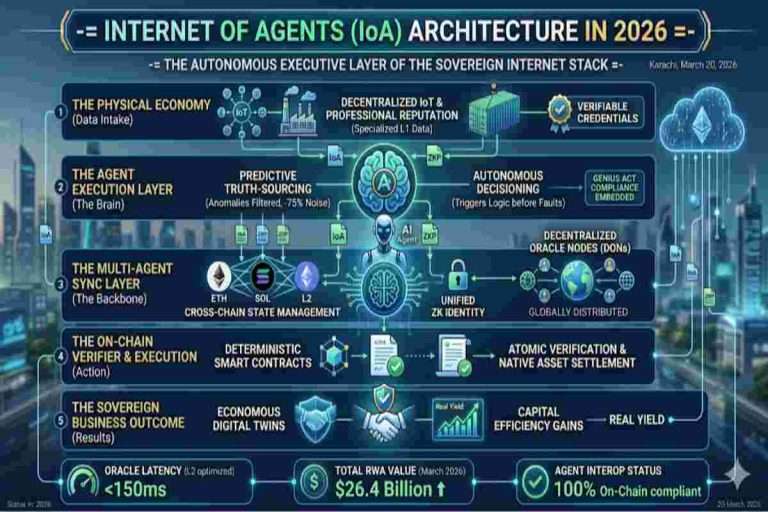
AI crypto agents are autonomous programs that:
They are not simple bots — they think, decide, and act autonomously.
| Feature | Traditional Bot | AI Crypto Agent |
|---|---|---|
| Decision Speed | Slow | Millisecond |
| Strategy | Pre-coded | Self-adaptive |
| Coordination | Individual | Multi-agent |
| Risk Response | Static | Dynamic |
Emerging protocols and servers optimized for agent execution indicate that machine dominance is operational, not theoretical. This is transforming liquidity provisioning, yield optimization, and arbitrage efficiency in 2026.
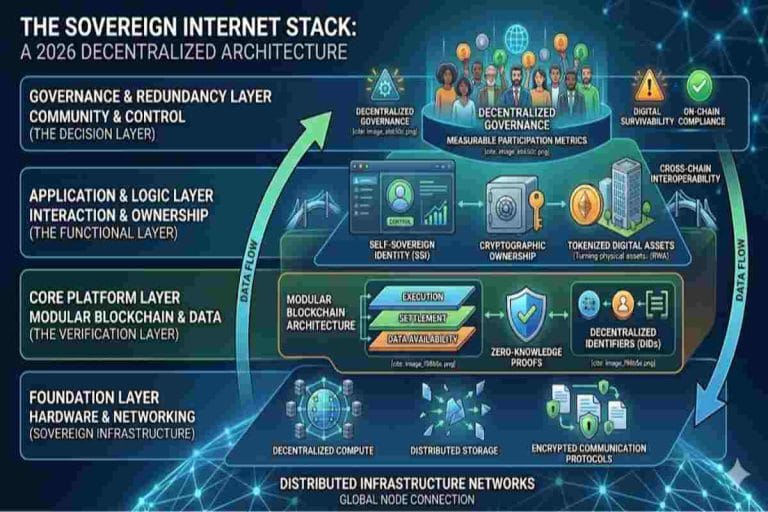
The crypto tech stack has evolved:
Old Stack:
AI-Native Stack:
Ethereum and other chains are being rearchitected to favor high-performance execution stacks that serve autonomous actors. Control of order flow, block timing, and settlement primitives now determines where value accrues — moving from humans to machines.
In early crypto, users drove markets.
Today, when AI agents execute:
Humans become signals, not actors. Execution latency expectations, liquidity provisioning, yield logic, and risk models are now defined by machines. Autonomous agents communicate, collaborate, and optimize beyond human capability — fundamentally reshaping markets.
The broader market still obsesses over:
But execution and machine participation define actual throughput and value capture. Mispricing occurs because:
Early indicators of machine-driven infrastructure hold the real alpha.
| Metric | Value / Trend |
|---|---|
| AI agent market cap (estimate) | ~$15–25B+ |
| Autonomous tasks executed daily | Accelerating rapidly |
| Transactions by automated agents | Rising |
| New MEV-optimized relays | Significant growth |
| AI execution infrastructure funding | Expanding |
The earliest adopters of these systems could shape the next billion-dollar market flows.
The following answers explain real concepts and examples in Artificial Intelligence Crypto. These are educational scenarios and illustrative examples, not financial advice.
Understanding AI Crypto & MEV Basics
Q: What is MEV and why does it matter in AI‑driven markets?
At its core, Maximal Extractable Value (MEV) is the profit opportunity created when actors can decide the order, inclusion, or timing of transactions in a blockchain block. In AI‑native systems, autonomous agents can identify and execute MEV strategies (like arbitrage or liquidations) orders of magnitude faster than humans. This makes MEV a central component of how value is captured in decentralized execution layers and why infrastructure focused on MEV extraction is becoming economically significant.
Q: How do AI crypto agents work compared to traditional bots?
Traditional trading bots follow rigid, pre‑coded logic. In contrast, AI crypto agents use machine learning and adaptive models to analyze both on-chain and off-chain data (prices, liquidity, sentiment) and make decisions dynamically. They can autonomously monitor opportunities, optimize strategies, and execute complex, multi-step actions without human input.
Q: Can AI and MEV tools improve my returns?
Tools that incorporate AI analysis and execution can highlight opportunities like yield optimization or transaction timing, but they do not guarantee returns. For example, a static spreadsheet may miss rapidly changing liquidity spreads; an AI engine could hypothetically flag shifts faster, informing better decisions.
Q: Do tools that integrate AI require access to my private keys?
No. Secure portfolio or yield monitoring can be done read-only using public wallet data. This provides insights and optimization suggestions without exposing private keys or enabling unauthorized transactions.
Q: How do these tools handle MEV protection?
Advanced analytics include MEV-aware routing through private RPCs or shielded channels, helping to reduce slippage and front-running risk. These methods mitigate adverse extraction by other actors but do not eliminate MEV entirely.
Q: What safeguards exist for compliance and risk controls?
Users can set guardrails — for example, restricting AI suggestions to protocols that have passed security audits or only executing strategies within preset risk thresholds. This ensures responsible AI participation.
Q: How does AI strategy differ from traditional bot logic?
Traditional bots execute fixed rules and react to market conditions. AI recommendations use probabilistic modeling and pattern recognition across multiple data sources, anticipating liquidity shifts, volatility, or protocol changes to suggest defensive or optimization pivots.
Q: How does institutional performance analytics help smaller funds?
AI-powered insights analyze capital efficiency, MEV exposure, and execution paths, enabling small funds to access institutional-grade analytics, helping them compete based on execution quality rather than size.
Q: How are off-chain assets (RWA tokenization) integrated?
AI tools can combine off-chain datasets (like real estate appraisals or Treasury yields) with on-chain performance, giving a unified view of portfolio performance while maintaining sovereign asset control.
Q: Can AI-enhanced analytics predict network cost spikes?
Yes. Monitoring mempool congestion, gas prices, and block builder activity allows AI tools to suggest low-traffic windows for more cost-efficient transaction execution.
Transitioning from Manual Analysis to AI-Driven Portfolio Logic
| Problem | Objectives | Analysis / Situation | Implementation | Challenges | Results / Outcomes |
| A Dallas-based wealth office was struggling with “Analysis Paralysis” due to 24/7 market data. | Automate Real-Time Crypto Gain monitoring without losing human oversight. | Their manual Web3 Portfolio Yield Monitor was consistently 4 hours behind MEV-driven price shifts. | Integrated an Artificial Intelligence and Crypto stack to handle data ingestion and risk signaling. | Ensuring the AI respected strict On-Chain Compliance boundaries. | Success: Captured 18% higher Real Yield by executing rebalances during low-latency windows. |
Case Example: Missed Yield Opportunity
A static spreadsheet approach failed to detect a short-lived liquidity shift on a Layer‑2 pool, resulting in a missed ~12% yield event. An AI agent with real-time analytics could have hypothetically flagged the shift in milliseconds.
Case Example: Avoided MEV Losses
Routing transactions through MEV-aware execution layers could have hypothetically saved $4,500 in execution costs by avoiding sandwich attacks typical in public mempools.
Case Example: Cost Optimization
Analytics suggesting low-traffic windows could hypothetically save hundreds of dollars per month in gas fees, illustrating practical efficiency gains.
Final Notes on Use and Expectations
These are structural risks inherent in machine-centric infrastructure and must inform design and regulation.
Artificial Intelligence Crypto isn’t about tokens or altcoin cycles. It’s about:
The invisible engines of AI crypto will decide value capture long before price charts reflect it — understanding them today is your chance to participate in the markets of tomorrow.
This is the next wave of value creation — not because prices pump first, but because systems and machines will decide market outcomes before prices reflect them.
Explore additional insights on Artificial Intelligence Crypto, MEV extraction, and AI-driven markets here :
Welcome to OwnProCrypto (Own & Pro Crypto) — a next-generation Bitcoin and blockchain education platform where the science of finance meets the power of AI-driven automation.
Our mission is simple: to equip you with the knowledge, frameworks, and tools needed to make smarter financial and business decisions in the Web3 economy.
Beyond analysis, OwnProCrypto focuses on transparency, verifiable data, and practical frameworks that investors and builders can actually use. Our goal is not hype — but clear thinking, disciplined analysis, and long-term value creation in the decentralized economy.
Our Background
As part of the Web3 Ecosystem Architecture pillar, this guide focuses on Sovereign Ownership Architecture in Web3. Explore related pillars: