
Table of Contents
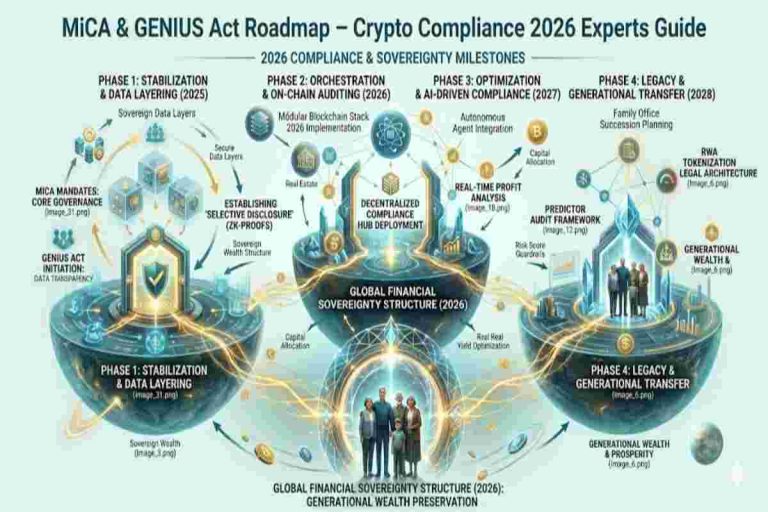
ToggleUnderstanding the MiCA & GENIUS Act Roadmap is essential for every stakeholder in crypto compliance 2026 — from issuers of GENIUS Act stablecoins to service providers adapting to the EU crypto asset rules. As regulators shift from ambiguity to enforcement, the stablecoin regulation MiCA framework and the new U.S. legal standards under the GENIUS Act are redefining how crypto firms operate globally. Navigating these mandates is a core requirement for the structures found in our Web3 Governance Framework: Sovereign Ownership (2026). Stay updated on regulatory shifts via the SEC’s official announcements.
| Feature | MiCA (EU) | GENIUS Act (U.S.) |
|---|---|---|
| Region | European Union | United States |
| Stablecoins | EMT & ART compliance | Federal payment stablecoin standard |
| Licensing | CASP mandatory | Federal and state charters required |
| Reserves | 1:1 backing & transparency | 1:1 liquid assets requirement |
| Enforcement Deadline | July 1, 2026 | Final rules due July 2026 |
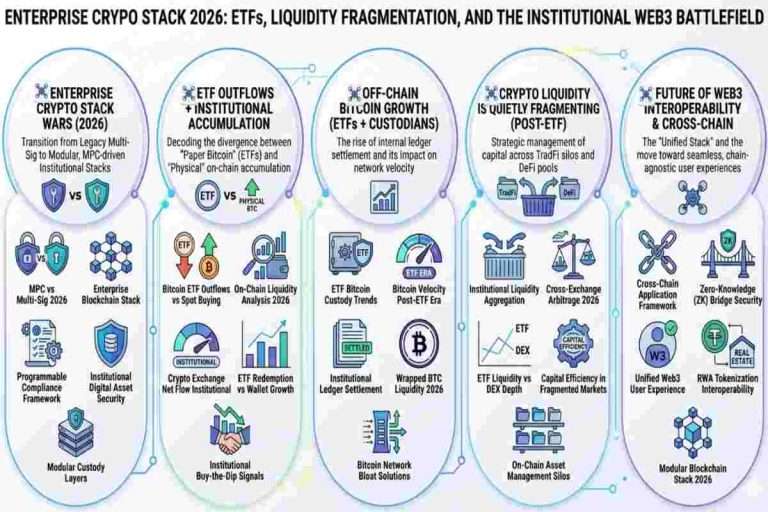
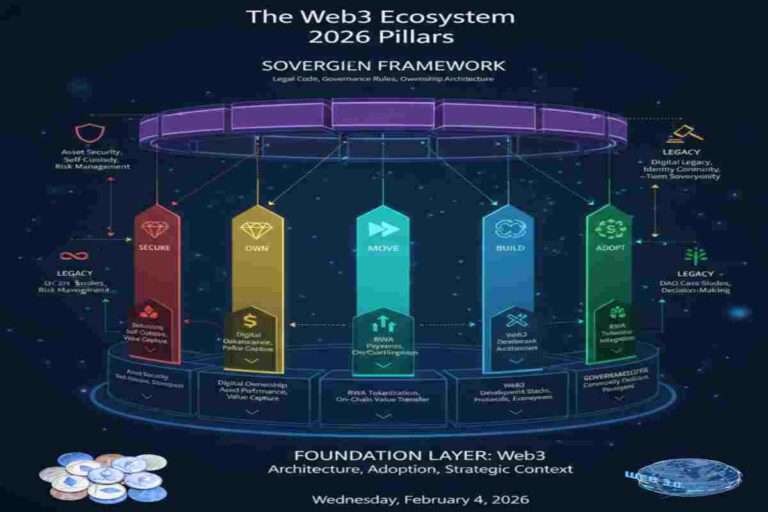
The Web3 ecosystem in 2026 functions as a modular, interoperable network of blockchains, smart contract standards, and governance frameworks. Each article within this blog contributes to understanding how settlement layers, account abstraction, tokenized assets, and decentralized identity systems integrate into a sovereign digital infrastructure.
This research hub explores how Web3 transitions from speculative narratives to scalable institutional architecture — where compliance, capital efficiency, and digital property rights are enforced on-chain.
I. The Core Infrastructure (Build & Connect)
II. Economic Sovereignty (Adopt & Move)
III. The Sovereign Shield (Secure & Govern)
IV. The Human Element (Legacy & Own)

Alex runs a DeFi platform that issues a stablecoin outside regulated markets. Post‑MiCA implementation, Alex must obtain CASP licensing or risk EU market exclusion. Under the MiCA & GENIUS Act Roadmap, Alex evolves from ad‑hoc compliance to structured systems — integrating AML, KYC, transaction monitoring, and reserve audits that attract institutional liquidity and partnerships.
Maria manages a digital asset fund. She prioritizes assets compliant with the GENIUS Act stablecoins standard and MiCA rules, driving portfolio allocation toward regulated USDC and euro‑compliant tokens. Regulatory certainty becomes key for risk management and fiduciary duty.

Circle adapted early to global compliance standards by publishing transparent reserve audits and aligning issuer structures with both MiCA and GENIUS Act expectations. This positioned USDC as a preferred compliant asset for global payments.
Without transparent 1:1 reserve backing, some exchanges restricted USDT under MiCA’s enforcement. Issuers who delayed compliance faced market access restrictions and loss of institutional partners.
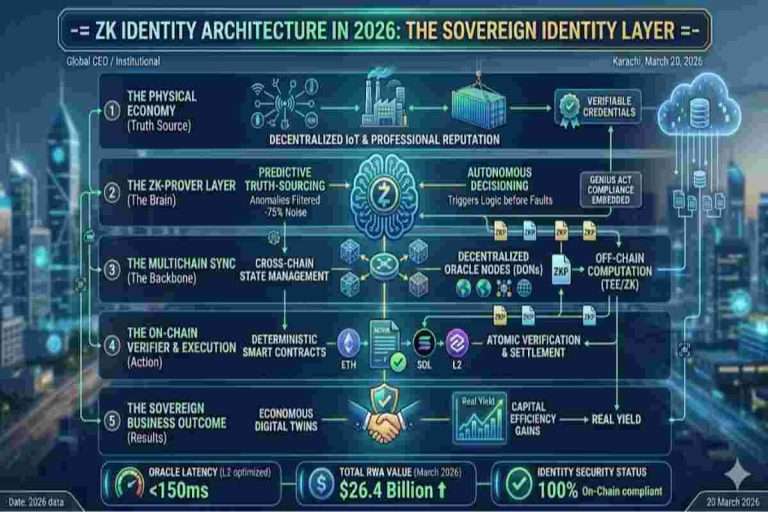
Looking beyond 2026, regulators worldwide will likely harmonize rules further — integrating privacy‑preserving compliance tech (e.g., zk‑KYC), real‑time monitoring, and cross‑border data reporting. Standards like MiCA and the GENIUS Act Roadmap are foundational for the next decade, shaping not just rules but crypto’s integration with traditional financial systems.
The MiCA & GENIUS Act Roadmap has transformed 2026 into a regulatory turning point for crypto, stablecoins, and digital asset infrastructure. Understanding these frameworks isn’t just compliance — it’s a competitive advantage in a maturing market.
For deep study do follow: European Securities and Markets Authority (ESMA) – https://www.esma.europa.eu
1. What is the MiCA & GENIUS Act Roadmap?
The strategic timeline and requirements for EU’s MiCA and U.S. GENIUS Act regulations governing crypto compliance in 2026.
2. When does MiCA fully enforce stablecoin rules?
MiCA stablecoin compliance is mandated by July 1, 2026.
3. What are GENIUS Act stablecoins?
Stablecoins issued under U.S. federal standards with 1:1 reserve and legal backing.
4. What does EU crypto asset rules cover?
Licensing, transparency, capital requirements, and AML/KYC standards for crypto firms.
5. How does crypto compliance 2026 affect exchanges?
Exchanges must enforce AML, KYC, and delist non‑compliant tokens.
6. Do DeFi projects fall under MiCA?
If they act as intermediaries or service providers, yes.
7. What are proof‑of‑reserves?
On‑chain and audit evidence that a stablecoin holds required backing.
8. Can private crypto firms ignore these regulations?
No — non‑compliance risks fines, market bans, and legal exposure.
9. How does this affect retail holders?
Retail investors benefit from safer assets and consumer protection.
10. What’s next after MiCA & GENIUS Act?
Global alignment on KYC, cross‑border AML, privacy‑preserving proof systems.
Welcome to OwnProCrypto (Own & Pro Crypto) — a next-generation Bitcoin and blockchain education platform where the science of finance meets the power of AI-driven automation.
Our mission is simple: to equip you with the knowledge, frameworks, and tools needed to make smarter financial and business decisions in the Web3 economy.
Beyond analysis, OwnProCrypto focuses on transparency, verifiable data, and practical frameworks that investors and builders can actually use. Our goal is not hype — but clear thinking, disciplined analysis, and long-term value creation in the decentralized economy.
Our Background
As part of the Web3 Ecosystem Architecture pillar, this guide focuses on Sovereign Ownership Architecture in Web3. Explore related pillars: