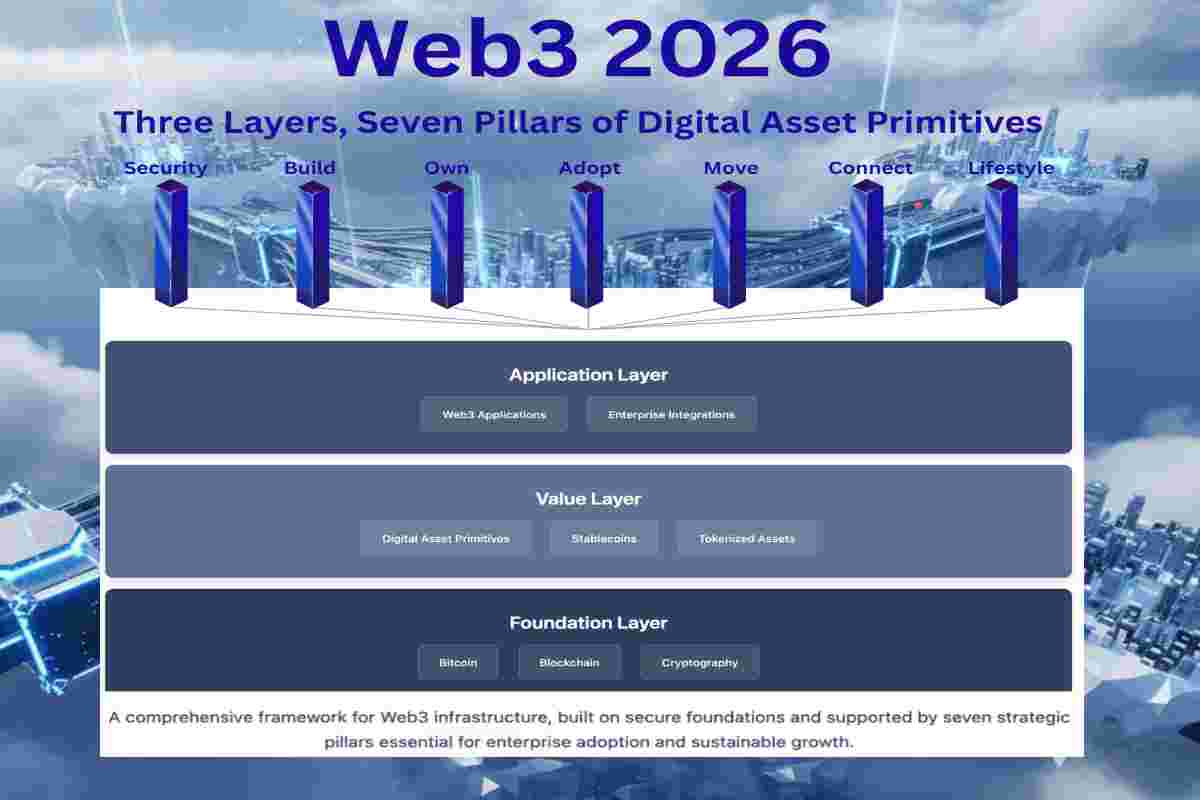
Web3 Architecture : Adoption & Strategic Impact (2026)
Welcome to Web3 Web3 Architecture in 2026 – Imagine an internet not owned by tech giants, but secured by blockchain networks and governed by its participants. In 2026, the Web3 ecosystem represents a mature decentralized digital economy powered by smart contracts, tokenized assets, decentralized finance (DeFi), DAO governance, and interoperable Layer 1 and Layer 2 infrastructure. Unlike Web2’s centralized platforms, Web3 operates on permissionless blockchain architecture where identity, liquidity, and value transfer are cryptographically verified and executed on-chain.
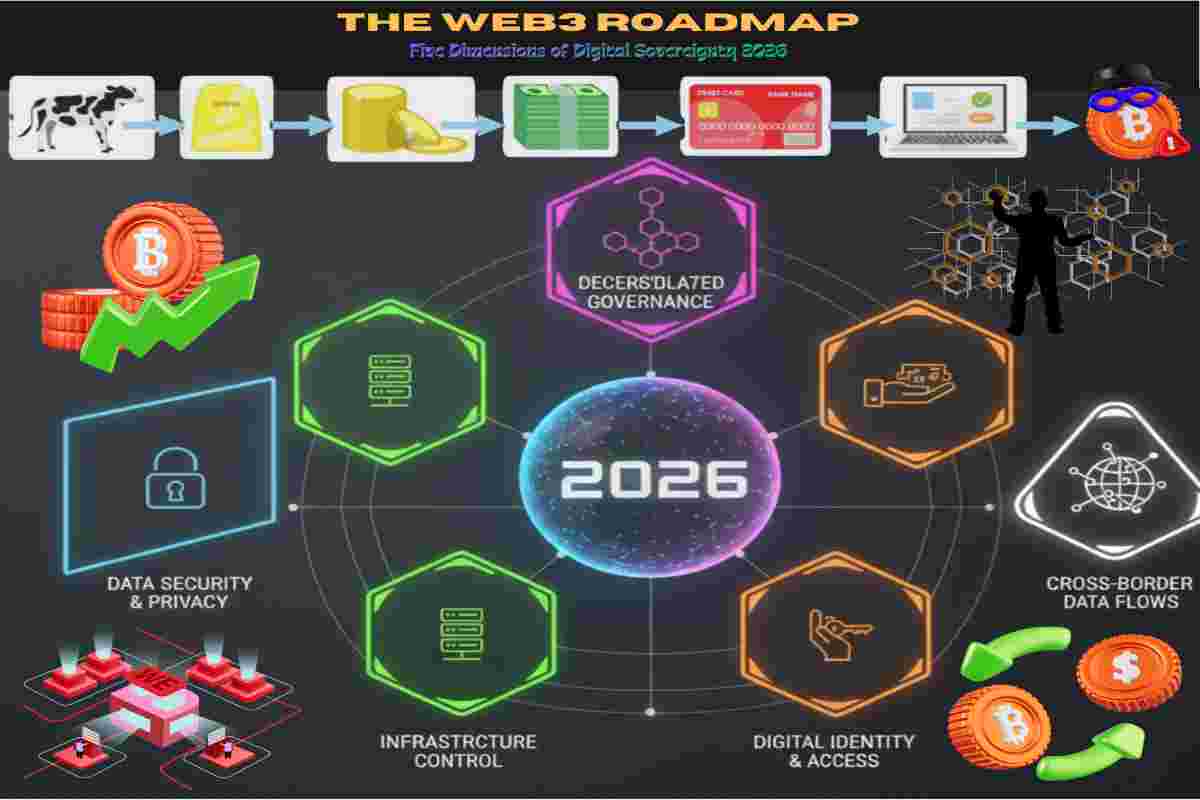
Adoption has expanded beyond crypto-native communities into enterprise blockchain integration, real-world asset (RWA) tokenization, stablecoin settlement, decentralized identity (DID), and compliant digital asset frameworks. Strategically, Web3 reshapes capital formation, digital ownership, programmable compliance, and global payment rails — shifting users into stakeholders within transparent, incentive-aligned networks. In 2026, the Web3 Architecture is not experimental infrastructure; it is a coordinated economic layer driving decentralized governance, institutional participation, and distributed value creation at scale.
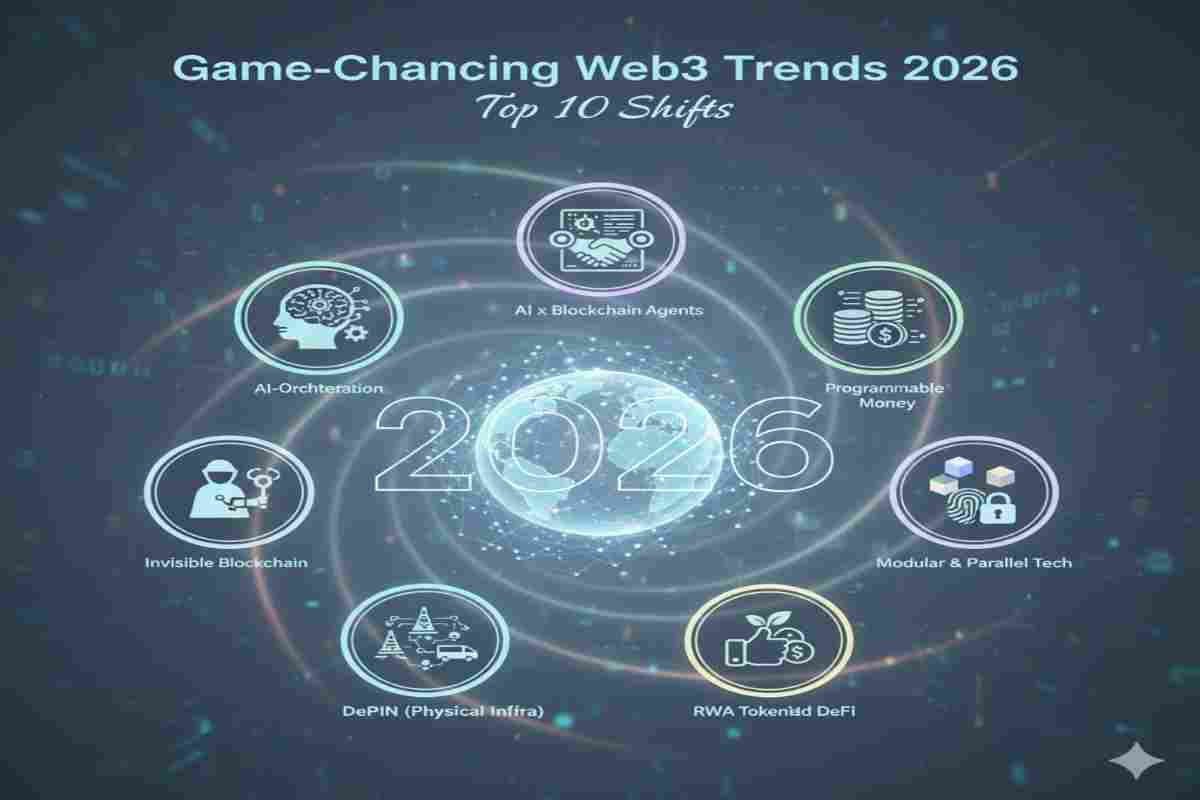
By 2026, Web3 has moved beyond experimentation into operational maturity and institutional integration. It now functions as:
- Institutional-grade blockchain settlement infrastructure
- Decentralized identity (DID) and verifiable credential ecosystems
- Real-world asset (RWA) tokenization frameworks
- Global liquidity networks and blockchain-based payment rails
- DAO-driven governance and on-chain coordination systems
- Interoperable Layer 1 and Layer 2 scaling environments
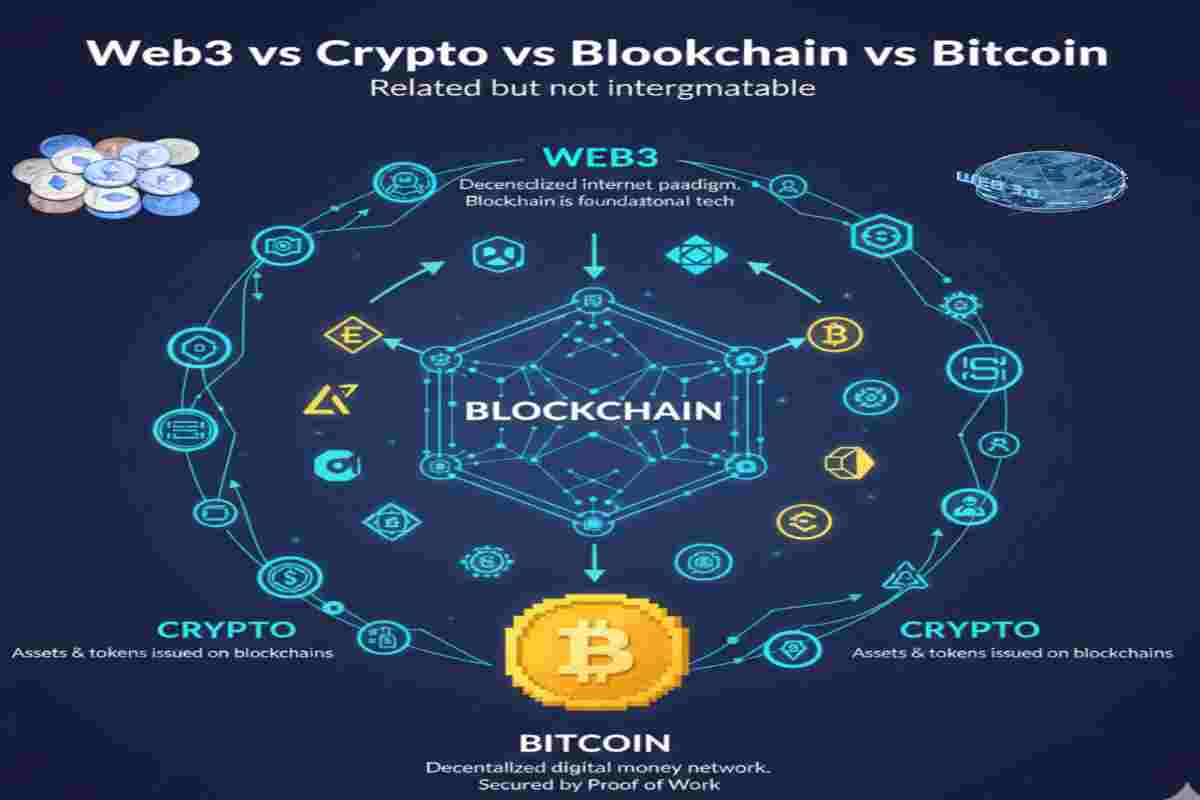
Web3 Ecosystem vs. Architecture: Why the Difference Matters for Investors.
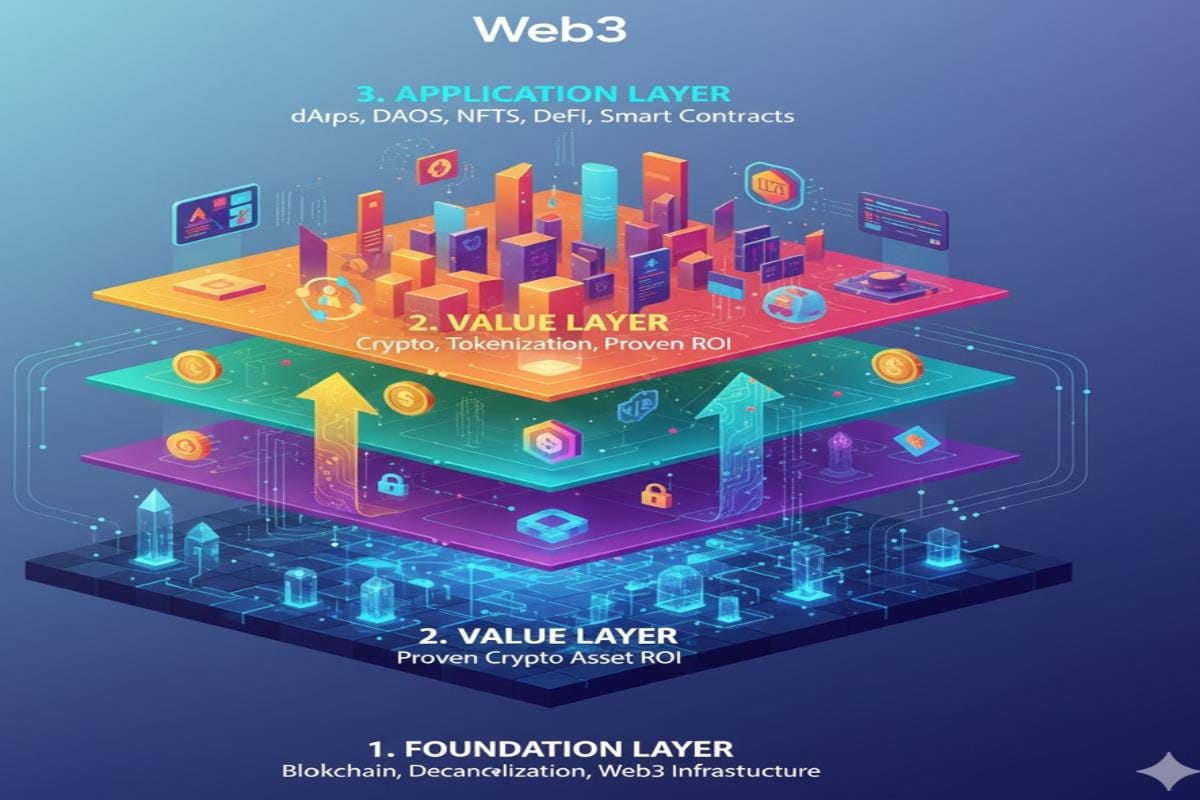
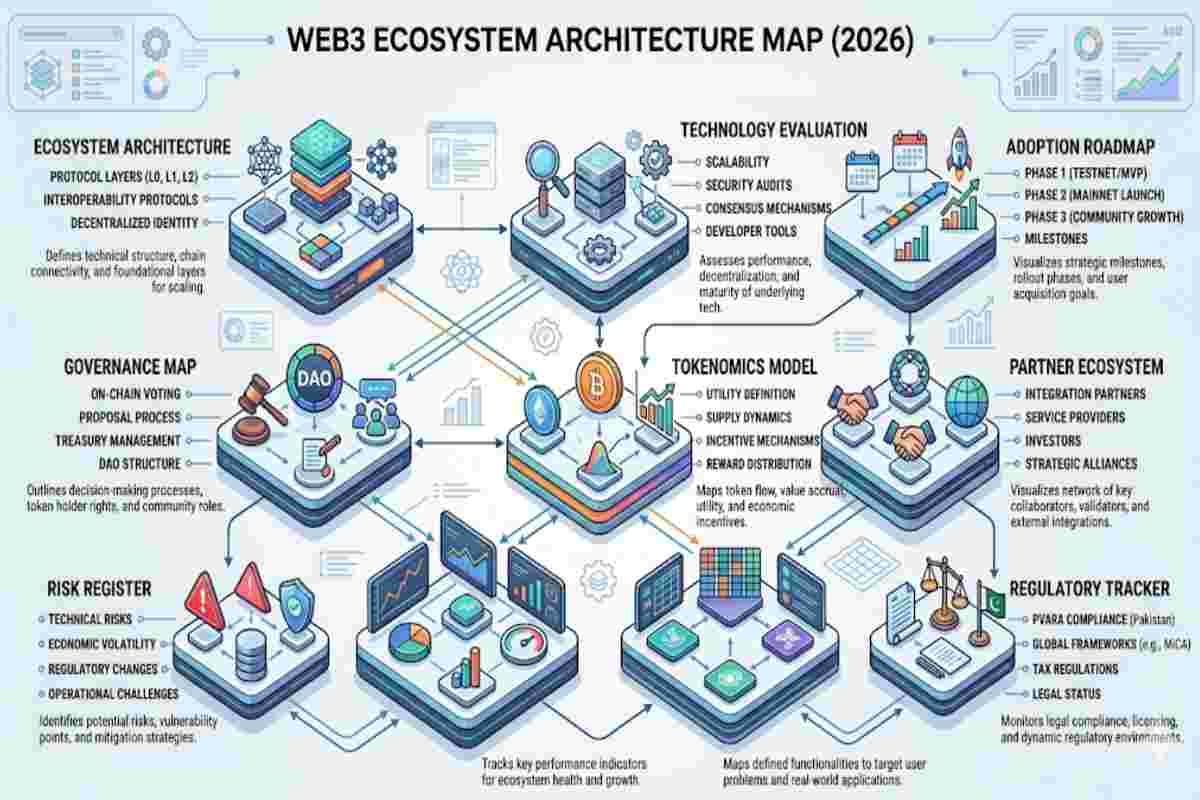
Web3 architecture refers specifically to the technical foundation — blockchain protocols, consensus mechanisms, smart contract execution layers, validator networks, cryptographic security, decentralized storage, and interoperability frameworks. It explains how decentralized systems function, how transactions are validated, and how trust is minimized without intermediaries.
The Web3 Architecture by contrast, is the broader economic and governance environment built on that architecture. It includes dApps, DeFi protocols, DAO coordination, token economies, digital asset markets, liquidity networks, and enterprise adoption. In simple terms, architecture is the infrastructure stack; the ecosystem is the decentralized economy operating on top of it. You can analyze Web3 architecture purely from a technical lens, but the Web3 ecosystem reflects how that infrastructure enables real-world adoption, capital efficiency, digital sovereignty, and strategic transformation in 2026. ↓ Jump to 2026 Web3 Strategy: Expert FAQs & Troubleshooting.