Contents Outline
Table of Contents
ToggleIn a world of rising uncertainty, global mobility, and rapid technological change, families are rethinking wealth beyond just money. The concept of generational sovereignty—the ability to preserve, grow, and govern wealth across generations with independence and purpose—is reshaping how long-term legacy is built.
As this shift accelerates, many are searching for answers to the top FAQs of generational sovereignty, along with deeper insights into family office FAQs, generational wealth planning questions, and how a digital family office is explained in today’s evolving financial landscape.
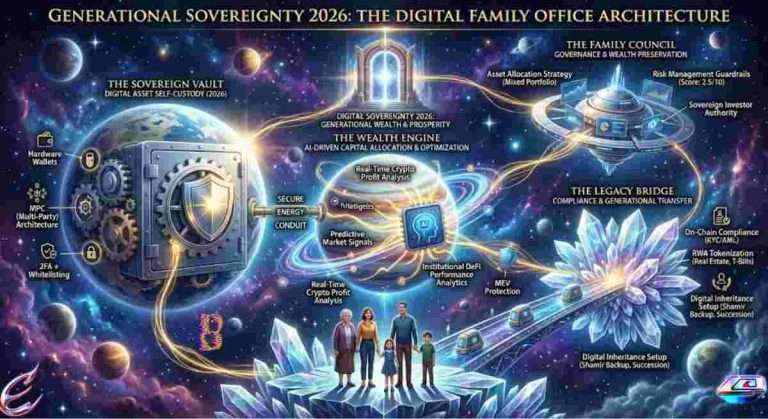
At the center of this transformation is the digital family office: a modern, technology-enabled framework that integrates investments, governance, security, and succession into one cohesive system.
This guide compiles 100 high-value FAQs, structured to help you understand, build, and scale a sovereign wealth system in 2026 and beyond. These answers provide the tactical clarity needed for the larger structures found in our Legacy & Sovereignty: Securing Your Digital Life Beyond You (2026). Consult the Society of Trust and Estate Practitioners (STEP) for international standards.
A digital family office is a centralized, technology-driven system that manages wealth, governance, investments, and legacy planning across generations. It replaces fragmented advisory models with integrated platforms. –> Read more: https://ownprocrypto.com/web3-ecosystem-explained/
Generational sovereignty refers to a family’s ability to control, protect, and transfer wealth independently across generations without over-reliance on external institutions. –> Deep dive: https://ownprocrypto.com/legacy-sovereignty/
Wealth management focuses on investments, while a family office integrates governance, succession, tax strategy, and long-term legacy planning.
Traditionally ultra-wealthy families, but now founders, crypto investors, and globally mobile individuals are adopting digital-first models.
Typically $10M+, but digital infrastructure has lowered entry barriers significantly.
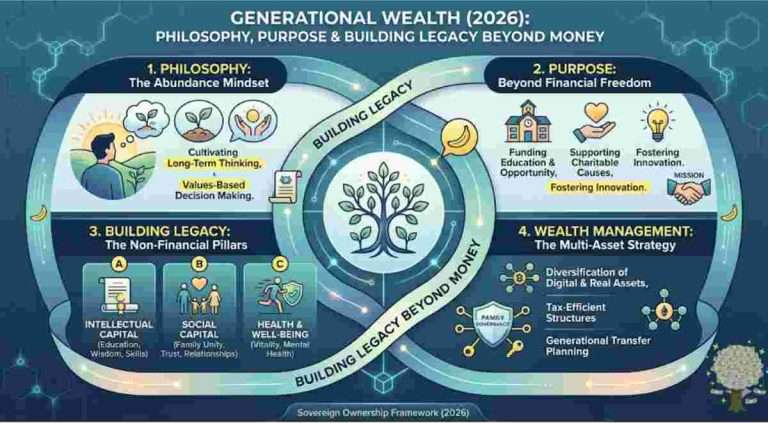
It is the structured approach to preserving and growing wealth across multiple generations using governance, investment strategy, and education.
Because of weak governance, lack of financial education, and absence of structured decision-making systems.
Legacy wealth now includes capital, knowledge, systems, and values—not just financial assets.
It means controlling assets, identity, and financial systems independent of centralized risk.
Spreading assets and legal structures across multiple countries to reduce risk.–> Macro context: https://ownprocrypto.com/global-asset-decoupling/
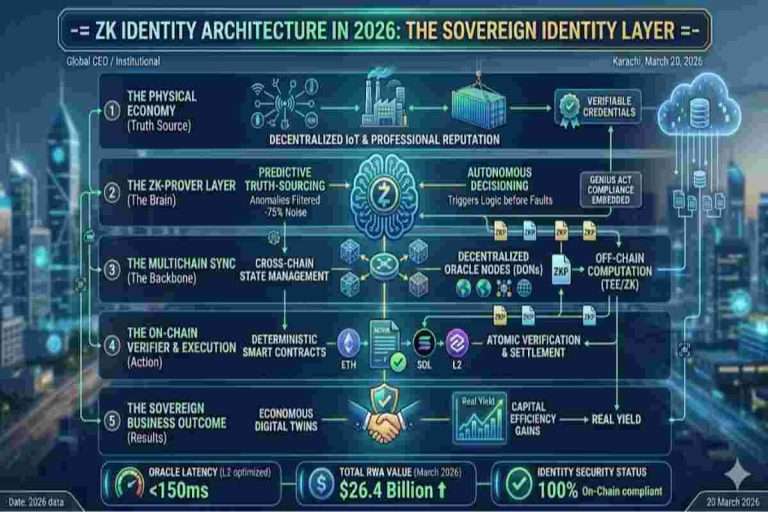
It ensures secure access, ownership verification, and inheritance control.
See: https://ownprocrypto.com/zk-identity-architecture/
A self-controlled identity system that removes reliance on centralized authorities.
Digital identity enables secure ownership, access control, and inheritance of digital assets.
It ensures secure access, ownership verification, and inheritance control.
See: https://ownprocrypto.com/zk-identity-architecture/
A self-controlled identity system that removes reliance on centralized authorities.
Digital identity enables secure ownership, access control, and inheritance of digital assets.
By combining legal entities, governance frameworks, and investment structures aligned with long-term goals.
A hybrid model using trusts, holding companies, and digital asset custody systems.
Trusts offer protection; holding companies offer control. Most advanced families use both.
Stable, legally secure, and tax-efficient jurisdictions with strong financial infrastructure.
Through layered structures, multi-jurisdiction exposure, and secure custody systems.
A long-term plan designed to sustain wealth beyond multiple generations using governance and compounding.
Hybrid models provide both control and resilience.
A blockchain-based system where assets are controlled via smart contracts.
By designing flexible, tech-enabled, and jurisdictionally diversified systems.
Yes, due to long-term growth and reduced short-term volatility.
By allocating to Bitcoin, real estate, commodities, and real-yield assets. Read: https://ownprocrypto.com/bitcoin-as-a-macro-hedge/

Through diversification, disciplined investing, and strong governance.
Public equities, private markets, real estate, crypto, and tokenized assets. –> See: https://ownprocrypto.com/rwa-tokenization/
A digital family office runs on Web3 infrastructure, including blockchain networks, smart contracts, digital identity systems, and secure data layers that enable ownership, control, and automation of wealth.
Read: https://ownprocrypto.com/web3-ecosystem-explained/
Web3 enables direct ownership, programmable assets, and decentralized control, removing reliance on traditional intermediaries.
A layered system including custody, identity, governance, and capital allocation tools built on blockchain.
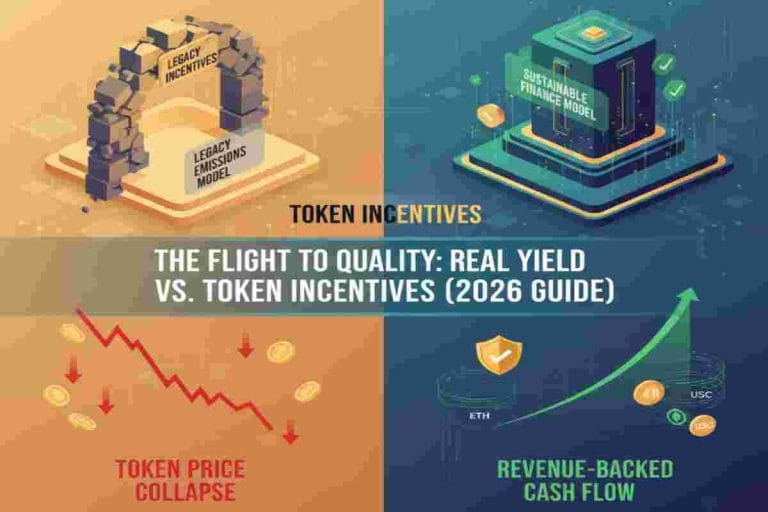
Income generated from actual economic activity, not token incentives. –> Guide: https://ownprocrypto.com/real-yield-vs-token-incentives/
Critical—it reduces risk across markets, currencies, and systems.
A globally diversified portfolio designed for independence and resilience.
By balancing long-term investments with accessible capital reserves.
Crypto acts as a hedge, growth asset, and financial infrastructure layer.
Assets outside traditional markets like private equity, venture capital, and tokenized assets.
They automate execution of financial agreements, governance decisions, and asset transfers.
Learn: https://ownprocrypto.com/smart-legal-contract-modules/
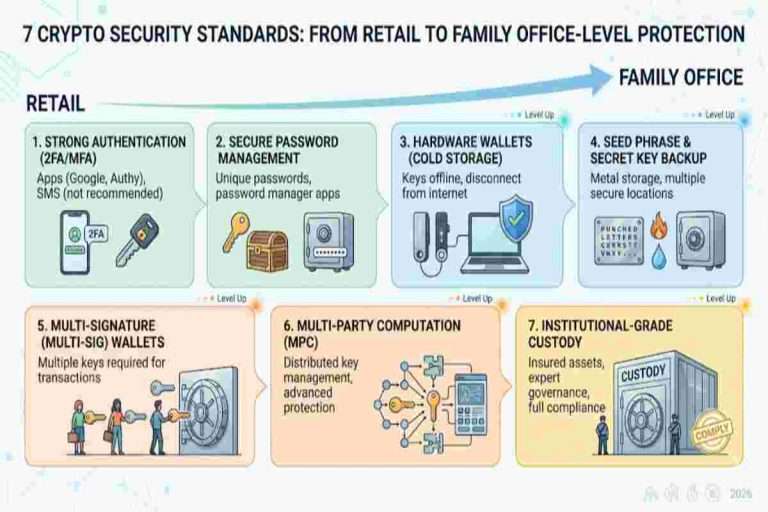
A smart contract-based system that improves wallet security and usability.
Learn: https://ownprocrypto.com/asset-security-2026/
It enables seamless asset movement across platforms.
Using trusts, governance systems, and structured inheritance planning.
The secure transfer of crypto and digital assets to heirs.
Through education, mentorship, and early involvement.
Gradually, starting with financial literacy and governance exposure.
Lack of preparation, misalignment, and absence of governance.
Preparing leadership and ownership transitions across generations.
Through shared frameworks and communication.
Depends on family philosophy and governance structure.
Training heirs to manage wealth responsibly.
By linking wealth to responsibility and purpose.
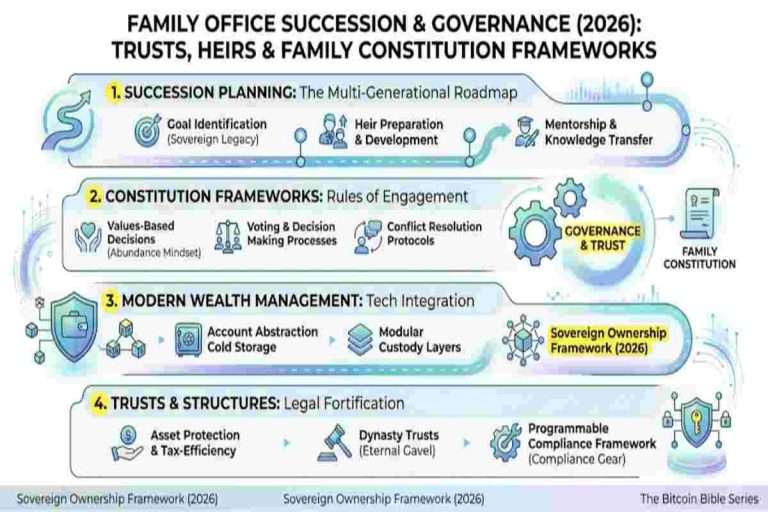
A structured system for decision-making and conflict resolution.
Read: https://ownprocrypto.com/web3-governance-framework/
A document outlining values, roles, and governance principles.
Through councils, boards, or voting frameworks.
Centralized, decentralized, or hybrid systems.
Clear rules, transparency, and structured communication.
A governing body representing family members.
Decision-making executed via blockchain protocols.
It ensures continuity beyond individuals.
Defined roles, reporting, and transparency.
A system that defines how decisions are made and enforced.
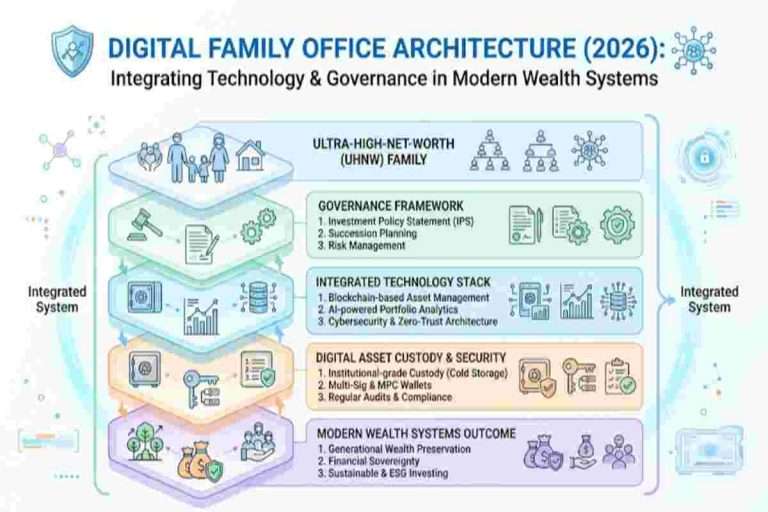
They integrate data, investments, governance, and security into one platform.
Blockchain, AI, analytics, and secure custody systems.
A secure storage system for sensitive financial and legal data.
For forecasting, risk analysis, and automation.
See: https://ownprocrypto.com/artificial-intelligence-crypto/
AI agents automate portfolio management, reporting, and decision-making.
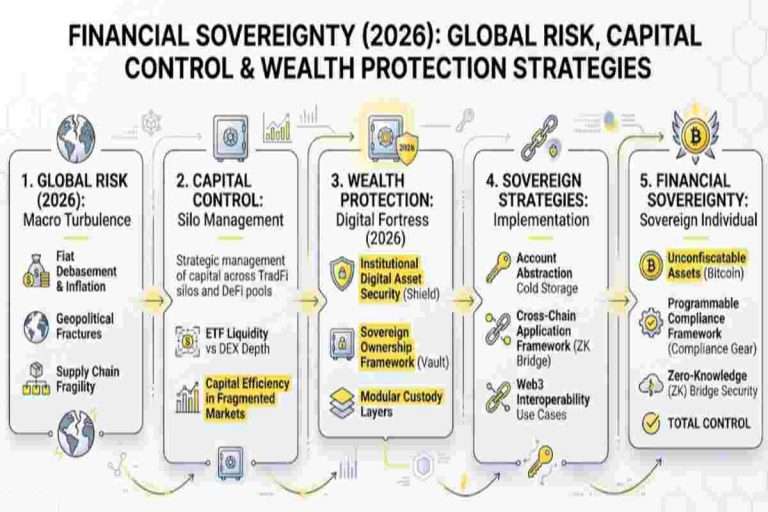
It enables seamless asset movement across platforms.
Read: https://ownprocrypto.com/web3-interoperability/
Yes, with hybrid oversight.
Using analytics to guide decisions.
Managing assets across multiple blockchains.
Through real-time reporting and tracking.
The ability to move and manage assets across multiple blockchain networks seamlessly.
It reduces fragmentation and allows unified control over global digital assets.
Managing assets across multiple blockchain ecosystems to reduce dependency on a single network.
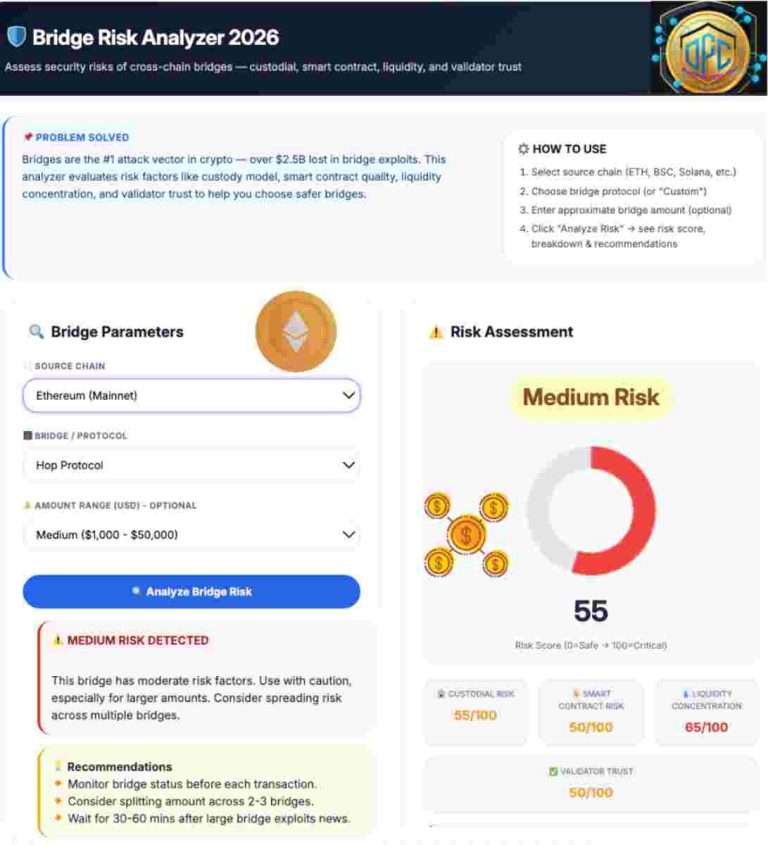
Market, geopolitical, cyber, and governance risks.
Through global diversification.
Control over wealth independent of external systems.
Using MPC, multi-sig, and institutional custody.
Read: https://ownprocrypto.com/institutional-asset-security/
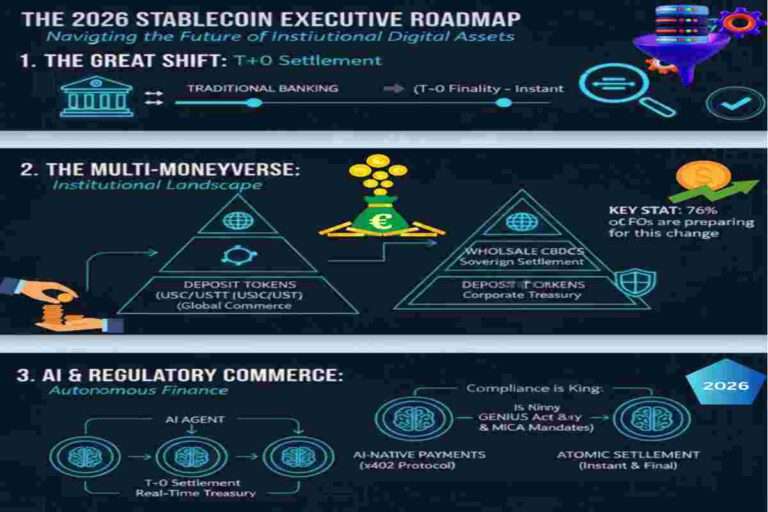
Through stablecoins, blockchain payment rails, and institutional crypto infrastructure, enabling faster and cheaper cross-border transfers.
Read: https://ownprocrypto.com/stablecoin-payments/
Digital currencies pegged to fiat that provide stability and efficiency in transactions.
They enable frictionless global transfers and reduce dependency on banking systems.
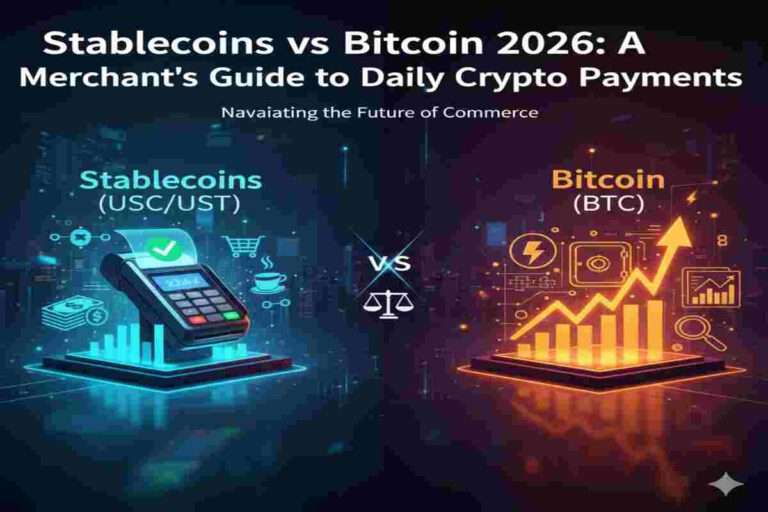
Stablecoins are better for transactions; Bitcoin is better for long-term value storage.
Compare: https://ownprocrypto.com/stablecoins-vs-bitcoin/
The ability to transfer value globally in near real-time without intermediaries.
Instant settlement of transactions, eliminating delays in traditional systems.
By holding assets in multiple currencies and blockchain-based systems.
Money that can execute rules automatically via smart contracts.
By eliminating intermediaries and increasing transparency.
A hybrid system combining traditional finance with blockchain infrastructure.
A system that assumes no implicit trust and verifies every action.
Learn: https://ownprocrypto.com/zero-trust-interoperability/
Holding diversified currencies and assets.
Safeguarding wealth from legal and financial threats.
By implementing advanced security frameworks.
Risk of losing access to assets due to poor storage systems.
Because global systems are increasingly unstable.
Freedom, security, and impact.
No, governance sustains it.
Continuity of values, systems, and capital.
Planning beyond one lifetime.
They guide decisions and priorities.
Operating independently of fragile systems.
Yes, without structure.
Aligning capital with impact.
Shared vision and governance.
Knowledge, systems, and identity.
Define goals → structure → governance → investments → tech.
Earn, invest, protect, and educate.
Use diversification and legal structures.
Focus on governance and compounding.
Define roles, rules, and decision processes.
Based on trust and expertise.
Align with risk tolerance and goals.
Through education and participation.
Adopt integrated platforms.
Combine strategy, governance, and independence.
Opportunity sustains wealth longer than money alone.
Skills create lasting wealth.
Yes—with discipline and structure.
No, systems matter more than starting capital.
Education.
Yes, through mindset and systems.
Roles can be adjusted.
It can be without preparation.
Through governance frameworks.
Long-term independence, resilience, and purpose.
If you’re building toward generational sovereignty, start by structuring your foundation:
To maintain true generational sovereignty, families must align their digital custody with evolving global standards, such as the OECD Crypto-Asset Reporting Framework (CARF), which now dictates how wealth is tracked across borders.
Welcome to OwnProCrypto (Own & Pro Crypto) — a next-generation Bitcoin and blockchain education platform where the science of finance meets the power of AI-driven automation.
Our mission is simple: to equip you with the knowledge, frameworks, and tools needed to make smarter financial and business decisions in the Web3 economy.
Beyond analysis, OwnProCrypto focuses on transparency, verifiable data, and practical frameworks that investors and builders can actually use. Our goal is not hype — but clear thinking, disciplined analysis, and long-term value creation in the decentralized economy.
Our Background
As part of the Web3 Ecosystem Architecture pillar, this guide focuses on Sovereign Ownership Architecture in Web3. Explore related pillars: