
Table of Contents
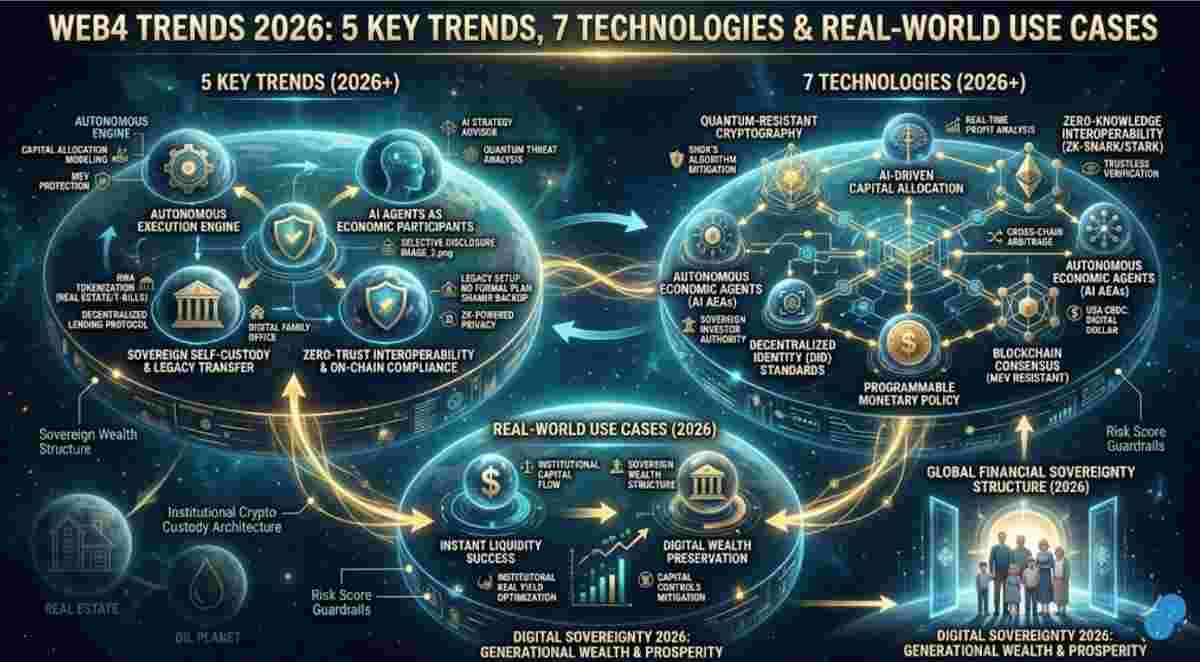
ToggleThe internet is evolving faster than ever, and Web4 represents the next frontier in digital innovation. Unlike Web3, which primarily focused on decentralization and blockchain, Web4 combines intelligent automation, advanced AI, and seamless interoperability across technologies.
As we step into 2026, understanding Web4 trends 2026 is crucial for developers, investors, and enthusiasts alike. Web4 is not just about technology—it’s a paradigm shift in how humans, machines, and organizations interact online.
In this guide, we will explore:
By the end, you’ll have a complete understanding of Web4 and how it’s poised to reshape the digital landscape. These autonomous shifts are a technical expansion of the “Connected Stack” we detail in our Web3 Interoperability 2026 master guide. Explore more on AI design trends at Elementor 2026.
Web4 is the fourth generation of the internet—a system where intelligent agents, decentralized networks, and real-time interoperability converge. Unlike the previous versions:
Web4 isn’t just a technology shift; it’s a paradigm shift in how humans, machines, and organizations interact online.
For a deeper look into Web3 foundations that Web4 builds upon, see our Web3 Ecosystem 2026 guide.
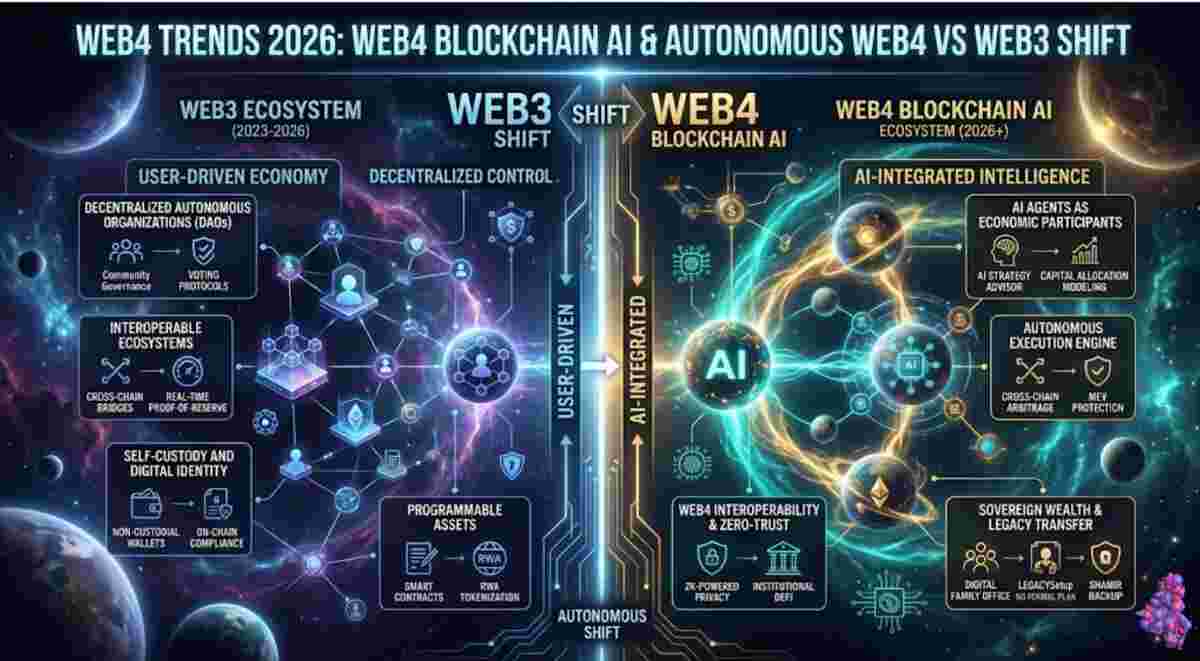
While Web3 brought decentralization and blockchain, Web4 extends the concept into an AI-driven, hyper-connected environment.
| Feature | Web3 | Web4 |
|---|---|---|
| Core focus | Decentralization & blockchain | Intelligent automation & interoperability |
| Technology | Blockchain, Smart Contracts | AI, IoT, Edge computing, Blockchain |
| User Experience | Wallets, tokens, dApps | AI agents, real-time interaction, seamless integration |
| Industry Impact | Finance, NFTs, Crypto | Finance, healthcare, smart cities, global enterprises |
Key takeaway: Web4 builds on Web3’s foundation but adds intelligence, automation, and industry-scale applications, making it far more adaptable for the real world.
For practical examples of Web3 adoption that lead into Web4, check our post on Web3 Interoperability Use Cases.
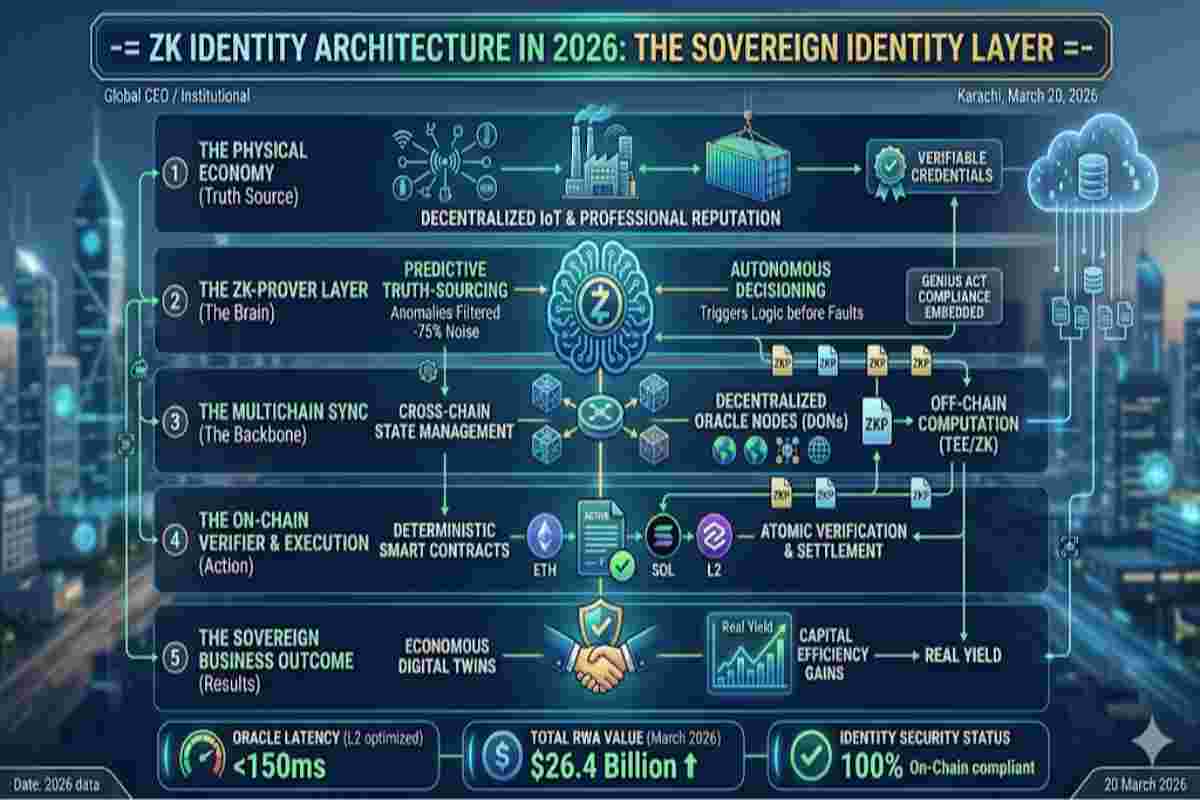
Explore how identity is evolving in the digital age with ZK Identity Architecture 2026.
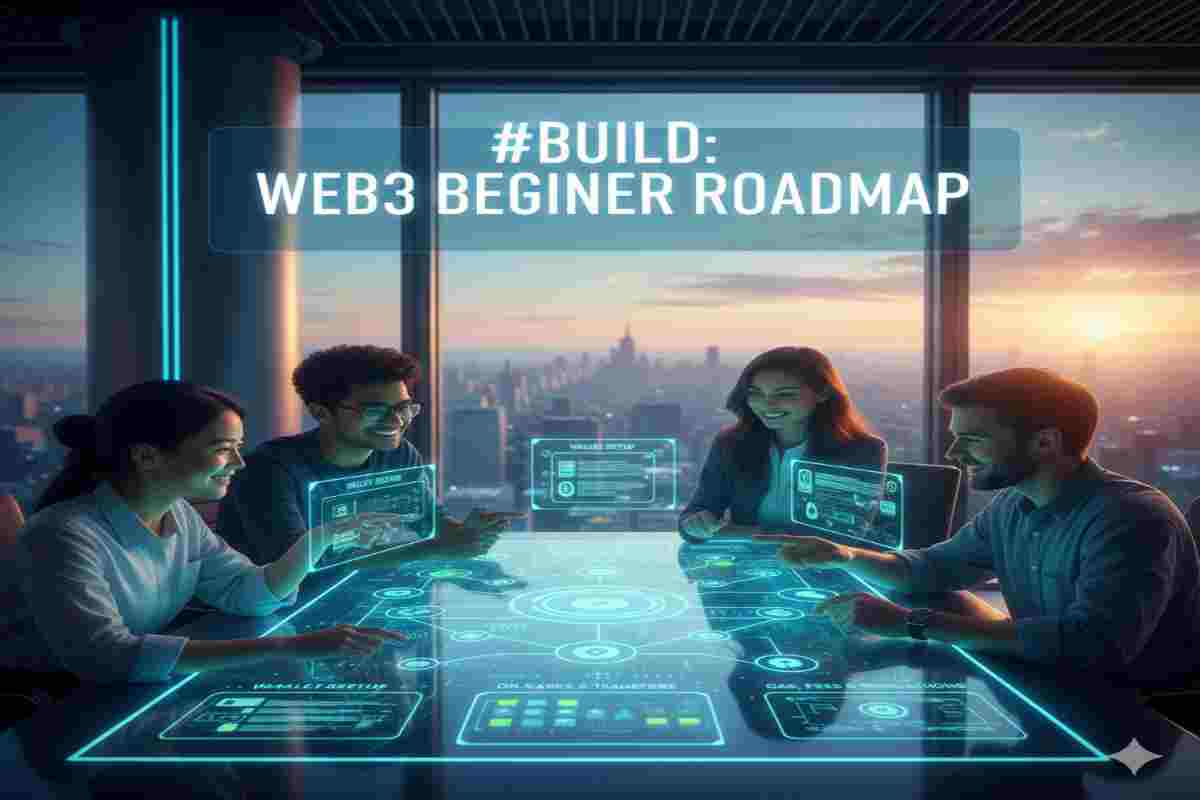
Web4 isn’t possible without a powerful tech stack. Here are the 7 core Web4 technologies:
For practical implementation examples, see Web3 Development Guide 2026
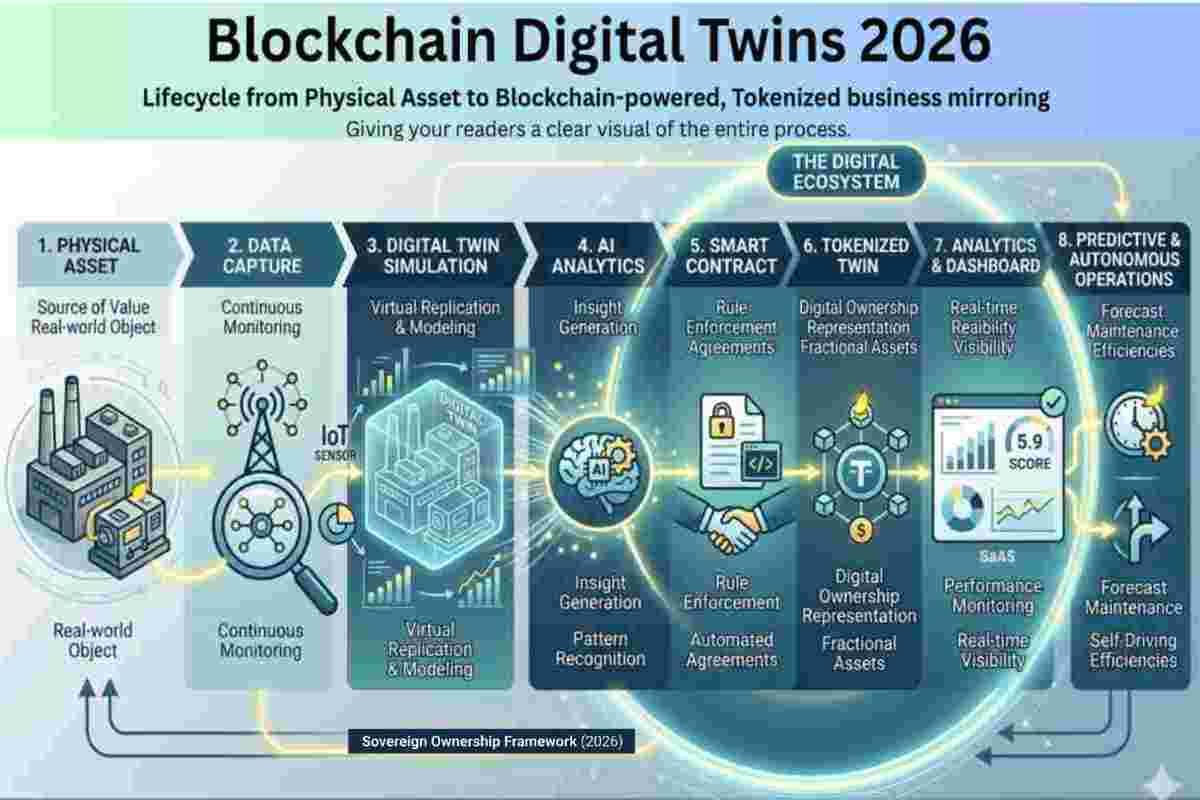
Web4 is not just theory—it’s already being applied. Here are 10 real-world use cases:
Learn more about blockchain applications in real life with Blockchain Digital Twins 2026 and RWA Tokenization 2026.
These use cases illustrate how Web4 bridges innovation and practical implementation, making it essential for forward-thinking businesses.
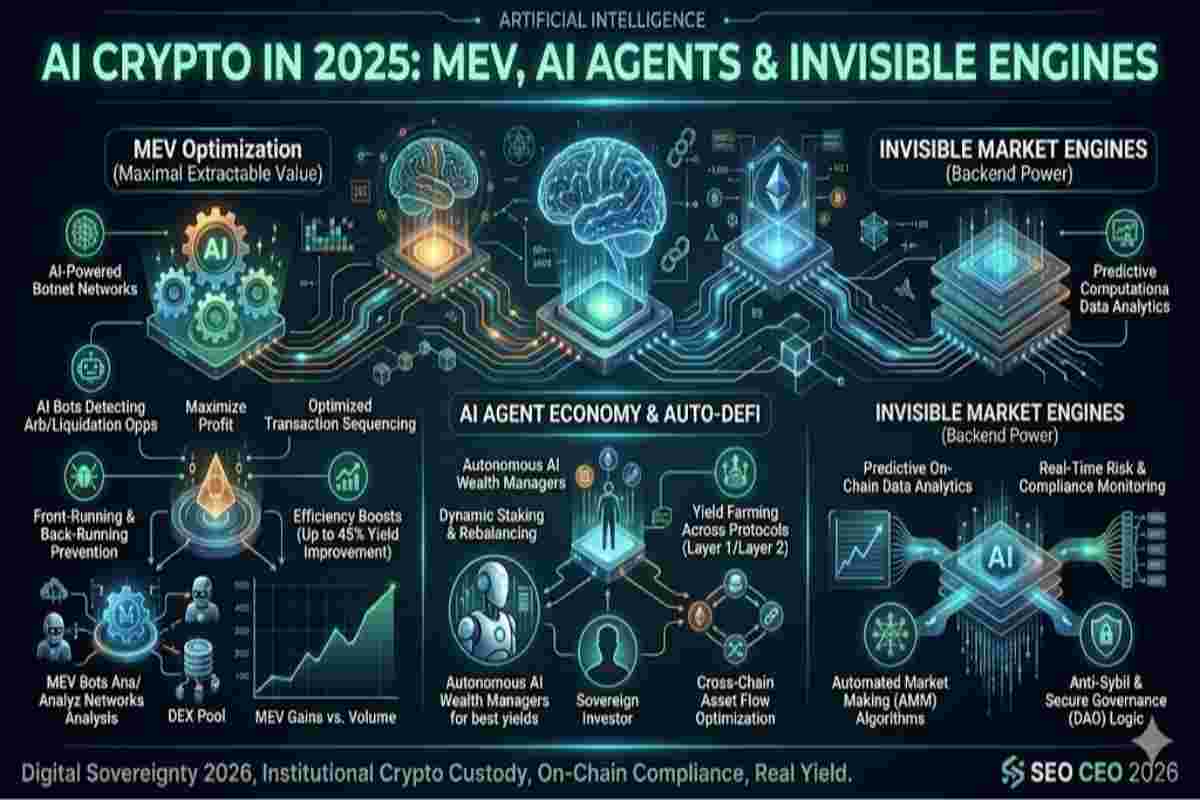
AI in Web4 enables autonomous decision-making, predictive analytics, and seamless task execution. It’s not just about smart algorithms—it’s the engine powering autonomous finance, supply chains, and content personalization.
For AI in crypto systems, see Artificial Intelligence Crypto 2025.

Blockchain provides security, transparency, and decentralized governance. From smart contracts to digital twins, blockchain ensures that Web4 networks remain tamper-proof and trustworthy.
Learn institutional and practical examples with Asset Security 2026.
Web4’s stack integrates:
Deep dive with Web3 Development Guide 2026.
Web4 has immense potential, but there are challenges:
Despite these challenges, Web4’s real-world applications, intelligent automation, and cross-industry potential suggest it is much more than hype.
Web4 is a highly interconnected system where AI, blockchain, and IoT converge. Autonomous agents perform tasks, predictive algorithms optimize outcomes, and decentralized networks ensure trust. For real-life blockchain frameworks, see North Carolina Bitcoin Reserve 2026.
Web4 extends Web3 by adding AI-driven intelligence, real-time interoperability, and automation. Explore differences with practical use cases in Web3 Interoperability Use Cases 2026.
Web4 is active today with functional applications in smart cities, DeFi 2.0, and autonomous AI agents. Learn more about real implementations in AI Agents in Web3 2026.
A symbiotic web describes mutual interaction between humans, AI agents, and decentralized networks. For practical frameworks, see Blockchain Hackathon for Beginners.
Web4 builds on Web3—it enhances decentralization with intelligence and automation. Deep dive into Web3 foundations in Web3 Ecosystem 2026.
Blockchain ensures trust, security, and autonomous execution. For institutional applications, check Institutional Asset Security 2026.
Web4 is hybrid: AI drives intelligence, blockchain secures trust. Learn more from AI-Powered Blockchain Multichain Oracles 2026.
Crypto enables value transfer, tokenized incentives, and governance. Explore tokenization frameworks in RWA Tokenization 2026.
No—decentralization ensures trust and security, which are critical for autonomous AI agents. For enterprise examples, see Enterprise Crypto Stack 2026.
Top trends: AI assistants, DeFi 2.0, cross-chain interoperability, edge computing, and digital identity sovereignty. Learn more from Crypto Trends 2026.
AI, blockchain, IoT, edge computing, semantic web, AR/VR, and quantum computing are central. For tech stack examples, see Web3 Development Guide 2026.
From healthcare to finance to smart cities, Web4 is already transforming industries. Explore use cases in Blockchain Digital Twins 2026 and Stablecoin Payments 2026.
These use cases demonstrate how Web4 moves beyond hype to tangible impact in 2026.
Web4 trends 2026 are reshaping the internet with intelligence, automation, and interoperability. Understanding Web4 vs Web3, the technologies powering Web4, and real-world use cases ensures you stay ahead in 2026.
Further reading for practical adoption: RWA Tokenization 2026, Asset Security 2026, and Stablecoin Payments 2026.
Web4 is here. Are you ready to integrate intelligence, decentralization, and automation into your digital strategy?
For reliable technical information on blockchain — one of the foundational technologies powering Web4 — the U.S. government’s National Institute of Standards and Technology (NIST) provides extensive research: [Learn more at NIST.gov](https://www.nist.gov/blockchain)
As we enter the Web4 era, it’s crucial for businesses, developers, and investors to embrace this change. Here are some practical insights to help you adapt:
By implementing these strategies, your organization will be better equipped to navigate the Web4 landscape.
Welcome to OwnProCrypto (Own & Pro Crypto) — a next-generation Bitcoin and blockchain education platform where the science of finance meets the power of AI-driven automation.
Our mission is simple: to equip you with the knowledge, frameworks, and tools needed to make smarter financial and business decisions in the Web3 economy.
Beyond analysis, OwnProCrypto focuses on transparency, verifiable data, and practical frameworks that investors and builders can actually use. Our goal is not hype — but clear thinking, disciplined analysis, and long-term value creation in the decentralized economy.
Our Background
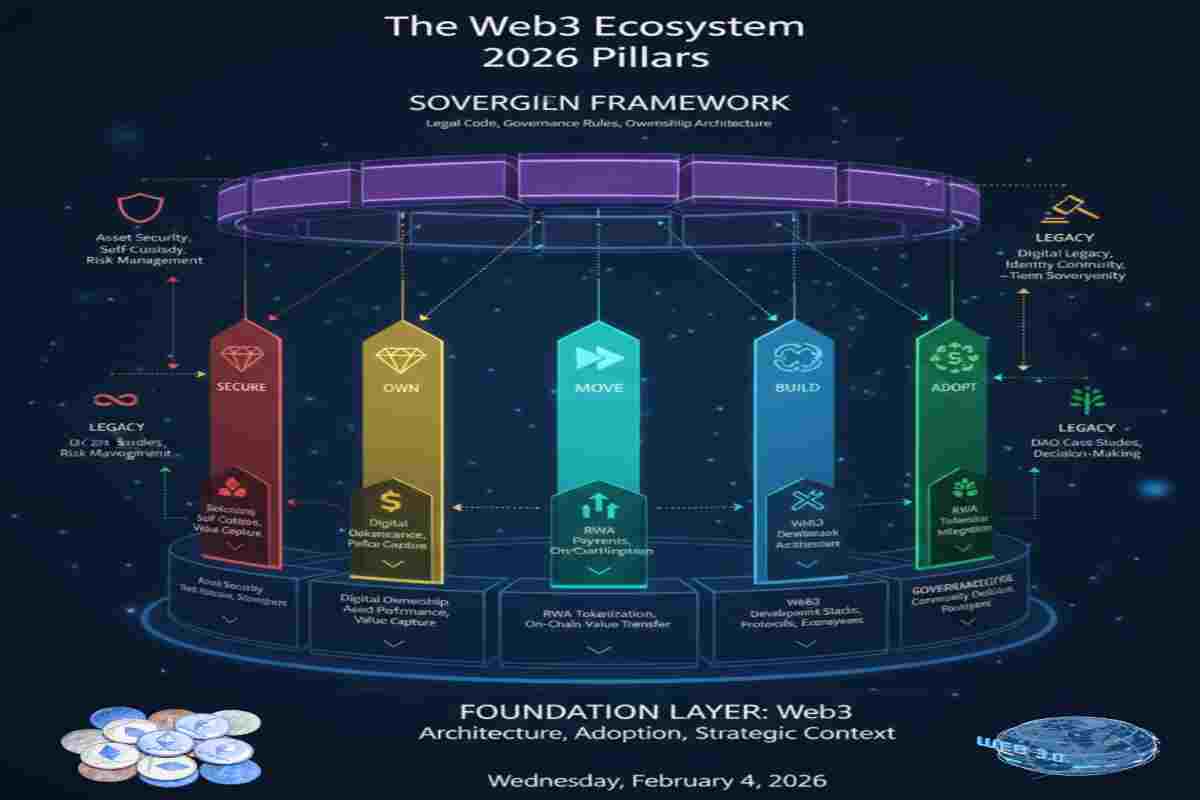
As part of the Web3 Ecosystem Architecture pillar, this guide focuses on Sovereign Ownership Architecture in Web3. Explore related pillars: